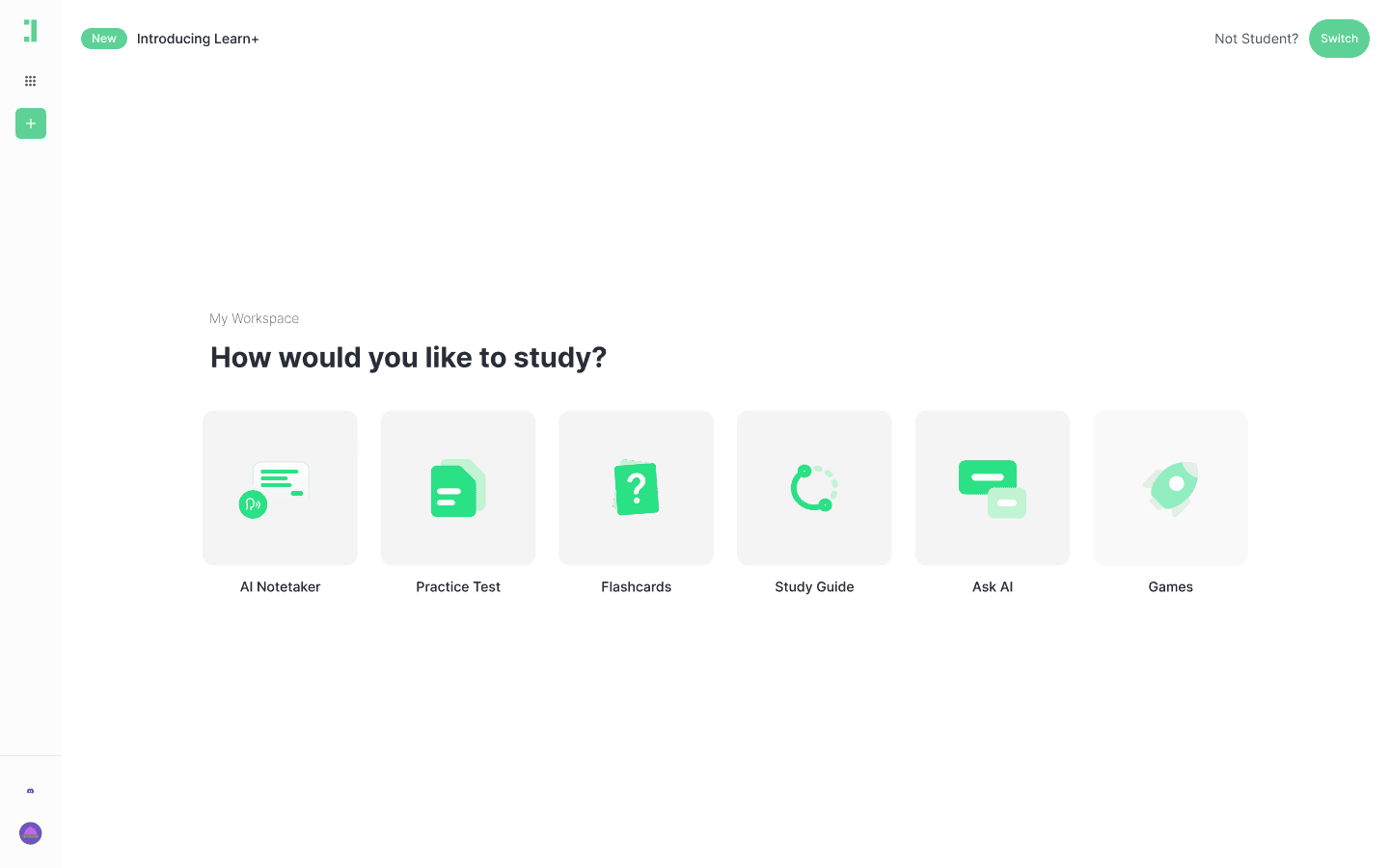
Generate Flashcards for Lab Techniques in Chemistry
Generate Lab Techniques in Chemistry flashcards from notes or PDFs. Try our free AI tool now!
Generate Flashcards with AI Free
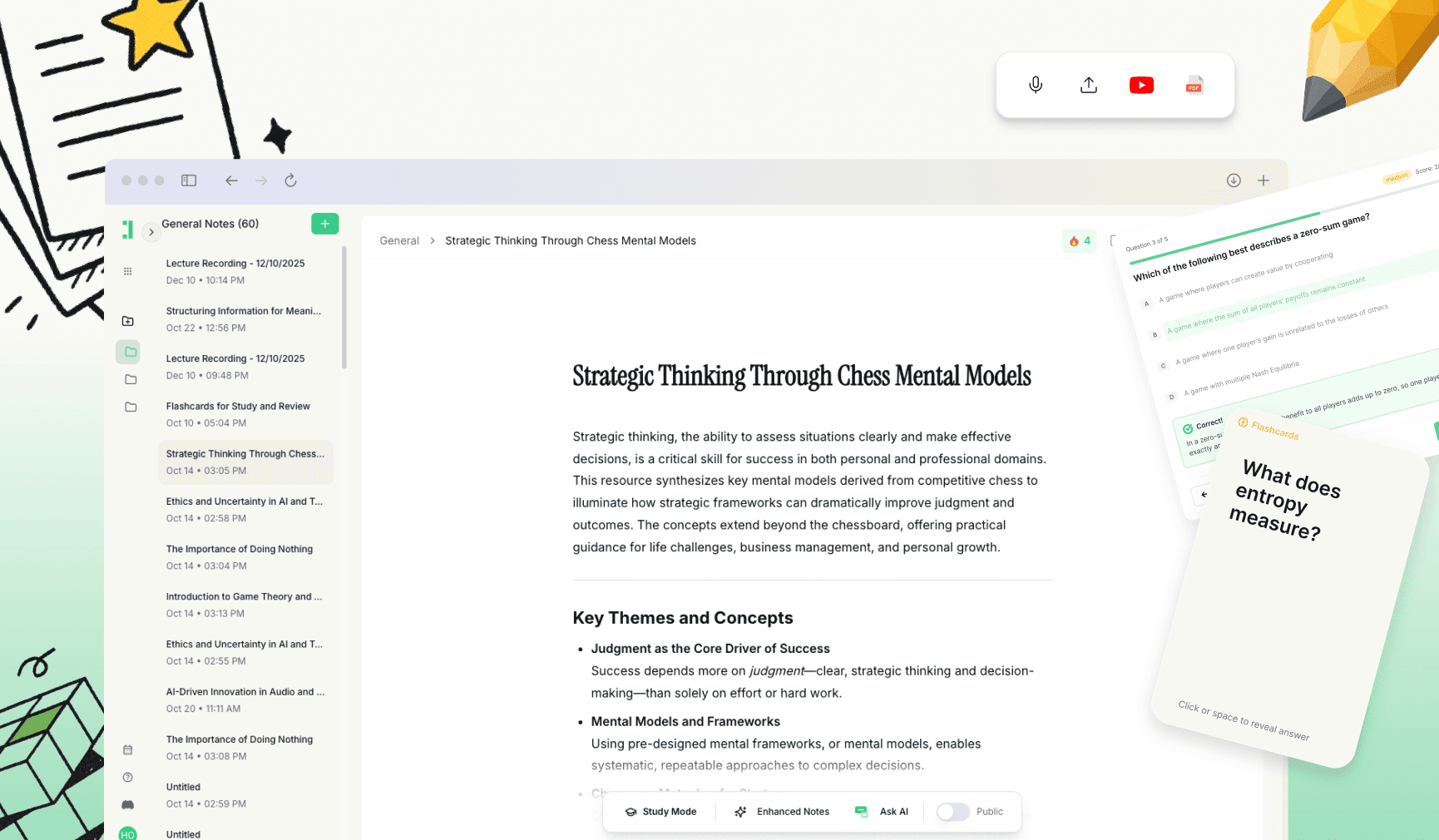
Generate Flashcards for Lab Techniques in Chemistry
Turn your lab manuals, procedure notes, slides, or lecture recordings into Lab Techniques in Chemistry flashcards so you can review faster and remember more before your next practical exam.
Generate Lab Techniques FlashcardsUpload notes / paste text
In Duetoday, the process is seamless: simply upload your lab materials, and our AI instantly generates a comprehensive deck. You can then review, edit, and use spaced repetition to master every procedure.
What are Lab Techniques in Chemistry flashcards?
Lab Techniques in Chemistry flashcards cover the essential mechanical and analytical skills required in a laboratory setting. This includes identifying glassware, understanding titration steps, mastering distillation setups, and memorizing safety protocols and chemical handling rules.
Instead of just rereading a lab manual and hoping you remember the steps, these flashcards force you to test your knowledge of specific procedures. You build active recall, ensuring that when you are at the bench, you know exactly which valve to turn or which indicator to add without hesitation.
If you already have lab notes or a manual, Duetoday can generate a clean deck in minutes.
Why flashcards work for Lab Techniques in Chemistry
Chemistry lab work requires a mix of procedural memory (how to do things) and factual knowledge (safety hazards and calculations). Flashcards are the perfect bridge between these two worlds.
Remember safety symbols and hazard codes without cramming.
Separate similar techniques (e.g., vacuum filtration vs. gravity filtration).
Learn complex processes step-by-step, like the stages of a recrystallization.
Practice calculating molarity or dilutions on the fly.
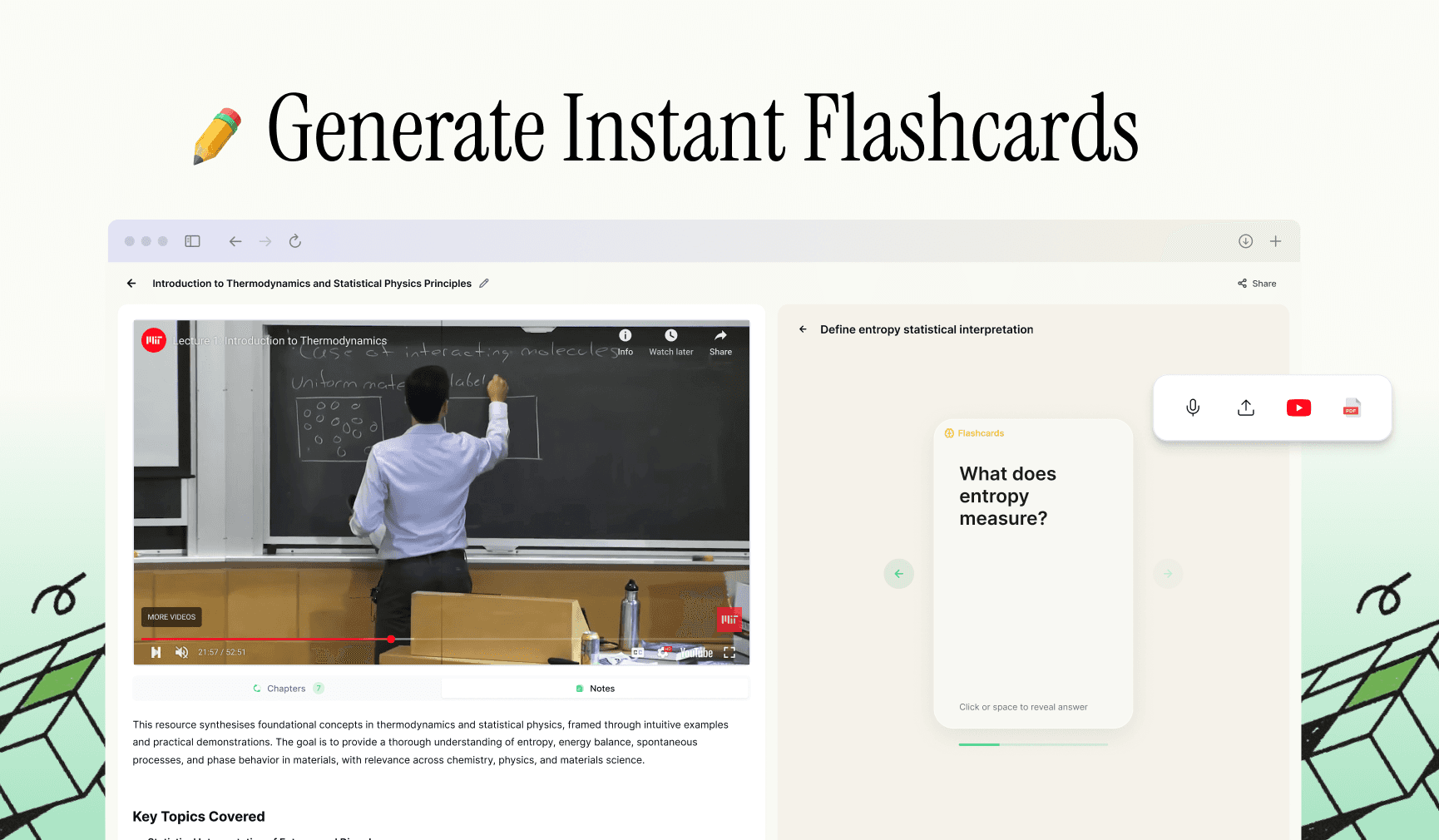
What to include in your Lab Techniques flashcards
Effective chemistry flashcards follow the "atomic" rule: one specific idea per card. This prevents you from glazing over complex procedures and forces your brain to retrieve specific data points.
Definitions & Equipment: "What is a buret used for?" "Define an aliquot."
Processes & Steps: "What is the first step in priming a pipette?"
Comparisons: "How does thin-layer chromatography differ from column chromatography?"
Safety & Application: "Which acid should never be added directly to water?"
Example prompts Include: "What color does phenolphthalein turn in a basic solution?", "Identify the parts of a Bunsen burner," and "How do you calculate percent yield?"
How to study Lab Techniques with flashcards
Mastering the lab is about consistency. Start by generating a deck from your lab manual. Do one quick round to identify which techniques confuse you—perhaps you always forget the order of operations in a titration. Focus your energy there.
Review your "weak" cards daily for a few days leading up to your lab session. By the time you enter the room, the steps are second nature. This reduces "lab anxiety" and helps you finish experiments faster and more accurately.
Common Lab Techniques flashcard mistakes
Many students make cards that are too wordy. If a card has a whole paragraph on how to perform a distillation, you won't actually learn it. Split it into five separate cards. Another mistake is ignoring safety; always include cards on the specific hazards of the chemicals you are using in that week's experiment.
Ready to generate your Lab Techniques flashcards?
Stop rereading your lab manual. Upload your PDFs or notes to Duetoday, generate your deck, and start practicing active recall today.
Start Generating Flashcards
Works with notes, PDFs, slides, and lab transcripts.
FAQ
How many flashcards do I need for Lab Techniques? Usually, 30-50 cards per specific experiment are enough to cover equipment, safety, and steps.
What is the best format for these flashcards? Question and answer format works best, especially for visualizing equipment setups.
How often should I review them? Review your deck 24 hours before your lab and again the morning of the experiment.
Can I generate cards from my lab manual PDF? Yes, Duetoday is designed to parse complex PDFs and turn them into structured study sets.
Should I include diagrams? Absolutely. Visualizing the difference between a Buchner funnel and a Hirsch funnel is crucial.
How do I stop forgetting the steps during a practical? Use spaced repetition to move the procedural steps from short-term to long-term memory.
Are digital flashcards better than paper? Yes, because digital tools like Duetoday use AI to track what you've forgotten and show those cards more often.
Can Duetoday handle chemistry formulas? Yes, the AI recognizes chemical symbols, formulas, and mathematical equations commonly found in lab notes.

Duetoday is an AI-powered learning OS that turns your study materials into personalised, bite-sized study guides, cheat sheets, and active learning flows.