Generate Flashcards for Journalism
Make flashcards for Journalism to master media law and AP style. This guide shows how to generate study sets from notes.
Generate Flashcards with AI Free
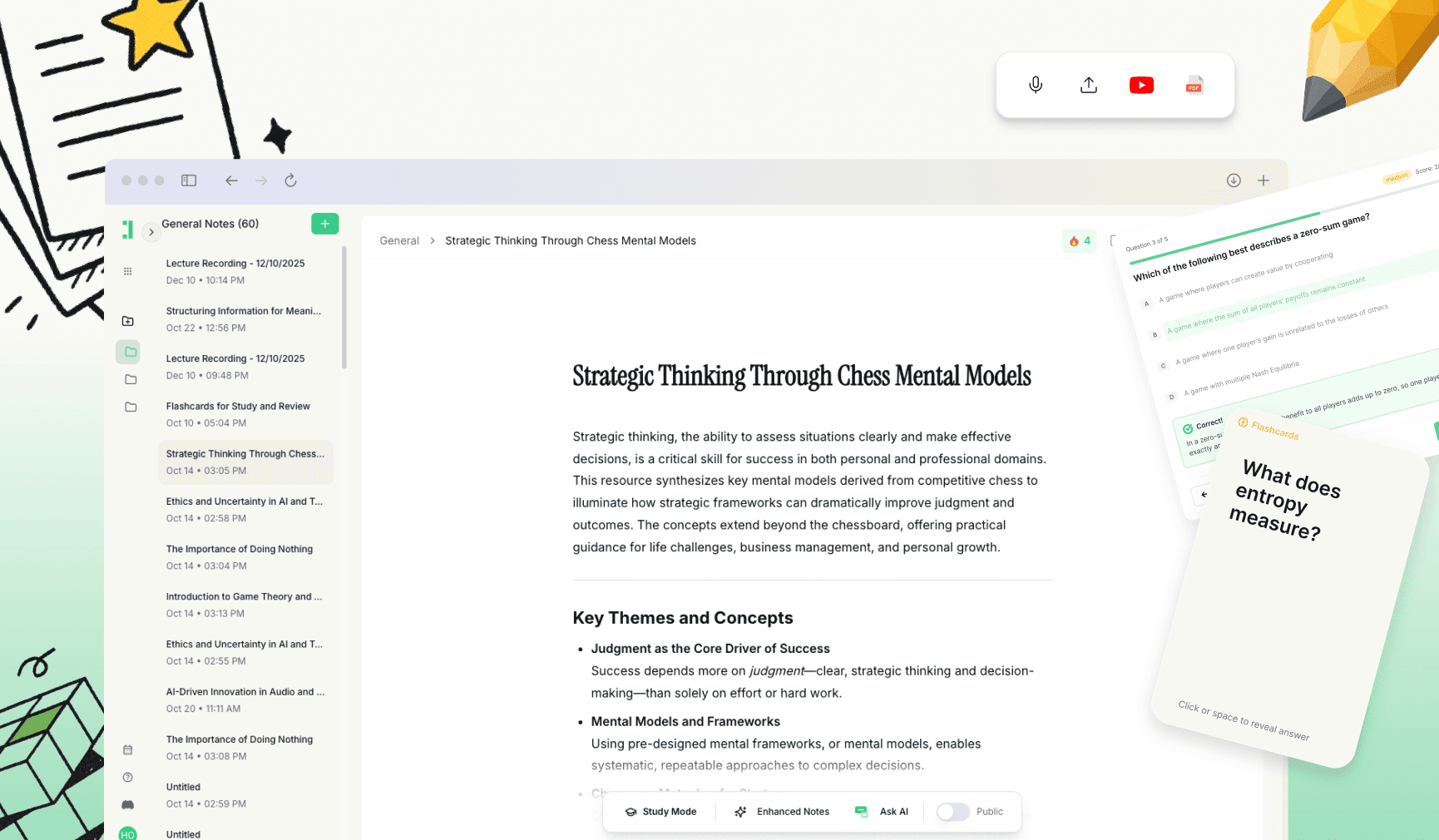
Generate Flashcards for Journalism
Turn your notes, PDFs, slides, or lectures into Journalism flashcards so you can review faster and remember more. Whether you are studying media law, ethical frameworks, or AP Style guidelines, Duetoday helps you transform dense theory into interactive study sessions.
Generate Journalism Flashcards | Upload notes / paste text
In Duetoday, the process is simple: upload your reporting materials, generate a structured deck, review or edit the cards, and start studying with active recall. No more manual data entry; just instant study tools.
What are Journalism flashcards?
Journalism flashcards cover the essential building blocks of media production, including key terms (like 'libel' vs. 'slander'), reporting steps, inverted pyramid structures, and common AP Style confusions. They serve as a bridge between reading a textbook and actually applying the rules in a newsroom setting.
Instead of passively rereading your notes, flashcards force you to test yourself. This builds the mental muscle memory required to recall legal protections or grammar rules under tight deadlines. If you already have notes, Duetoday can generate a clean deck in minutes.
Why flashcards work for Journalism
Journalism requires the memorization of specific protocols, legal standards, and technical terminologies that must be recalled instantly. Flashcards leverage active recall and spaced repetition to ensure these facts stick long-term without the need for last-minute cramming.
Remember AP Style rules without constant manual checking
Separate similar concepts like 'On the Record' vs. 'On Background'
Learn the stages of the editorial process step-by-step
Practice applying ethical frameworks to real-world scenarios
What to include in your Journalism flashcards
Effective Journalism flashcards follow the one idea per card rule. They should be question-based and focus on the practical application of reporting standards rather than long, vague definitions.
Definitions & Key Terms: What is the Freedom of Information Act (FOIA)?
Processes & Steps: What are the four parts of the SPJ Code of Ethics?
Comparisons: How does 'Fair Use' differ from 'Copyright Infringement'?
Application: When is it acceptable to use an anonymous source?
Example prompts: 'Define the Inverted Pyramid structure,' 'What constitutes actual malice in a libel case?', 'Identify the six situational news values.'
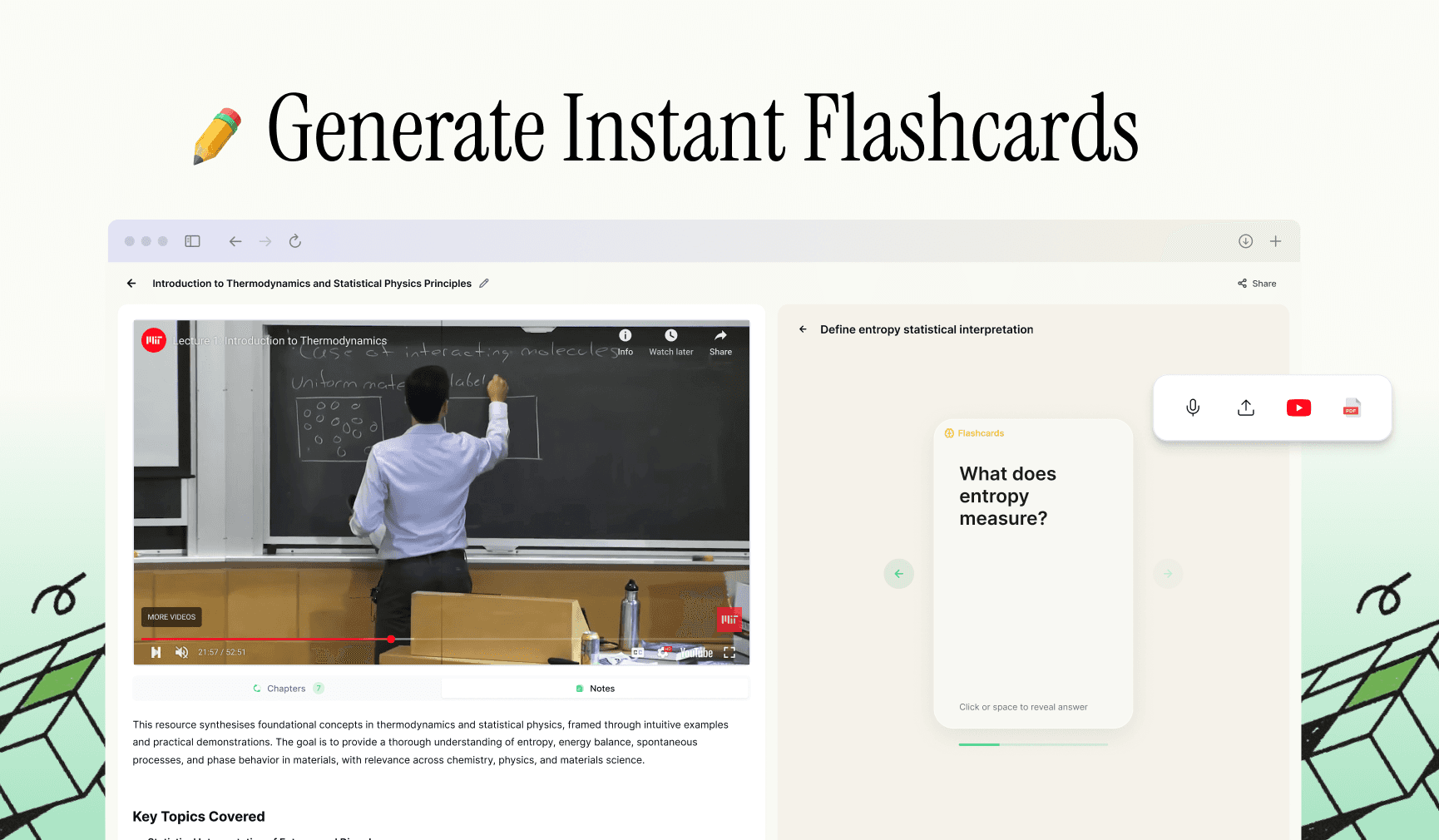
How to study Journalism with flashcards
Success in journalism exams and reporting requires a two-pass approach. First, build your deck from your syllabus or newsroom guides. Second, review in rounds until the concepts become second nature.
Make a deck from your lecture notes or media law PDFs.
Do one quick round to identify which legal terms or style rules are tripping you up.
Review these 'weak' cards daily for a few days to cement them.
Mix in harder application scenarios to test your judgment.
Do a final mixed review before your deadline or exam.
Generate Journalism flashcards automatically in Duetoday
Making cards manually is slow, messy, and takes away time you could spend writing or reporting. Duetoday eliminates the grunt work by automating the creation process.
Positioned as an AI study assistant, Duetoday allows you to upload your reporting handbooks or slides and receive a study-ready deck in seconds. You can then edit the results to fit your specific course requirements.
Upload or paste your Journalism material
Click Generate Flashcards
Review, edit, and start studying
Generate Journalism Flashcards in Duetoday
Start with your notes and get a deck you can actually use today.
Common Journalism flashcard mistakes
Most students make cards that are too wordy or focus on the wrong details. Avoid these pitfalls to maximize your study efficiency:
Cards are too long: Split complex laws into one card per specific clause.
Only memorizing words: Add 'explain why' prompts for ethical dilemmas.
Confusing similar concepts: Create specific comparison cards for 'Off the record' vs 'Deep background'.
No review schedule: Ensure you repeat the challenging AP Style rules daily.
Ready to generate your Journalism flashcards?
Stop rereading and start recalling. Upload your notes, generate your deck, and master your journalism curriculum with active recall. Works with notes, PDFs, slides, and interview transcripts.
FAQ
How many flashcards do I need for Journalism? Typically, 50-100 cards per unit (e.g., Media Law) is enough to cover essential definitions and rules without becoming overwhelming.
What’s the best format for Journalism flashcards? Question-and-answer format is best for style rules, while scenario-based cards are better for ethics and media law.
How often should I review Journalism flashcards? Review once a day for new material and twice a week for concepts you already know to keep them fresh for exams.
Should I make cards from a textbook or lecture notes? Use both! Textbooks provide definitions, while lectures often highlight what the professor considers most important for exams.
How do I stop forgetting media law after a few days? Spaced repetition is key. Duetoday helps you revisit the specific cards you struggle with more frequently.
What if my flashcards feel too easy? Increase the difficulty by adding 'Application' questions where you have to apply a rule to a specific reporting scenario.
Can I generate Journalism flashcards from a PDF? Yes, Duetoday can process your PDF lecture slides or style guides and turn them into cards instantly.
Are digital flashcards better than paper for Journalism? Yes, digital cards allow for faster organization, instant searching, and AI-powered generation from long transcriptions.
How long does it take to make a full Journalism deck? With Duetoday, you can generate a full deck in seconds rather than hours of typing.
Can Duetoday organize my flashcards for me? Yes, the AI categorizes terms and concepts logically so you can study by specific sub-topics like ethics or grammar.

Duetoday is an AI-powered learning OS that turns your study materials into personalised, bite-sized study guides, cheat sheets, and active learning flows.