Generate Flashcards for IS-LM Basics
Generate IS-LM Basics flashcards in seconds. Turn notes into study decks. Try for free!
Generate Flashcards with AI Free
Generate Flashcards for IS-LM Basics
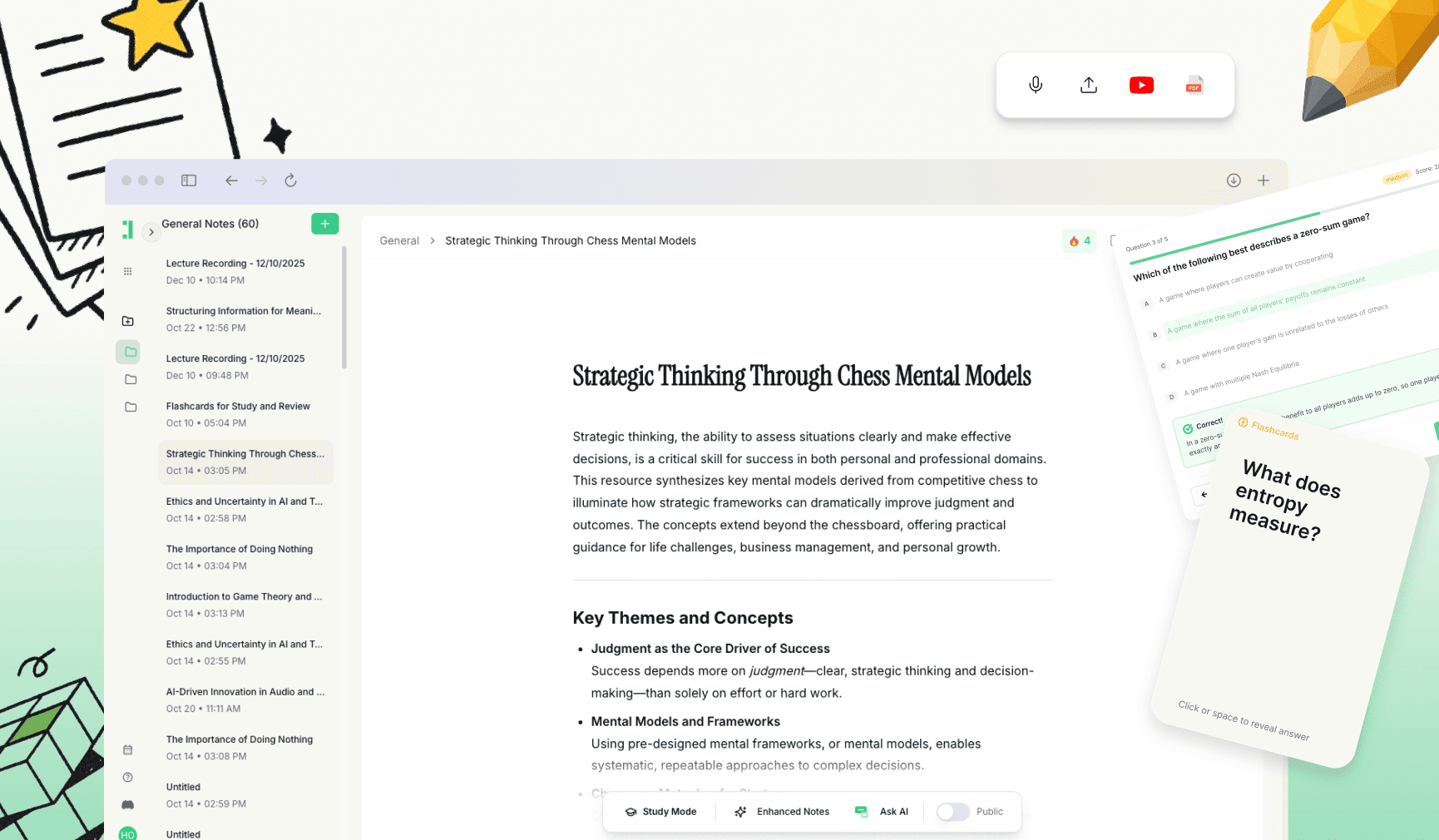
Turn your macroeconomics notes, PDFs, slides, or lecture recordings into IS-LM Basics flashcards so you can review faster and remember more. Whether you are prepping for a midterm or mastering fiscal and monetary policy, automated flashcards bridge the gap between reading and recalling.
Generate IS-LM Basics FlashcardsUpload notes / paste text
In Duetoday, the process is simple: upload your materials, our AI identifies key economic variables, you review the generated deck, and start studying with active recall immediately.
What are IS-LM Basics flashcards?
IS-LM Basics flashcards cover the fundamental components of the Investment-Savings (IS) and Liquidity Preference-Money Supply (LM) model. These cards break down how the goods market and money market interact to determine the equilibrium interest rate and national income.
Instead of rereading complex graphs and multi-variable equations over and over, you test yourself on shifts, slopes, and policy impacts. If you already have notes, Duetoday can generate a clean deck in minutes, helping you build muscle memory for economic modeling.
Why flashcards are one of the best ways to study IS-LM Basics
IS-LM requires a mix of conceptual understanding and logical sequencing. You need to know not just what the curves are, but why they shift and what happens to the equilibrium point when a variable changes. Flashcards force you to explain these movements from memory.
Remember key terms like 'Crowding Out' and 'Liquidity Trap' without cramming.
Separate similar concepts like shifts in the IS curve vs. movements along the curve.
Learn processes step-by-step, such as how an increase in the money supply lowers interest rates.
Practice applying policy rules to predict changes in GDP and Interest Rates.
What to include in your IS-LM Basics flashcards
Good flashcards follow the principle of 'one idea per card.' For IS-LM, focus on question-based cards that challenge your understanding of market equilibrium. Avoid long, winding definitions and favor short, punchy prompts.
Definitions: "What is the IS curve?" or "Define the LM equation."
Processes: "What happens to the LM curve if the central bank increases the money supply?"
Comparisons: "How does the slope of the IS curve change with high vs. low interest sensitivity?"
Application: "If the government increases spending, which curve shifts and in what direction?"
Example prompts: "What causes a movement along the IS curve?", "List the factors that shift the LM curve rightward.", "What does a vertical LM curve imply about money demand?"
How to study IS-LM Basics with flashcards
Use a two-pass approach: first, build your deck using Duetoday to ensure all lecture points are covered, then review in rounds. Start with the basics of curve derivation before moving to policy analysis.
Make a deck from your textbook notes or lecture slides.
Do one quick round to find which shifts (Fiscal vs. Monetary) confuse you most.
Review these specific 'weak' cards daily for three days.
Mix in harder application cards involving the 'crowding out' effect.
Do a final mixed review of all IS-LM scenarios before your exam.
Generate IS-LM Basics flashcards automatically in Duetoday
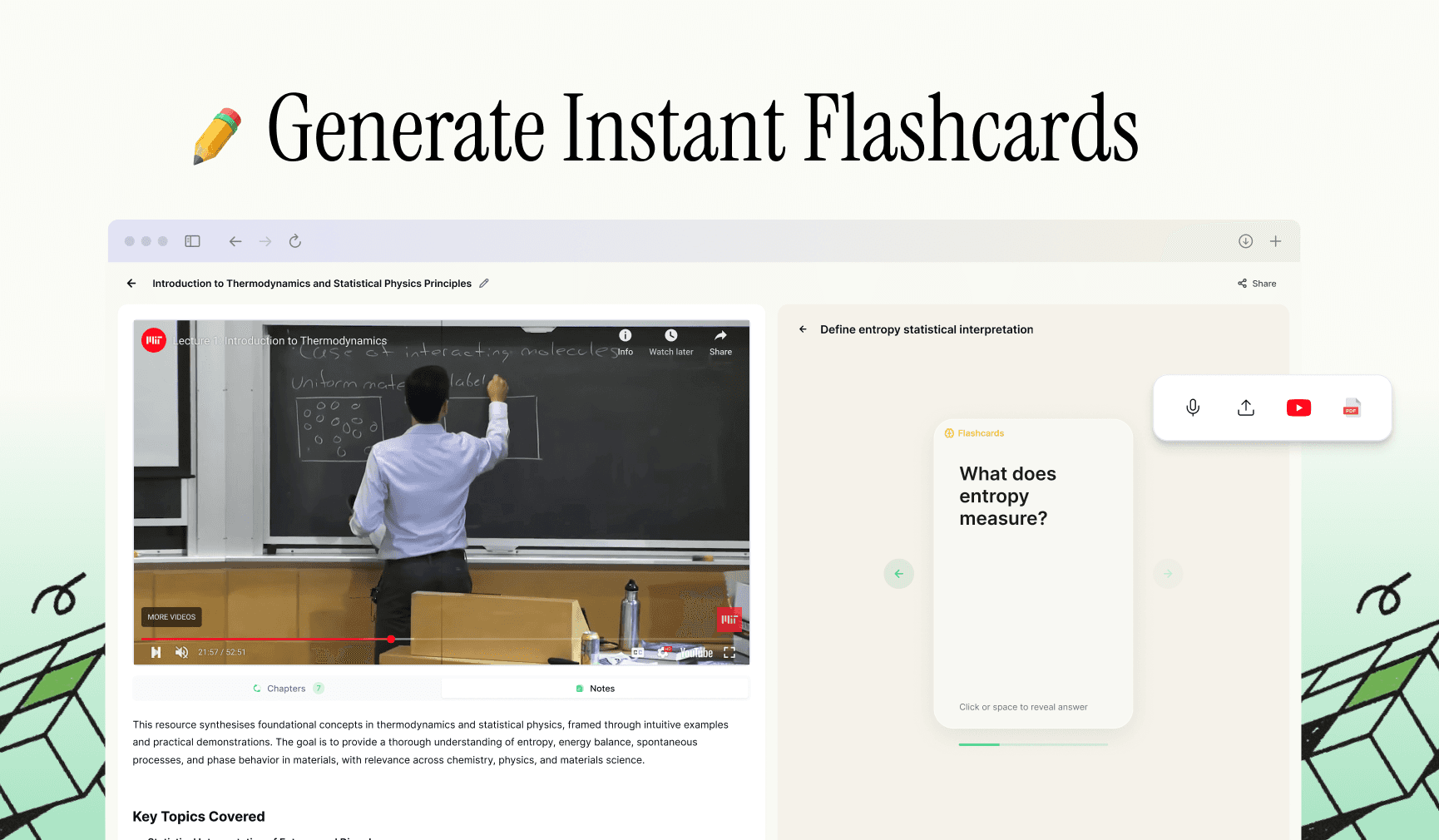
Making economics cards manually is slow—drawing graphs and writing out equations takes time you don't have. Duetoday automates the grunt work. Upload your macroeconomics PDF or paste your lecture transcript, and our AI will extract the core logic of the IS-LM model for you.
Upload or paste your IS-LM material.
Click Generate Flashcards.
Review, edit, and start studying.
Generate IS-LM Basics Flashcards in Duetoday
Common IS-LM Basics flashcard mistakes
Many students create ineffective cards by trying to put an entire chapter on one card. To fix this, ensure your cards are 'atomic'—focused on a single shift or single variable. Don't just memorize the direction of shifts; include 'why' on the back of the card to ensure you understand the underlying market mechanism.
FAQ
How many flashcards do I need for IS-LM Basics? Typically 30–50 cards cover the essential definitions, shift factors, and policy implications for an introductory macro course.
What’s the best format for IS-LM flashcards? Question and answer format is best. Use 'If X happens, what happens to Y?' to simulate exam questions.
How often should I review IS-LM flashcards? Review them daily leading up to your test using spaced repetition to move the logic from short-term to long-term memory.
Should I make cards from a textbook or slides? Both. Slides usually have the graphs, while textbooks provide the detailed reasons behind the slopes.
How do I stop forgetting the shift directions? Create specific 'Inverse' cards. If you have a card for an increase in Money Supply, create one for a decrease to test the logic both ways.
Can I generate IS-LM flashcards from a PDF? Yes, Duetoday can read your economics PDF and generate cards based on the text and headings provided.
Are digital flashcards better than paper for IS-LM? Digital cards are superior for IS-LM because they allow for faster randomization and use algorithms to show you the hardest concepts more often.
Can Duetoday handle the formulas in IS-LM? Yes, Duetoday's AI understands economic equations and can turn them into 'fill-in-the-blank' or 'solve for' cards.

Duetoday is an AI-powered learning OS that turns your study materials into personalised, bite-sized study guides, cheat sheets, and active learning flows.