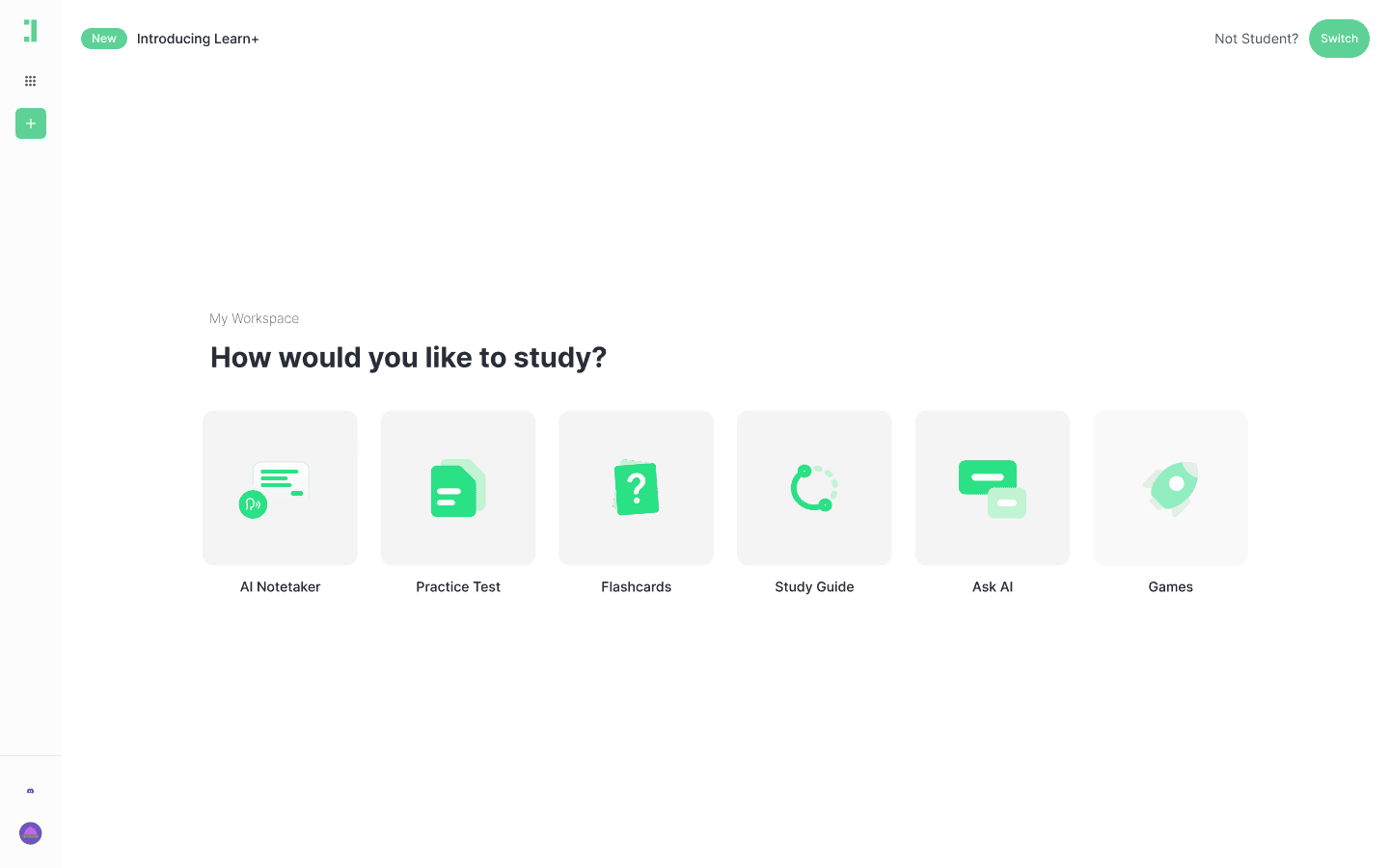
Generate Flashcards for Ionic vs Covalent Bonds
Generate Ionic vs Covalent Bonds flashcards in seconds. Use AI to turn notes into study decks. Try out free!
Generate Flashcards with AI Free
Generate Flashcards for Ionic vs Covalent Bonds
Turn your notes, PDFs, slides, or chemistry lectures into Ionic vs Covalent Bonds flashcards so you can review faster and remember more. Understanding the nuances of chemical bonding is essential for any chemistry student, and active recall is the fastest way to master it.
Generate Ionic vs Covalent Bonds Flashcards
Upload your chemistry notes or paste your textbook text to create a custom study deck instantly.
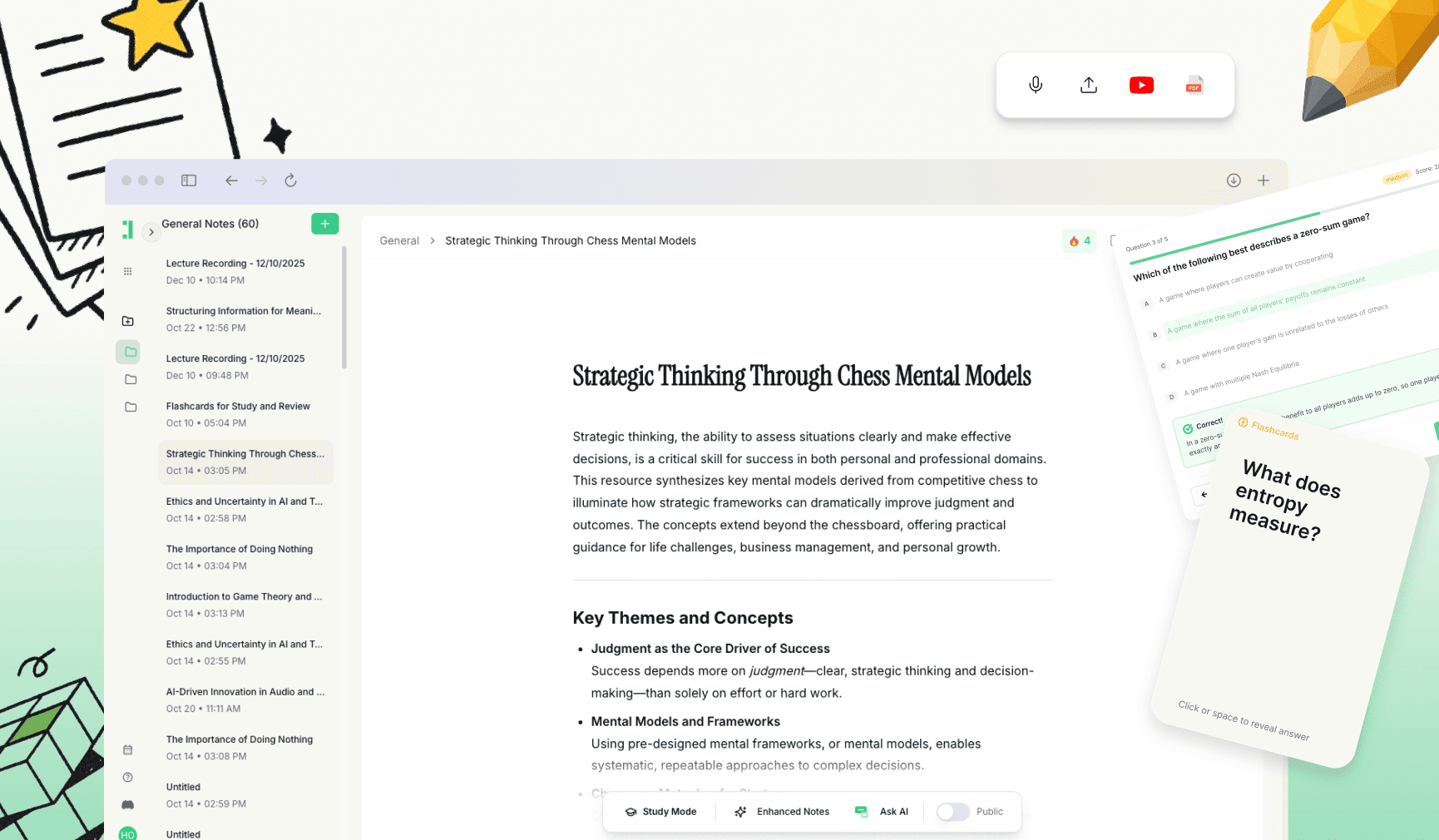
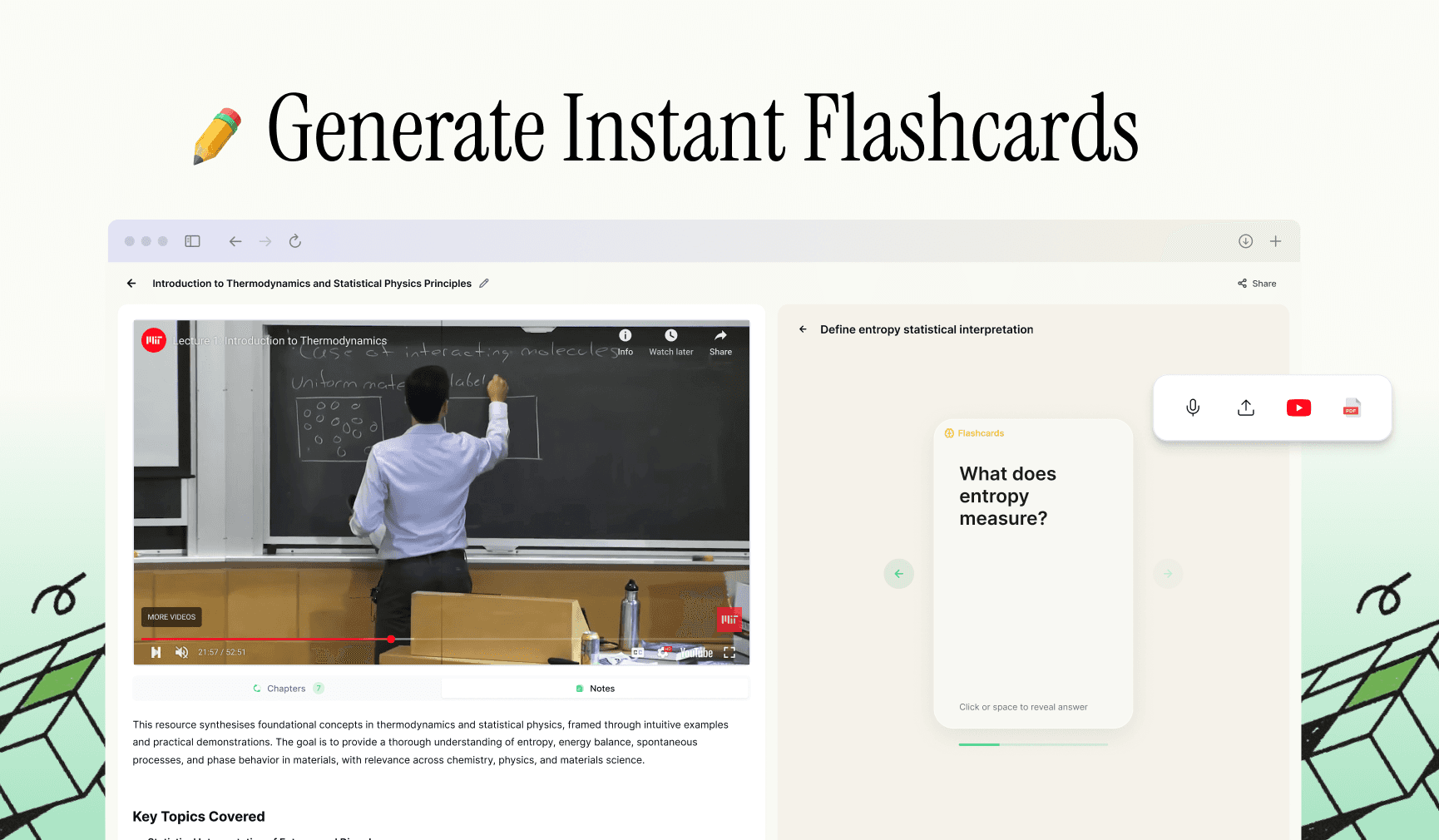
In Duetoday, the process is simple: you upload your source material, our AI generates precise flashcards, you review or edit the content, and then you start your study session with spaced repetition.
What are Ionic vs Covalent Bonds flashcards?
Ionic vs Covalent Bonds flashcards are targeted study tools that cover the fundamental differences between the two primary types of chemical bonding. They focus on electron behavior, electronegativity differences, melting points, and conductivity.
Instead of just rereading your textbook, these flashcards force you to test your knowledge of how atoms interact. By constantly retrieving this information from memory, you build stronger neural pathways and prepare yourself for complex chemistry exams.
If you already have notes, Duetoday can generate a clean deck in minutes.
Why flashcards are one of the best ways to study Ionic vs Covalent Bonds
Chemical bonding requires a mix of memorizing definitions and applying rules. Flashcards are perfect because they help you distinguish between similar concepts that often get confused on tests.
Using active recall and spaced repetition helps you move information from short-term memory to long-term mastery without the stress of cramming. Specific benefits include:
Remember key terms like 'cations' and 'anions' without confusion.
Clearly separate similar concepts like sharing vs. transferring electrons.
Learn periodic trends and electronegativity patterns step-by-step.
Practice applying rules to identify bond types based on chemical formulas.
What to include in your Ionic vs Covalent Bonds flashcards
Effective flashcards follow the "atomic" rule: one idea per card. When studying chemical bonds, focus on question-based prompts that require specific answers rather than vague descriptions.
Definitions & Key Terms: "What is an ionic bond?" or "Define the octet rule."
Processes & Steps: "What happens to the valence electrons in a covalent bond?"
Comparisons: "How is the melting point of an ionic compound different from a covalent one?"
Application: "Is NaCl an ionic or covalent compound?"
Example prompts for your deck:
• "Which bond involves the transfer of electrons?"
• "What is the typical electronegativity difference for a polar covalent bond?"
• "True or False: Covalent bonds typically form between two nonmetals."
• "Describe the conductivity of ionic compounds in water."
How to study Ionic vs Covalent Bonds with flashcards
To master chemical bonding, use a "two-pass" approach. Start by building a comprehensive deck from your lecture notes, then move into focused review rounds to identify where you are struggling.
Review in quick, high-intensity sessions. Don't spend 20 minutes on one card; if you don't know it, mark it for review and move on. Repeat the difficult cards more frequently until they become second nature.
Make a deck from your notes using Duetoday’s AI generator.
Do one quick round to find weak spots (e.g., distinguishing polar from nonpolar).
Review your weak cards daily for at least three days.
Mix in harder application cards involving specific molecules.
Do a final mixed review of the entire bonding unit before your exam.
Generate Ionic vs Covalent Bonds flashcards automatically in Duetoday
Making flashcards manually is slow, messy, and prone to errors—valuable time that should be spent studying is instead spent copying and pasting. Duetoday automates this process so you can focus on learning.
Simply upload your chemistry PDF, slides, or raw notes, and Duetoday will extract the key concepts to build a structured deck. You can edit the cards to add your own hints and start studying instantly.
Upload or paste your bonding material.
Click Generate Flashcards.
Review, edit, and start studying.
Generate Ionic vs Covalent Bonds Flashcards in Duetoday—Start with your notes and get a deck you can actually use today.
Common Ionic vs Covalent Bonds flashcard mistakes
Many students create ineffective cards that actually slow down their learning. Avoid these common pitfalls:
Cards are too long: Don't put the entire definition of electronegativity on one card; split it into several smaller questions.
Rote memorization: Don't just memorize the words; include cards that ask "why" a bond forms.
Ignoring the 'Why': Add cards that explain the energy changes during bond formation.
No review schedule: Don't just look at the cards once; use Duetoday's spaced repetition system.
Ready to generate your Ionic vs Covalent Bonds flashcards?
Stop rereading your notes and start mastering the material. Upload your notes, generate your bond deck, and use active recall to ace your next chemistry test.
Start Generating Flashcards
Works with notes, PDFs, slides, and transcripts.
FAQ
How many flashcards do I need for Ionic vs Covalent Bonds? Usually, a solid deck of 30-50 cards covers the basics, including definitions, property comparisons, and practice identification.
What’s the best format for these flashcards? Question-and-answer format is best. Avoid simply putting a term on one side and a paragraph on the other.
How often should I review them? Daily for the first few days, then every 3-4 days as you become more confident in the material.
Should I make cards from a textbook or slides? Both. Textbooks provide the theory, while lecture slides often highlight what your specific professor thinks is important for the exam.
How do I stop forgetting the difference after a few days? Use spaced repetition. Duetoday’s algorithm ensures you see the hardest cards at the right intervals to prevent forgetting.
What if my flashcards feel too easy? Add application questions. instead of 'What is a covalent bond?', try 'Explain why H2O has a covalent bond using electronegativity.'
Can I generate chemistry flashcards from a PDF? Yes, Duetoday can read your chemistry PDFs and automatically extract the most important bonding concepts into cards.
Are digital flashcards better than paper? Yes, because digital cards allow for automated spaced repetition and are easier to organize and search.
How long does it take to make a full deck? With Duetoday, it takes seconds. Manually, it could take an hour or more to write out 50 high-quality cards.
Can Duetoday organize my flashcards by topic? Yes, you can categorize your decks by chapter, unit, or specific chemistry concept for easy access.

Duetoday is an AI-powered learning OS that turns your study materials into personalised, bite-sized study guides, cheat sheets, and active learning flows.