Generate Flashcards for Introductory Physics
Generate Introductory Physics flashcards from your notes in seconds. Try it for free today!
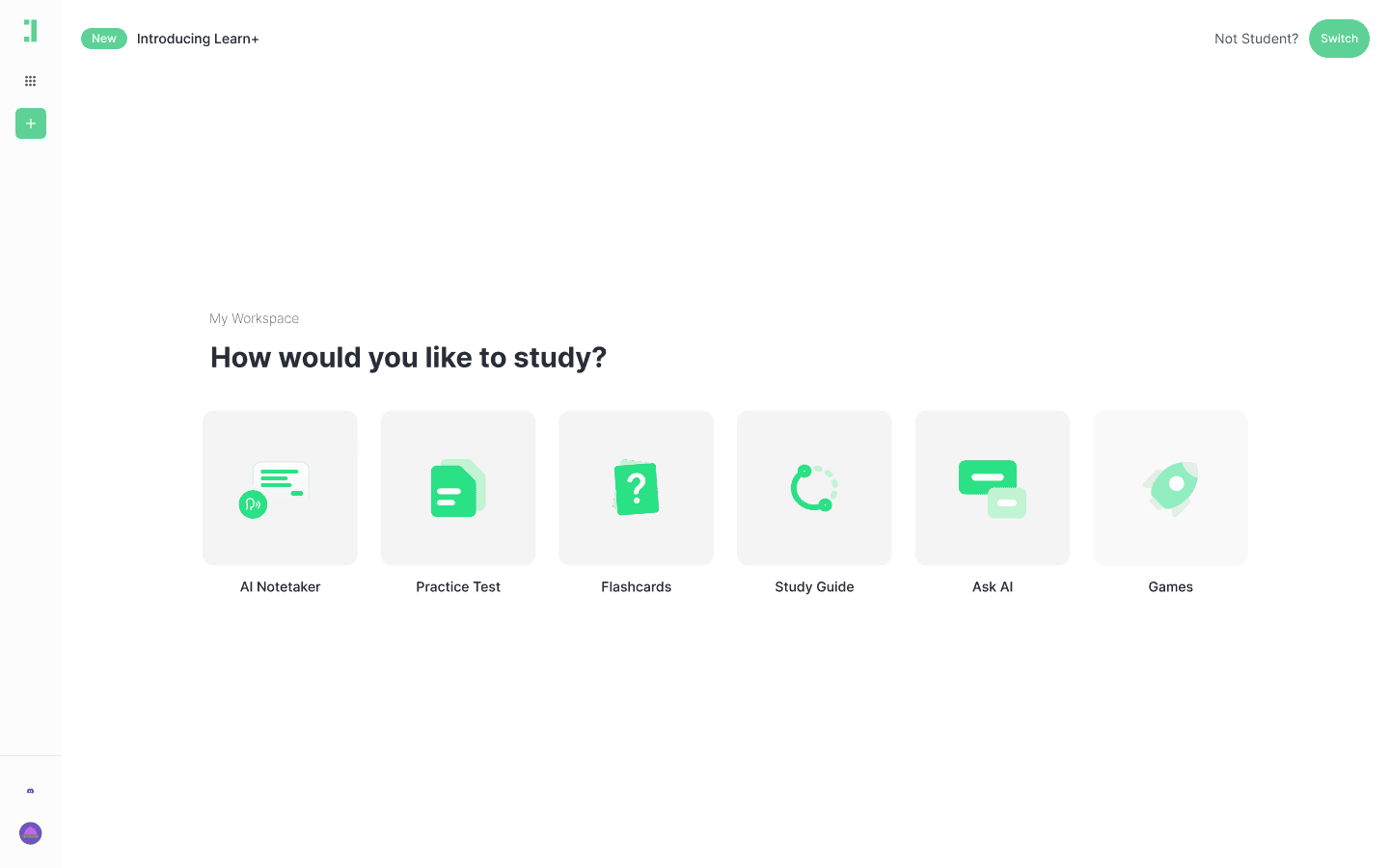
Generate Flashcards with AI Free
What are Introductory Physics flashcards?
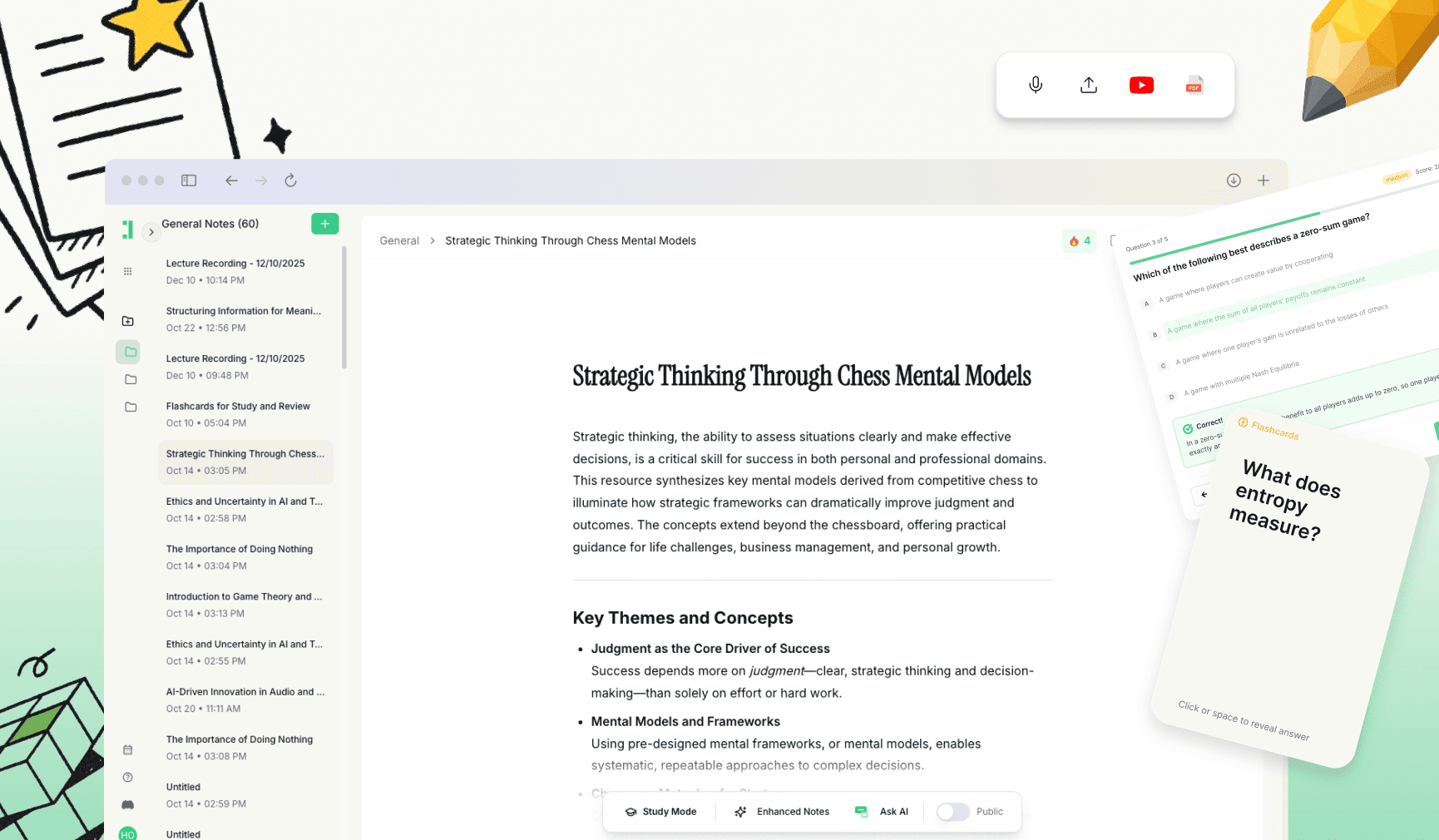
Introductory Physics flashcards are concise study tools designed to help you master the fundamental laws of the universe. They cover essential concepts like kinematics, Newtonian mechanics, work and energy, thermodynamics, and basic electromagnetism. Instead of staring at complex equations in a textbook, these flashcards break down variables, units, and conceptual relationships into bite-sized questions.
By using flashcards, you move away from passive reading and toward active retrieval. Whether you are memorizing the constant for gravity or practicing how to identify force vectors, flashcards force your brain to recall the information from scratch, building the mental pathways needed for exam success.
If you already have lecture notes or slides, Duetoday can generate a clean deck of Introductory Physics flashcards in minutes.
Why flashcards are one of the best ways to study Introductory Physics
Physics is a subject built on cumulative logic; if you don’t understand the definitions and basic units, solving complex word problems becomes impossible. Flashcards are perfect for this because they bridge the gap between theory and application through active recall and spaced repetition.
Remember SI units and fundamental constants without last-minute cramming.
Separate similar concepts like distance vs. displacement or mass vs. weight.
Learn multi-step processes for solving free-body diagrams and energy conservation.
Practice applying specific formulas to find missing variables quickly.
What to include in your Introductory Physics flashcards
The most effective physics flashcards follow the "atomic" rule: one specific idea per card. If a card is too crowded with formulas, you won’t know which part you actually forgot. Focus on transforming your notes into question-based prompts that require a specific answer.
Definitions & Key Terms: "What is inertia?" or "Define a Joule in terms of SI base units."
Processes & Steps: "What is the first step in solving a projectile motion problem?"
Comparisons: "How does an elastic collision differ from an inelastic collision?"
Application: "If the net force on an object is zero, what happens to its velocity?"
Example prompts for your deck include: "State Newton's Second Law," "Write the formula for centripetal acceleration," "What is the area under a velocity-time graph?", and "Define the law of conservation of energy."
How to study Introductory Physics with flashcards
To master physics, you need a system that balances memorization with problem-solving. Start by building a comprehensive deck from your textbook or lecture slides, then move into a structured review cycle.
Begin with a "two-pass" approach. In the first pass, go through your cards to identify which concepts feel intuitive and which feel like a foreign language. In the second pass, focus heavily on the "weak" cards. Spend 15–20 minutes each day reviewing these difficult cards before you start your practice problems. This ensures the formulas are fresh in your mind before you try to apply them.
Make a deck from your notes or generate it automatically from your physics PDF.
Do one quick round to identify weak spots in your conceptual understanding.
Review weak cards (like electromagnetism rules) daily for a few days.
Mix in a few harder derivation cards each session to challenge yourself.
Do a final mixed review of all topics before your midterms or finals.
Generate Introductory Physics flashcards automatically in Duetoday
Manually writing out physics equations and diagrams on paper cards is incredibly time-consuming. Duetoday eliminates the busywork by using AI to scan your study materials and extract the most important information for you.
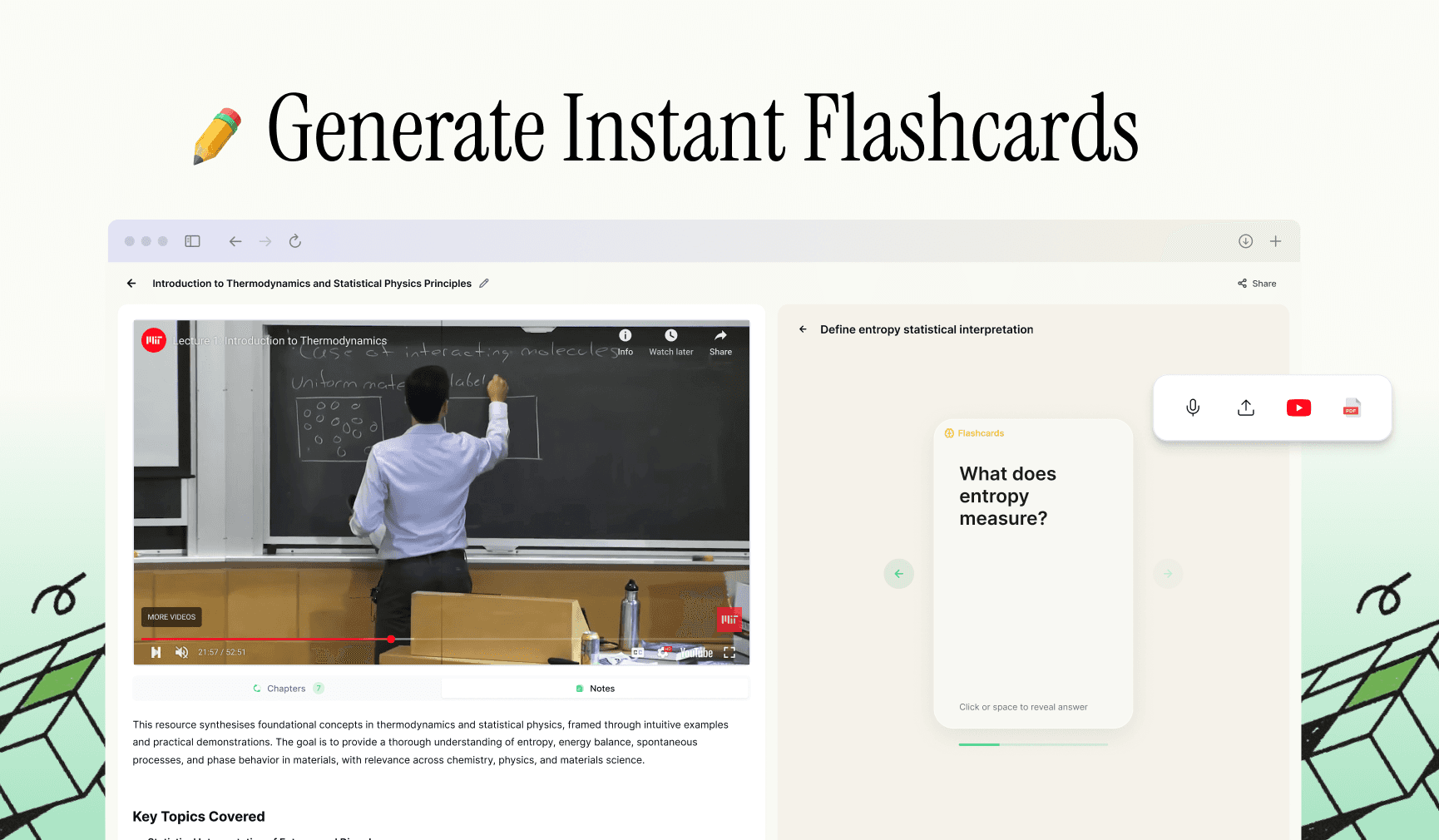
Simply upload your lab reports, lecture transcripts, or textbook chapters. Duetoday’s AI identifies the laws, units, and variables, creating a professional study deck in seconds. You can then edit the cards, add your own hints, and start studying immediately.
Upload or paste your physics notes and slides.
Click Generate Flashcards.
Review, edit, and start mastering physics with active recall.
Generate Introductory Physics Flashcards in Duetoday
Start with your notes and get a deck you can actually use today.
Common Introductory Physics flashcard mistakes
Many students fail to see results because their cards are poorly designed. Avoid these common pitfalls to study more efficiently:
Cards are too long: Don't put an entire derivation on one card; split it into logical steps.
Only memorizing the formula: You must include cards that ask "why" a formula is used or what the variables represent.
Ignoring units: Always include the units (e.g., Newtons, Watts) on your cards to avoid easy mistakes on exams.
No review schedule: Flashcards only work if you see the hard cards more frequently than the easy ones.
FAQ
How many flashcards do I need for Introductory Physics? Most students find that 50–100 cards per unit (e.g., Mechanics) is enough to cover definitions, formulas, and conceptual checks.
What’s the best format for Physics flashcards? A question-on-front, answer-on-back format works best. For formulas, put the name of the law on the front and the equation plus variable definitions on the back.
How often should I review my cards? Daily review is best for new concepts. Once you've mastered a topic, you can move to reviewing it every 3–4 days using spaced repetition.
Should I make cards from a textbook or my own notes? Your own notes are usually better because they reflect what your professor emphasizes, but textbooks are great for finding practice definitions.
How do I stop forgetting formulas after a few days? This is where spaced repetition shines. By reviewing the formula in context with its application via flashcards, you move it from short-term to long-term memory.
What if my flashcards feel too easy? If cards are too easy, you likely have the concept down. Retire those cards and replace them with "application" cards that ask how the concept changes in different scenarios.
Can I generate Physics flashcards from a PDF automatically? Yes, Duetoday can process your Physics PDFs and instantly create a structured deck of flashcards based on the text.
Are digital flashcards better than paper for Physics? Digital cards are often better because they allow for faster organization, include AI generation features, and are always accessible on your phone.
How long does it take to make a full Physics deck? Manually, it can take hours. With Duetoday, it takes less than a minute to generate a deck from your existing materials.
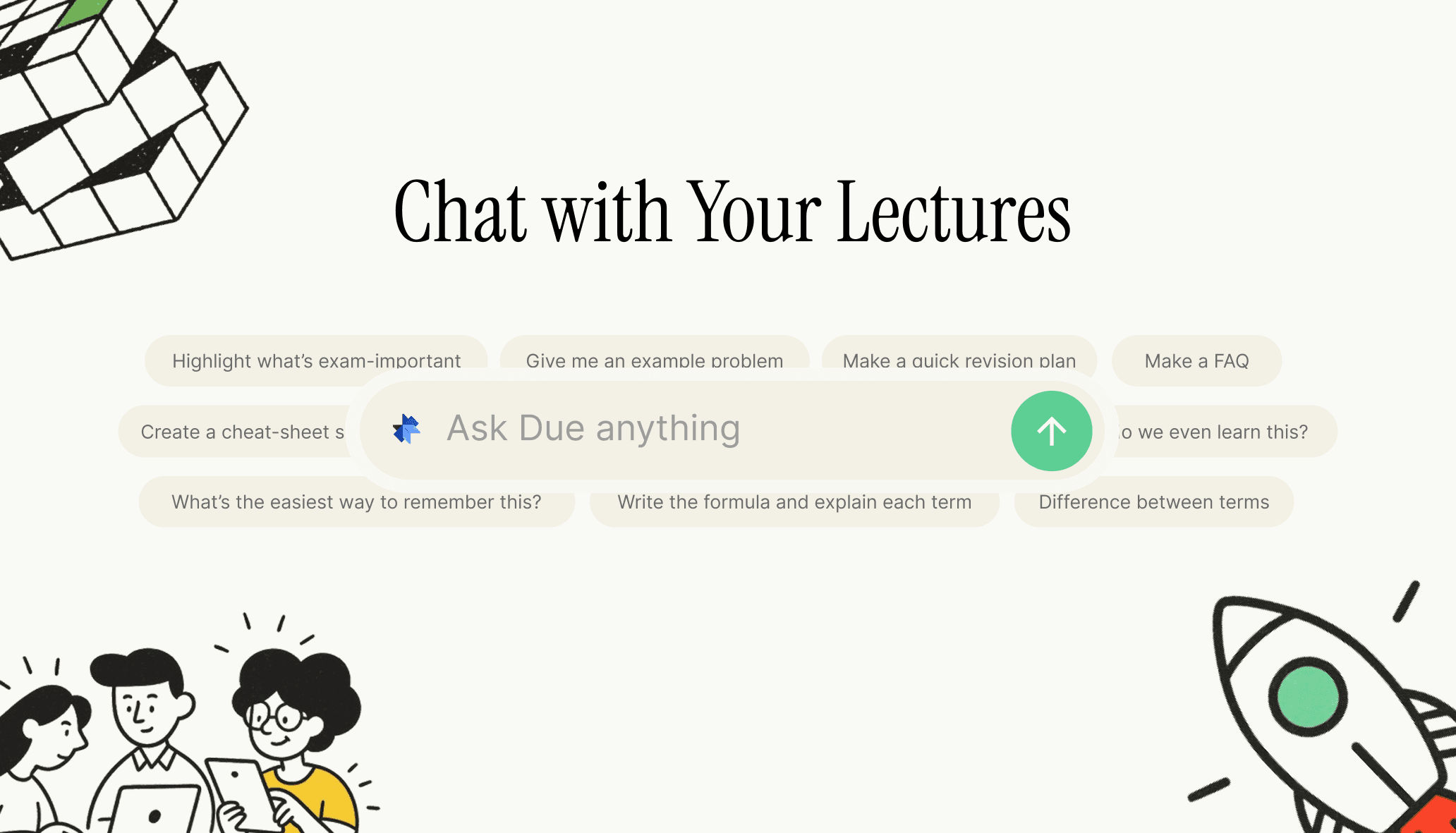
Can Duetoday handle mathematical equations? Yes, Duetoday is designed to recognize and format mathematical concepts and scientific definitions accurately for your study sessions.

Duetoday is an AI-powered learning OS that turns your study materials into personalised, bite-sized study guides, cheat sheets, and active learning flows.