Generate Flashcards for Introduction to Psychology
Make flashcards for Introduction to Psychology using AI to generate study decks from your notes and textbooks.
Generate Flashcards with AI Free
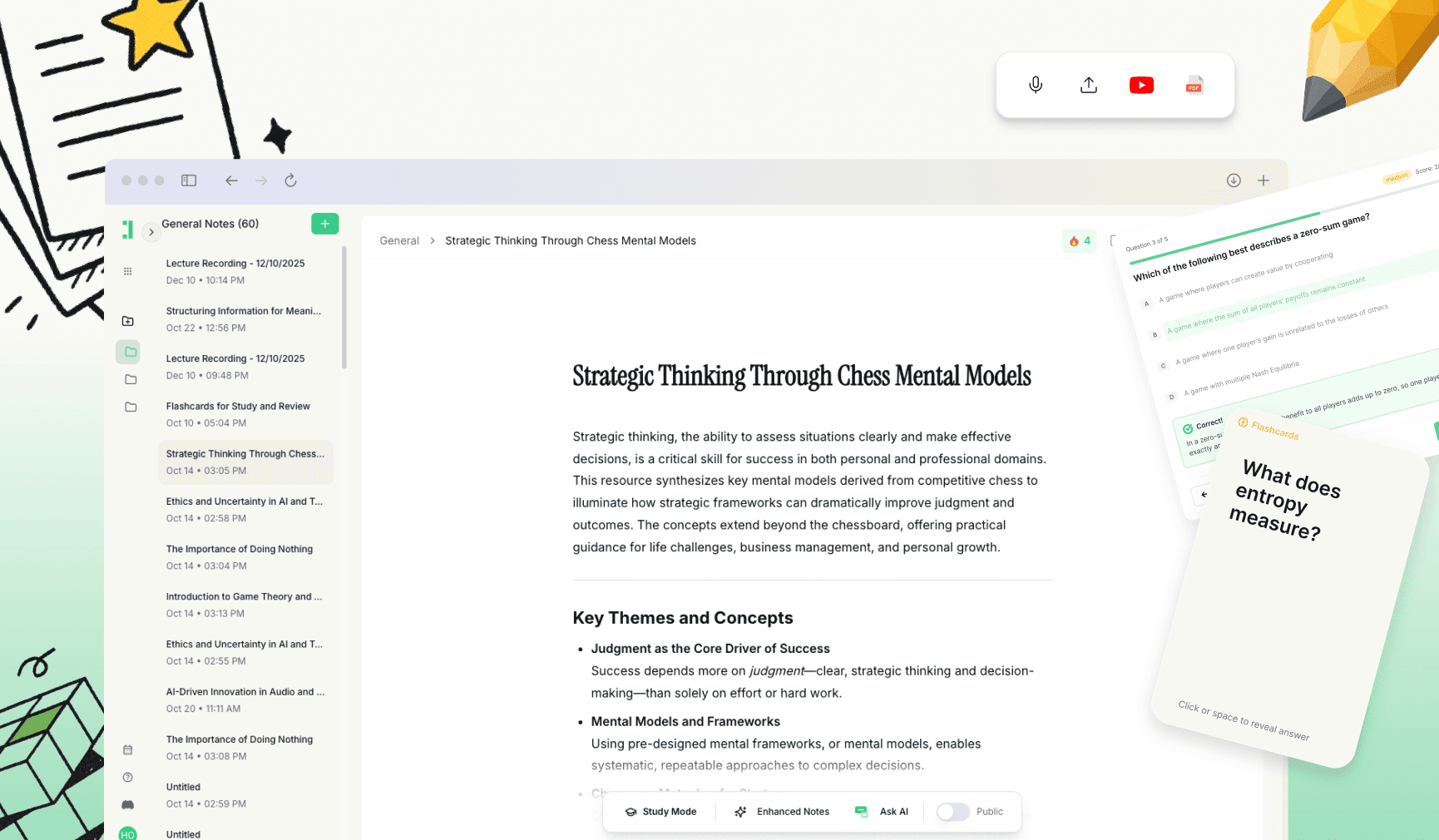
What are Introduction to Psychology flashcards?
Introduction to Psychology flashcards are focused study tools designed to help you master the vast landscape of human behavior and mental processes. They cover everything from foundational theories like Behaviorism and Psychoanalysis to the physiological structures of the brain and complex social behaviors.
Instead of passively rereading thick chapters on developmental stages or cognitive biases, these flashcards force you to retrieve information actively. The outcome is a much deeper level of encoding: you don't just recognize a term like 'neuroplasticity' when you see it; you can define and explain it from memory. If you already have lecture notes or a syllabus, Duetoday can generate a clean, organized deck in minutes.
Why flashcards are one of the best ways to study Psychology
Psychology relies heavily on understanding specific terminology, differentiating between similar theories, and remembering the key figures who shaped the field. Flashcards are uniquely suited for this because they break down dense material into digestible, testable units.
By using active recall and spaced repetition, you move psychological concepts from short-term memory into long-term mastery. This method prevents the 'illusion of competence' where you think you know the material just because it looks familiar on the page.
Memorize key terms like 'Classical Conditioning' vs 'Operant Conditioning' without confusion.
Remember brain structures and their specific functions (e.g., Amygdala vs Hippocampus).
Learn developmental stages (Piaget, Erikson) one step at a time.
Practice applying psychological rules to real-world behavioral scenarios.
What to include in your Psychology flashcards
The secret to effective psychology study is avoiding 'wordy' cards. Each card should focus on one idea to ensure your brain makes a clear connection between the prompt and the answer. We recommend using four specific card types to cover the introductory curriculum.
Definitions & Key Terms: What is the bystander effect? or Define the 'Big Five' personality traits.
Processes & Steps: What are the four stages of Piaget’s cognitive development?
Comparisons: How does a longitudinal study differ from a cross-sectional study?
Application: If a patient has damage to Broca’s area, what specific symptom would they display?
Try these example prompts for your deck: 'Who is the father of Psychoanalysis?', 'What is the purpose of a double-blind study?', 'Explain the difference between sensation and perception', and 'What characterizes the sympathetic nervous system response?'
How to study Psychology with flashcards (a simple system)
Mastering Psychology requires a more strategic approach than just flipping through cards. Use a 'two-pass' system to ensure the information sticks. First, generate your deck from your syllabus or notes, then do a rapid-fire round to identify which theories or terms are tripping you up.
Once you've identified your weak spots, focus your daily reviews on those specific cards. As you get more comfortable, start mixing the cards from different chapters—like social psychology and biological psychology—to force your brain to switch contexts, which is exactly what happens during a final exam.
Generate a deck from your specific psychology notes or PDF.
Do a quick initial pass to mark the cards you find difficult.
Review the 'hard' cards every day for 10 minutes.
Shuffle the deck to avoid 'serial position' bias where you only remember cards in a certain order.
Perform a full review 48 hours before your exam.
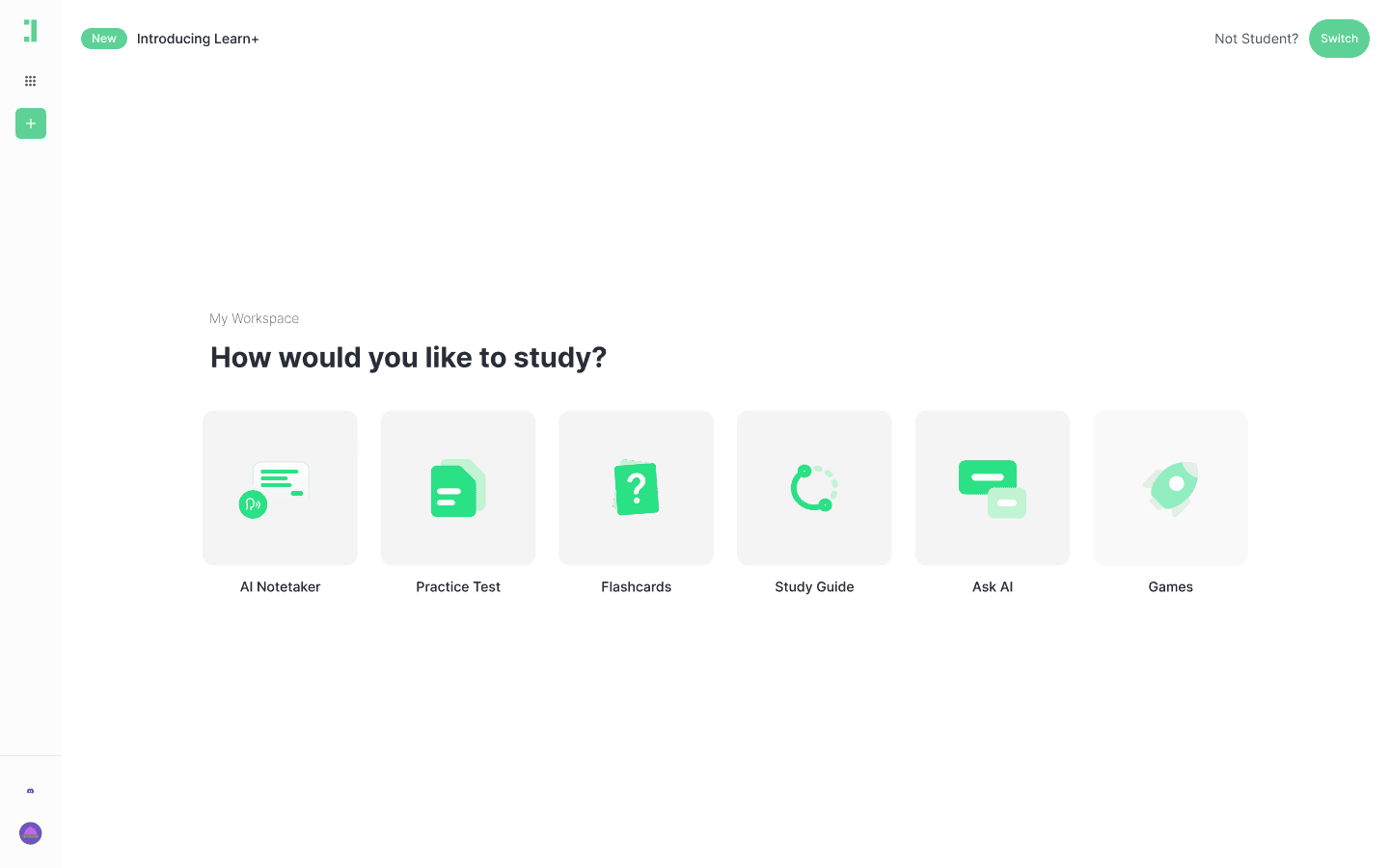
Generate Psychology flashcards automatically in Duetoday
Manually writing out hundreds of cards for Freud, Jung, cognitive dissonance, and the nervous system is exhausting. It takes away the time you should spend actually learning. Duetoday solves this by turning your study material into structured flashcards instantly.
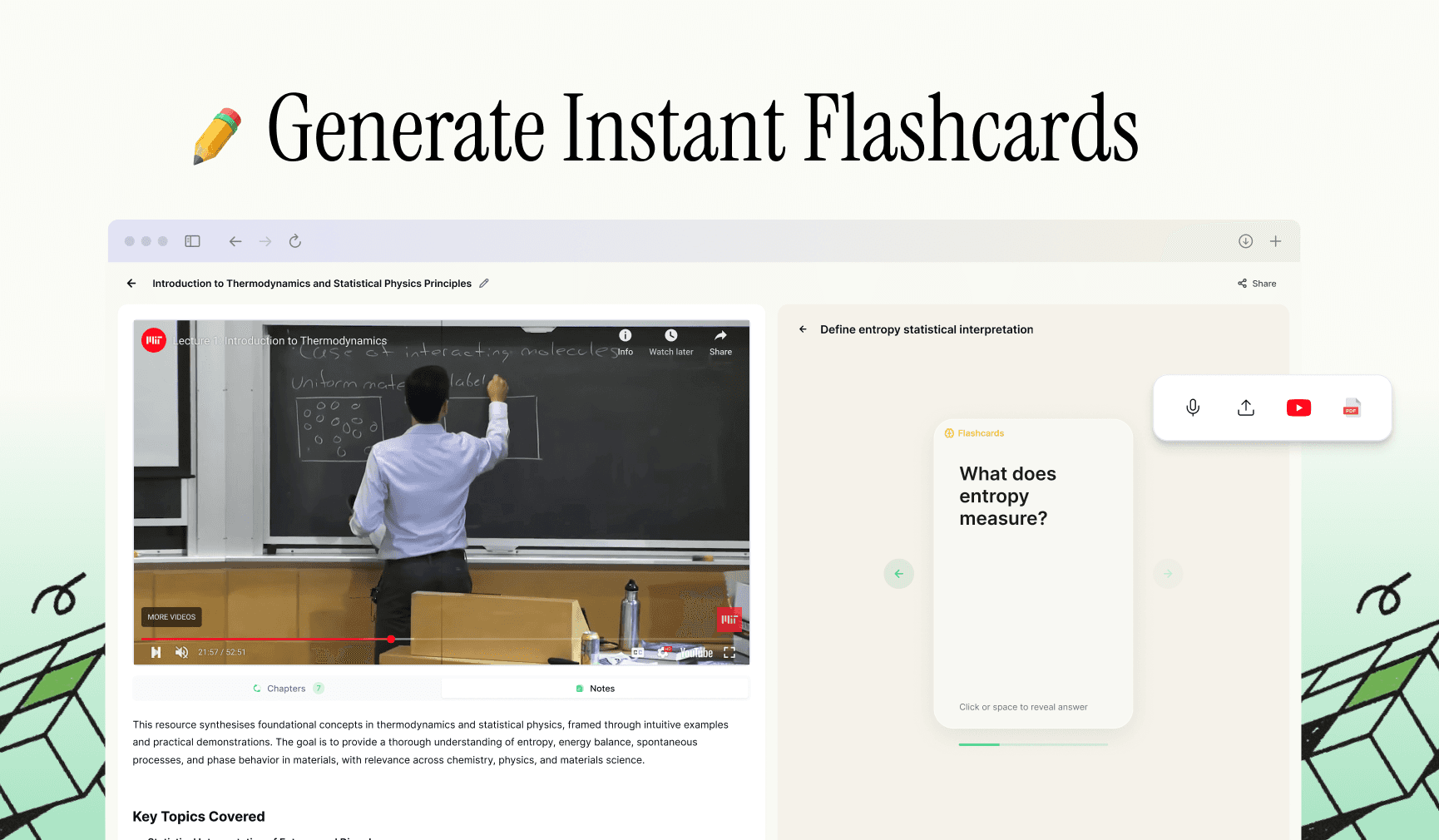
Whether you have a PDF of a textbook chapter or a transcript from a lecture on clinical psychology, Duetoday extracts the core concepts and formats them for optimal recall. You get a professional-grade study deck without the hours of manual entry.
Upload or paste your Psychology material (slides, notes, or PDFs).
Click 'Generate Flashcards'.
Review, edit for personal context, and start studying instantly.
Common Psychology flashcard mistakes (and how to fix them)
Many students create Psychology cards that are essentially paragraphs hidden on the back of a card. This leads to 'recognition' rather than 'recall.' Keep your cards snappy and focused on a single psychological concept.
Cards are too long: If you're defining 'Defense Mechanisms,' make a separate card for each one (Repression, Denial, etc.) rather than one giant list.
Ignoring the 'Why': Don't just memorize the name of a researcher; include a card on why their experiment was significant.
Confusing similar terms: Create specific comparison cards for 'Negative Reinforcement' and 'Punishment' since these are frequently mixed up.
No application: Always include cards that ask how a theory applies to a real-life behavior or clinical case.
Ready to generate your Psychology flashcards?
Stop rereading and start recalling. Upload your Introduction to Psychology materials to Duetoday and get a ready-to-use deck in seconds. Turn your notes into flashcards, master the curriculum, and ace your exam.
FAQ
How many flashcards do I need for Introduction to Psychology? Most intro courses cover 10-15 chapters. You should aim for 30-50 high-quality cards per chapter to cover key terms, theories, and researchers.
What’s the best format for Psychology flashcards? A question-and-answer format is best. Instead of putting 'Dopamine' on the front, ask 'Which neurotransmitter is most associated with reward and pleasure?'
How often should I review my Psychology cards? Use spaced repetition—review new cards daily, then every three days, then weekly as they become easier to remember.
Should I make cards from the textbook or lecture notes? Use both. Textbooks provide formal definitions, while lecture notes often contain the specific examples your professor wants you to know for the exam.
How do I stop forgetting Psychology terms after a few days? This is the 'forgetting curve.' The only way to stop it is through active recall. Don't just read the card; say the answer out loud before flipping it.
What if my flashcards feel too easy? If they are too easy, you are likely using too many hints on the front. Make the questions more challenging or move to 'Application' style questions.
Can I generate Psychology flashcards from a PDF automatically? Yes, with Duetoday you can upload any textbook PDF or lecture slide deck and it will automatically identify and create flashcards for the key concepts.
Are digital flashcards better than paper for Psychology? Digital cards are generally better because they allow for faster organization, the inclusion of diagrams of the brain, and automated spaced repetition scheduling.
How long does it take to make a full Psychology deck? Doing it manually could take hours per chapter. Using Duetoday’s AI generation, you can have a full chapter deck ready in under 60 seconds.
Can Duetoday organize my cards by topic? Yes, you can generate and categorize your decks by specific psychology subfields like Social, Clinical, or Biological psychology for more organized study sessions.

Duetoday is an AI-powered learning OS that turns your study materials into personalised, bite-sized study guides, cheat sheets, and active learning flows.