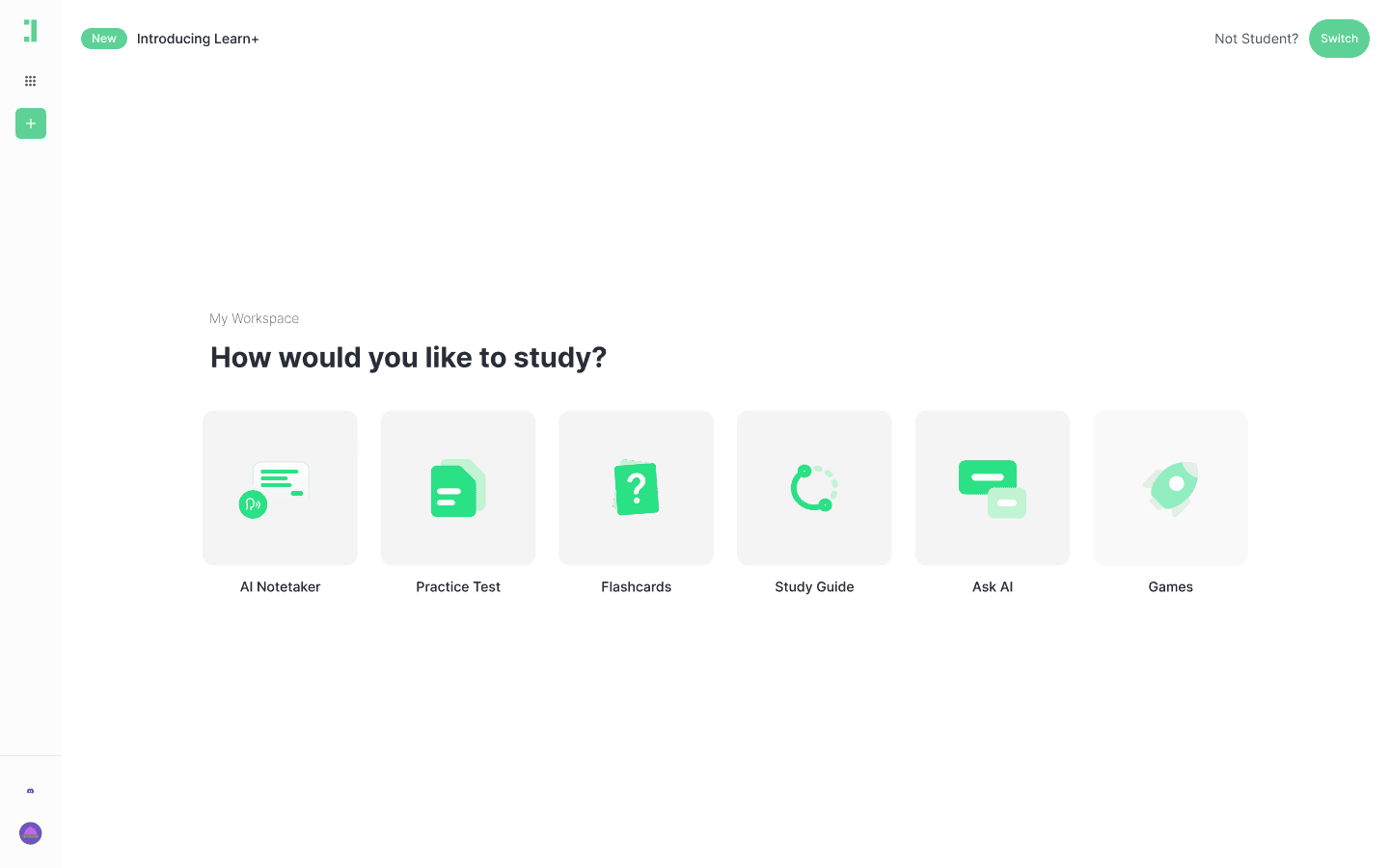
Generate Flashcards for Introduction to Computer Science
Make and generate Introduction to Computer Science flashcards from your notes to master algorithms and programming.
Generate Flashcards with AI Free
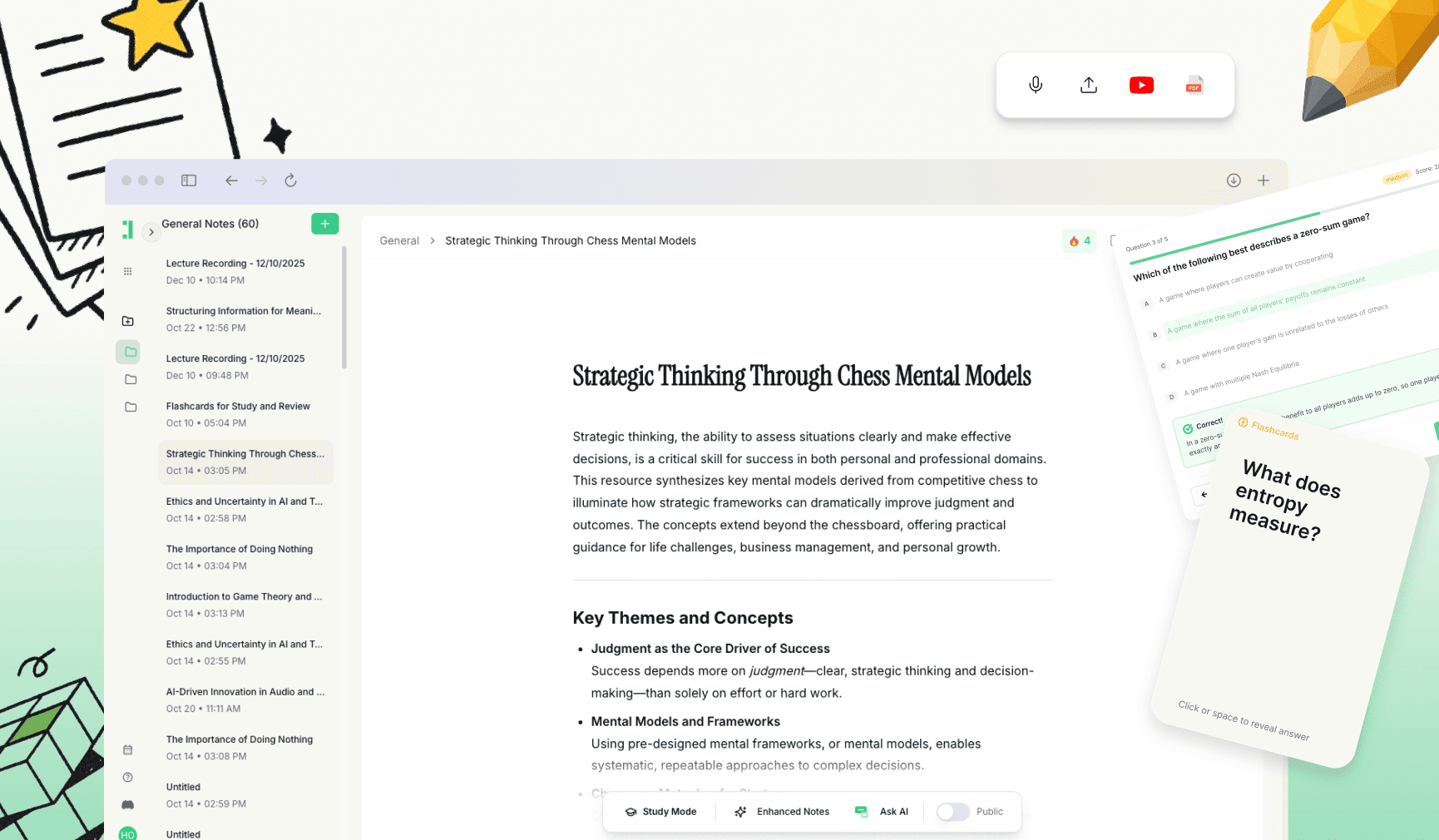
What are Introduction to Computer Science flashcards?
Introduction to Computer Science flashcards are focused study tools designed to break down complex computing concepts—like binary logic, syntax rules, and data structures—into bite-sized, testable questions. Instead of staring at lines of code or dense textbook chapters, these flashcards force you to recall specific information from memory, which is essential for mastering technical subjects.
By using these flashcards, you move from passive reading to active engagement. Whether you are learning Python basics or understanding how an Operating System manages memory, flashcards help you isolate the core logic so you can apply it during lab assignments and exams. If you already have lecture slides or coding notes, Duetoday can generate a clean, organized deck in minutes.
Why flashcards are one of the best ways to study Computer Science
Computer Science relies heavily on understanding both specific vocabulary (syntax and definitions) and procedural logic (how an algorithm works). Flashcards are uniquely suited for this because they bridge the gap between rote memorization and logical application. By testing yourself repeatedly, you build the 'mental muscle memory' needed to write code without constantly checking documentation.
Master Syntax: Remember specific labels, reserved words, and formatting rules without cramming.
Clarify Differences: Easily separate similar concepts like 'Lists vs. Arrays' or 'While loops vs. For loops.'
Learn Logic Steps: Break down the stages of a sorting algorithm or the fetch-decode-execute cycle.
Speed Up Debugging: Practice recognizing error types and their causes building faster troubleshooting skills.
What to include in your CS flashcards
Effective CS cards follow the 'atomic' rule: one concept per card. If a card is too busy, you'll struggle to know if you actually got it right. Focus on converting your notes into direct questions that simulate how a professor or a technical interviewer might quiz you.
Definitions & Key Terms: What is encapsulation? or Define a pointer in C++.
Processes & Steps: What are the four steps of the software development life cycle?
Logic & Math: What is the binary representation of 12? or What does the XOR operator do?
Code Snippets: What is the output of this loop? or Which line in this block will cause a syntax error?
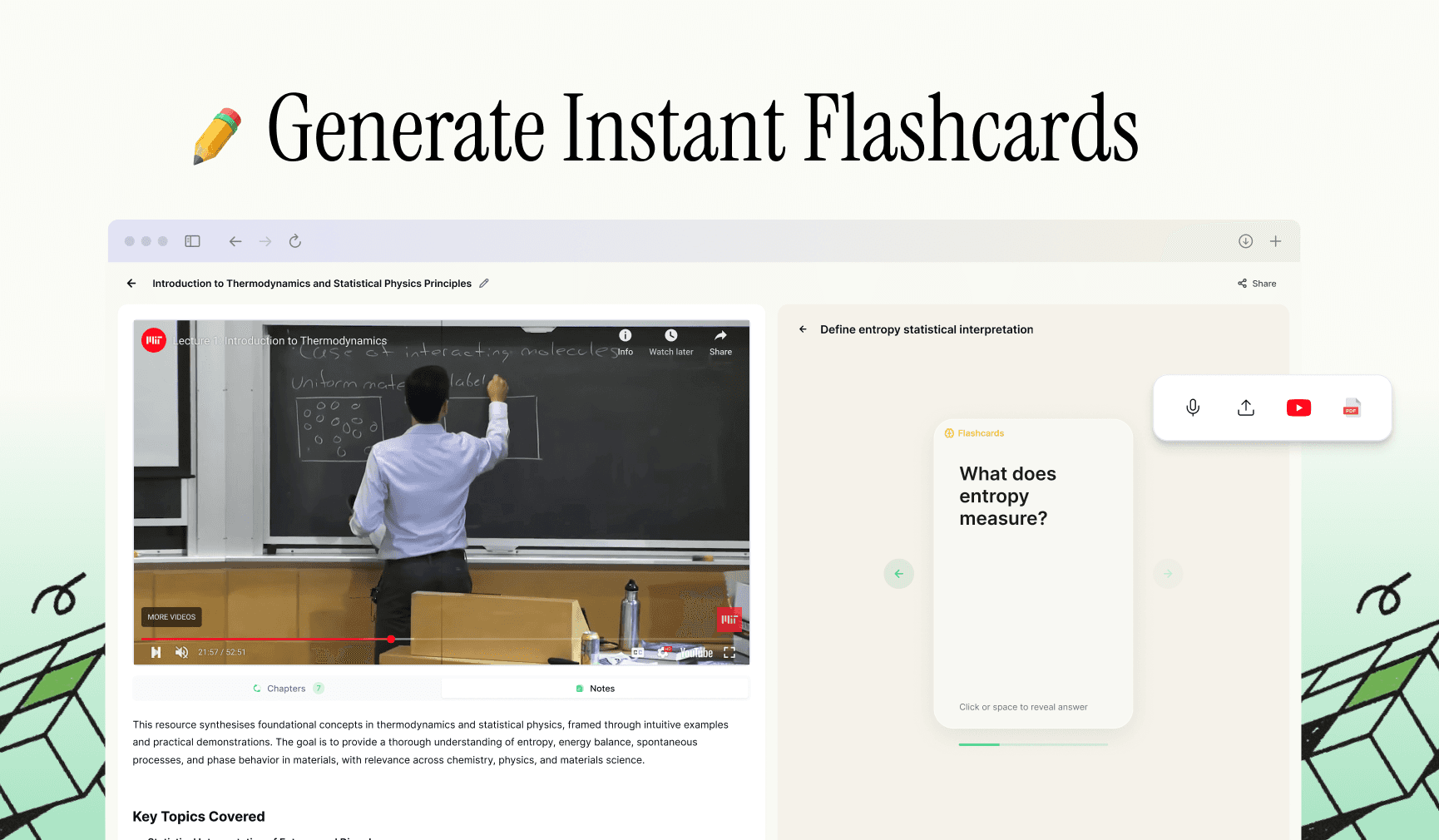
How to study Computer Science with flashcards
Avoid the trap of studying for three hours straight. Computer Science is best learned through high-frequency, short-duration reviews. Start by generating a deck from your latest lecture or textbook chapter, then use a 'phased' approach: use the first pass to identify what you don't know, and the subsequent passes to drill those difficult concepts into your long-term memory.
Generate a deck from your lecture notes or coding snippets in Duetoday.
Do a quick 'speed round' to filter cards into 'Easy' and 'Hard' piles.
Review the 'Hard' cards daily, especially before your next coding lab.
Shuffle your deck periodically to ensure you aren't just memorizing the order of the questions.
Try to manually write the code for the concept once you've successfully recalled the card.
Generate CS flashcards automatically in Duetoday
Writing out flashcards by hand for 100+ programming terms is a waste of your coding time. Duetoday simplifies this by using AI to scan your materials and extract the most important technical details for you. Simply upload your PDFs, lecture slides, or even your Python scripts, and get a study-ready deck instantly.
Upload your Introduction to Computer Science materials.
Click 'Generate Flashcards.'
Review the AI-generated questions and start studying immediately.
Common CS flashcard mistakes (and how to fix them)
Many students make the mistake of putting a whole block of code on a single card. This makes it impossible to 'pass' the card unless you memorize it word-for-word. Instead, ask about the purpose of the code. Also, don't neglect the 'Why'—knowing what a compiler does is good, but knowing why it's different from an interpreter is better for your grades.
Too much code: Split long snippets into smaller logic checks.
Neglecting time complexity: Always include the Big O notation for algorithms.
Forgetting the 'Why': Add cards that compare two different methods of solving a problem.
No schedule: Use an automated system to surface difficult cards more frequently.
FAQ
How many flashcards do I need for Intro to CS? Usually, 30-50 cards per major topic (like 'Conditionals' or 'Loops') is sufficient to cover the basics without feeling overwhelmed.
What’s the best format for CS flashcards? Question and Answer style works best, ideally with a code snippet on the front and the expected output or explanation on the back.
How often should I review my CS cards? Daily review is best for syntax and definitions. Once you feel confident, you can move to once every three days.
Should I make cards from my textbook or my code? Use both. Textbooks provide the 'why' (theory), while your code provides the 'how' (application).
How do I stop forgetting logic after a few days? This is common. Spaced repetition—reviewing a card just as you are about to forget it—is the only way to build permanent memory.
Can I generate CS flashcards from a PDF automatically? Yes, Duetoday can read your textbook chapters or lecture PDFs and convert them into organized question-and-answer pairs.
Are digital flashcards better than paper for CS? Yes, because digital cards allow you to easily paste code snippets and use automated scheduling for better recall.
How long does it take to make a full CS deck? Manually it takes hours, but with Duetoday, you can generate a full deck in under 60 seconds.
Can Duetoday organize my flashcards by programming language? Absolutely, you can create separate folders or decks for Python, Java, C++, or general Theory.

Duetoday is an AI-powered learning OS that turns your study materials into personalised, bite-sized study guides, cheat sheets, and active learning flows.