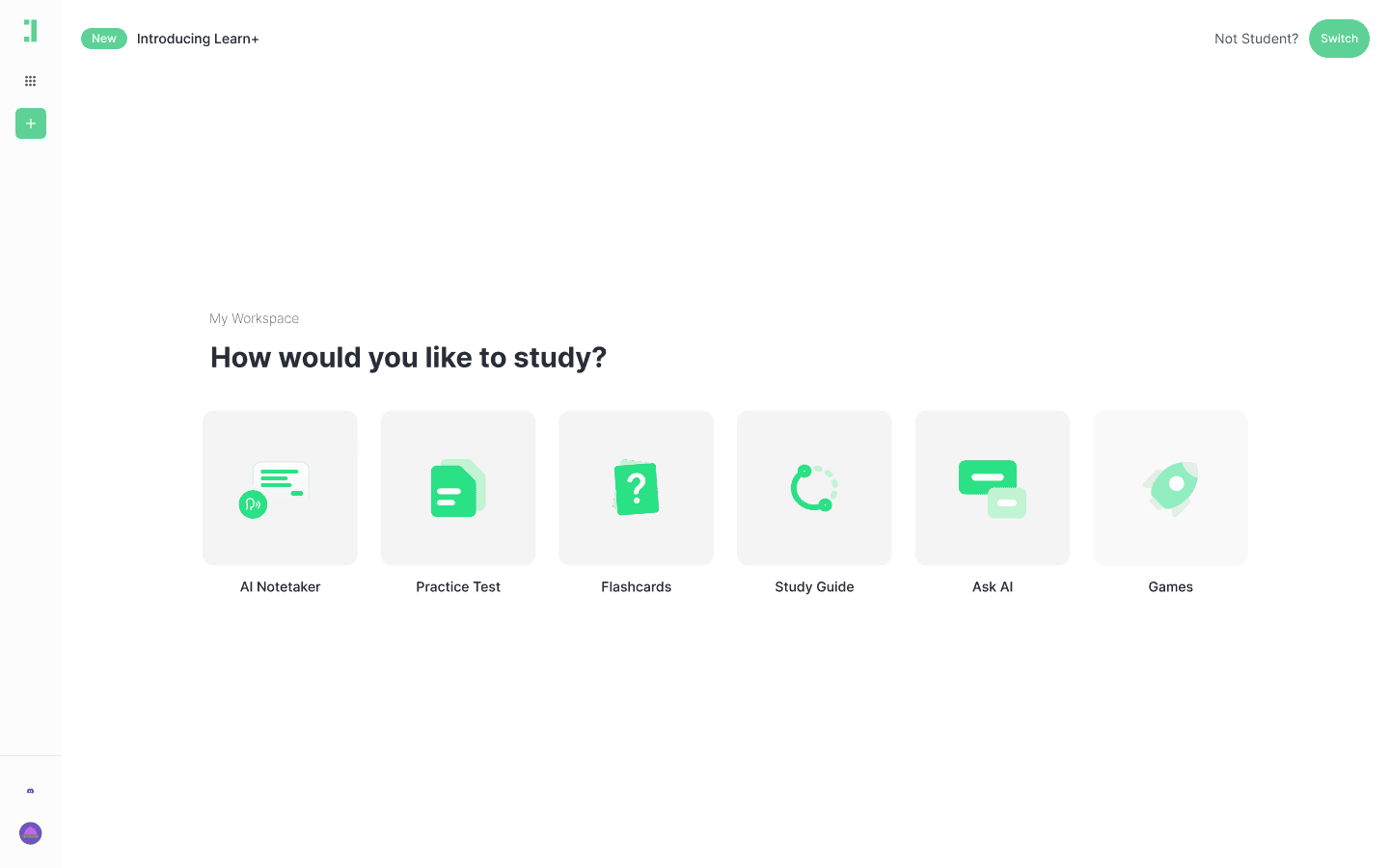
Generate Flashcards for International Relations
Easily make or generate International Relations flashcards from your notes to master theories and global politics.
Generate Flashcards with AI Free
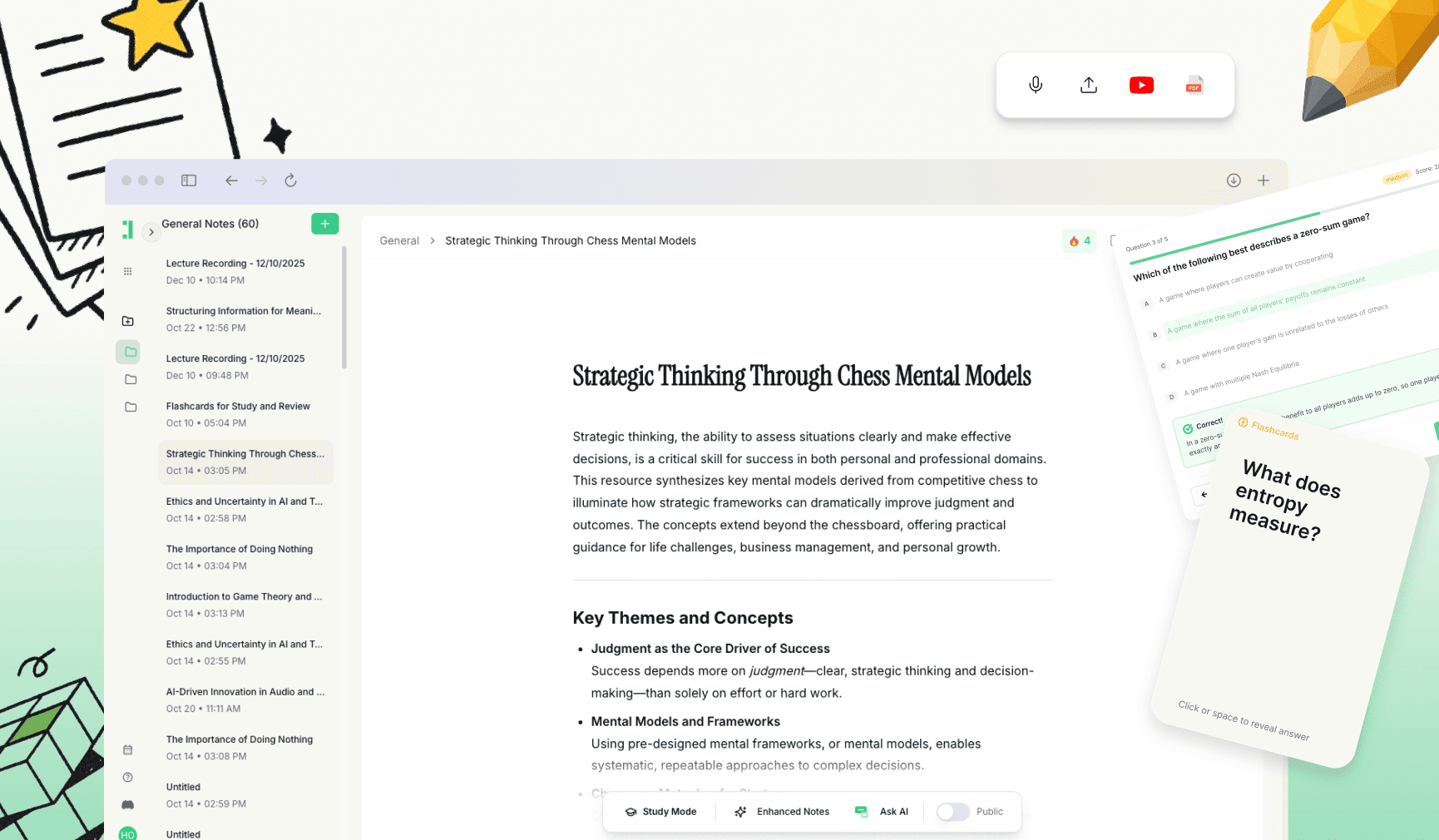
Generate Flashcards for International Relations
Turn your notes, PDFs, slides, or lectures into International Relations flashcards so you can review faster and remember more. Whether you are studying realism, liberal institutionalism, or specific historical treaties, Duetoday helps you synthesize complex geopolitical concepts into manageable study sessions.
Generate International Relations FlashcardsUpload notes / paste text
In Duetoday, the process is simple: you upload your syllabus or reading materials, our AI identifies key themes, and it generates a structured deck. You can then review, edit, and study using active recall to ensure you are ready for your next exam.
What are International Relations flashcards?
International Relations (IR) flashcards cover a broad spectrum of global politics, including theoretical frameworks, key historical events, diplomatic protocols, and the roles of international organizations. Unlike simple vocabulary cards, these flashcards help you connect actors, interests, and outcomes in the global arena.
Instead of passively rereading dense textbooks on constructivism or the Cold War, you test yourself on core arguments and causal relationships. If you already have notes, Duetoday can generate a clean deck in minutes, helping you focus on the nuances of global power dynamics.
Why flashcards work for International Relations
International Relations requires a mix of rote memorization for dates and treaties, and deep conceptual understanding for theories. Flashcards bridge this gap by forcing you to explain complex ideas succinctly. They are perfect for master the 'who, what, where, and why' of global affairs.
By using active recall and spaced repetition, you ensure that high-level concepts move from short-term memory to long-term understanding without the exhaustion of cramming. Practice with focused prompts to strengthen your ability to analyze current events through various theoretical lenses.
Remember key theoretical terms (Anarchy, Hegemony, Sovereignty) without cramming
Separate similar concepts (e.g., Neorealism vs. Neoliberalism)
Learn diplomatic processes step-by-step (Treaty formation, UN resolutions)
Practice applying IR themes to historical and current case studies
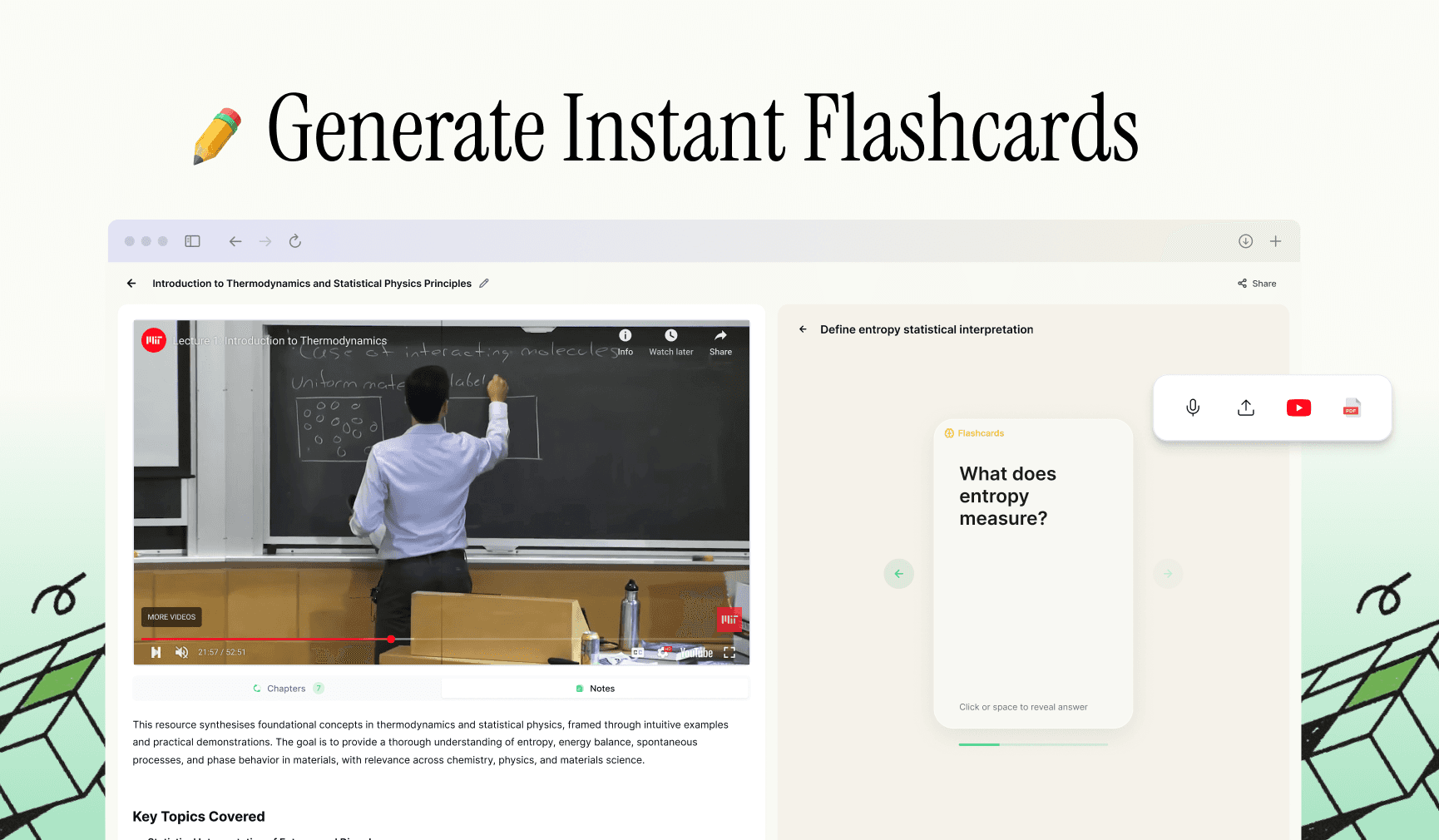
What to include in your International Relations flashcards
Effective IR flashcards should follow the principle of 'one idea per card.' Avoid cluttering a single card with an entire chapter's summary. Instead, focus on specific questions that trigger analytical thinking. This helps you build a network of knowledge rather than isolated facts.
Definitions & key terms: What is the Westphalian system? Define Soft Power.
Processes & steps: How does a bill become an international law? What are the stages of conflict escalation?
Comparisons: How does Liberalism differ from Realism regarding state cooperation?
Application: Apply the security dilemma to the context of the Cold War arms race.
How to study International Relations with flashcards
The best way to tackle IR is through a 'two-pass' approach. First, generate your deck from your lecture notes or assigned readings to establish a foundation. Then, move into specialized review rounds where you focus on the cards that challenge your understanding of complex theories.
Make a deck from your notes (or generate it from content).
Do one quick round to find weak spots in theory or history.
Review weak cards daily to solidify the 'Great Debates' of IR.
Mix in harder application cards to test your analytical skills.
Do a final mixed review before your midterms or finals.
Generate International Relations flashcards automatically in Duetoday
Making cards manually for a subject as vast as International Relations is slow and often leads to inconsistent study habits. Duetoday streamlines this by extracting the most relevant information from your documents instantly.
Upload or paste your International Relations material
Click Generate Flashcards
Review, edit, and start studying
Common International Relations flashcard mistakes
Many students create cards that are too wordy, making them difficult to review quickly. Another mistake is focusing solely on names and dates while ignoring the underlying 'why' of political actions. Ensure your cards require you to explain the significance of an event, not just the year it happened.
Cards are too long: split 'Realism' into several cards covering its core assumptions.
Only memorizing dates: add prompts like 'Why did the Treaty of Versailles fail?'
Confusing similar theories: use comparison cards to contrast Neorealism and Neoliberalism side-by-side.
FAQ
How many flashcards do I need for International Relations? It depends on the scope of your course, but a typical unit usually requires 50-100 cards to cover theories, key actors, and major historical events.
What is the best format for IR flashcards? Question-and-answer format works best. For example: 'What is the core assumption of Realism?' on the front, and 'The international system is anarchic' on the back.
Can I generate IR flashcards from a PDF automatically? Yes, Duetoday allows you to upload PDFs of your textbooks or journal articles and transforms the content into flashcards instantly.
Should I include case studies on my flashcards? Absolutely. Case studies are essential for IR. Create cards that link specific theories to events like the Cuban Missile Crisis or the Rwandan Genocide.
How often should I review my International Relations deck? Use spaced repetition—review daily when first learning a concept, then expand to every 3-5 days once the material feels familiar.
Are digital flashcards better than paper for IR? Digital cards are generally better because they allow for easy organization of vast topics and use algorithms to show you the hardest cards more frequently.
How long does it take to make a full IR deck? Manually it could take hours, but with Duetoday's AI generation, you can have a comprehensive deck ready in under a minute.
Can Duetoday organize my cards by theory? Yes, you can generate different decks for different topics like 'Security Studies,' 'Global Economy,' or 'IR Theory' to keep your studying organized.

Duetoday is an AI-powered learning OS that turns your study materials into personalised, bite-sized study guides, cheat sheets, and active learning flows.