Generate Flashcards for International Law
Easily make or generate International Law flashcards from your notes. A complete guide to mastering legal subjects with AI.
Generate Flashcards with AI Free
What are International Law flashcards?
International Law flashcards are targeted study tools designed to help you master the complex framework of rules, norms, and standards that govern the relations between nations. They cover essential areas such as treaty interpretation, state sovereignty, diplomatic immunity, and the jurisdiction of international courts. By breaking down dense legal texts into manageable questions, these flashcards allow you to test your knowledge of specific case law and international conventions.
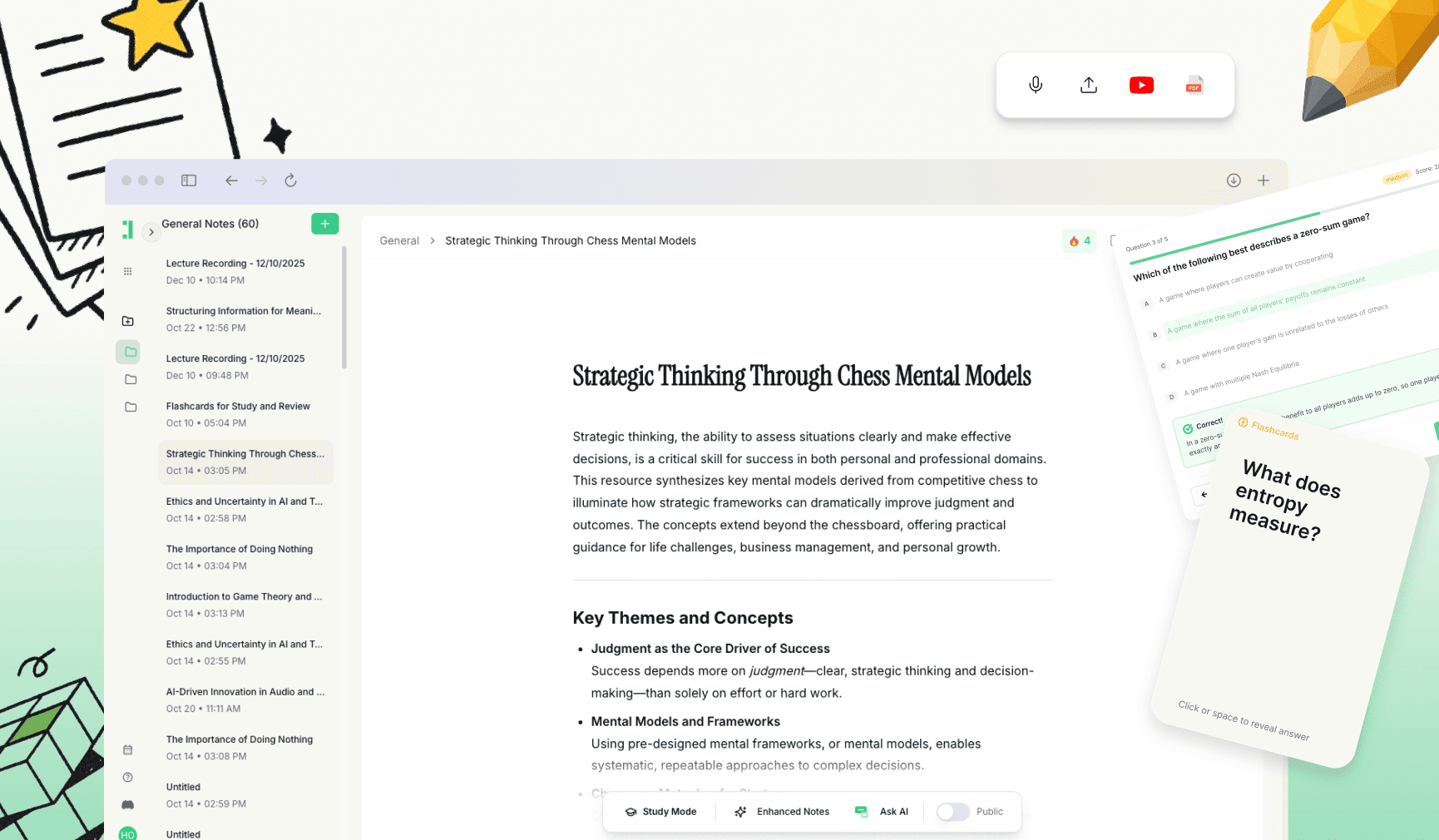
The primary outcome of using these cards is moving beyond passive reading. Instead of just highlighting a textbook, you are actively challenging your brain to recall specific legal principles. If you already have lecture notes or case summaries, Duetoday can generate a clean, organized deck in minutes, allowing you to focus on learning rather than formatting.
Why flashcards are one of the best ways to study International Law
International Law requires a unique blend of rote memorization and conceptual application. You need to remember specific treaty articles while also understanding how they apply to modern geopolitical conflicts. Flashcards are perfect for this because they force you to practice active recall—the most effective way to move information from short-term to long-term memory.
By using a spaced repetition approach, you can ensure that you are reviewing the most difficult legal concepts (like jus cogens or state responsibility) more frequently than the ones you already know. This prevents the forgetting curve that often happens after a long lecture.
Memorize key treaty articles and dates without cramming.
Separate similar concepts like Monism vs. Dualism.
Learn the steps of international dispute resolution.
Practice applying legal rules to specific state-actor scenarios.
What to include in your International Law flashcards
To make your study sessions effective, your flashcards should follow the one idea per card rule. Avoid cluttering a single card with an entire case summary; instead, focus on the specific legal principle or the ratio decidendi. This keeps your brain focused and ensures you truly understand each component of the law.
Using a mix of card types helps cover different cognitive levels, from basic definitions to high-level application of international standards.
Definitions & Key Terms: What is the principle of Non-Refoulement?
Processes & Steps: What are the stages of treaty formation?
Comparisons: How does the ICJ differ from the ICC in terms of jurisdiction?
Application: When can a state claim self-defense under Article 51 of the UN Charter?
Example prompts for your deck include: Define Pacta Sunt Servanda, What are the four criteria for statehood under the Montevideo Convention? and Explain the difference between de jure and de facto recognition.
How to study International Law with flashcards
The best way to tackle a heavy subject like International Law is through a two-pass approach. Start by generating or building your deck based on your weekly readings. In your first pass, go through the cards slowly to ensure you understand the why behind each answer. In the second pass, focus on speed and accuracy to build the mental pathways required for exams.
Keep your sessions short but consistent. It is better to review your International Law cards for 15 minutes every day than to do a three-hour marathon once a week. This consistency helps the legal Latin and complex terminology stay fresh in your mind.
Generate a deck from your case briefs and treaty summaries.
Perform a quick diagnostic round to identify which conventions you struggle with.
Review high-difficulty cards daily to reinforce memory.
Mix in older cards to ensure you don't forget the foundations of sovereignty.
Do a final mixed review of all topics before your final exam.
Generate International Law flashcards automatically in Duetoday
Writing out legal flashcards by hand is incredibly time-consuming. When you have hundreds of cases to get through, you can't afford to spend hours just making the cards. Duetoday solves this by turning your study materials into interactive study tools instantly.
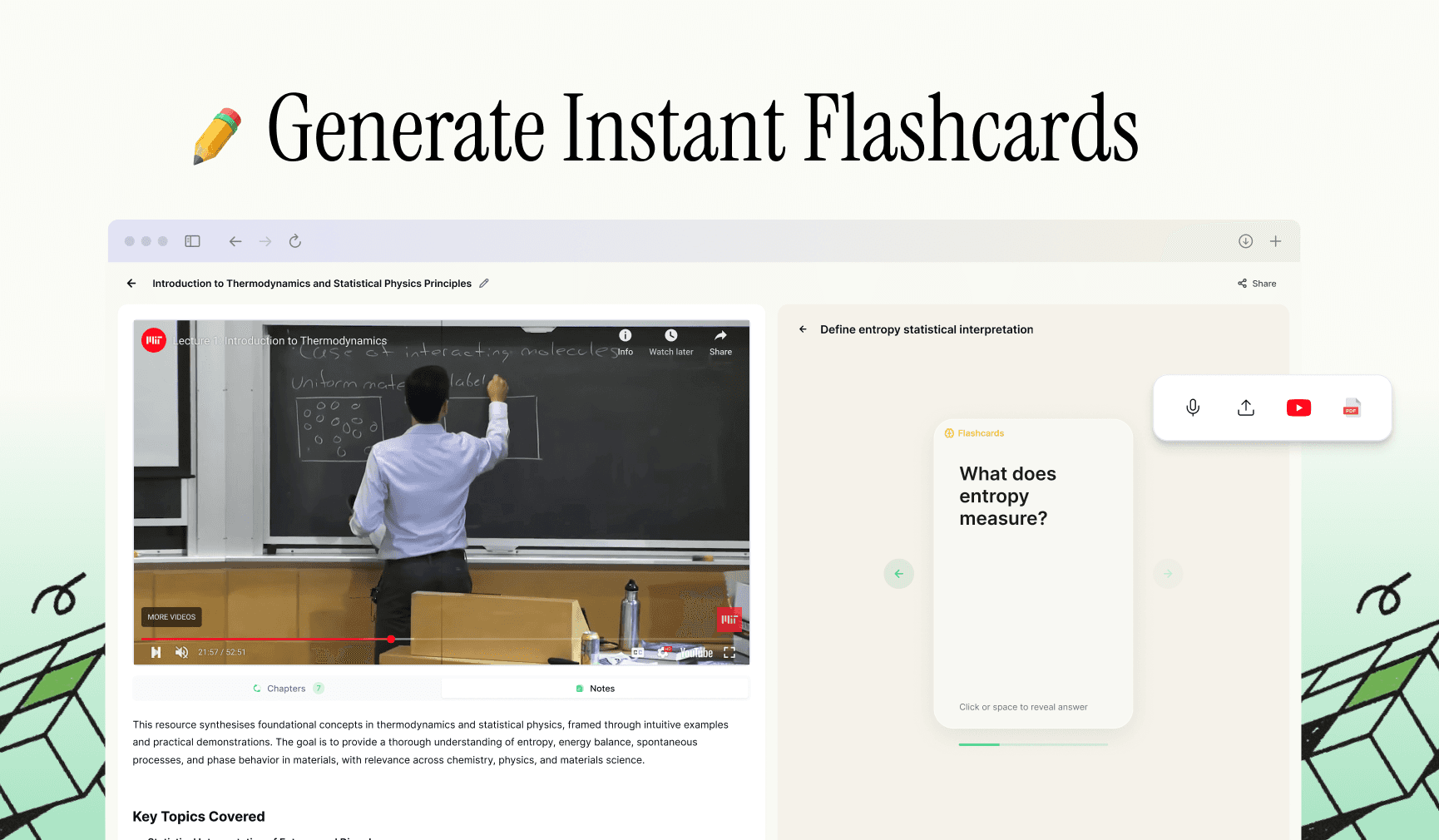
Whether you have a PDF of the UN Charter, lecture slides on the Law of the Sea, or your own handwritten notes, Duetoday's AI identifies the most important legal concepts and creates a structured deck for you. This allows you to spend your time studying the law rather than copying it.
Upload your International Law PDFs, slides, or notes.
Click Generate Flashcards.
Edit the cards for any specific nuances and start your review.
Common International Law flashcard mistakes
One of the biggest mistakes law students make is creating cards that are too wordy. If a card contains a whole paragraph, you aren't testing recall; you're testing reading comprehension. Keep your cards punchy and specific. Another mistake is neglecting the why—make sure you have cards that ask about the reasoning behind a court's decision, not just the name of the case.
Cards are too long: Split complex doctrines into multiple simple questions.
Only memorizing names: Ensure you include cards that ask for the legal significance of a case.
Ignoring customary law: Don't just focus on treaties; include cards on state practice and opinio juris.
No scheduled review: Spaced repetition only works if you actually return to the cards.
Ready to generate your International Law flashcards?
Stop rereading your textbooks and start testing your knowledge. Upload your notes, generate a professional deck, and master the world of International Law with Duetoday.
FAQ
How many flashcards do I need for International Law? While it depends on the course depth, a standard semester-long course usually requires 150-300 cards to cover all major treaties, cases, and principles effectively.
What’s the best format for International Law flashcards? Question and answer format is best. Use the front for a legal term or case name, and the back for the definition or the specific legal rule established.
How often should I review International Law flashcards? Aim for daily reviews of your new or weak cards, and a weekly review of the entire deck to keep older concepts like statehood criteria fresh.
Should I make cards from a textbook, lecture notes, or slides? A mix is best. Use textbooks for exact treaty language and lecture notes for the specific interpretations emphasized by your professor.
How do I stop forgetting International Law after a few days? Use spaced repetition. By reviewing cards at increasing intervals (1 day, 3 days, 1 week), you move the data into your long-term memory.
What if my flashcards feel too easy or too hard? If they are too easy, you might be making them too obvious; try adding How or Why questions. If they are too hard, break the information down into smaller pieces.
Can I generate International Law flashcards from a PDF automatically? Yes, Duetoday is designed to read your law PDFs and extract the most relevant legal points to create a deck instantly.
Are digital flashcards better than paper for International Law? Yes, because digital tools allow for better organization, the ability to search your cards, and built-in spaced repetition algorithms.
How long does it take to make a full International Law deck? Manually, it can take hours or days. With Duetoday, you can generate a comprehensive deck in a matter of seconds after uploading your notes.
Can Duetoday generate and organize my flashcards for me? Absolutely. It handles the extraction, formatting, and categorization so you can start studying with active recall immediately.

Duetoday is an AI-powered learning OS that turns your study materials into personalised, bite-sized study guides, cheat sheets, and active learning flows.