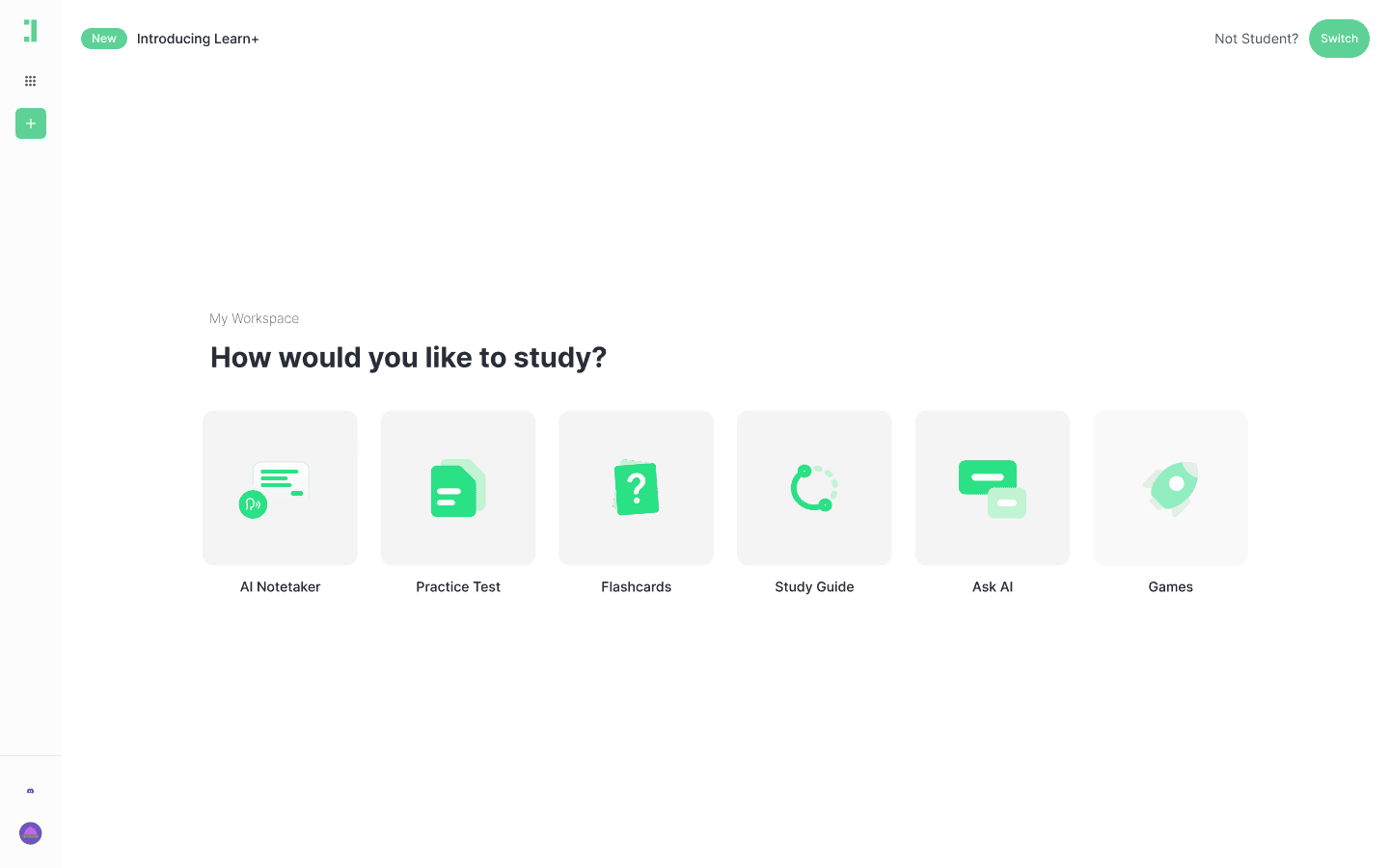
Generate Flashcards for Intellectual Property Law
Make Intellectual Property Law flashcards from your notes. Generate custom study decks for patents and copyright law.
Generate Flashcards with AI Free
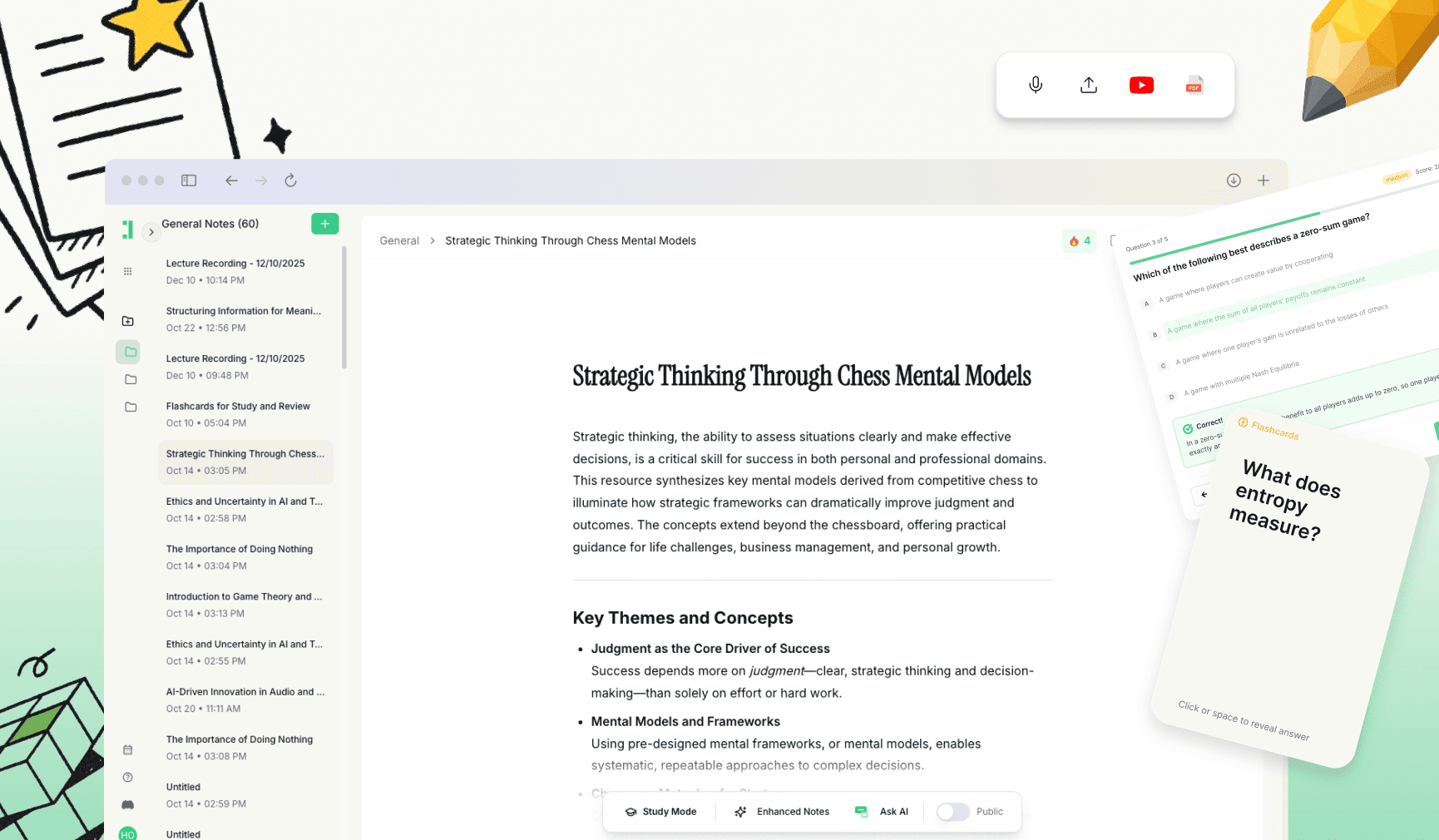
What are Intellectual Property Law flashcards?
Intellectual Property (IP) Law flashcards are targeted study tools designed to help you master the complex legal frameworks surrounding patents, trademarks, copyrights, and trade secrets. These flashcards break down dense statutes, case law precedents, and filing requirements into manageable prompts. Instead of wading through hundreds of pages of textbooks, you focus on the specific elements of infringement or the criteria for patentability.
The ultimate goal is to move beyond passive reading. By using IP Law flashcards, you force your brain to retrieve specific legal tests—like the 'likelihood of confusion' in trademark law or the 'fair use' factors in copyright—ensuring you can apply these concepts during exams or real-world legal analysis. If you already have case briefs or lecture slides, Duetoday can generate a clean deck in minutes.
Why flashcards are one of the best ways to study Intellectual Property Law
IP Law requires a mix of rote memorization (statutory deadlines and durations) and high-level conceptual application (originality and non-obviousness). Flashcards bridge this gap by using active recall, which strengthens the neural pathways associated with these legal terms.
Remember key terms without cramming: Master the difference between 'utility' and 'design' patents.
Separate similar concepts: Easily distinguish between Trademark Infringement vs. Dilution.
Learn processes step-by-step: Memorize the stages of the patent prosecution cycle or the DMCA takedown process.
Practice applying rules: Quickly recall the four-factor test for Copyright Fair Use.
What to include in your Intellectual Property Law flashcards
Effectiveness in legal study comes from the 'one idea per card' rule. Your cards should be question-based and focus on specific triggers for legal action or defense. This prevents 'recognition bias' where you think you know the material just because it looks familiar.
Definitions & Key Terms: What is the 'Work Made for Hire' doctrine?
Processes & Steps: What are the three requirements for a patentable invention?
Comparisons: How does 'Trade Secret' protection differ from 'Patent' protection?
Application: What happens if a trademark becomes generic?
Example Prompts:
• Define 'Secondary Meaning' in trademark law.
• What is the duration of copyright for an individual author?
• List the four factors of the Fair Use defense.
• What constitutes 'Prior Art' in patent law?
• Define the 'First Sale' doctrine.
• What is the 'Inequitable Conduct' defense?
How to study Intellectual Property Law with flashcards
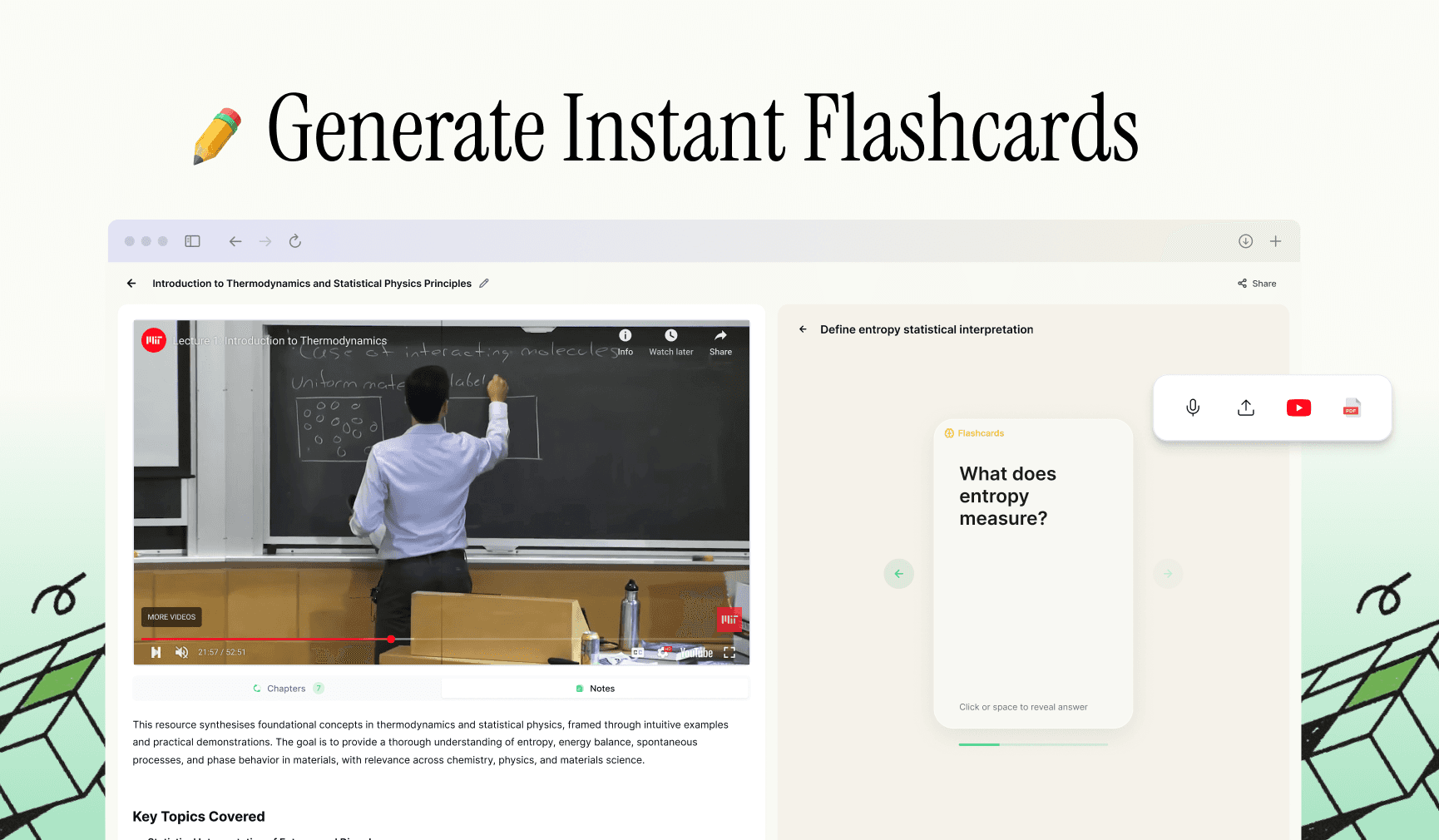
To master IP Law, use a two-pass approach. First, generate a comprehensive deck from your course syllabus or casebook to establish a baseline. Then, refine your focus through repetitive rounds that prioritize your weakest areas. This ensures you spend more time on complex doctrines like 'Doctrine of Equivalents' and less on things you already know.
Review sessions should be short but frequent. Legal concepts are best retained when revisited across several days rather than in one marathon session. This spaced repetition prevents the 'forgetting curve' from wiping out your progress.
Make a deck from your case briefs, PDFs, or lecture transcripts.
Do one quick round to identify which IP doctrines are confusing.
Review high-difficulty cards daily for a week.
Mix in foundational cards to keep basic statutes fresh.
Do a final mixed review simulating exam pressure.
Generate Intellectual Property Law flashcards automatically in Duetoday
Manually writing out legal flashcards is a grueling process that takes hours away from actual studying. Between copying case names and typing out multi-step tests, you lose the mental energy needed for analysis. Duetoday eliminates this friction by automating the card-creation process.
Simply upload your IP Law PDFs, lecture slides, or case summaries, and our AI will extract the most critical legal principles into a ready-to-use deck. You can then edit the cards for personal nuance and start your review immediately.
Upload or paste your IP Law material (Case briefs, outlines, or statutes).
Click 'Generate Flashcards'.
Review, edit, and start studying with active recall.
Stop rereading. Start recalling. Upload your material and get a deck you can actually use today.
Common Intellectual Property Law flashcard mistakes
Many law students make cards that are essentially mini-textbooks. If a card has three paragraphs on it, you aren't testing recall; you're just reading. Keep your cards punchy and specific.
Cards are too long: Split a complex case like Sony v. Universal into 3-4 separate cards.
Only memorizing titles: Ensure you have 'Explain Why' prompts for rulings.
Confusing jurisdictions: Label cards clearly if they apply specifically to US (USPTO) vs. International (WIPO) standards.
No review schedule: Don't wait until the week of the Bar or Final Exam to start your deck.
FAQ
How many flashcards do I need for Intellectual Property Law?
A typical semester-long IP course usually requires 150-300 cards to cover patents, trademarks, and copyrights thoroughly.
What’s the best format for Intellectual Property Law flashcards?
The 'Question and Answer' format is best for definitions, while 'Scenario-Based' cards are better for practicing infringement analysis.
How often should I review Intellectual Property Law flashcards?
Review your 'weak' cards daily and your 'mastered' cards once every 4-5 days to maintain long-term retention.
Should I make cards from a textbook or case briefs?
Case briefs are superior for learning applications of the law, while textbooks are better for learning foundational statutory definitions.
How do I stop forgetting IP statutes after a few days?
Use spaced repetition. Duetoday’s system ensures segments of the law you struggle with appear more frequently in your daily deck.
What if my flashcards feel too easy?
Increase the complexity by adding 'What if' scenarios to the cards, forcing you to apply the law to new facts.
Can I generate IP flashcards from a PDF automatically?
Yes, Duetoday allows you to upload any IP Law PDF and converts the text into structured study flashcards instantly.
Are digital flashcards better than paper for Law?
Digital cards are more efficient for law students because they are searchable, easier to update as laws change, and support spaced repetition algorithms.
How long does it take to make a full IP Law deck?
With Duetoday, you can generate a full deck in under 60 seconds, whereas manual creation could take an entire weekend.
Can Duetoday organize my flashcards by topic?
Yes, you can generate and categorize decks specifically for Patents, Trademarks, Copyrights, or Trade Secrets to keep your study organized.

Duetoday is an AI-powered learning OS that turns your study materials into personalised, bite-sized study guides, cheat sheets, and active learning flows.