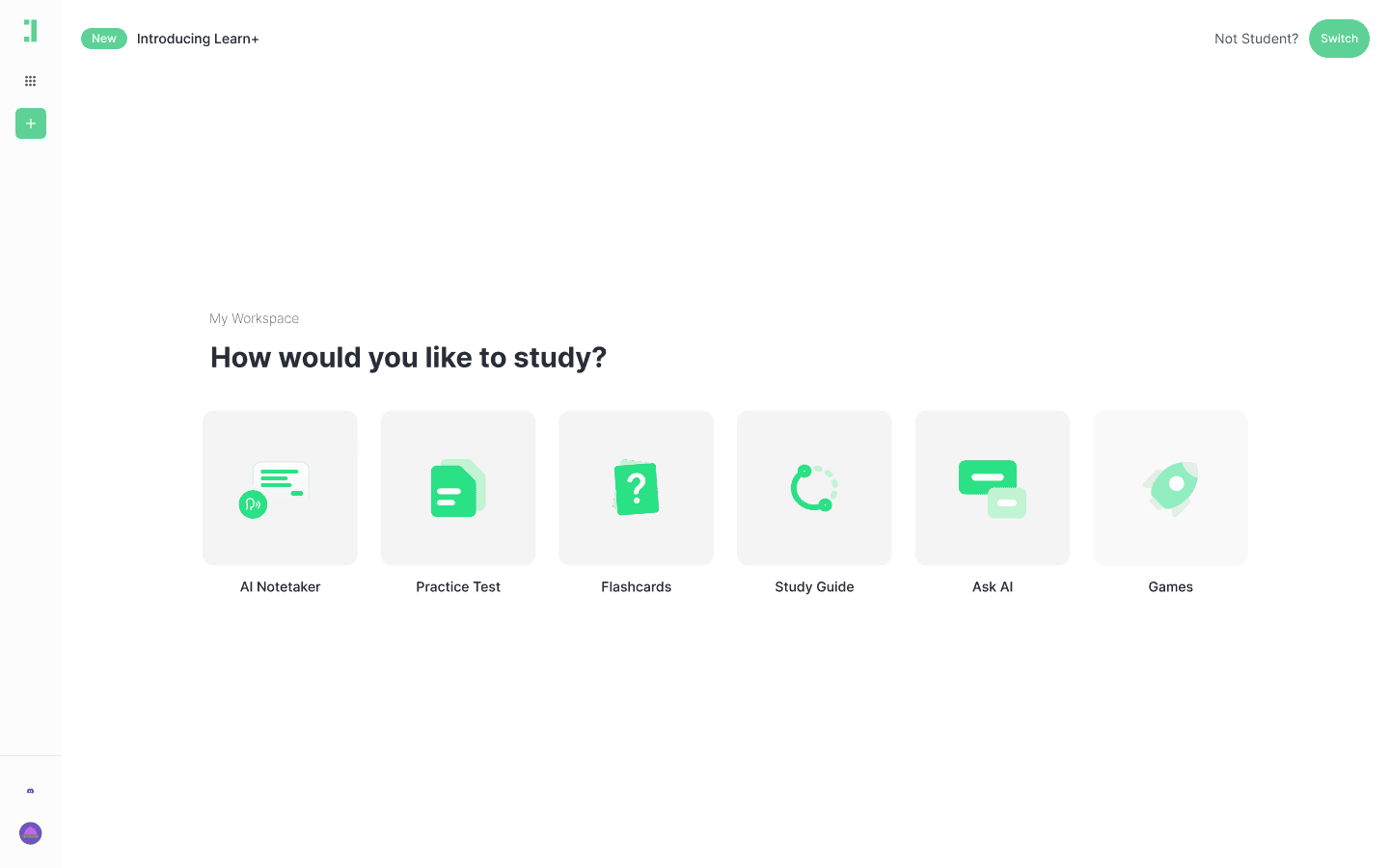
Generate Flashcards for Histology
Easily generate or make histology flashcards from your notes to help you master microscopic anatomy and tissue identification.
Generate Flashcards with AI Free
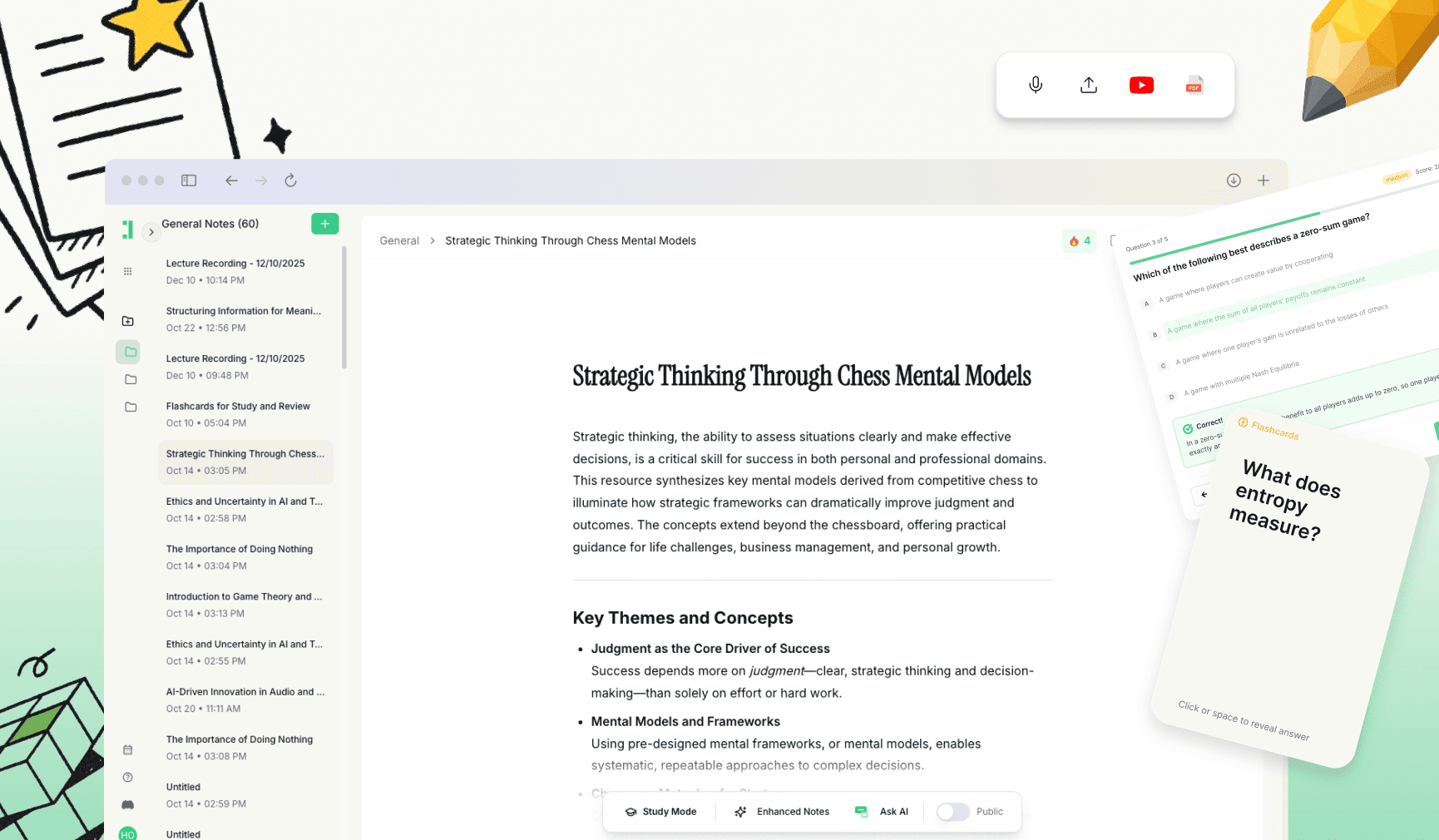
Generate Flashcards for Histology
Turn your notes, PDFs, slides, or lectures into Histology flashcards so you can review faster and remember more. Whether you are identifying tissue layers or cellular structures, Duetoday helps you memorize the visual and conceptual details of microscopic anatomy.
Generate Histology FlashcardsUpload notes / paste text
In Duetoday, the process is simple: upload your materials, and our AI identifies key structures and functions to generate a custom deck. You can review, edit, and start studying with active recall in seconds.
What are Histology flashcards?
Histology flashcards are specialized study tools that cover the microscopic structure of tissues and organs. They typically feature questions about cell types, extracellular matrix components, staining techniques, and the physiological roles of specific tissue layers.
The outcome is a shift from passive looking to active testing. Instead of just staring at a micrograph, you test yourself on whether you can identify the structure (e.g., simple squamous epithelium) and recall its function (e.g., diffusion) instantly.
If you already have notes or lab guides, Duetoday can generate a clean deck in minutes, saving you hours of manual data entry.
Why flashcards work for Histology
Histology requires a high level of visual recognition and the ability to link microscopic structures to biological functions. Flashcards are ideal for this because they force your brain to retrieve information from memory rather than just recognizing it on a page.
By using active recall and spaced repetition, you reinforce the neural pathways for complex terms and patterns. This is especially helpful for distinguishing between tissues that look similar under a microscope but have different functions.
Identify microscopic structures without visual cues from textbooks
Differentiate between similar tissues (e.g., skeletal vs. cardiac muscle)
Memorize specific staining outcomes (H&E, PAS, etc.)
Quickly recall the location and function of various cell types
What to include in your Histology flashcards
Effective histology flashcards follow the atomic rule: one idea per card. This prevents recognition bias where you think you know the material but actually don't.
Focus on four main categories to ensure comprehensive coverage: identification, function, location, and staining characteristics.
Definitions & key terms: What is a chondrocyte? Define the basement membrane.
Processes & steps: What are the stages of intramembranous ossification?
Comparisons: How does smooth muscle differ from skeletal muscle morphologically?
Application: What tissue type would you expect to find in the lining of the bladder?
Example prompts include: Identify the primary cell type in connective tissue proper, What is the function of microvilli in the small intestine? and Which stain is best for identifying elastic fibers?
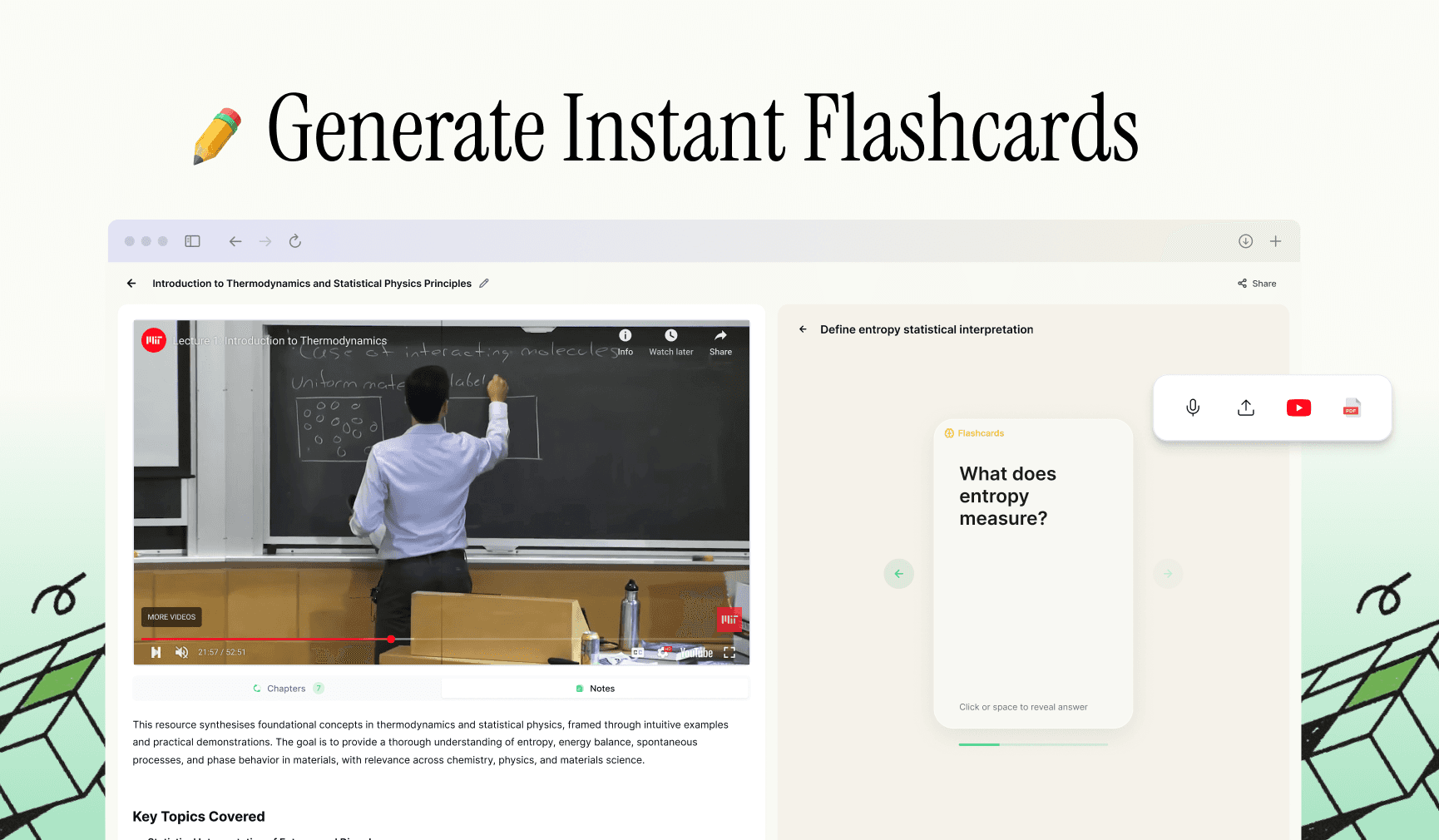
How to study Histology with flashcards (a simple system)
Studying histology is most effective when you use a two-pass approach. First, build your foundational deck from your lab notes or lectures. Then, move into repetitive testing rounds to cement the visual patterns in your memory.
Keep your sessions short but frequent. Reviewing 20 cards three times a day is far more effective than reviewing 100 cards once a week.
Make a deck from your notes (or generate it from content automatically).
Do one quick round to find weak spots or tissue types you keep confusing.
Review weak cards daily to build visual familiarity.
Mix in harder application questions (e.g., pathology) once you master identification.
Do a final mixed review of all organ systems before your practical exam.
Generate Histology flashcards automatically in Duetoday
Making histology cards manually—especially when trying to describe visual structures—is slow, messy, and inconsistent. It often takes more time to make the cards than it does to study them.
Duetoday changes this by allowing you to upload your specific course materials. Whether it's a PDF of a lab manual or a slide deck, the AI extracts the most important histological facts and formats them for study.
Upload or paste your Histology material
Click Generate Flashcards
Review, edit, and start studying
Generate Histology Flashcards in Duetoday
Start with your notes and get a deck you can actually use today.
Common Histology flashcard mistakes (and how to fix them)
Most students make cards that are too broad, leading to frustration during review sessions. Here is how to optimize your histology deck.
Cards are too long: Split them up so you only identify one structure or one function per card.
Only memorizing labels: Add why prompts to understand the relationship between structure and function.
Ignoring the 'Why': Don't just learn what a cell is; learn why it has its specific shape (e.g., why epithelial cells are polarized).
No review schedule: Use spaced repetition to ensure you don't forget the first chapter by the time you reach the last.
Ready to generate your Histology flashcards?
Stop rereading your lab manual. Turn your histology notes into ready-to-use flashcards in minutes and start mastering tissue identification today.
Start Generating Flashcards
Works with notes, PDFs, slides, and transcripts.
FAQ
How many flashcards do I need for Histology? This depends on the scope of your course, but generally, 30-50 cards per tissue system (e.g., respiratory, digestive) is a good baseline for covering identification and function.
What’s the best format for Histology flashcards? Question and answer format works best. Use the front for a specific structure or cell type and the back for its function, location, and unique features.
How often should I review Histology flashcards? Daily review is recommended, especially for visual identification, as microscopic patterns can easily be forgotten without frequent exposure.
Should I make cards from a textbook, lecture notes, or slides? Use your lecture slides and lab manuals first, as these usually contain the specific images and terminology your instructor expects you to know.
How do I stop forgetting Histology after a few days? Consistent use of spaced repetition is the key. Duetoday helps by surfacing the cards you struggle with more frequently until they stick.
What if my flashcards feel too easy or too hard? If they are too easy, add application questions (e.g., 'what happens if this tissue is damaged?'). If too hard, break the information down into smaller, simpler cards.
Can I generate Histology flashcards from a PDF automatically? Yes, Duetoday can digest PDF lecture notes or lab guides and instantly turn them into study-ready flashcards.
Are digital flashcards better than paper for Histology? Digital flashcards are often superior for Histology because you can easily include high-resolution micrographs and use automated scheduling for reviews.
How long does it take to make a full Histology deck? Manually, it can take hours. With Duetoday, you can generate a comprehensive deck in less than a minute after uploading your content.
Can Duetoday generate and organize my flashcards for me? Absolutely. Duetoday will categorize and format your flashcards based on the material you provide, so you can spend your time studying instead of organizing.

Duetoday is an AI-powered learning OS that turns your study materials into personalised, bite-sized study guides, cheat sheets, and active learning flows.