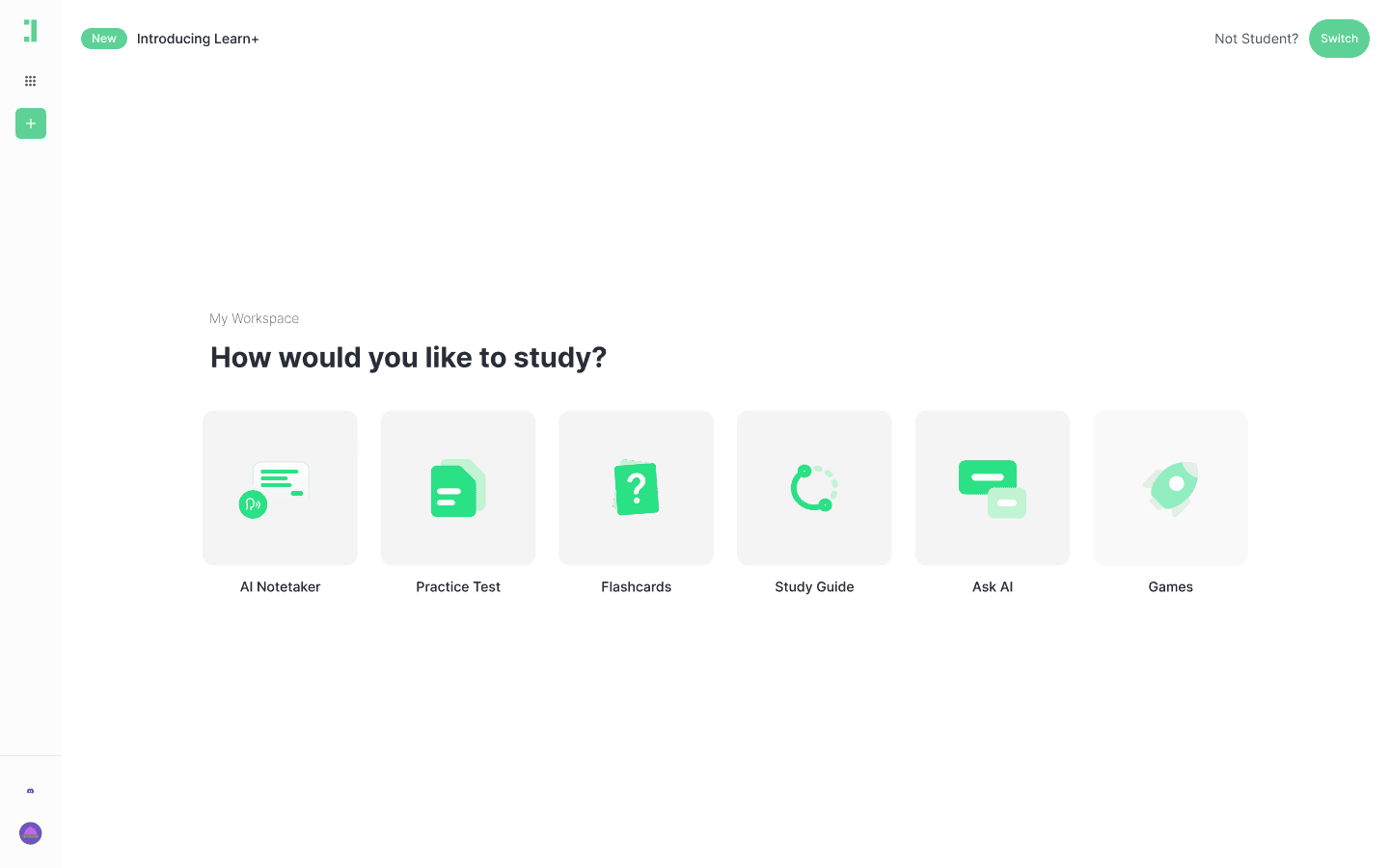
Generate Flashcards for Gravitation
Generate Gravitation flashcards in seconds. Turn physics notes into study decks. Try it free today!
Generate Flashcards with AI Free
Generate Flashcards for Gravitation
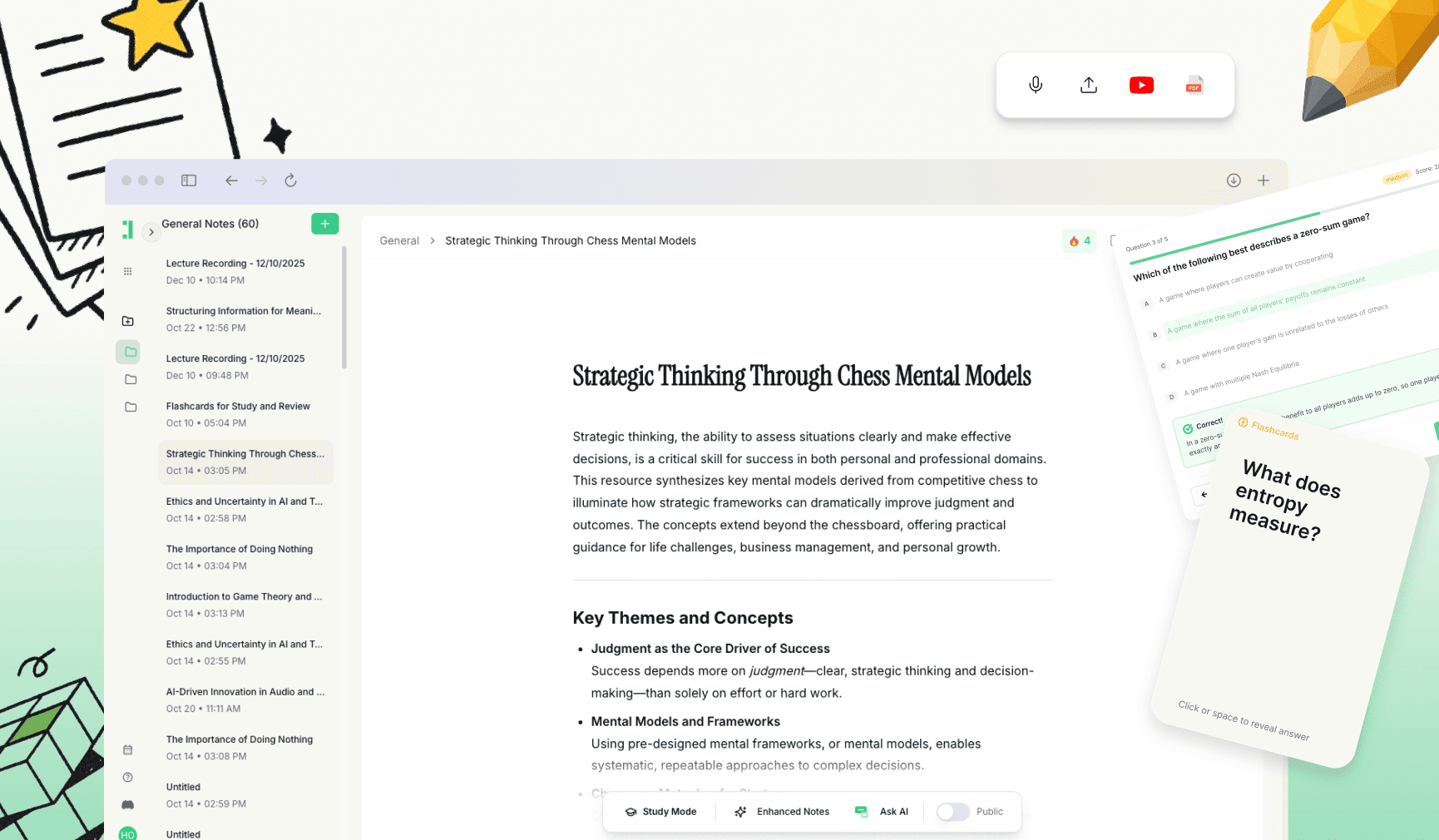
Turn your physics notes, PDFs, slides, or lectures into Gravitation flashcards so you can review faster and remember more. Whether you are studying for high school physics or advanced astrophysics, mastering the force that pulls the universe together requires more than just reading—it requires active recall.
Generate Gravitation FlashcardsUpload notes / paste text
With Duetoday, you simply upload your study material, and our AI identifies key formulas and concepts to create a custom deck. You can then review, edit, and study your cards anywhere, turning passive reading into active learning.
What are Gravitation flashcards?
Gravitation flashcards cover the fundamental principles governing the attraction between masses. This includes Newton’s Law of Universal Gravitation, gravitational potential energy, escape velocity, Kepler’s Laws of planetary motion, and the behavior of satellites in orbit. These cards take complex physics problems and break them down into bite-sized questions.
The outcome is simple: instead of rereading a textbook chapter five times, you test yourself on the specific variables and relationships that define gravitational force. This builds a stronger mental model of how objects interact in space.
If you already have notes, Duetoday can generate a clean deck in minutes.
Why flashcards are one of the best ways to study Gravitation
Gravitation is a topic built on relationships—how mass affects force, how distance alters acceleration, and how energy is conserved in an orbit. Flashcards are ideal for this because they force you to recall these specific relationships without looking at the answer.
Active recall and spaced repetition help you move formulas from short-term memory into long-term mastery. By seeing a card about the Inverse Square Law multiple times over a week, you stop guessing the math and start intuitively understanding the physics.
Remember key constants like G without cramming
Separate similar concepts (e.g., g vs G)
Learn orbital pathways and cycles step-by-step
Practice applying rules and formulas quickly
What to include in your Gravitation flashcards
Effective Gravitation flashcards follow the "one idea per card" rule. Don't try to put all of Kepler’s Laws on one card; instead, create a question for each law individually to ensure you aren't skipping over the details.
Use a mix of four main card types to ensure full comprehension: definitions for the vocabulary, process cards for derivations, comparison cards for distinguishing forces, and application cards for problem-solving.
Definitions & key terms: "What is the Universal Gravitational Constant?"
Processes & steps: "How do you calculate the period of a circular orbit?"
Comparisons: "How does gravitational force change if distance is doubled?"
Application: "What happens to the weight of an object on a planet with twice the Earth's mass?"
Example prompts: "State Kepler’s Third Law," "Define Escape Velocity," "What is the relationship between Force and Distance?", "Formula for Gravitational Potential Energy."
How to study Gravitation with flashcards (a simple system)
Studying physics works best with a "two-pass" approach. First, build your deck using your lecture notes or textbook chapters. Then, move into review rounds that increase in difficulty as you gain confidence with the variables.
Keep your sessions short but frequent. Reviewing Gravitation for 15 minutes a day is significantly more effective than a 4-hour session right before a midterm.
Make a deck from your notes using Duetoday's AI generator.
Do one quick round to identify which formulas you keep forgetting.
Review weak cards daily for at least three days.
Mix in harder application cards as you master the basic definitions.
Do a final mixed review of all planetary motion and energy cards before your exam.
Generate Gravitation flashcards automatically in Duetoday
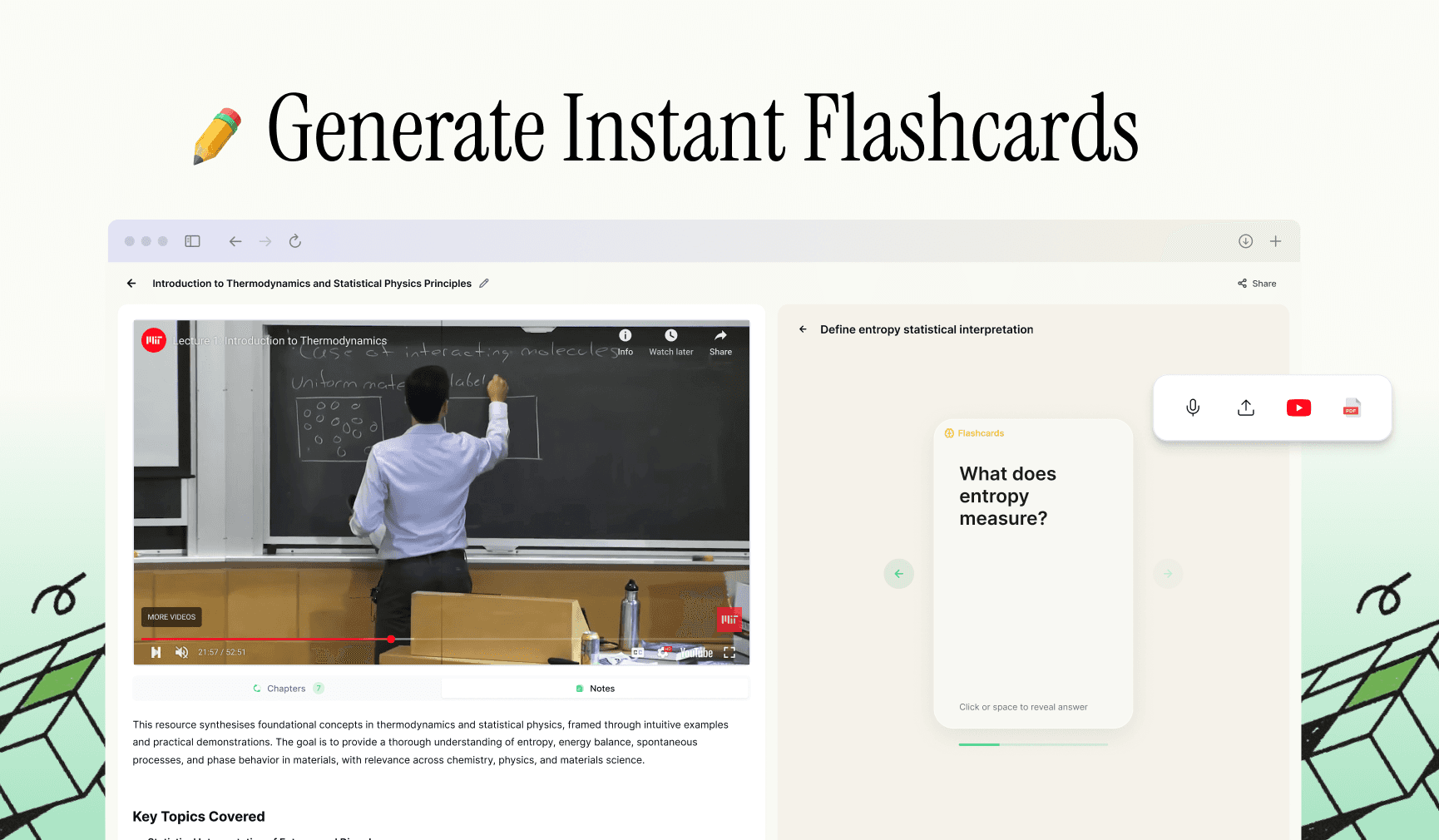
Making flashcards manually is slow, messy, and inconsistent. You often spend more time writing the cards than actually studying them. Duetoday changes that by doing the heavy lifting for you.
Simply upload your physics PDF, lecture slides, or even a recording of your professor. Duetoday will transcribe the content and generate a comprehensive deck of flashcards instantly, letting you focus on the actual learning.
Upload or paste your Gravitation material
Click Generate Flashcards
Review, edit, and start studying
Generate Gravitation Flashcards in Duetoday
Start with your notes and get a deck you can actually use today.
Common Gravitation flashcard mistakes (and how to fix them)
Many students make the mistake of creating cards that are too wordy. If a card takes 30 seconds to read, it isn't a flashcard—it's a paragraph. Keep your answers short to ensure your brain focuses on the core concept.
Cards are too long: Split them until there is only one idea or formula per card.
Only memorizing words: Add "why" or "how" questions to test deeper understanding.
Confusing G and g: Create comparison cards specifically to distinguish the constant from acceleration.
No review schedule: Use Duetoday to track which cards you have mastered.
No application practice: Include cards that ask what happens when one variable changes.
Ready to generate your Gravitation flashcards?
Stop rereading and start recalling. Turn your Gravitation notes into a high-powered study tool in seconds. Upload your materials and let Duetoday build your perfect study deck.
Start Generating Flashcards
Works with notes, PDFs, slides, and transcripts.
FAQ
How many flashcards do I need for Gravitation? Usually, a comprehensive set for a standard physics chapter includes 30 to 50 cards covering laws, constants, and formula applications.
What’s the best format for Gravitation flashcards? Question and answer format is best. Use the front for a variable change (e.g., "Distance x2") and the back for the result (e.g., "Force /4").
How often should I review Gravitation flashcards? Review new cards daily for the first three days, then move to every other day until you have 100% accuracy.
Should I make cards from a textbook or lecture notes? Lecture notes often contain the specific shortcuts your teacher prefers, while textbooks provide broader context. Using both ensures a well-rounded deck.
How do I stop forgetting formulas after a few days? Spaced repetition is the key. By using digital flashcards that reappear right as you are about to forget them, you lock the information into long-term memory.
What if my flashcards feel too easy? If they are too easy, you likely only have definition cards. Add application cards where you have to calculate a result or explain a relationship.
Can I generate Gravitation flashcards from a PDF automatically? Yes, Duetoday can scan any physics PDF and extract the most important concepts to create flashcards instantly.
Are digital flashcards better than paper for physics? Digital cards are generally better because they allow you to include complex diagrams easily and use AI to track your progress.
How long does it take to make a full Gravitation deck? With Duetoday, it takes less than a minute. Manually, it could take over an hour to write and organize 40 cards.
Can Duetoday organize my flashcards for me? Yes, Duetoday categorizes your cards by topic and tracks your mastery level for each one automatically.

Duetoday is an AI-powered learning OS that turns your study materials into personalised, bite-sized study guides, cheat sheets, and active learning flows.