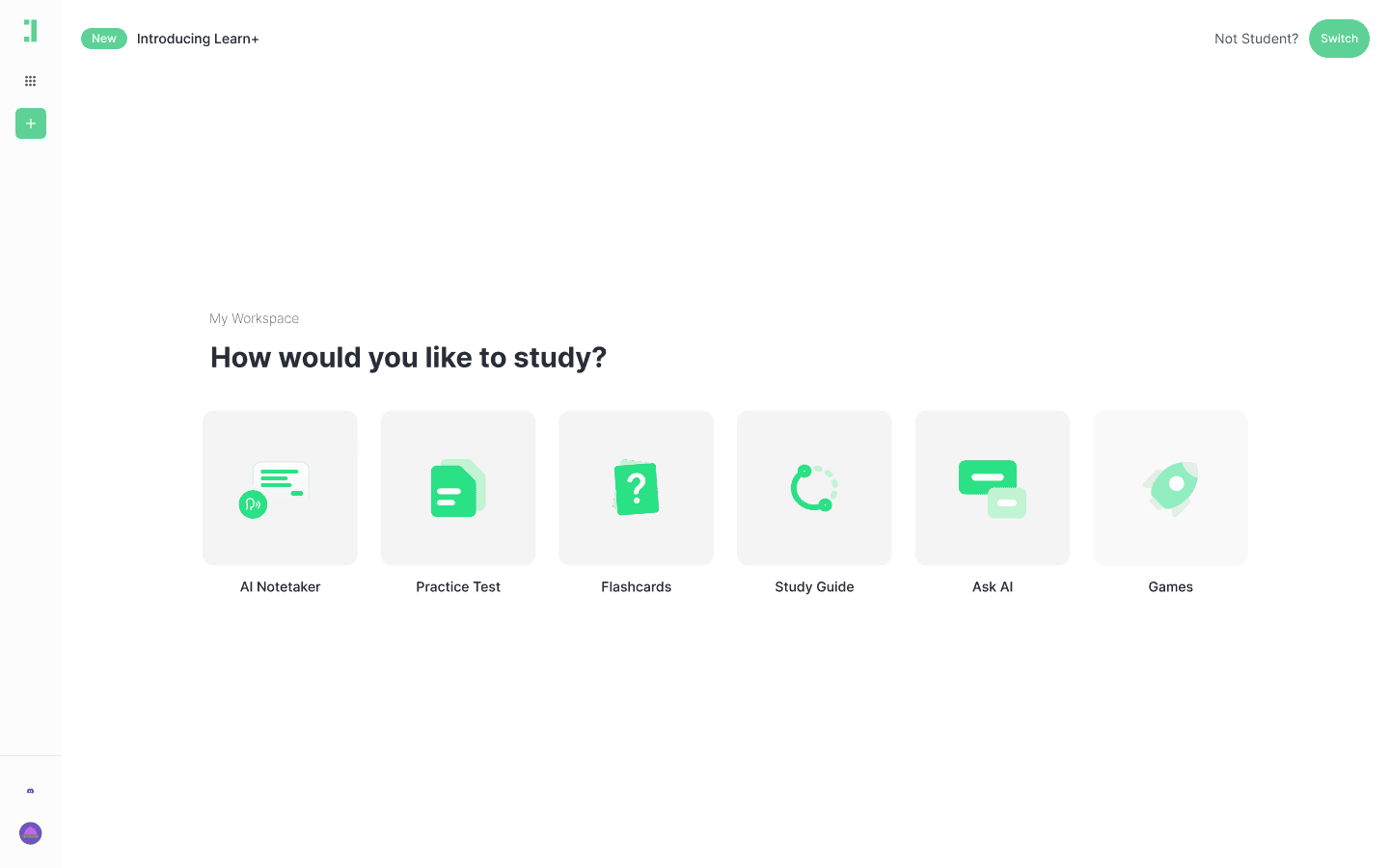
Generate Flashcards for Genomics
Easily make or generate genomics flashcards to master genetic sequencing and bioinformatics with our AI study guide.
Generate Flashcards with AI Free
Generate Flashcards for Genomics
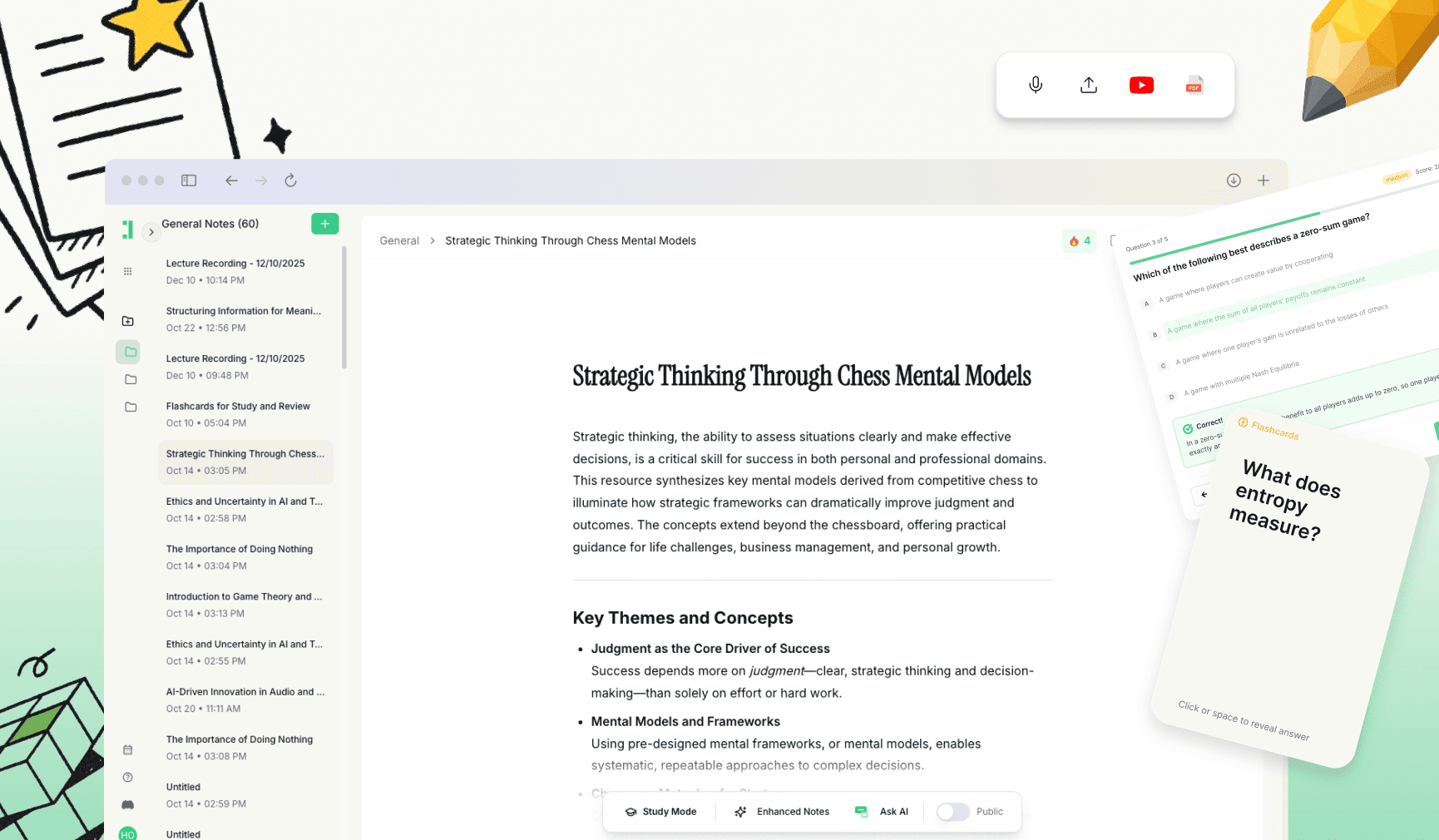
Turn your complex dna sequences, genetic maps, and research papers into genomics flashcards so you can review faster and remember more. Understanding the blueprint of life shouldn't require manual data entry; simply upload your source material and let AI do the heavy lifting.
Generate Genomics FlashcardsUpload notes / paste text
In Duetoday, the process is seamless: upload your genomics materials, generate your deck, review or edit the content, and start studying with active recall immediately.
What are Genomics flashcards?
Genomics flashcards are specialized study tools that cover the structure, function, evolution, and mapping of genomes. They break down high-level concepts like SNP analysis, CRISPR-Cas9 mechanisms, NGS workflows, and bioinformatics algorithms into bite-sized, digestible questions.
The outcome is a shift from passive reading to active testing. Instead of staring at a textbook page on gene expression, you test yourself on the specific triggers and pathways involved, building stronger neural connections and faster retrieval during exams.
If you already have notes, Duetoday can generate a clean deck in minutes.
Why flashcards work for Genomics
Genomics requires a unique mix of rote memorization for terminology and deep understanding of multi-step biological processes. Flashcards bridge this gap by forcing your brain to retrieve information without cues.
Active recall and spaced repetition ensure that you don't just 'recognize' a term like epigenetics, but can actually explain its role in gene regulation from memory. This method prevents the 'illusion of competence' that comes with rereading highlighted text.
Remember complex sequencing terminology without cramming
Separate similar concepts like genotype vs. phenotype or genomics vs. genetics
Learn molecular processes step-by-step (transcription, translation, replication)
Practice identifying patterns in genetic data quickly
What to include in your Genomics flashcards
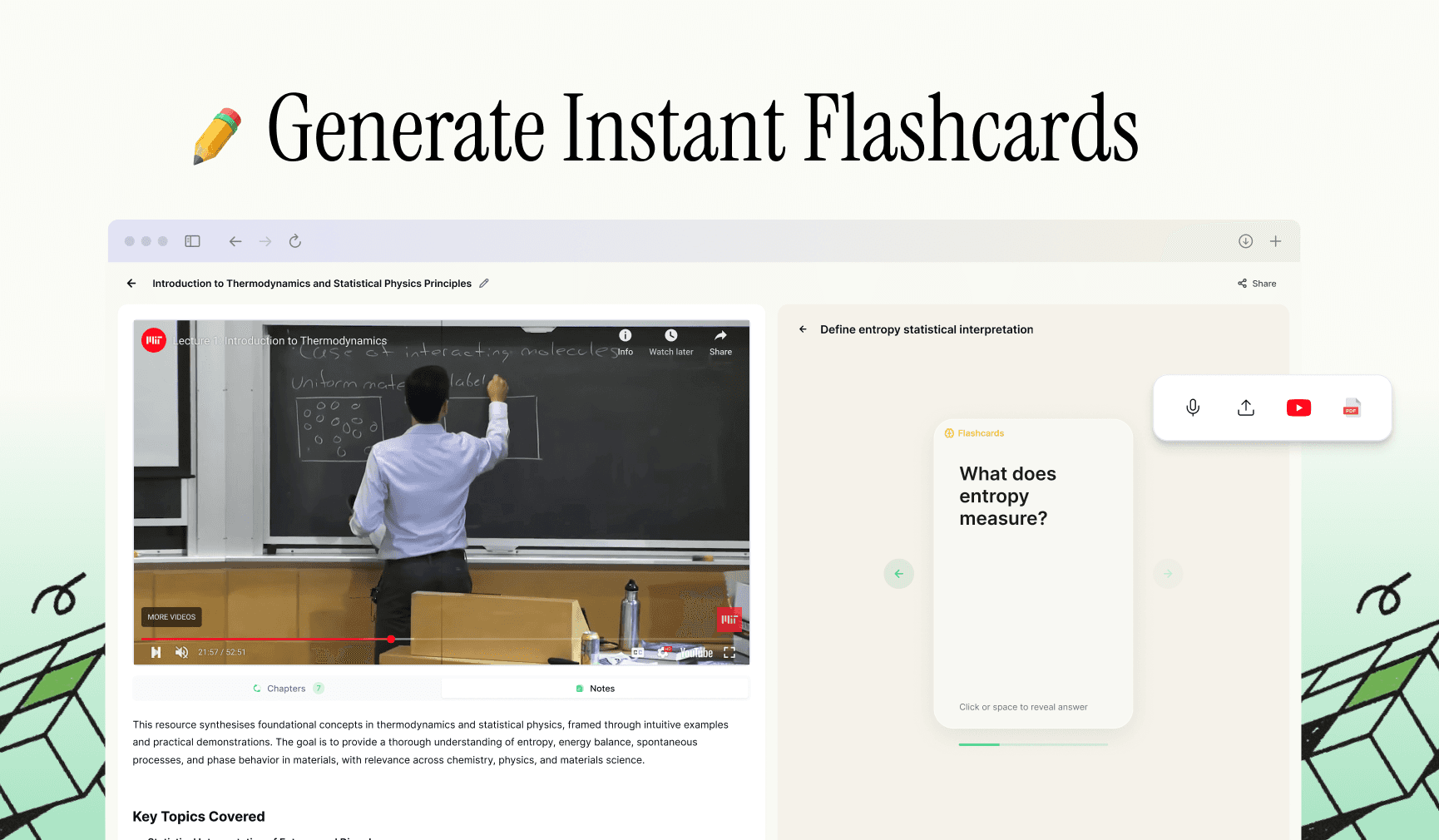
Effective genomics flashcards follow the 'one idea per card' rule. By keeping questions specific, you ensure you truly know the answer rather than guessing based on context. Framing your material as questions is the fastest way to improve retention.
There are four main card types to focus on for this subject:
Definitions & key terms: Focus on 'What is a haplotype?' or 'Define the exonuclease activity.'
Processes & steps: Ask 'What is the first step in Sanger sequencing?'
Comparisons: Challenge yourself with 'How is RNA-Seq different from Microarrays?'
Application: Use scenarios like 'What happens if a nonsense mutation occurs in this sequence?'
Example prompts: 'What are the three components of a nucleotide?', 'Explain the role of a promoter region.', 'Compare orthologs vs. paralogs.', 'What is the goal of the Human Genome Project?'
How to study Genomics with flashcards (a simple system)
Mastering genomics requires a systematic approach. Don't try to learn 200 cards at once; instead, use the two-pass method to focus your energy where it's needed most.
Start by building your deck from your lectures or research papers. Review the entire deck once to identify 'weak spots'—the concepts that don't immediately click. Spend the majority of your time on these difficult cards, while checking in on the easier ones every few days.
Make a deck from your notes (or generate it from genomic PDFs).
Do one quick round to find weak spots.
Review weak cards daily for a few days.
Mix in a few harder cards each session to build stamina.
Do a final mixed review before your midterm or lab checkout.
Generate Genomics flashcards automatically in Duetoday
Making genomics cards manually is incredibly slow. Writing out definitions for hundreds of alleles and markers takes time you could be using to actually study. Duetoday automates this by extracting the core facts from your files instantly.
Upload or paste your Genomics material (PDFs, slides, or notes)
Click 'Generate Flashcards'
Review, edit, and start studying immediately
Generate Genomics Flashcards in Duetoday
Start with your notes and get a deck you can actually use today.
Common Genomics flashcard mistakes
Many students make cards that are too 'wordy,' which leads to memorizing the paragraph rather than the concept. If your card has five sentences on it, it's a note, not a flashcard. Focus on atomic facts that can be answered in a few words.
Cards are too long: split 'DNA Replication' into separate cards for each enzyme.
Only memorizing words: ensure you have cards that ask 'why' a process occurs.
Confusing similar concepts: create specific comparison cards for mitosis vs. meiosis.
No review schedule: using flashcards once isn't enough; leverage spaced repetition.
FAQ
How many flashcards do I need for Genomics? It depends on the depth of the course, but typically 100-150 cards per major unit (like Gene Expression or Biotechnology) is sufficient to cover terms and processes.
What’s the best format for Genomics flashcards? Question-and-answer format is best. For example, 'What enzyme unwinds DNA?' on the front and 'Helicase' on the back.
How often should I review Genomics flashcards? Daily reviews are best for new material. Once you have a high accuracy rate, you can move to reviewing every 3-5 days.
Should I make cards from a textbook or slides? Use lecture slides first as they represent what your professor values, then supplement with textbook details for complex topics like GWAS.
How do I stop forgetting Genomics pathways? Break pathways into 'Step 1,' 'Step 2,' etc., and create separate cards for the enzymes and substrates involved in each.
What if my flashcards feel too easy or too hard? If they are too easy, you've likely over-simplified the concept; add 'application' questions. If too hard, break the card into two smaller ideas.
Can I generate Genomics flashcards from a PDF automatically? Yes, Duetoday is designed to parse complex PDFs and extract key genomic terms and concepts into cards automatically.
Are digital flashcards better than paper for Genomics? Yes, because digital tools allow for spaced repetition algorithms and make it easy to include diagrams of genetic structures.
How long does it take to make a full Genomics deck? Manually it can take hours; with Duetoday, you can generate a comprehensive deck in under 60 seconds.
Can Duetoday organize my Genomics flashcards by topic? Yes, you can generate and categorize decks by specific modules like 'Epigenetics' or 'PopGen' to keep your study sessions focused.

Duetoday is an AI-powered learning OS that turns your study materials into personalised, bite-sized study guides, cheat sheets, and active learning flows.