Generate Flashcards for Game Theory Basics
Generate Game Theory flashcards in seconds. Turn PDFs and notes into study decks. Try it for free!
Generate Flashcards with AI Free

Generate Flashcards for Game Theory Basics
Turn your notes, PDFs, slides, or lectures into Game Theory Basics flashcards so you can review faster and remember more.
To start, simply upload your materials or paste your text into Duetoday. Our AI analyzes your content to identify key strategic concepts, equilibrium points, and player incentives, creating a structured deck ready for immediate study.
What are Game Theory Basics flashcards?
Game Theory Basics flashcards cover the fundamental frameworks used to analyze strategic interactions. This includes definitions of players, strategies, payoffs, and the various types of games such as zero-sum vs. non-zero-sum or simultaneous vs. sequential moves.
By using these flashcards, you move beyond passive reading. Instead of just looking at a payoff matrix, you test your ability to identify dominant strategies and find equilibrium points from scratch. If you already have notes, Duetoday can generate a clean deck in minutes.
Why flashcards are one of the best ways to study Game Theory Basics
Game Theory requires a mix of logical deduction and rote memorization of specific equilibrium conditions. Flashcards help bridge the gap between understanding a concept and applying it under exam pressure.
Remember key terms like 'Pareto Efficiency' without cramming.
Separate similar concepts like 'Dominant Strategy' vs 'Nash Equilibrium'.
Learn game stages and move sequences step-by-step.
Practice calculating payoffs and identifying outcomes quickly.
What to include in your Game Theory Basics flashcards
Effective Game Theory cards follow the "atomic" rule: one specific strategic concept per card. You should focus on question-based prompts that force your brain to compute an answer rather than just recognizing a term.
Definitions & key terms: "What is a Zero-Sum Game?"
Processes & steps: "How do you find a Nash Equilibrium in a 2x2 matrix?"
Comparisons: "How does a one-shot game differ from a repeated game?"
Application: "In a Prisoner's Dilemma, what is the rational choice for a self-interested player?"
Example prompts: "Define the 'Tit-for-Tat' strategy," "What is a Focal Point?", and "List the assumptions of rational choice theory."
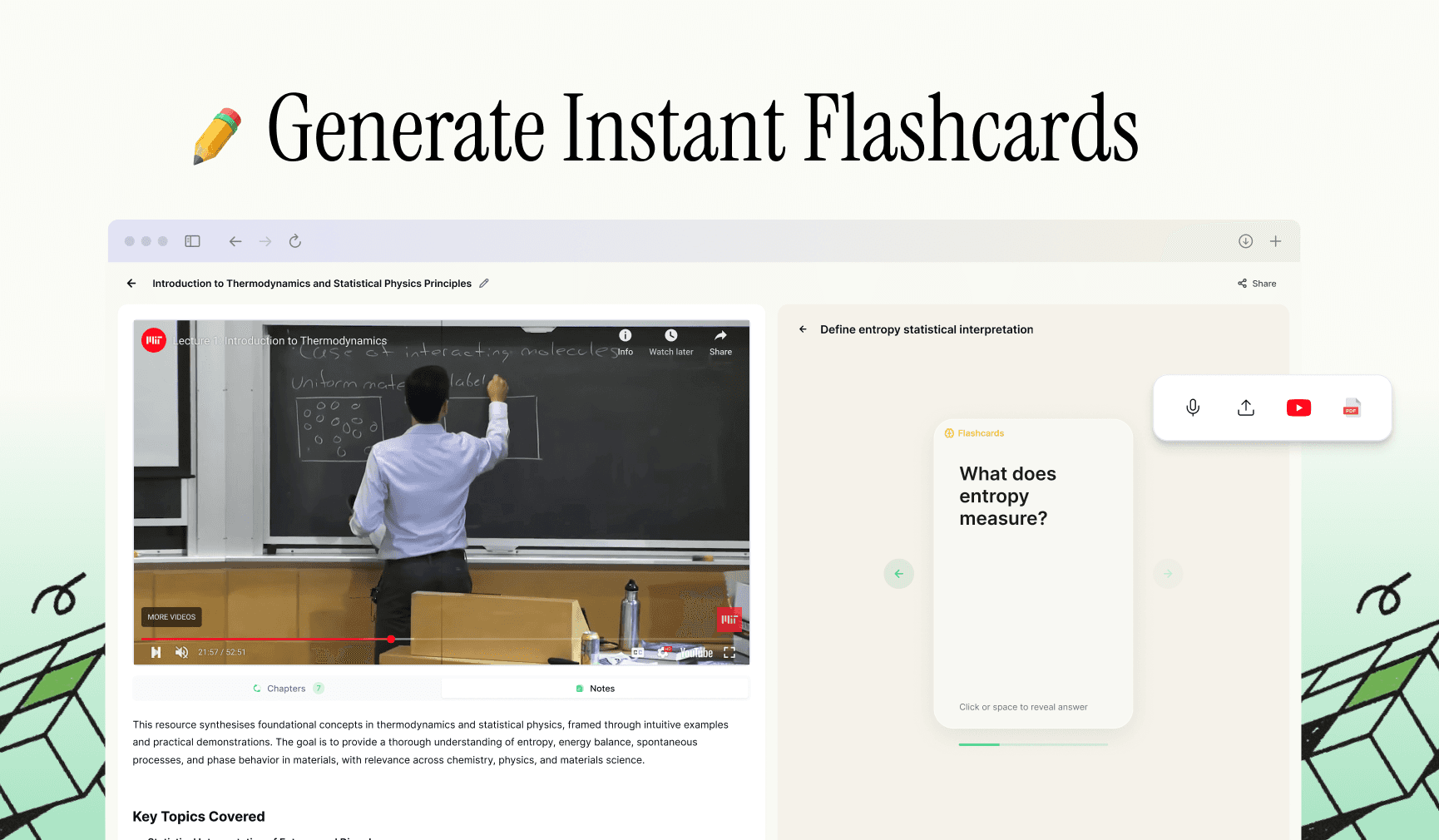
How to study Game Theory Basics with flashcards (a simple system)
Start with a 'two-pass' approach. First, generate your deck and do a broad review to see which matrices or concepts confuse you. Then, move into targeted rounds focusing specifically on those weak points.
Make a deck from your lecture notes or textbook chapters.
Do a quick round to flag difficult concepts like 'Backward Induction'.
Review tougher cards daily until the logic becomes second nature.
Mix the order to ensure you aren't just memorizing the sequence.
Perform a final review of mixed game types before your test.
Generate Game Theory Basics flashcards automatically in Duetoday
Drawing payoff matrices and writing out definitions manually is time-consuming. Duetoday automates the tedious part of studying so you can focus on the actual logic of the games.
Simply upload your PDF or paste your transcript, and Duetoday will generate a comprehensive deck of flashcards instantly. You can then edit, organize, and start your active recall session immediately.
Upload your Game Theory slides or PDFs.
Click Generate Flashcards.
Review, edit, and start studying.
Common Game Theory Basics flashcard mistakes
Avoid making cards that are too wordy; if a card explains an entire case study, it’s too long. Split it into 'The Setup' and 'The Outcome.' Also, don't just memorize the names of games—ensure you have cards that ask 'Why' a certain strategy is chosen.
Cards are too long: split into one strategic idea per card.
Memorizing words only: add 'find the equilibrium' prompts.
Confusing similar games: use comparison cards for 'Stag Hunt' vs 'Chicken'.
No schedule: use spaced repetition to keep strategies fresh.
Ready to generate your Game Theory Basics flashcards?
Stop rereading your textbook. Upload your notes, generate your deck, and master Game Theory with active recall.
Start generating flashcards in Duetoday now.
FAQ
How many flashcards do I need for Game Theory Basics? Most intro courses require 50–80 cards to cover basic terminology and standard game structures.
What’s the best format for Game Theory flashcards? A mix of 'Term/Definition' and 'Scenario/Outcome' works best to build both vocabulary and logic.
How often should I review? Review daily for the first week, then use spaced repetition to touch on them every few days.
Should I make cards from a textbook or slides? Use both. Slides give you the 'must-know' concepts, while textbooks provide the detailed payoff examples.
How do I stop forgetting the math? Include 'Step 1, Step 2' cards for calculating Nash Equilibrium to build procedural memory.
Are digital flashcards better for Game Theory? Yes, because you can easily include images of payoff matrices and update them as you learn more complex strategies.
Can I generate cards from a PDF? Absolutely. Duetoday is designed to Parse PDFs and extract the most important study points automatically.
How long does it take to make a full deck? With Duetoday, it takes less than a minute to generate a full deck from your uploaded notes.

Duetoday is an AI-powered learning OS that turns your study materials into personalised, bite-sized study guides, cheat sheets, and active learning flows.