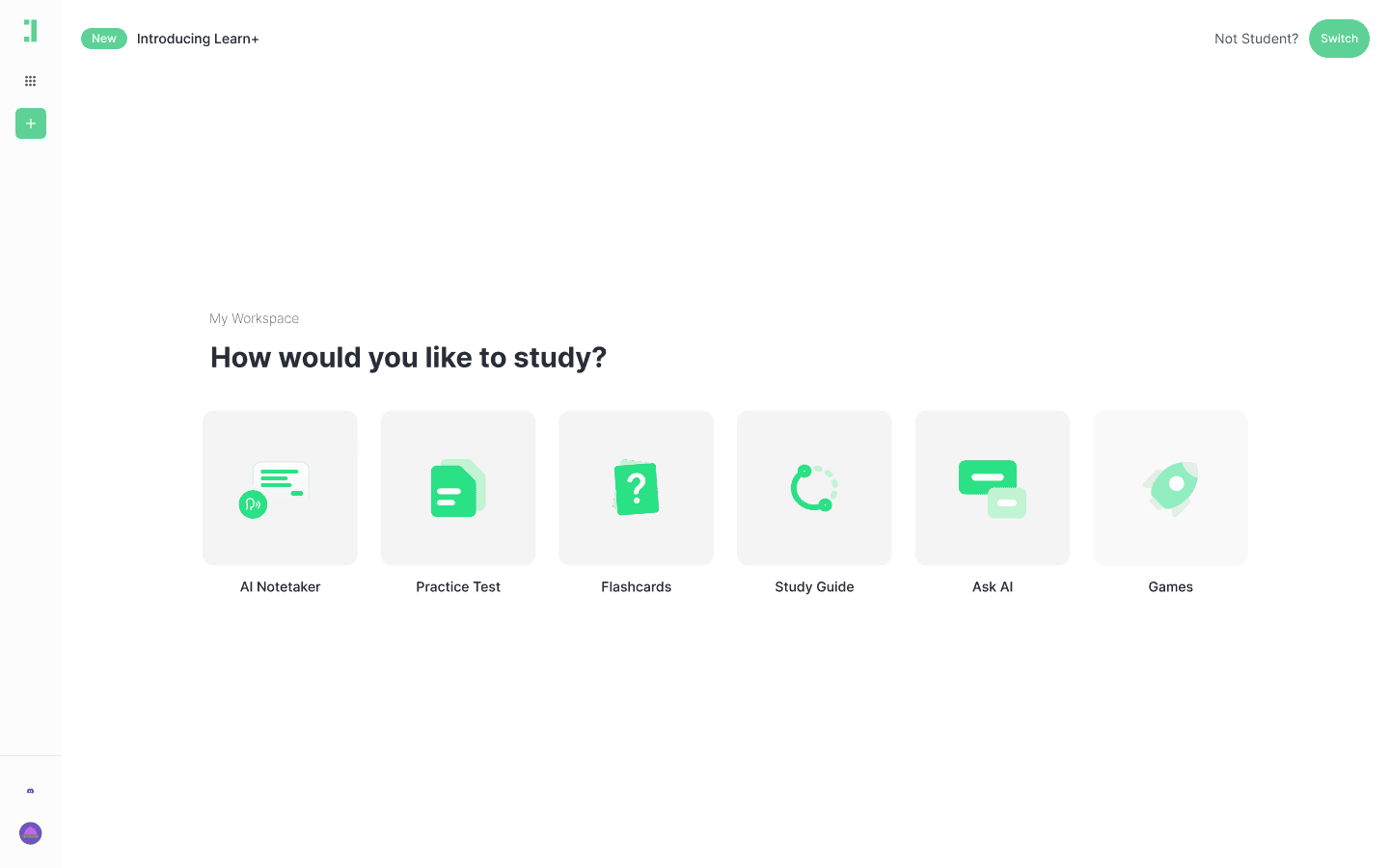
Generate Flashcards for Financial Statement Analysis
Make Financial Statement Analysis flashcards from your notes or PDFs to master ratios, GAAP, and balance sheets easily.
Generate Flashcards with AI Free
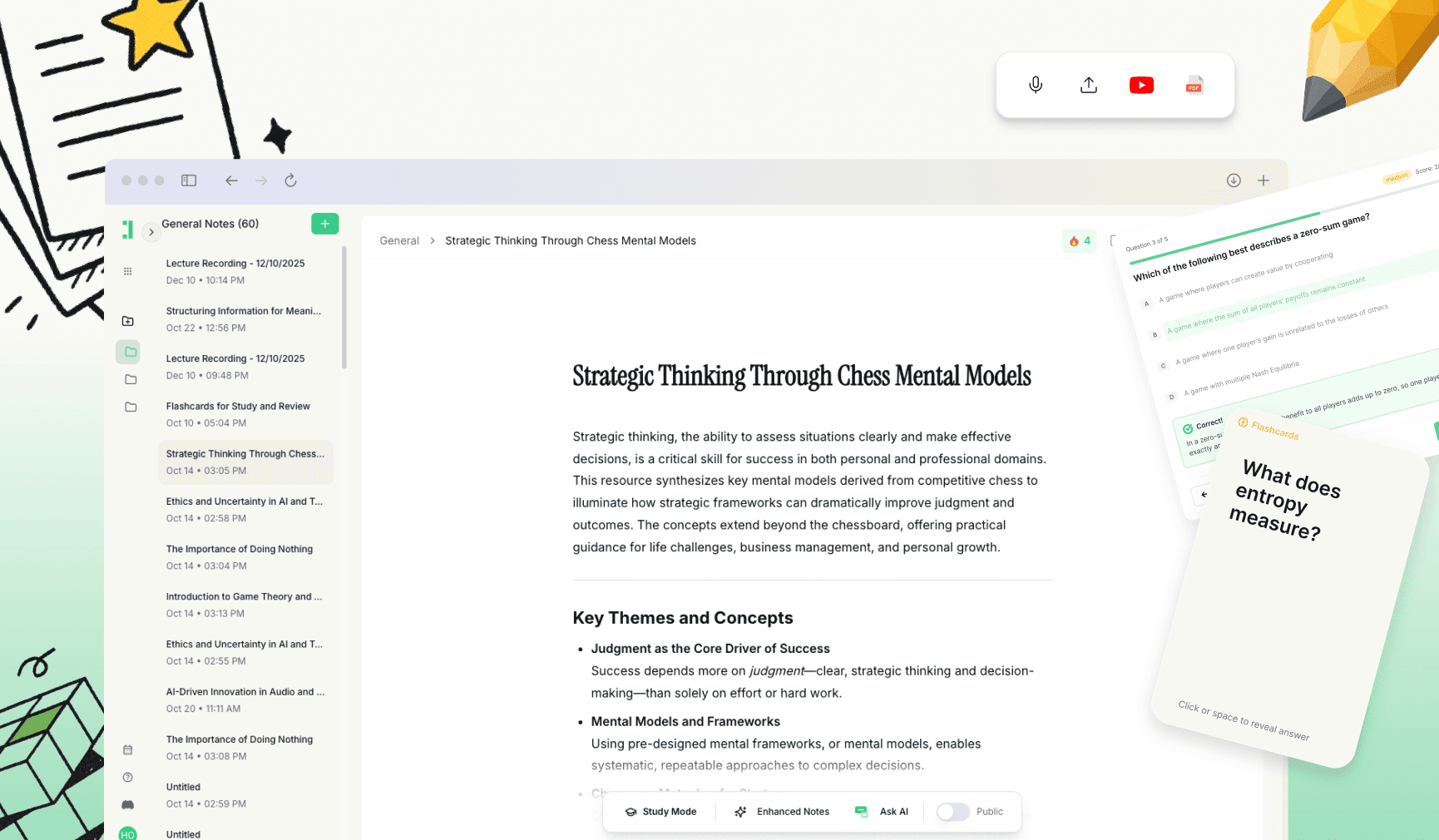
What are Financial Statement Analysis flashcards?
Financial Statement Analysis flashcards are specialized study tools designed to help you master the art of interpreting balance sheets, income statements, and cash flow reports. These cards cover everything from liquidity ratios like the Current Ratio to complex valuation metrics and accounting principles. Instead of staring at spreadsheets for hours, you use these cards to quiz yourself on what the numbers actually mean for a company's health.
The goal is to move beyond passive reading. By using flashcards, you force your brain to retrieve definitions and formulas from memory, which builds the deep analytical skills required for finance exams or professional accounting roles. If you already have lecture slides or textbook chapters, Duetoday can generate a clean deck in minutes so you can start practicing immediately.
Why flashcards work for Financial Statement Analysis
Analyzing financial statements requires a mix of rote memorization for formulas and critical thinking for interpretation. Flashcards bridge this gap by breaking down dense data into bite-sized, manageable queries. They utilize active recall and spaced repetition to ensure you don't forget the difference between operating and financing cash flows under pressure.
Memorize key accounting formulas without last-minute cramming.
Differentiate between similar concepts like EBITDA vs. Net Income.
Master the steps of a vertical or horizontal analysis.
Practice identifying 'red flags' in financial footnotes quickly.
What to include in your Financial Statement Analysis flashcards
Effective finance flashcards follow the 'one idea per card' rule. They should transform complex concepts into direct questions that challenge your understanding. You want to focus on why a ratio matters, not just how to calculate it.
Definitions & Key Terms: What is the Debt-to-Equity ratio? Define deferred revenue.
Processes & Steps: What is the first step in calculating Free Cash Flow?
Comparisons: How does IFRS treatment of research costs differ from US GAAP?
Application: If inventory turnover decreases while sales are flat, what does this suggest about stock management?
Example prompts for your deck:
• What does a high Price-to-Earnings (P/E) ratio typically signal to investors?
• Formula for the Acid-Test Ratio.
• List the three sections of the Statement of Cash Flows.
• How is Depreciation treated on the indirect method cash flow statement?
How to study Financial Statement Analysis with flashcards
Don't try to master the entire balance sheet in one go. Start with a 'two-pass' approach. First, generate your deck from your syllabus or notes and do a broad sweep to identify which ratios or accounting standards are tripping you up. This initial pass helps you categorize cards into 'known' and 'unknown' piles.
In the second phase, focus your energy on the difficult cards. Spend 15-20 minutes a day reviewing the ratios you struggle with, such as Return on Assets (ROA) or complex lease accounting. Over time, mix in easier cards to ensure you retain the basics while mastering the advanced material before your exam or presentation.
Make a deck from your notes or generate it automatically from a PDF.
Do one quick round to find weak spots in your formula knowledge.
Review weak cards daily for at least three days.
Mix in scenario-based cards to practice applying the rules.
Do a final mixed review of all financial statements before your test.
Generate Financial Statement Analysis flashcards automatically
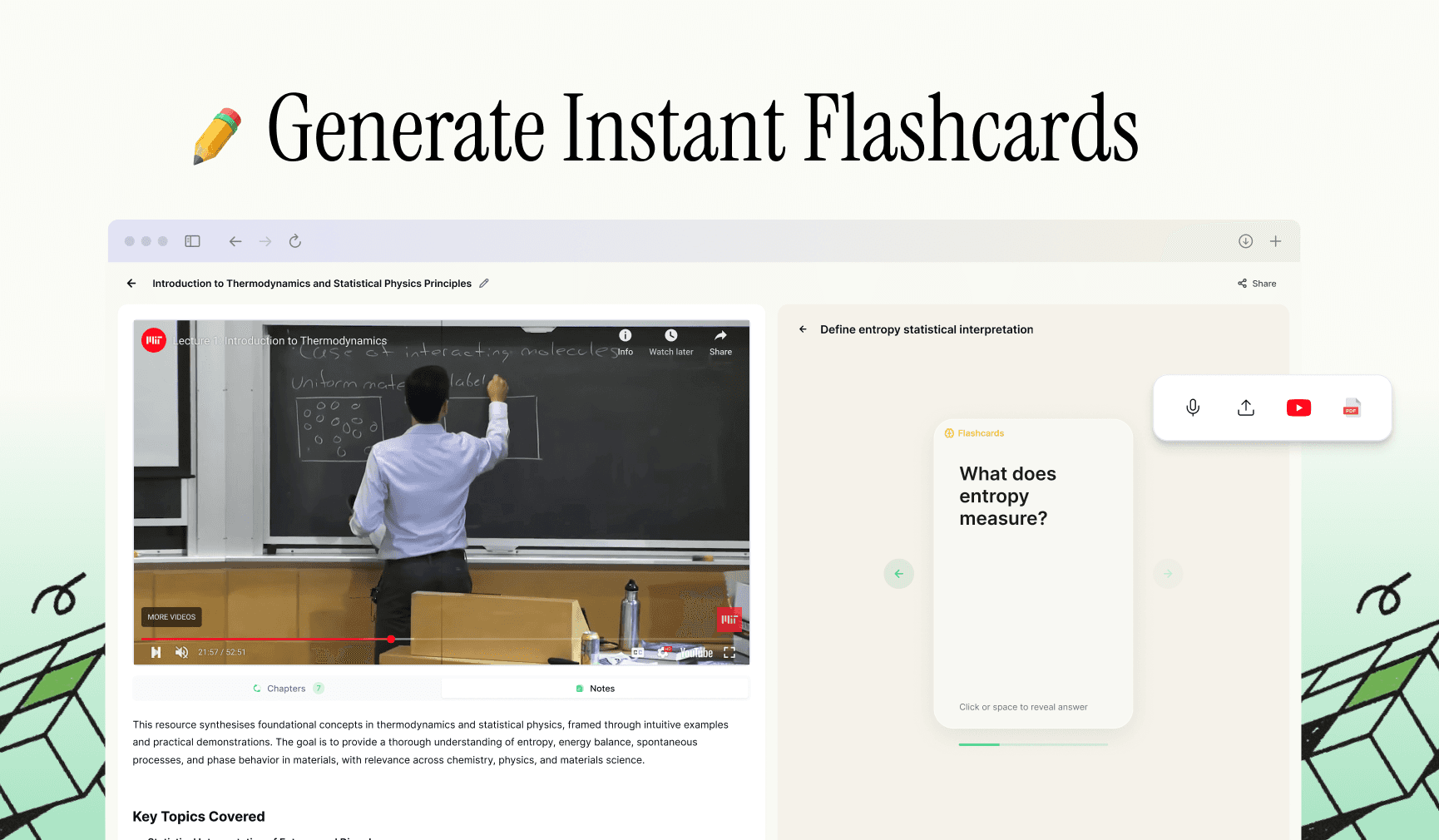
Creating finance flashcards manually is incredibly tedious. Typing out long formulas and copying definitions from textbooks takes time you should be using to actually study. Duetoday solves this by automating the creation process so you can focus on analysis.
Simply upload your accounting PDFs, lecture slides, or even a transcript of a finance vlog. Our AI identifies the core concepts and builds a structured deck for you instantly.
Upload or paste your Financial Statement Analysis material.
Click Generate Flashcards.
Review, edit the formulas if needed, and start studying.
Common Financial Statement Analysis mistakes
Many students make the mistake of creating flashcards that are far too wordy. If a card contains a whole paragraph about revenue recognition, you'll end up memorizing the text rather than the concept. Keep them snappy.
Cards are too long: Split complex valuation models into multiple cards.
Only memorizing formulas: Ensure you include 'interpretation' cards (e.g., What does a ratio >1 mean?).
Ignoring the 'Notes': Don't forget to include cards on financial footnotes and disclosures.
No consistent review: Spaced repetition only works if you actually open the deck every day.
FAQ
How many flashcards do I need for Financial Statement Analysis? Typically, a comprehensive deck for a full course ranges from 80 to 120 cards, covering all major ratios, statement components, and analysis techniques.
What’s the best format for these flashcards? Question-and-answer format is best. For example: 'Front: Formula for Working Capital. Back: Current Assets minus Current Liabilities.'
How often should I review my finance cards? Daily reviews are best for the first week, then you can transition to every 3-4 days as the information moves into your long-term memory.
Should I make cards from a textbook or my own notes? Using both is ideal. Textbooks provide formal definitions, while your notes often contain the specific examples your professor emphasizes.
How do I stop forgetting formulas after a few days? This is where spaced repetition shines. By reviewing the cards at increasing intervals, you solidify the neural pathways for those specific formulas.
What if my flashcards feel too easy? If the cards are too easy, start adding 'Case Study' cards where you have to interpret a specific set of numbers instead of just defining a term.
Can I generate flashcards from an annual report PDF? Yes, Duetoday can scan an 10-K or annual report and extract key figures and terms for your flashcards.
Are digital flashcards better than paper? For finance, digital is often better because you can easily update formulas, include images of graphs, and use AI to generate them instantly.
How long does it take to make a full deck? Manually, it can take hours. With Duetoday, you can generate a high-quality deck in under a minute.
Can Duetoday organize my cards by topic? Absolutely. You can tag and categorize your cards by 'Ratios,' 'Cash Flow,' 'Balance Sheet,' and more to keep your study sessions organized.

Duetoday is an AI-powered learning OS that turns your study materials into personalised, bite-sized study guides, cheat sheets, and active learning flows.