Generate Flashcards for Financial Economics
Make Financial Economics flashcards to master asset pricing and risk. Generate study guides and practice questions for your subject.
Generate Flashcards with AI Free
Generate Flashcards for Financial Economics
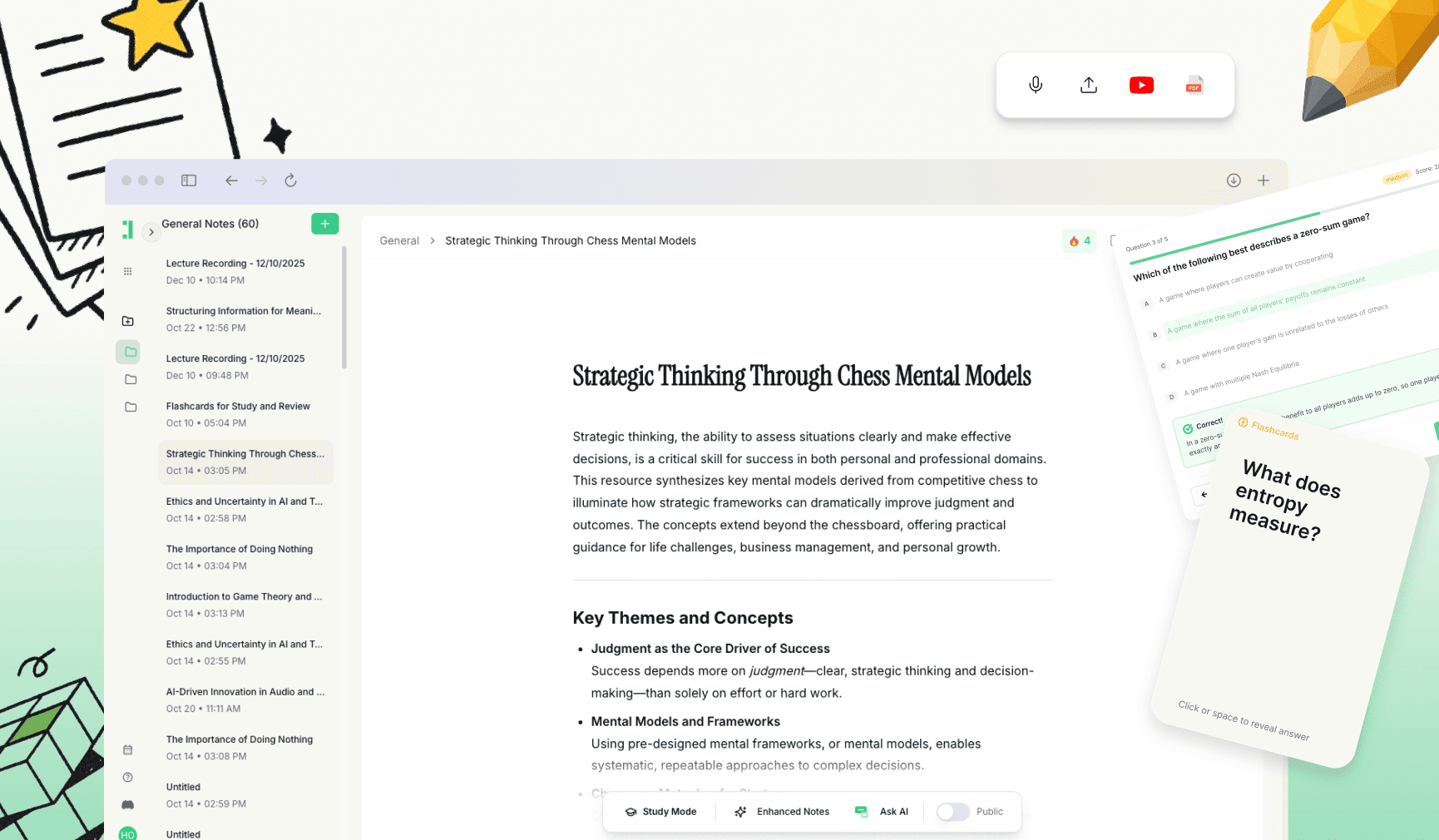
Turn your notes, PDFs, slides, or lectures into Financial Economics flashcards so you can review faster and remember more. Whether you are tackling capital markets or derivatives, our AI helps you master complex financial theories in half the time.
Generate Financial Economics Flashcards
Upload notes / paste text
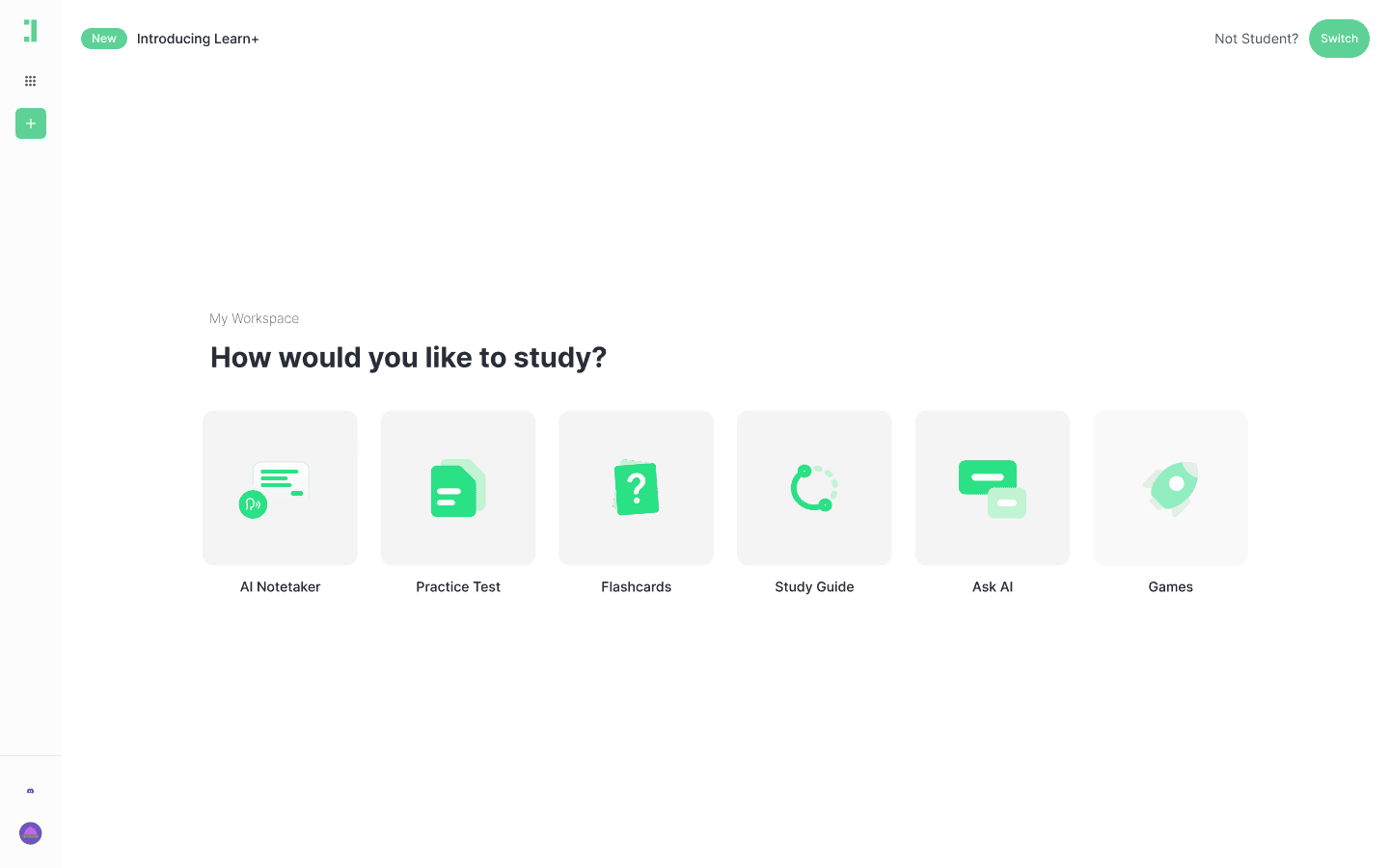
In Duetoday, the process is simple: upload your course materials, generate a comprehensive deck, review or edit the cards, and start studying with active recall tools immediately.
What are Financial Economics flashcards?
Financial Economics flashcards cover the intersection of economic theory and financial markets. They focus on key terms like arbitrage, the Efficient Market Hypothesis (EMH), option pricing models, and portfolio theory. These cards break down dense quantitative formulas and qualitative theories into bite-sized questions.
The outcome is simple: instead of passively rereading a 500-page textbook, you test yourself on specific variables and assumptions. If you already have notes, Duetoday can generate a clean deck in minutes, allowing you to focus on the math rather than the formatting.
Why flashcards work for Financial Economics
Financial Economics requires a blend of conceptual understanding and mathematical application. Flashcards are ideal for this because they help you internalize the relationships between risk, return, and time. By using active recall and spaced repetition, you bridge the gap between knowing a formula and knowing when to apply it.
Remember complex financial terms without overnight cramming.
Separate similar concepts like Systematic vs. Unsystematic Risk.
Learn multi-step processes for valuation and asset pricing.
Practice applying Greek letters and formulas in various market scenarios.
What to include in your Financial Economics flashcards
Great Financial Economics flashcards follow the one idea per card rule. Use question-based prompts to ensure you aren't just recognizing words, but actually retrieving information. We recommend focusing on four main pillars of the subject.
Definitions & Key Terms: What is the Sharpe Ratio? Define the Modigliani-Miller Theorem.
Processes & Steps: What are the steps to calculate a Weighted Average Cost of Capital (WACC)?
Comparisons: How does the CAPM differ from the Arbitrage Pricing Theory?
Application: If interest rates rise, what happens to the price of an existing bond?
How to study Financial Economics with flashcards
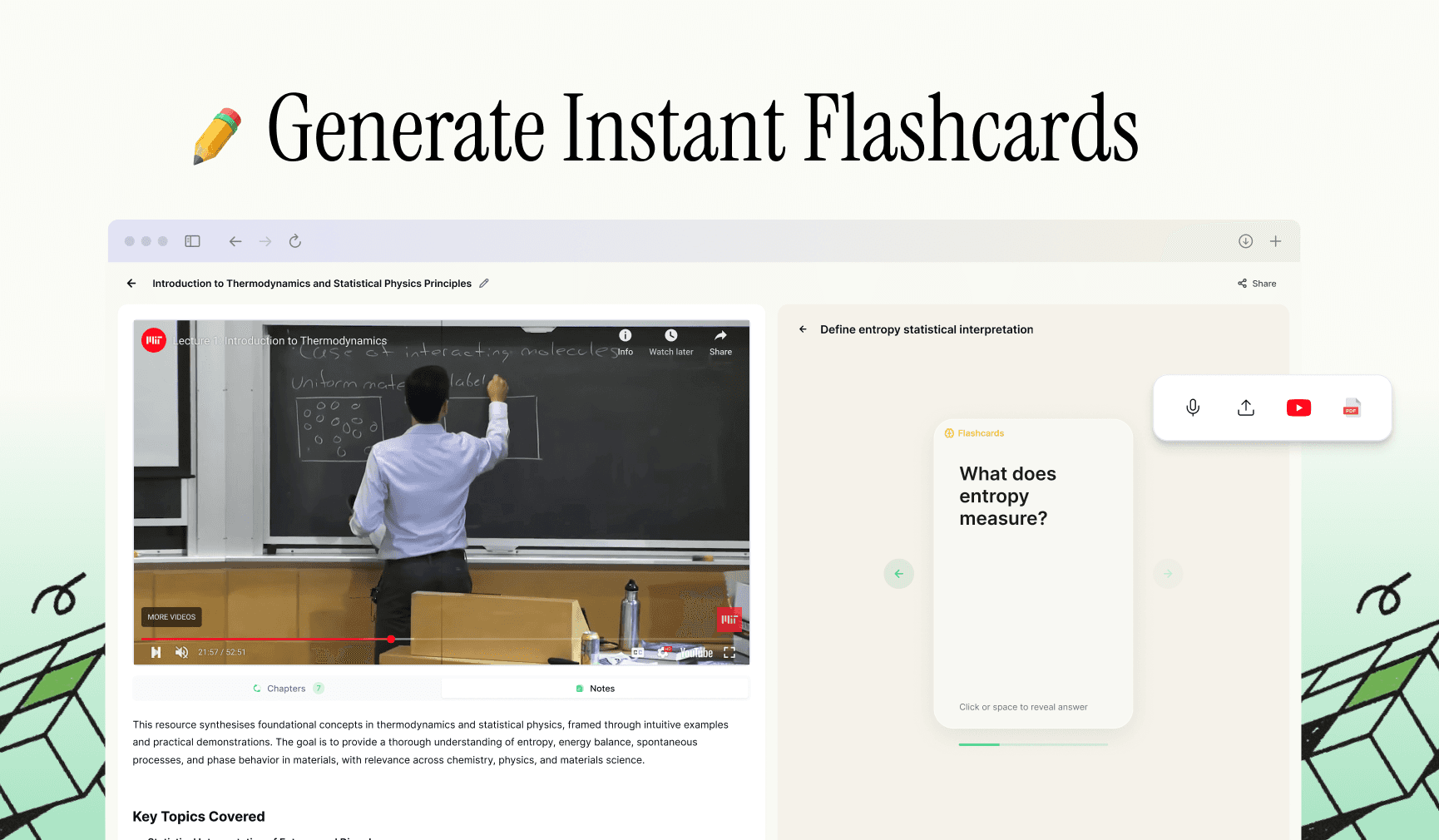
Success in finance comes from consistent exposure. We recommend a two-pass approach: first, build your deck from your syllabus or lecture slides, then review in focused rounds. This helps you identify which models you've mastered and which ones require more practice.
Make a deck from your notes or generate it from your textbook PDF.
Do one quick round to find weak spots in your quantitative understanding.
Review weak cards—like option pricing or hedging—daily for a few days.
Mix in a few harder application cards to simulate exam conditions.
Do a final mixed review before your midterms or CFA exams.
Generate Financial Economics flashcards automatically in Duetoday
Making finance cards manually is agonizing. Drawing graphs, writing out complex discount formulas, and organizing market theories takes hours you could spend actually studying. Duetoday automates the tedious part so you can get straight to the learning.
Upload or paste your Financial Economics material (PDFs or Slides).
Click Generate Flashcards to let the AI pinpoint high-yield concepts.
Review, edit for personal nuance, and start studying.
Generate Financial Economics Flashcards in Duetoday
Start with your notes and get a deck you can actually use today. Stop rereading and start recalling.
Common Financial Economics flashcard mistakes
Most students make cards that are too long or contain entire paragraphs. This leads to false mastery where you recognize the text but can't apply the concept under pressure.
Cards are too long: Split complex valuation models into several smaller steps.
Only memorizing definitions: Ensure you include why and how for market movements.
Confusing similar models: Create specific contrast cards for CAPM vs. APT.
No review schedule: Ensure you use spaced repetition for mathematical formulas.
Ready to generate your Financial Economics flashcards?
Don't waste another hour formatting slides into cards. Upload your notes, generate your deck, and master Financial Economics with the power of active recall. Works with notes, PDFs, slides, and transcripts.
FAQ
How many flashcards do I need for Financial Economics?
A typical introductory course usually requires 150-300 cards to cover major theories, formulas, and market concepts comprehensively.
What is the best format for finance flashcards?
Use a Q&A format. Put the concept or scenario on the front and the definition or formula application on the back.
How often should I review my finance deck?
Review daily leading up to exams. High-intensity subjects like Financial Economics benefit from the spaced repetition provided by AI study tools.
Should I make cards from a textbook or my lecture slides?
Both. Use textbooks for foundational theories and lecture slides for specific exam focuses and examples provided by your professor.
How do I stop forgetting formulas?
Create cloze deletion cards where you leave a part of the formula blank to test your ability to reconstruct it from memory.
What if my flashcards feel too easy?
Increase the difficulty by adding application scenarios like: Given these variables, calculate the Expected Return.
Can I generate cards from a PDF of a financial report?
Yes, Duetoday can analyze financial reports or textbooks to extract key metrics and definitions into study cards.
Are digital flashcards better than paper for finance?
Yes, digital cards allow for faster organization and the use of algorithms that show you the hardest cards more frequently.
How long does it take to create a full deck?
Using AI, you can turn a chapter of notes into a full deck in under 60 seconds, whereas manual creation takes hours.
Can Duetoday organize my cards by topic?
Yes, Duetoday categorizes your generated cards by the specific concepts found in your uploaded materials.

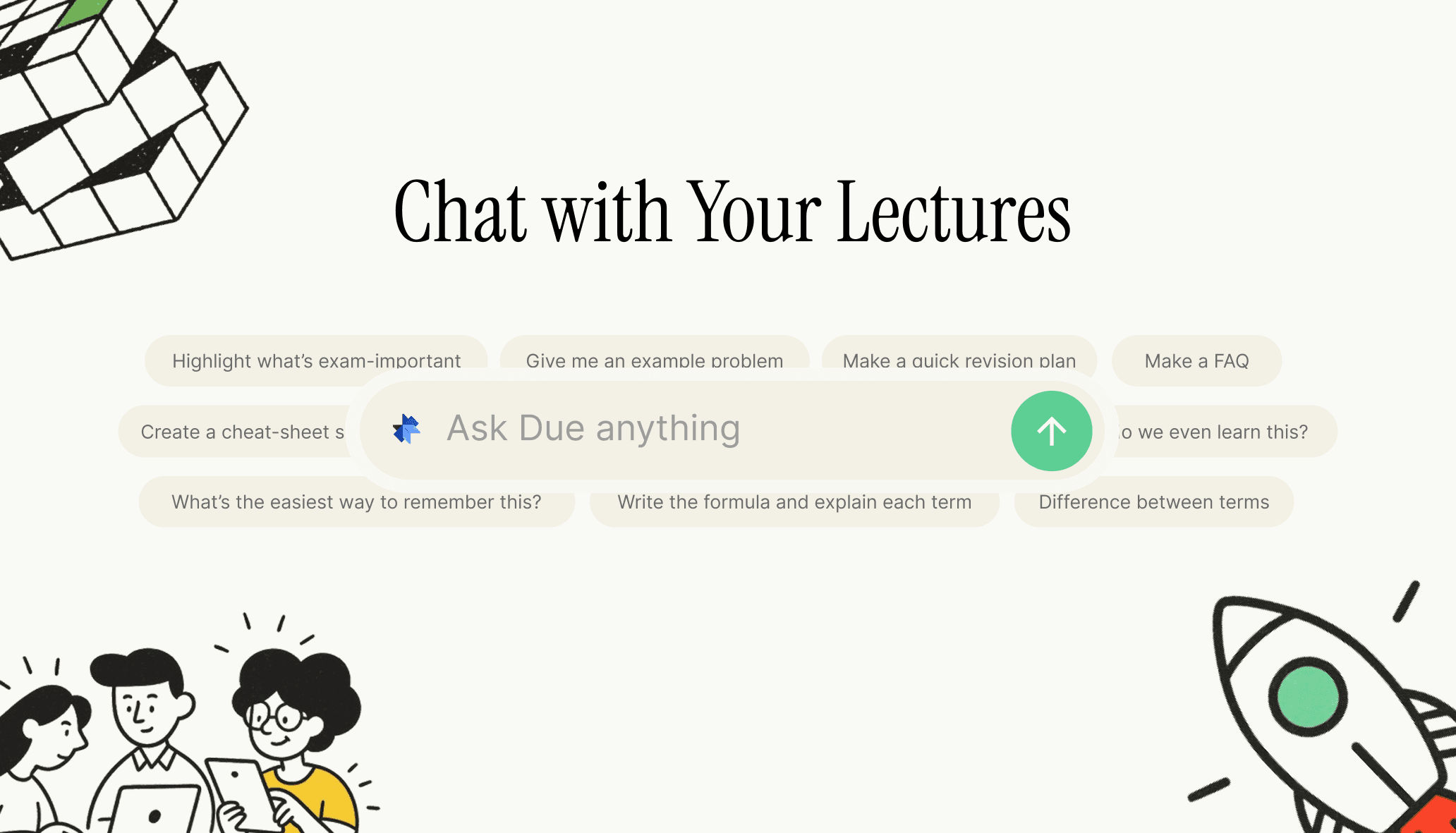
Duetoday is an AI-powered learning OS that turns your study materials into personalised, bite-sized study guides, cheat sheets, and active learning flows.