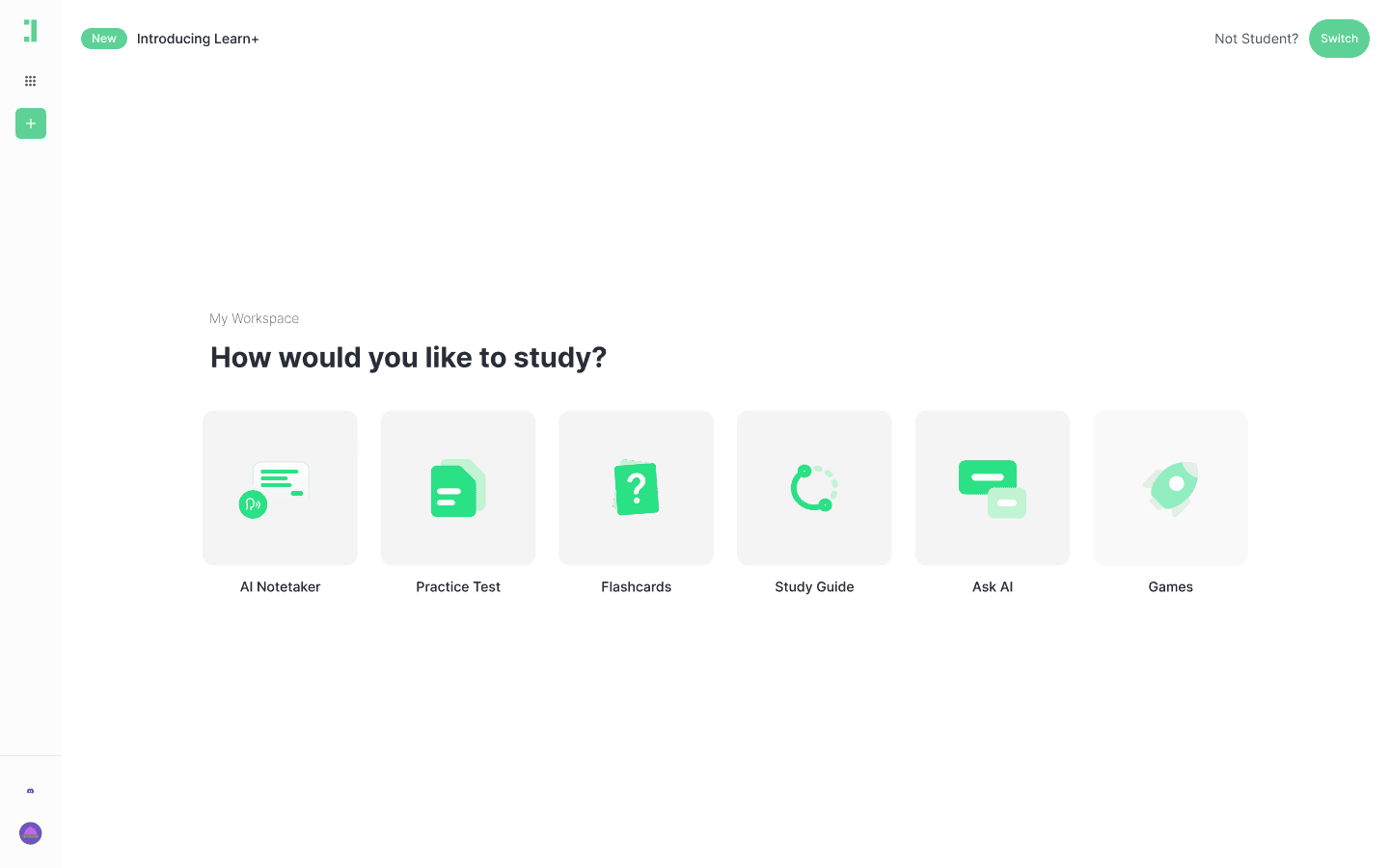
Generate Flashcards for Financial Accounting
Master Financial Accounting. Turn notes into flashcards instantly with AI. Try out free today!
Generate Flashcards with AI Free
Generate Flashcards for Financial Accounting
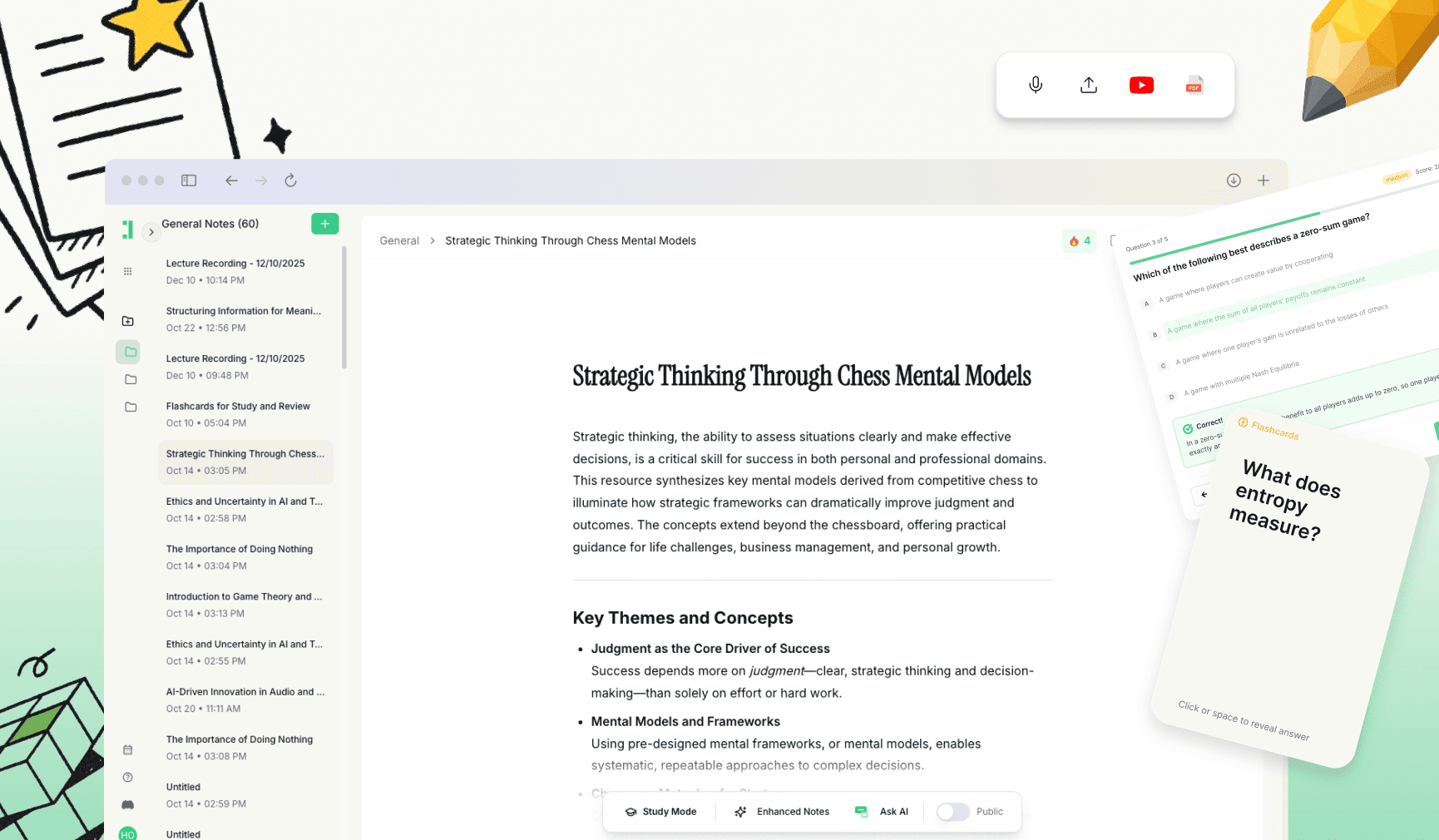
Turn your notes, PDFs, slides, or lectures into Financial Accounting flashcards so you can review faster and remember more. Whether you are tackling the accounting equation or complex consolidation rules, our AI simplifies the process.
Generate Financial Accounting FlashcardsUpload notes / paste text
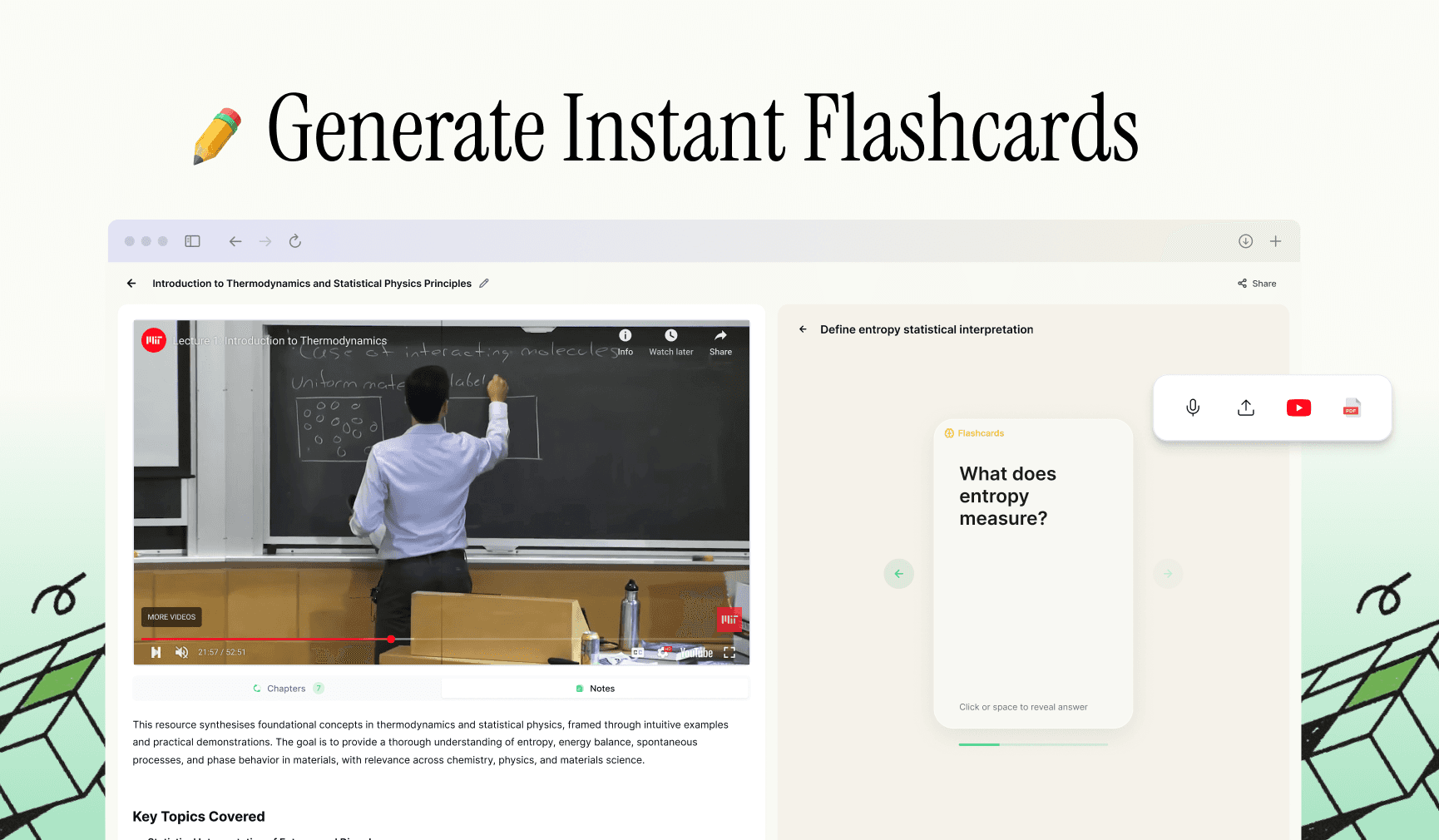
In Duetoday, the process is seamless: simply upload your study materials, and our AI instantly generates a comprehensive deck. You can then review, edit, and begin studying with proven active recall methods.
What are Financial Accounting flashcards?
Financial Accounting flashcards cover the essential building blocks of the field, including key terms like assets, liabilities, and equity, as well as the specific steps in the accounting cycle. They help you master formulas for financial ratios and the nuanced rules of GAAP or IFRS.
The outcome is a shift from passive reading to active testing. Instead of rereading a textbook chapter on cash flows, you test your ability to categorize activities, which builds much stronger long-term recall for your exams.
If you already have notes, Duetoday can generate a clean deck in minutes so you can spend your time studying, not formatting.
Why flashcards are one of the best ways to study Financial Accounting
Financial Accounting requires a mix of rote memorization for terminology and procedural memory for recording transactions. Flashcards bridge this gap by forcing you to retrieve information from scratch.
By using active recall and spaced repetition, you ensure that you don't just recognize a term when you see it, but can actually define and apply it under exam pressure.
Remember key terms like Accrual vs. Cash basis without cramming
Separate similar concepts such as Accounts Payable vs. Accrued Expenses
Learn the steps of the accounting cycle in the correct sequence
Practice applying debit and credit rules to various account types quickly
What to include in your Financial Accounting flashcards
Effective accounting flashcards follow the “one idea per card” rule. They should be question-based rather than just a list of words to ensure you are actually testing your knowledge.
Definitions & key terms: Focus on the “why” and “what” of accounting standards.
Processes & steps: Break down the closing process or bank reconciliations.
Comparisons: Contrast FIFO vs. LIFO or Operating vs. Capital leases.
Application: Create mini-scenarios where you must determine the effect on the balance sheet.
Example prompts for your deck: "What is the basic accounting equation?", "Define the Revenue Recognition Principle," "What happens to Equity when an expense is recorded?", and "How is the Current Ratio calculated?"
How to study Financial Accounting with flashcards (a simple system)
Success in accounting comes from consistency. We recommend a two-pass approach: build your deck quickly using Duetoday, then review in focused rounds.
Make a deck from your chapter notes or lecture slides.
Do one quick round to identify which entries or formulas are tripping you up.
Review these "weak" cards daily to move them into long-term memory.
Mix in harder application cards as you get more comfortable.
Do a final mixed review of all chapters before your midterms or finals.
Generate Financial Accounting flashcards automatically in Duetoday
Making accounting cards manually is slow and tedious—drawing T-accounts by hand takes time you don't have. Duetoday automates the grunt work.
Simply upload your PDF textbook or paste your class notes, and our AI identifies the most important concepts to create a professional study deck instantly.
Upload your Financial Accounting PDFs or slides
Click Generate Flashcards
Review, edit, and start mastering your debits and credits
Common Financial Accounting flashcard mistakes
Many students make their cards too wordy. If a card contains an entire paragraph about Depreciation, you'll memorize the text, not the concept. Keep it simple: one card for the definition, one for the formula, and one for the entry.
Cards are too long: Split complex entries into smaller steps.
Ignoring the 'Why': Don't just memorize the entry; ask why a specific account is debited.
Focusing only on definitions: Ensure you include calculation-based cards.
Lack of consistency: Spaced repetition only works if you review regularly.
Ready to generate your Financial Accounting flashcards?
Stop rereading your textbook and start recalling the material. Upload your notes today and get a custom deck in seconds.
Start Generating Flashcards
FAQ
How many flashcards do I need for Financial Accounting? Usually, 30-50 cards per chapter is enough to cover key terms, formulas, and common journal entries without becoming overwhelming.
What’s the best format for accounting flashcards? Question-and-answer format works best. For example: 'Q: Normal balance of an Asset? A: Debit.'
How often should I review my cards? Daily review is best for accounting, as the concepts build on each other. Even 15 minutes a day makes a massive difference.
Should I make cards from my textbook or slides? Use both. Slides usually highlight what the professor thinks is important for the exam, while textbooks provide the formal definitions.
How do I stop forgetting accounting rules? Use spaced repetition. Duetoday shows you the cards you struggle with more frequently until they stick.
Can I generate cards from a PDF? Yes, Duetoday can process accounting PDFs and extract key concepts to build cards automatically.
Are digital flashcards better than paper? Digital cards are often better for accounting because they are easier to organize by chapter and allow for faster searching and editing.
How long does it take to make a deck? With Duetoday, it takes seconds. Manually, it could take hours to write out every term and formula.
Can Duetoday handle formulas? Yes, the AI is designed to recognize and format accounting formulas and equations for clear study cards.

Duetoday is an AI-powered learning OS that turns your study materials into personalised, bite-sized study guides, cheat sheets, and active learning flows.