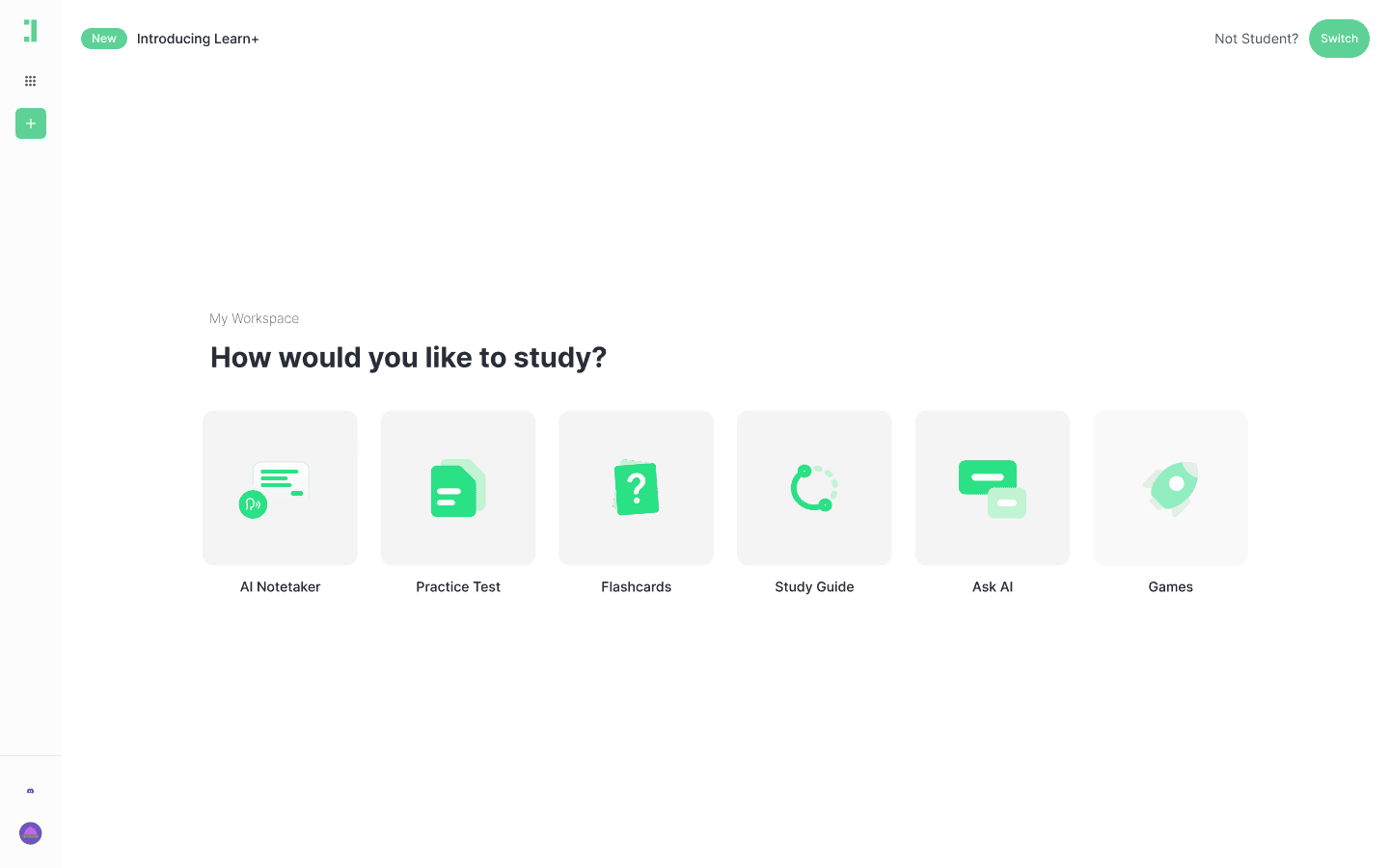
Generate Flashcards for Externalities
Turn notes into Externalities flashcards in seconds. Try out free AI generation today!
Generate Flashcards with AI Free
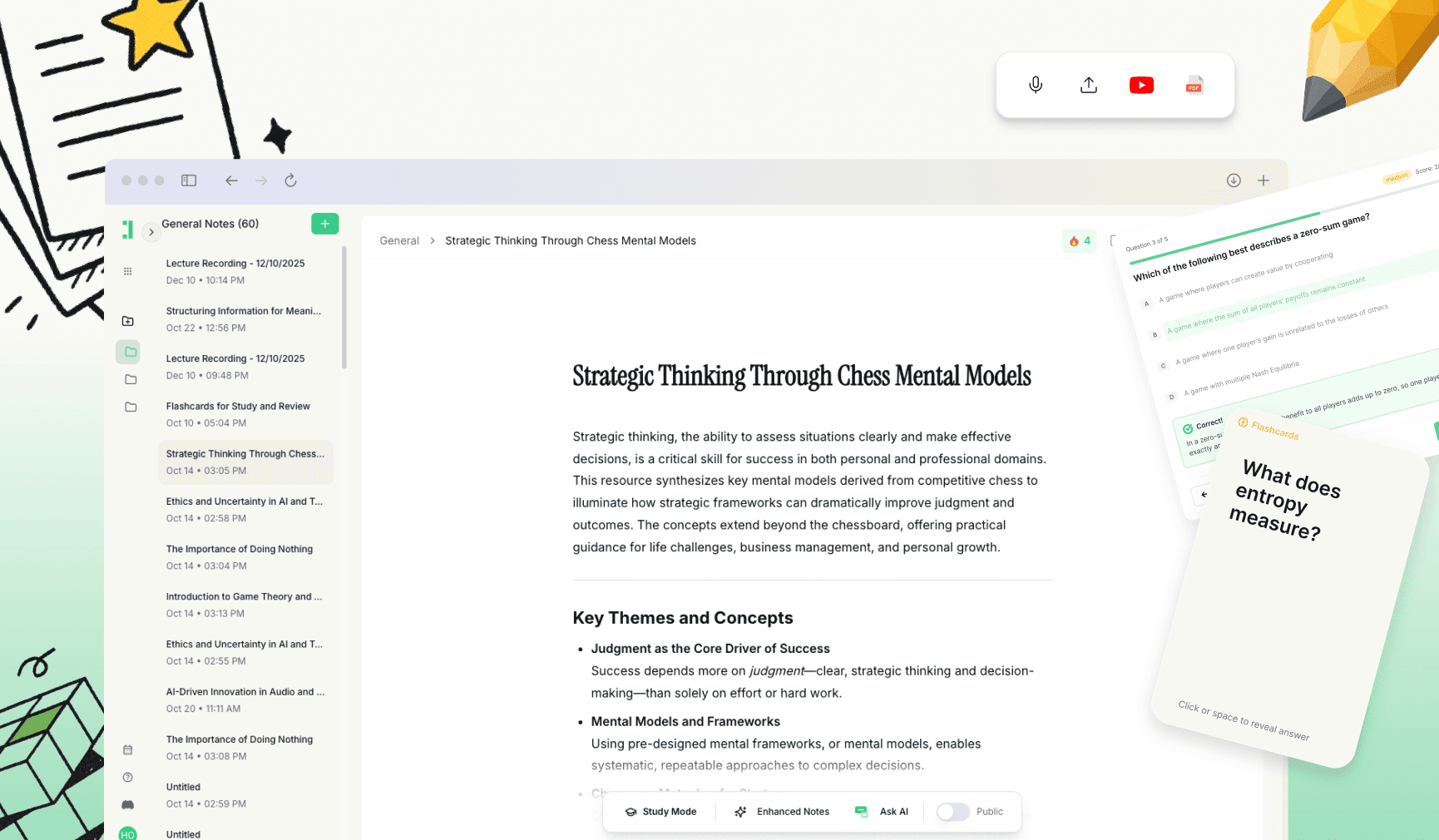
Generate Flashcards for Externalities
Turn your economics notes, PDFs, slides, or lectures into Externalities flashcards so you can review faster and remember more. Whether you are tackling microeconomics or environmental policy, Duetoday helps you master complex market failure concepts.
Generate Externalities FlashcardsUpload notes / paste text
In Duetoday, simply upload your materials and our AI extracts the core economic principles. Within seconds, you receive a generated deck to review, edit, and start studying with active recall.
What are Externalities flashcards?
Externalities flashcards cover the costs or benefits that affect a third party who did not choose to incur that cost or benefit. These cards focus on key terms like marginal social benefit (MSB), marginal private cost (MPC), and the specific formulas used to calculate deadweight loss in a market.
Instead of rereading long textbook chapters on market failures, you test yourself on shifts in supply and demand curves. This builds immediate recall of how government interventions like Pigouvian taxes or subsidies correct market inefficiencies. If you already have notes, Duetoday can generate a clean deck in minutes.
Why flashcards are one of the best ways to study Externalities
Externalities require a deep understanding of the relationship between private incentives and social outcomes. Flashcards force you to differentiate between productive and allocative efficiency without looking at your notes.
By using active recall and spaced repetition, you ensure that you aren't just memorizing definitions but are understanding the underlying mechanics of market failure. Short, repetitive testing helps move these abstract concepts into long-term memory.
Remember key terms like 'Negative Externality' and 'Positive Externality' without cramming.
Separate similar concepts such as Marginal Social Cost vs. Marginal Private Cost.
Learn the step-by-step process of how a tax shifts the supply curve.
Practice applying the Coase Theorem to different economic scenarios.
What to include in your Externalities flashcards
Effective flashcards follow the 'atomic' rule: one idea per card. When studying economics, focus on question-based prompts that require more than a 'yes' or 'no' answer.
Definitions & key terms: "What is a negative externality?" "Define market failure in terms of efficiency."
Processes & steps: "What happens to the equilibrium price when a subsidy is introduced to a positive externality?"
Comparisons: "How is a command-and-control policy different from a market-based policy?"
Application: "When would you use a Pigouvian tax?" "What happens if property rights are clearly defined?"
Try these example prompts: "Explain the impact of pollution on the MSB/MSC curve," or "Why does a positive externality lead to under-consumption?"
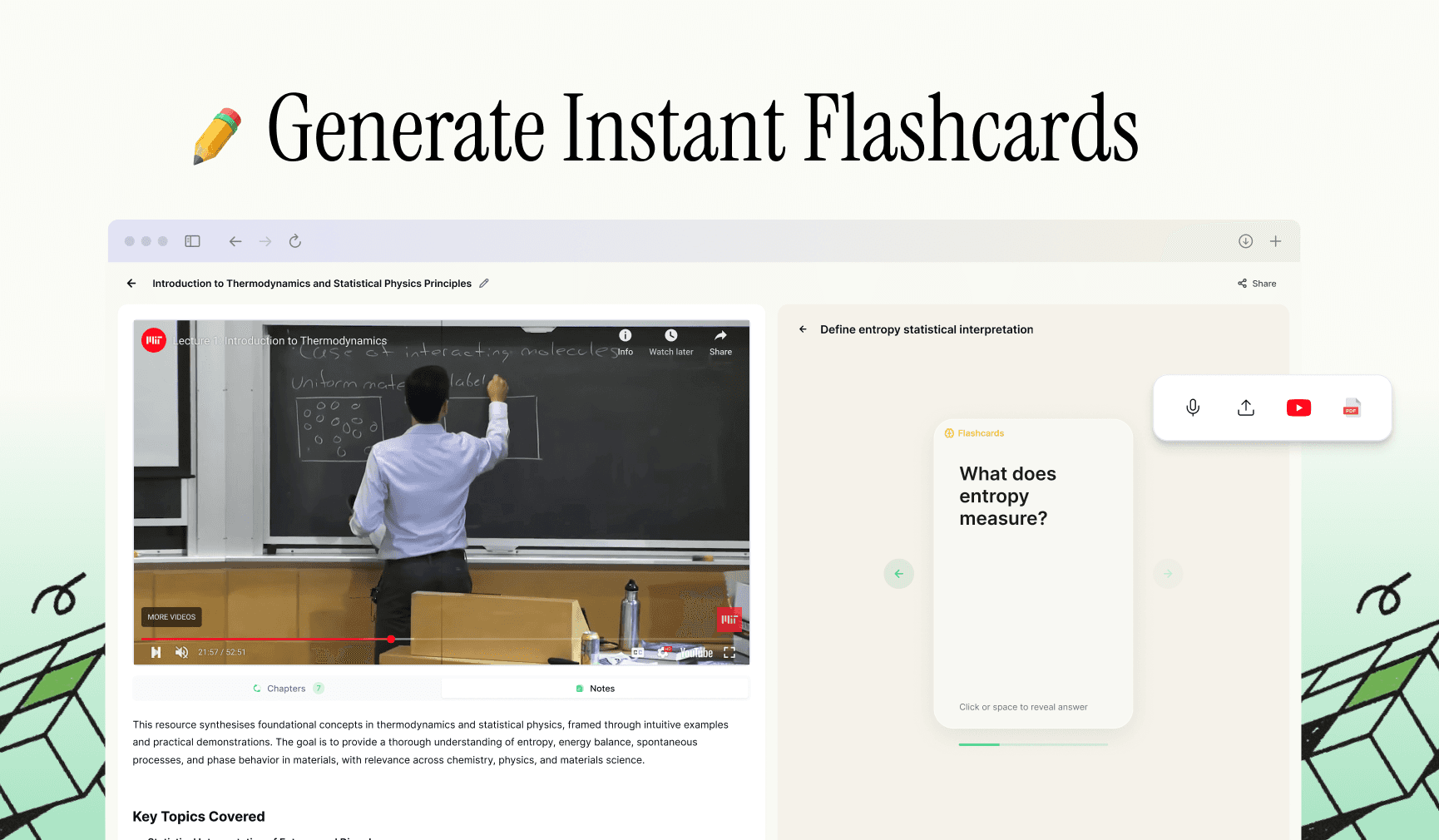
How to study Externalities with flashcards (a simple system)
Use a two-pass approach. First, generate your deck from your syllabus or lecture slides. Then, go through the deck once to identify high-difficulty concepts like 'Common Pool Resources' or 'Tragedy of the Commons.'
Once you’ve identified the tough cards, review them daily. Mix in simpler cards like basic supply/demand definitions to keep your confidence high and your overall knowledge balanced. Before your exam, do a final mixed review of all market failure topics.
Make a deck from your notes using Duetoday.
Do one quick round to find weak spots in graph interpretation.
Review weak cards daily for three to five days.
Mix in a few harder application cards each session.
Do a final mixed review before your midterms or finals.
Generate Externalities flashcards automatically in Duetoday
Making economics cards manually is incredibly slow. Drawing curves and writing out definitions for social costs takes time away from actual studying. Duetoday solves this by automating the creation process.
Just upload your PDF or paste your lecture transcript into the tool. Duetoday analyzes the text, identifies the most important economic variables, and builds a deck you can use instantly.
Upload or paste your Externalities materials.
Click 'Generate Flashcards'.
Review, edit, and start studying.
Generate Externalities Flashcards in Duetoday
Start with your notes and get a deck you can actually use today.
Common Externalities flashcard mistakes
Many students create cards that are too wordy, making it hard to test specific knowledge. If a card takes 30 seconds to read, it's a paragraph, not a flashcard. Aim for clarity and speed.
Cards are too long: split 'Government Interventions' into individual cards for taxes, subsidies, and quotas.
Only memorizing words: ensure you add 'draw the shift' prompts for graphical understanding.
Confusing MSC and MPC: add cards that specifically ask for the difference between the two.
No review schedule: use spaced repetition to avoid forgetting the 5 types of externalities.
Ready to generate your Externalities flashcards?
Stop rereading your textbook and start practicing active recall. Upload your notes today and let AI build your study guide in seconds.
Start Generating Flashcards
Works with notes, PDFs, slides, and transcripts.
FAQ
How many flashcards do I need for Externalities? Usually, a comprehensive deck for this unit contains 30-50 cards, covering definitions, graphical shifts, and policy examples.
What’s the best format for Externalities flashcards? Question-and-answer format is best. For graphs, describe the shift: 'If MSB > MPB, is the good over-produced or under-produced?'
How often should I review Externalities flashcards? Aim for a quick 10-minute session every day for a week leading up to your exam.
Should I make cards from a textbook or slides? Both. Slides usually have the core definitions, while textbooks provide the real-world examples that make for great application cards.
How do I stop forgetting the difference between MSB and MPB? Use 'Comparison' cards that specifically ask you to define one in relation to the other.
Can I generate Externalities flashcards from a PDF automatically? Yes, Duetoday is designed to parse PDFs and instantly convert the text into study-ready flashcards.
Are digital flashcards better than paper for economics? Yes, because digital tools like Duetoday use spaced repetition algorithms to show you harder cards more frequently.
How long does it take to make a full Externalities deck? With Duetoday, it takes less than a minute. Manually, it could take over an hour.
Can Duetoday organize my flashcards by sub-topic? Yes, you can generate specific sets for negative externalities, positive externalities, and public goods.

Duetoday is an AI-powered learning OS that turns your study materials into personalised, bite-sized study guides, cheat sheets, and active learning flows.