Generate Flashcards for Experimental Design in Biology
Generate Experimental Design flashcards from your notes in seconds. Try Duetoday for free today!
Generate Flashcards with AI Free
Generate Experimental Design in Biology Flashcards
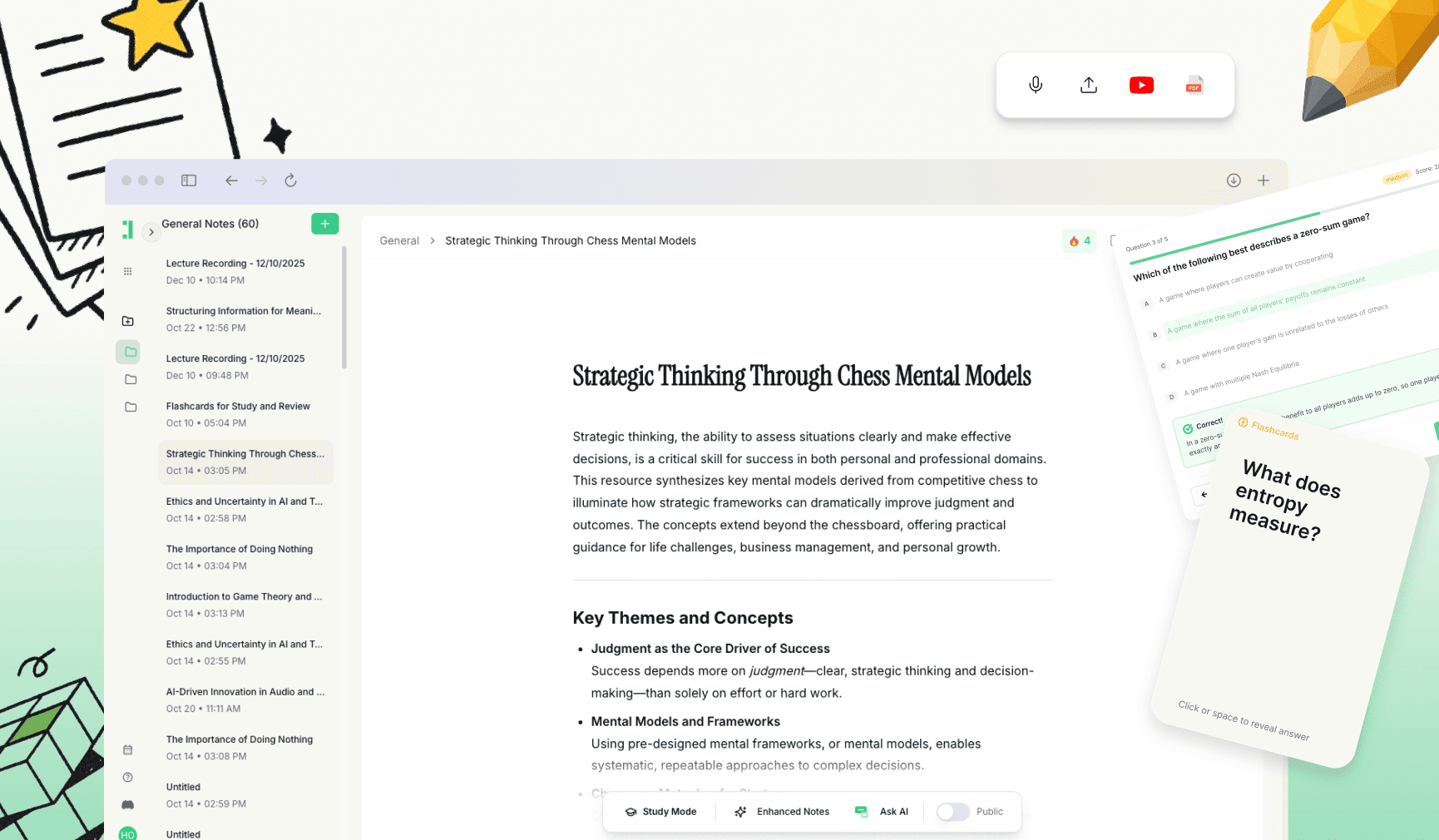
Turn your notes, PDFs, slides, or lectures into Experimental Design in Biology flashcards so you can review faster and remember more. Whether you are prepping for a lab report or a final exam, active recall is the key to mastering scientific methodology.
Generate Experimental Design FlashcardsUpload notes / paste text
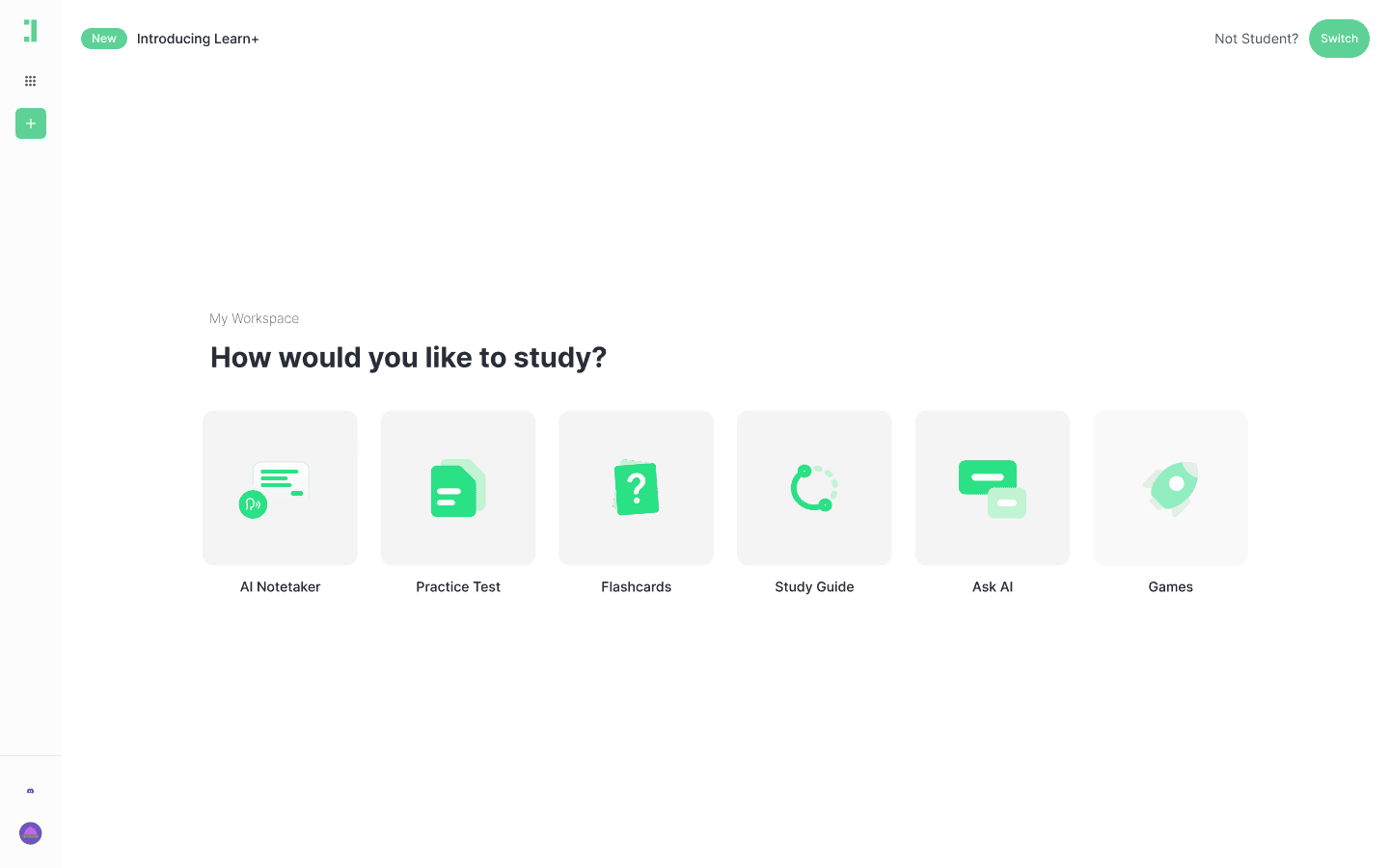
Explain what happens in Duetoday in plain words: simply upload your biology materials, let the AI generate a comprehensive deck, refine the cards to fit your needs, and start your study session immediately.
What are Experimental Design flashcards?
Experimental Design flashcards cover the foundational logic of scientific inquiry. They focus on identifying independent and dependent variables, establishing control groups, understanding constants, and recognizing potential sources of bias or error in a biological study.
Instead of just rereading your textbook chapters on methodology, these flashcards force you to test yourself on how to structure a valid experiment. If you already have notes, Duetoday can generate a clean deck in minutes, helping you move from passive reading to active mastery.
Why flashcards work for Experimental Design
Experimental Design requires a mix of rote memorization for terms and logical application for scenarios. Flashcards bridge this gap by making you define terms and apply rules to hypothetical experiments.
Remember key terms like 'confounding variables' without cramming
Separate similar concepts like negative vs. positive controls
Learn processes step-by-step from hypothesis to data analysis
Practice applying statistical rules and sample size requirements quickly
What to include in your Experimental Design flashcards
Good flashcards follow the 'one idea per card' rule. For biology labs, your questions should focus on the 'why' behind the setup, not just definitions.
Definitions: What is a null hypothesis?
Processes: What are the steps to randomize a sample?
Comparisons: How does a control group differ from an experimental group?
Application: If the temperature fluctuates, how does that impact the independent variable?
Example prompts: 'Define a double-blind study,' 'What is the purpose of a placebo?', 'Name three ways to reduce bias in field observations,' and 'When would you use a T-test?'
How to study Experimental Design with flashcards
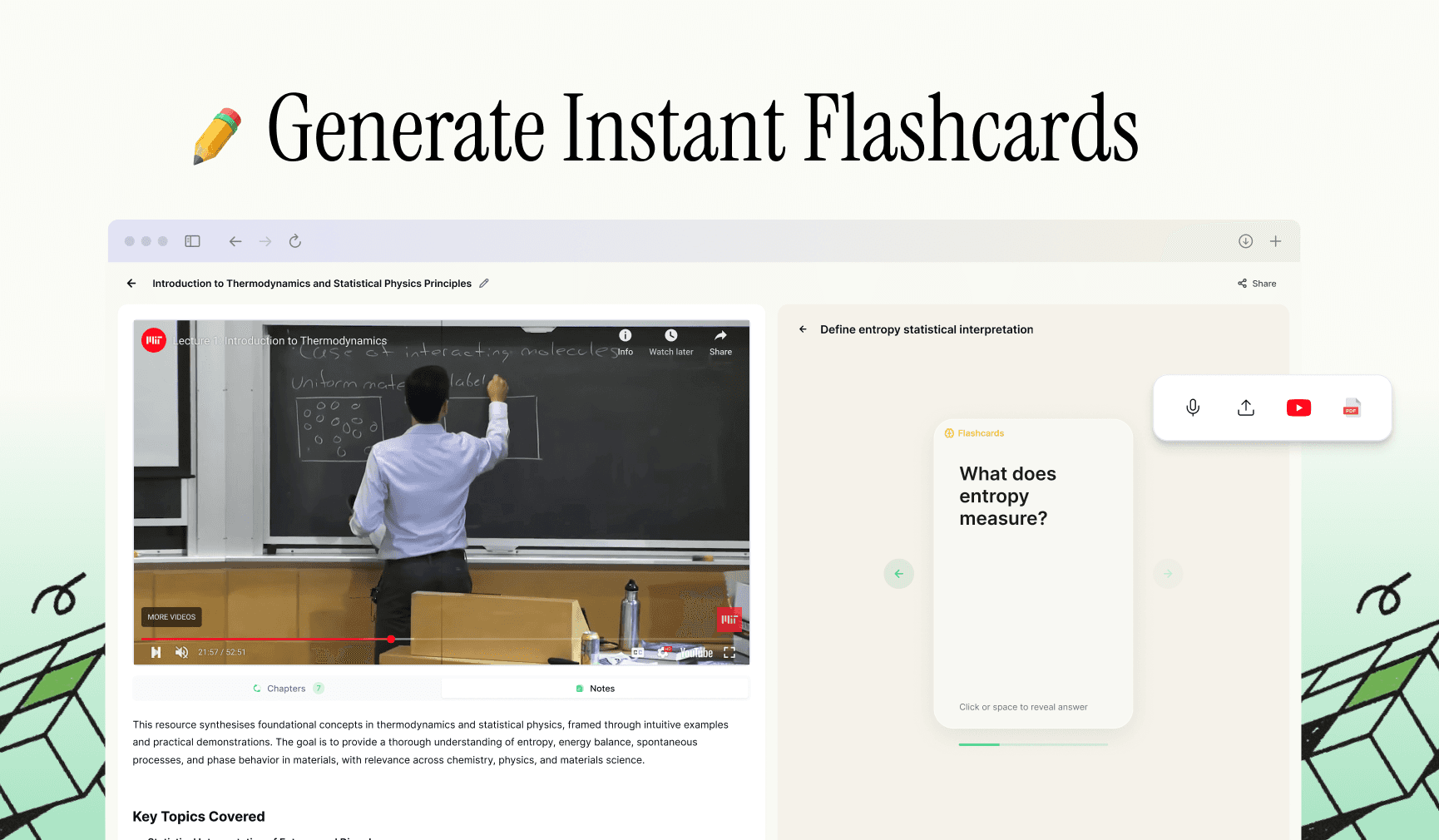
Use a two-pass approach. First, generate your deck and do a high-speed review to see which concepts (like standard deviation or p-values) trip you up. Then, focus your energy on those specific gaps.
Make a deck from your lab manual or lecture slides.
Do one quick round to find weak spots in your logic.
Review weak cards daily to build long-term retention.
Mix in scenario-based cards to practice real-world application.
Do a final mixed review before your lab practical or exam.
Generate Experimental Design flashcards automatically in Duetoday
Making cards manually is slow and often leads to cards that are too wordy. Duetoday uses AI to pull the most important experimental concepts from your specific course materials.
Upload your biology PDFs or paste your lecture transcripts
Click Generate Flashcards
Review, edit, and start studying immediately
Generate Experimental Design Flashcards in Duetoday
Start with your notes and get a deck you can actually use today. Stop rereading and start recalling the logic of science.
Common Experimental Design mistakes
Many students create cards that are too complex. Keep your cards focused on single concepts to avoid 'the illusion of competence.'
Cards are too long: split 'How to design an experiment' into 5 individual cards.
Only memorizing words: add prompts that ask 'Why is a large sample size necessary?'
Confusing variables: create specific comparison cards for 'independent' vs 'dependent'.
No review schedule: use spaced repetition to keep old definitions fresh.
FAQ
How many flashcards do I need for Experimental Design? Typically, 40 to 60 cards cover the core concepts of variables, controls, and basic statistics for most biology courses.
What’s the best format for these cards? Use a 'Question and Answer' format with specific scenarios, such as 'In a study of plant growth and light, what is the IV?'
How often should I review? Review daily for the first three days, then every three days until your exam to ensure the concepts stick.
Should I use lab notes or textbooks? Use both. Textbooks provide definitions, while lab notes provide the practical application you will likely be tested on.
How do I stop forgetting the types of bias? Use comparison cards that highlight the specific differences between selection bias and observer bias.
Can I generate cards from my lab manual PDF? Yes, Duetoday can scan your lab manual and extract the key experimental parameters automatically.
Are digital flashcards better than paper? Yes, digital cards allow for spaced repetition algorithms that prioritize the cards you find difficult.
How long does it take to make a deck? With Duetoday, you can turn a 20-page PDF into a deck in under a minute.
Can Duetoday organize cards by topic? Yes, you can categorize cards into sub-topics like 'Statistics' or 'Field Methodology'.

Duetoday is an AI-powered learning OS that turns your study materials into personalised, bite-sized study guides, cheat sheets, and active learning flows.