Generate Flashcards for Ethics in Philosophy
Make and generate Ethics in Philosophy flashcards to master moral theories and philosophical arguments quickly.
Generate Flashcards with AI Free
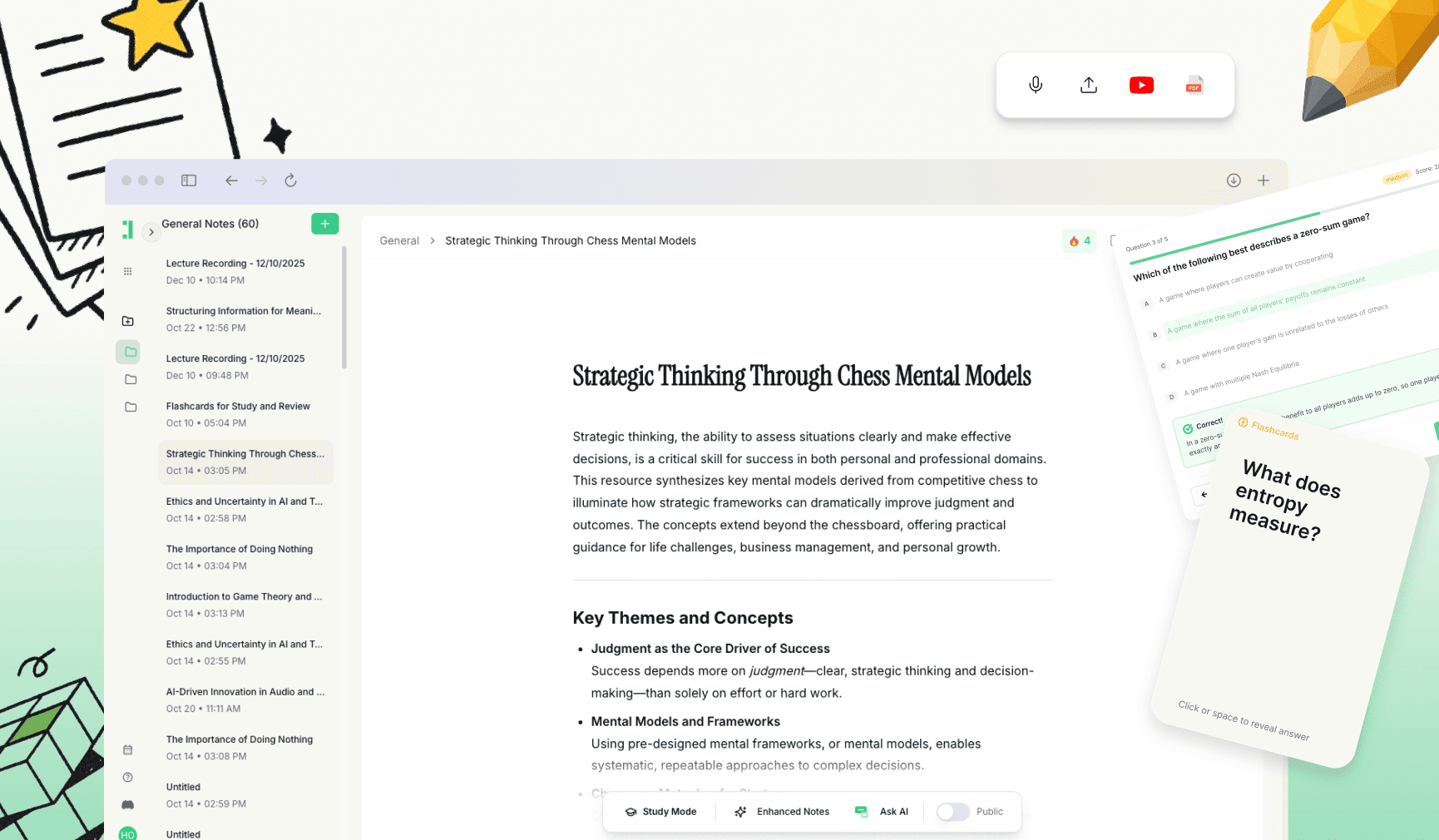
What are Ethics in Philosophy flashcards?
Ethics in Philosophy flashcards are specialized study tools designed to help you master moral theories, normative frameworks, and applied ethics. Instead of passively reading dense philosophical texts, these flashcards break down complex ideas like Deontology, Utilitarianism, and Virtue Ethics into manageable bits of information.
By using these flashcards, you transition from simply recognizing a philosopher's name to actively recalling their core arguments and criticisms. If you already have lecture notes or textbook chapters, Duetoday can generate a clean, organized deck in minutes, allowing you to focus on the nuances of moral logic rather than manual entry.
Why flashcards work for Ethics in Philosophy
Philosophy requires a unique blend of terminology mastery and logical application. Flashcards excel here because they force your brain to engage in active recall, which is significantly more effective than highlighting a book. They help you distinguish between closely related concepts, such as the difference between 'rule utilitarianism' and 'act utilitarianism,' through repeated, targeted testing.
Build a solid foundation of key ethical terminology.
Differentiate between competing moral frameworks instantly.
Learn the sequence of logical arguments and common rebuttals.
Practice applying abstract moral principles to real-world dilemmas.
What to include in your Ethics in Philosophy flashcards
The most effective philosophy flashcards follow the atomic rule: one idea per card. This prevents you from simply memorizing a block of text and helps you truly grasp specific concepts. Your deck should balance definitions with 'why' and 'how' questions to prepare you for both multiple-choice exams and essay writing.
Definitions & Terms: Simple recall for terms like 'Categorical Imperative' or 'Teleology'.
Theoretical Frameworks: Questions regarding the core tenets of specific schools of thought.
Comparison Cards: Prompts that ask you to compare two thinkers (e.g., Kant vs. Mill).
Application Scenarios: Brief ethical dilemmas that ask which theory would justify a specific action.
Example prompts include: What is the primary goal of Virtue Ethics?, How does the Principle of Utility define right action?, and What are the three formulations of Kant's Categorical Imperative?
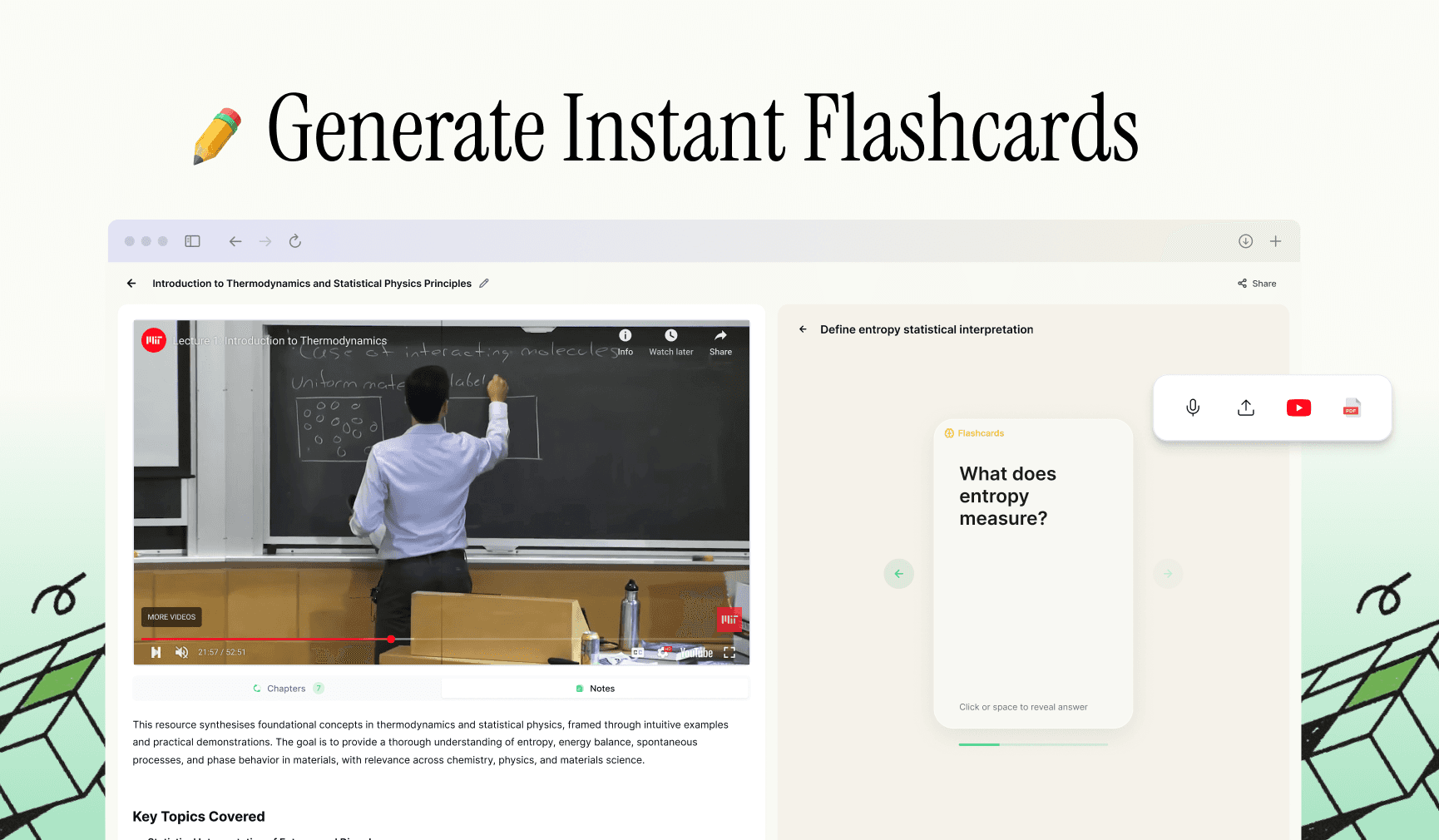
How to study Ethics in Philosophy with flashcards
Studying philosophy is about more than just definitions; it is about understanding relationships between ideas. We recommend a two-pass approach. Start by generating a deck from your reading material and do a broad pass to see which theories you find most confusing. Then, use spaced repetition to focus heavily on those difficult areas.
Generate a deck from your syllabus, PDF, or lecture notes.
Perform an initial review to identify weak spots in your understanding.
Review difficult concepts (like Meta-ethics or Nihilism) daily.
Mix cards from different chapters to test your ability to switch contexts.
As you approach your exam, use the cards to trigger longer verbal explanations of the theories.
Generate Ethics in Philosophy flashcards automatically in Duetoday
Manually writing out flashcards for a philosophy course is exhausting and often leads to over-filled cards that are hard to study. Duetoday simplifies this by using AI to extract the most important philosophical arguments and definitions from your materials instantly.
Upload your Ethics PDFs, slides, or lecture transcripts.
Click 'Generate Flashcards' to see your AI-curated deck.
Edit the prompts to match your professor's specific focus and start studying.
Generate Ethics in Philosophy Flashcards in Duetoday
Common Ethics in Philosophy flashcard mistakes
Avoid the 'wall of text' mistake. Philosophical definitions can be wordy, but your cards shouldn't be. If a card is too long, you'll memorize the pattern of the words rather than the concept itself. Ensure you aren't just memorizing who said what, but also why their argument matters in the context of moral reasoning. Finally, don't ignore the critiques; include cards that ask for the standard objection to each major ethical theory.
Ready to generate your Ethics in Philosophy flashcards?
Stop struggling with dense readings and start mastering the material. Upload your notes, generate your deck, and use active recall to ace your philosophy course.
Start Generating Flashcards
FAQ
How many flashcards do I need for Ethics? A typical introductory course usually requires 100-150 cards to cover the major theories, philosophers, and applied topics.
What is the best format for philosophy cards? Use a 'Question and Answer' format that focuses on the 'why' behind a theory rather than just a name and a date.
How often should I review them? Review your most difficult moral theories daily and your 'mastered' cards once a week to ensure long-term retention.
Should I make cards from my textbook or lectures? Lectures often highlight what the professor thinks is important for the exam, so start there, then supplement with textbook definitions.
How do I stop forgetting complex theories? Use spaced repetition. The more you struggle to recall a concept like 'The Veil of Ignorance,' the more often you should see that card.
What if my cards feel too easy? If a card is too easy, it might be too simple. Rephrase it to ask for a critique or an application of the concept instead.
Can I generate flashcards from a philosophy PDF? Yes, Duetoday can scan your academic PDFs and extract key arguments into flashcard format automatically.
Are digital flashcards better than paper for philosophy? Yes, because digital tools allow for spaced repetition algorithms that prioritize the concepts you find most difficult.
How long does it take to make a full deck? With Duetoday, it takes less than a minute. Manually, it could take hours of transcribing notes.
Can Duetoday organize my flashcards by theory? Yes, you can categorize your generated cards into sets like 'Normative Ethics' or 'Meta-ethics' for organized study.

Duetoday is an AI-powered learning OS that turns your study materials into personalised, bite-sized study guides, cheat sheets, and active learning flows.