Generate Flashcards for Epistemology
Make Epistemology flashcards to master the theory of knowledge. Generate study decks from your philosophy notes with AI.
Generate Flashcards with AI Free
Generate Flashcards for Epistemology
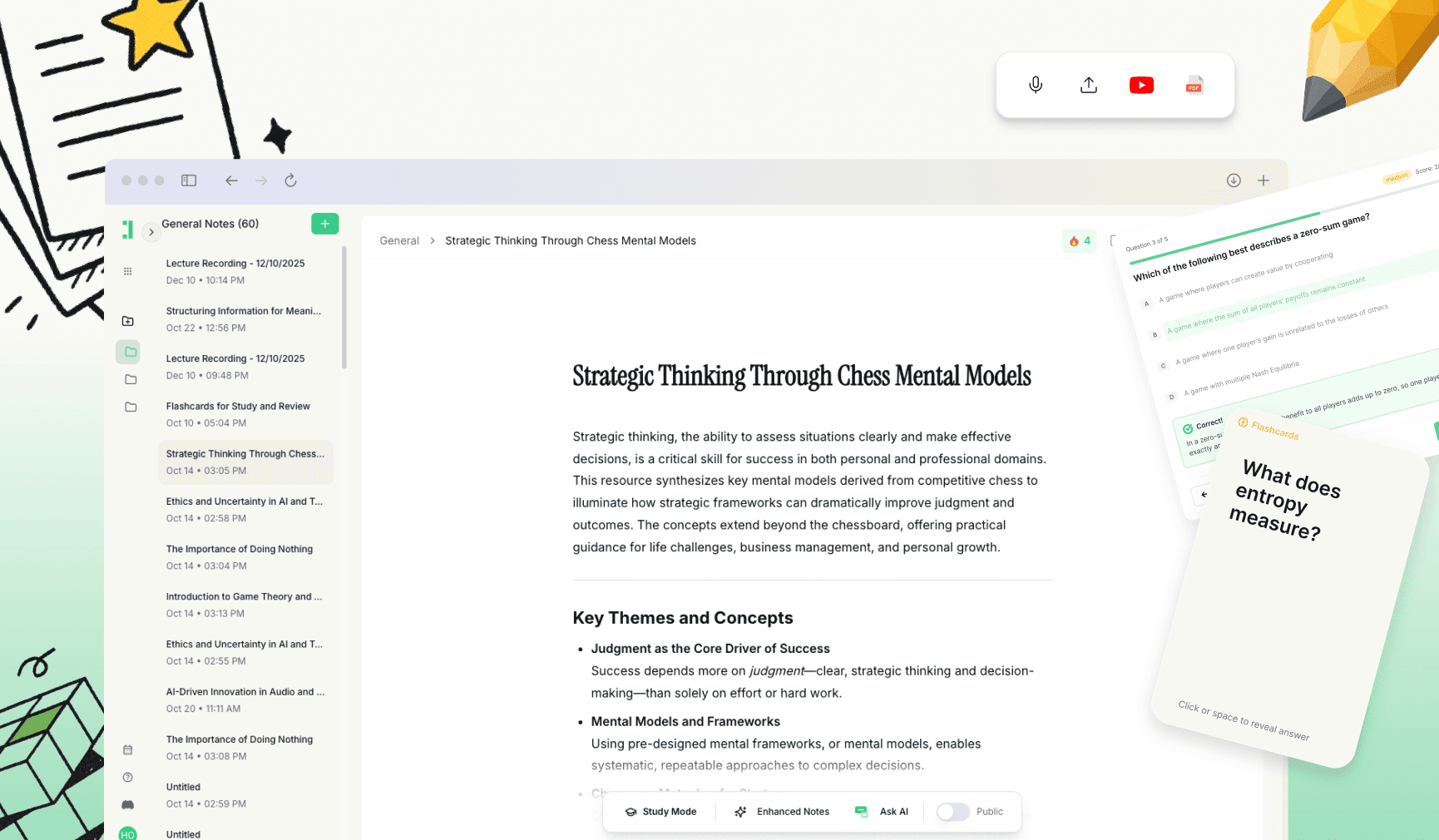
Turn your philosophy notes, PDFs, textbook chapters, or lecture transcripts into structured Epistemology flashcards so you can review complex theories faster and remember critical arguments for your exams.
Generate Epistemology Flashcards Upload Philosophy Notes
With Duetoday, you simply upload your reading material and our AI identifies the core arguments and definitions to create a custom study deck. No more manual copying—just upload, generate, and start your review.
What are Epistemology flashcards?
Epistemology flashcards focus on the theory of knowledge. They cover essential questions regarding the nature, origin, and limits of human belief. These cards help you breakdown dense philosophical jargon into manageable prompts that test your understanding of how we know what we know.
Instead of highlighting endless pages of text, these flashcards force you to define terms like 'Justified True Belief,' distinguish between 'a priori' and 'a posteriori' knowledge, and explain internalism versus externalism. The outcome is active recall: you stop recognizing the text and start retrieving the concepts from memory.
If you already have lecture notes on the theory of knowledge, Duetoday can generate a clean, organized deck in minutes.
Why flashcards work for Epistemology
Epistemology requires a high level of precision in language and logic. Flashcards are ideal because they force you to isolate specific variables in a philosophical argument without getting lost in the prose. They utilize active recall and spaced repetition to ensure that the foundational 'isms'—from Skepticism to Constructivism—stay fresh in your mind.
Master precise definitions of complex philosophical terms.
Separate similar concepts like Rationalism vs. Empiricism.
Learn the steps of logical proofs and transcendental arguments.
Practice applying epistemological virtues to specific thought experiments.
What to include in your Epistemology flashcards
Effective Epistemology flashcards follow the 'atomic' rule: one concept per card. They should move beyond simple vocabulary and challenge your ability to apply a theory to a specific problem or skeptic's challenge.
We recommend focusing on four main categories of cards to ensure a deep understanding of the subject matter:
Definitions & Key Terms: What is the Gettier problem?
Processes & Frameworks: What are the three components of the Tripartite Theory of Knowledge?
Comparisons: How does Foundationalism differ from Coherentism?
Application: Explain the 'Brain in a Vat' thought experiment in relation to Skepticism.
Use prompts like: Define Phenomenalism, State the main critique of Naive Realism, or Contrast Reliabilism with Evidentialism.
How to study Epistemology with flashcards
Studying philosophy requires a two-pass approach. First, use your cards to build a 'mental map' of the various schools of thought. Second, use the cards to simulate the debate between these schools. This moves you from rote memorization to high-level critical thinking.
Break your study sessions into small, focused rounds. Don't try to learn 100 cards at once; instead, master the theories of perception before moving on to the theories of truth.
Generate a deck from your syllabus or reading list.
Do a quick 'filter' round to identify which theories (like Solipsism) confuse you most.
Review your 'weak' cards daily until the definitions are second nature.
Shuffle your deck to avoid 'serial position bias' (remembering things only in order).
Do a final mixed-topic review 48 hours before your exam or paper deadline.
Generate Epistemology flashcards automatically in Duetoday
Making philosophy cards manually is incredibly slow because you have to summarize complex paragraphs into short questions. It’s easy to get bogged down in the writing rather than the studying.
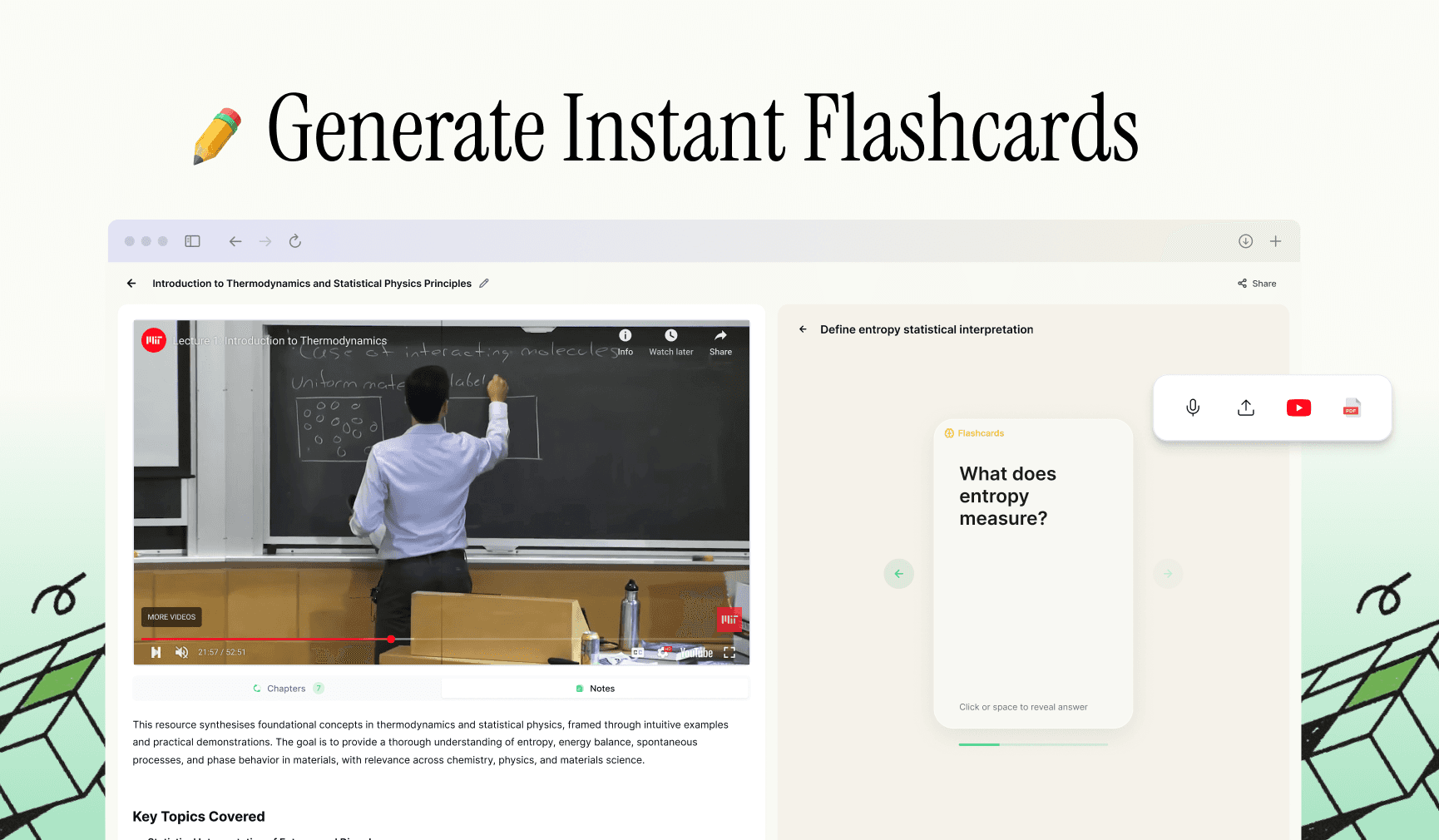
Duetoday solves this by automating the creation process. You provide the source material, and our AI handles the formatting, ensuring your cards are punchy, accurate, and ready for active recall.
Upload your Epistemology PDFs or lecture slides.
Click Generate Flashcards.
Review the AI-generated deck, add your own notes, and start studying.
Generate Epistemology Flashcards in Duetoday
Start with your notes and get a professional-grade study deck you can actually use today.
Common Epistemology flashcard mistakes
Most students make cards that are too wordy, which leads to 'recognition' rather than 'recall.' If you find yourself reading a paragraph on the back of a card, you aren't actually testing your memory.
Cards are too long: If a theory has five parts, make five separate cards.
Ignoring the 'Why': Don't just define a term; ask why a philosopher proposed it in response to a specific problem.
Confusing similar 'isms': Create specific comparison cards for things like Indirect Realism vs. Direct Realism.
Lack of consistency: Spaced repetition only works if you revisit the difficult cards regularly.
Ready to generate your Epistemology flashcards?
Stop rereading the same difficult chapters and start testing your knowledge. Upload your Epistemology materials today and let Duetoday build your perfect study system.
Start Generating Flashcards
Works with philosophy notes, textbook PDFs, lecture slides, and seminar transcripts.
FAQ
How many flashcards do I need for Epistemology? A typical introductory course usually requires 60 to 100 cards to cover major theories, key philosophers, and the central problems of knowledge.
What’s the best format for Epistemology flashcards? Question-and-answer format works best. For example: 'Front: What is the primary claim of Empiricism? Back: All knowledge is derived from sense-experience.'
How often should I review Epistemology flashcards? Use spaced repetition. Review new cards daily for the first three days, then stretch the intervals to every three days, then weekly as they become easier.
Should I make cards from a textbook or my notes? Ideally both. The textbook provides the formal definitions, while your notes likely contain the specific examples or critiques your professor emphasizes.
How do I stop forgetting the different 'isms' after a few days? Create comparison cards that force you to explain the difference between two similar theories, such as Idealism and Materialism.
What if my flashcards feel too easy or too hard? If they are too easy, you are likely just memorizing words. Add 'Application' cards. If they are too hard, your cards are likely too long and need to be split into smaller pieces.
Can I generate Epistemology flashcards from a PDF automatically? Yes, Duetoday is designed to parse complex philosophy PDFs and extract the most important definitions and arguments for you.
Are digital flashcards better than paper for Epistemology? Digital cards are generally better because they allow for automated spaced repetition schedules and are easier to update as your understanding grows.
How long does it take to make a full Epistemology deck? Manually, it can take hours. With Duetoday, you can generate a comprehensive deck in less than a minute after uploading your materials.
Can Duetoday generate and organize my flashcards for me? Yes, the AI categorizes the information it finds in your notes to create a logically structured deck ready for immediate study.

Duetoday is an AI-powered learning OS that turns your study materials into personalised, bite-sized study guides, cheat sheets, and active learning flows.