Generate Flashcards for Endocrinology
Learn how to generate or make Endocrinology flashcards to master hormone pathways and endocrine subjects with this guide.
Generate Flashcards with AI Free
What are Endocrinology flashcards?
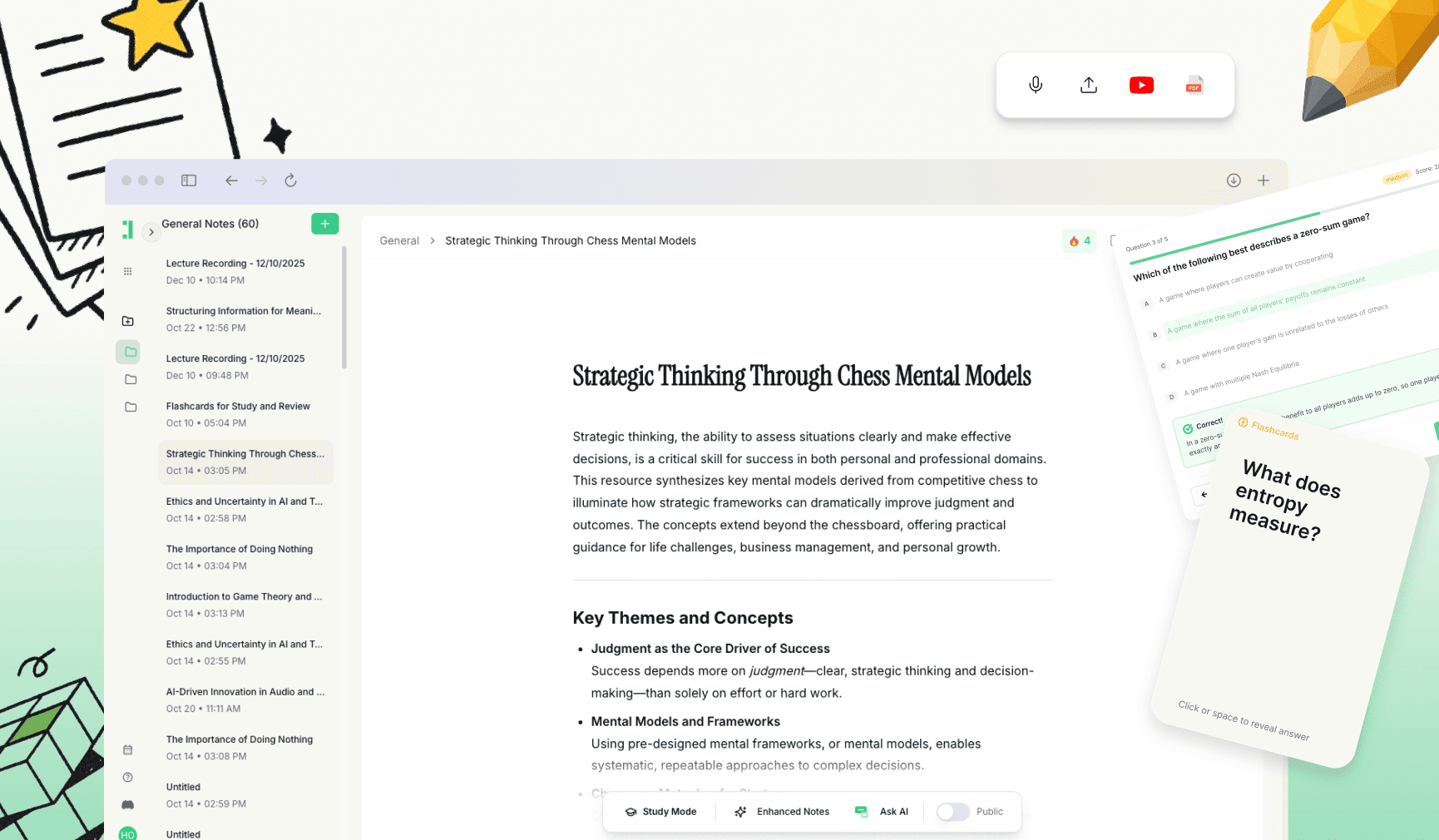
Endocrinology flashcards are specialized study tools designed to help you master the complex network of glands, hormones, and signaling pathways that regulate bodily functions. These cards focus on high-yield clinical information, including hormone synthesis, mechanisms of action, target organs, and the pathophysiology of common endocrine disorders like diabetes, thyroid disease, and adrenal insufficiency.
Instead of passively rereading dense textbooks, endocrinology flashcards force you to recall the specific trigger for a hormone's release or the clinical presentation of a hormonal imbalance. If you already have notes or slides, Duetoday can generate a clean, organized deck in minutes, allowing you to focus on learning rather than formatting.
Why flashcards are one of the best ways to study Endocrinology
Endocrinology is a subject built on relationships and feedback loops. It requires precise memory of normal ranges, hormone interactions, and the 'upstream and downstream' effects of specific glands. Flashcards are ideal for this because they utilize active recall—the process of challenging your brain to retrieve information—which strengthens neural pathways far better than highlighting text.
Memorize complex feedback loops (HPG, HPA, HPT axes) without cramming.
Separate similar concepts, such as the symptoms of Primary vs. Secondary Hyperparathyroidism.
Learn biochemical pathways and hormone synthesis steps in a logical sequence.
Practice applying diagnostic rules for endocrine stimulation and suppression tests.
What to include in your Endocrinology flashcards
The secret to effective endocrinology study is keeping cards concise. One card should focus on one specific idea—such as a single enzyme or a specific symptom—rather than trying to summarize an entire gland. This prevents 'recognition bias' where you think you know the material just because you recognize the words.
Definitions & Key Terms: What is the role of cAMP in hormone signaling?
Processes & Steps: What is the rate-limiting step in steroidogenesis?
Comparisons: How does Central Diabetes Insipidus differ from Nephrogenic DI?
Application: What happens to TSH levels if a patient has Graves' disease?
Use these prompts to build your deck: List the hormones secreted by the anterior pituitary, Define the Somogyi effect, or What is the primary stimulus for aldosterone release?
How to study Endocrinology with flashcards (a simple system)
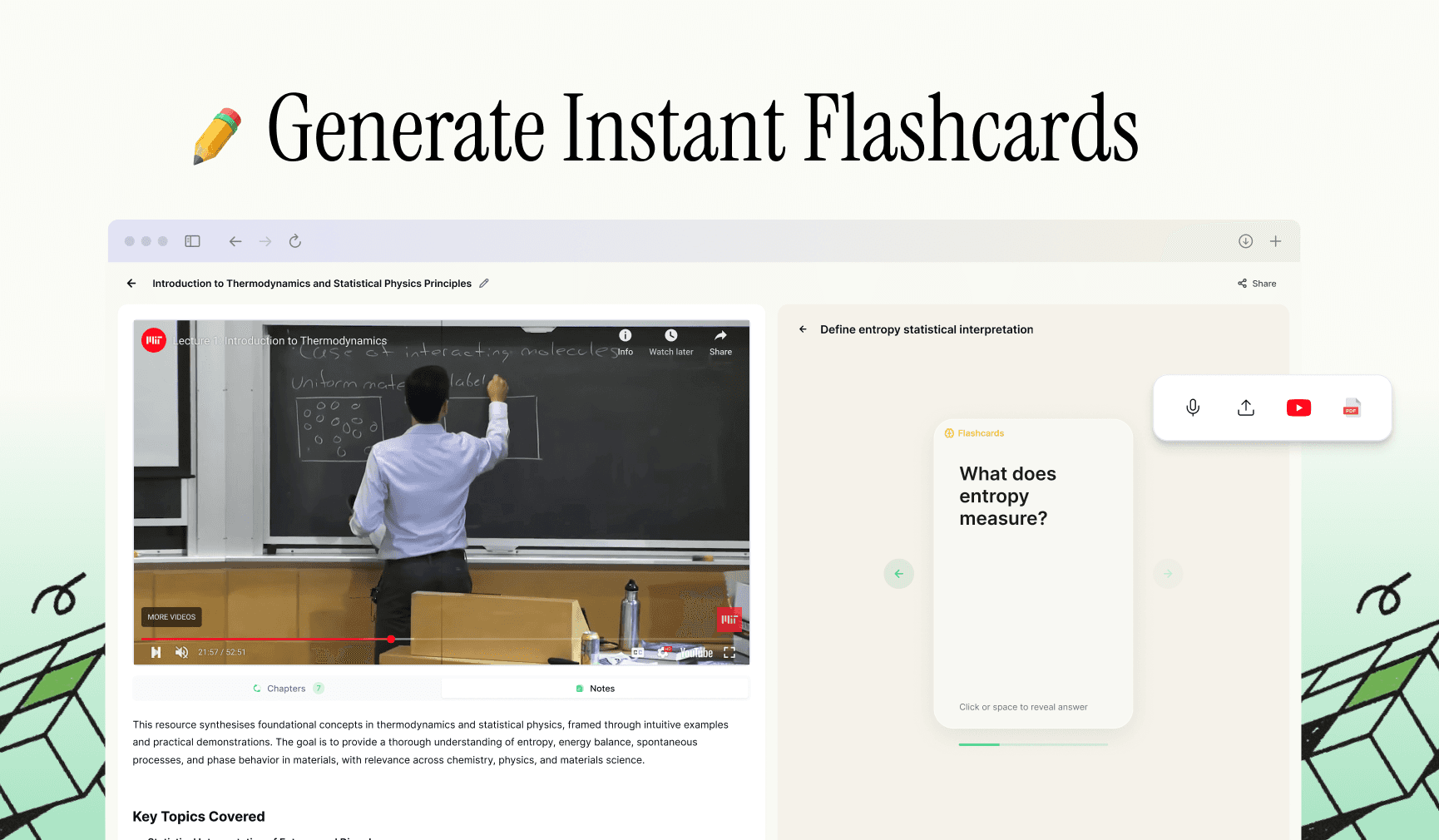
Mastering endocrinology requires a systematic approach. Start by building a comprehensive deck from your lecture notes or clinical guidelines, then move into a 'two-pass' review cycle. This ensures you aren't just memorizing facts, but building a mental map of how the endocrine system functions as a whole.
Make a deck from your notes or generate it automatically from your PDF slides.
Do one quick round to identify which hormones or pathways are your weakest.
Review weak cards (like complex adrenal steroid pathways) daily for several days.
Mix in 'normal' physiology cards with 'pathology' cards to build clinical context.
Do a final mixed review session before your endocrine module exam or boards.
Generate Endocrinology flashcards automatically in Duetoday
Manually writing out flashcards for dozens of hormones and their associated disorders is incredibly time-consuming. Duetoday eliminates the grunt work by using AI to scan your study materials and pull out the most important terms and concepts for you.
Simply upload your endocrinology PDFs, lecture slides, or Harrison’s textbook chapters. Duetoday will instantly generate a structured deck of flashcards that you can edit, organize, and study on any device. Start with your notes and get a deck you can actually use today.
Common Endocrinology flashcard mistakes (and how to fix them)
Avoid these common pitfalls to ensure your study sessions are productive:
Cards are too long: Don't list every symptom of Cushing's on one card; split them into metabolic, physical, and psychological signs.
Ignoring the 'Why': Don't just memorize that TSH is low; add a card explaining the negative feedback mechanism.
Neglecting Lab Values: Ensure you have separate cards for diagnostic cut-offs and reference ranges.
No Spaced Repetition: Don't stop reviewing the 'easy' hormones; keep them in your rotation but at a lower frequency.
Ready to generate your Endocrinology flashcards?
Stop rereading and start recalling. Upload your endocrinology material today and turn your notes into a powerful study tool with Duetoday.
FAQ
How many flashcards do I need for Endocrinology? A typical endocrine module usually requires 150-300 cards to cover physiology, pathology, and pharmacology comprehensively.
What’s the best format for Endocrinology flashcards? Q&A format works best for clinical symptoms, while 'Image Occlusion' is excellent for gland anatomy and histology slides.
How often should I review Endocrinology flashcards? Use spaced repetition—review new or difficult cards daily, and well-known concepts every 3-5 days.
Should I make cards from a textbook or lecture notes? Use lecture notes for exam-specific content and textbooks for filling in gaps regarding complex biochemical pathways.
How do I stop forgetting hormone pathways? Create 'causality' cards. Instead of 'What does Insulin do?', ask 'What happens to blood glucose when Insulin binds its receptor?'.
What if my flashcards feel too hard? Break the concept down. If a card about the RAAS system is too hard, split it into four cards based on each step of the pathway.
Can I generate Endocrinology flashcards from a PDF? Yes, Duetoday can scan your endocrine PDFs and extract key facts into flashcards automatically.
Are digital flashcards better than paper for Endocrinology? Digital is often better because you can easily embed diagrams of feedback loops and access them anywhere.
How long does it take to make a full Endocrinology deck? With Duetoday, you can generate a full deck from a 50-page slide deck in under a minute.
Can Duetoday organize my flashcards by gland? Yes, you can generate and tag cards by specific topics like Thyroid, Adrenal, or Pituitary for organized studying.

Duetoday is an AI-powered learning OS that turns your study materials into personalised, bite-sized study guides, cheat sheets, and active learning flows.