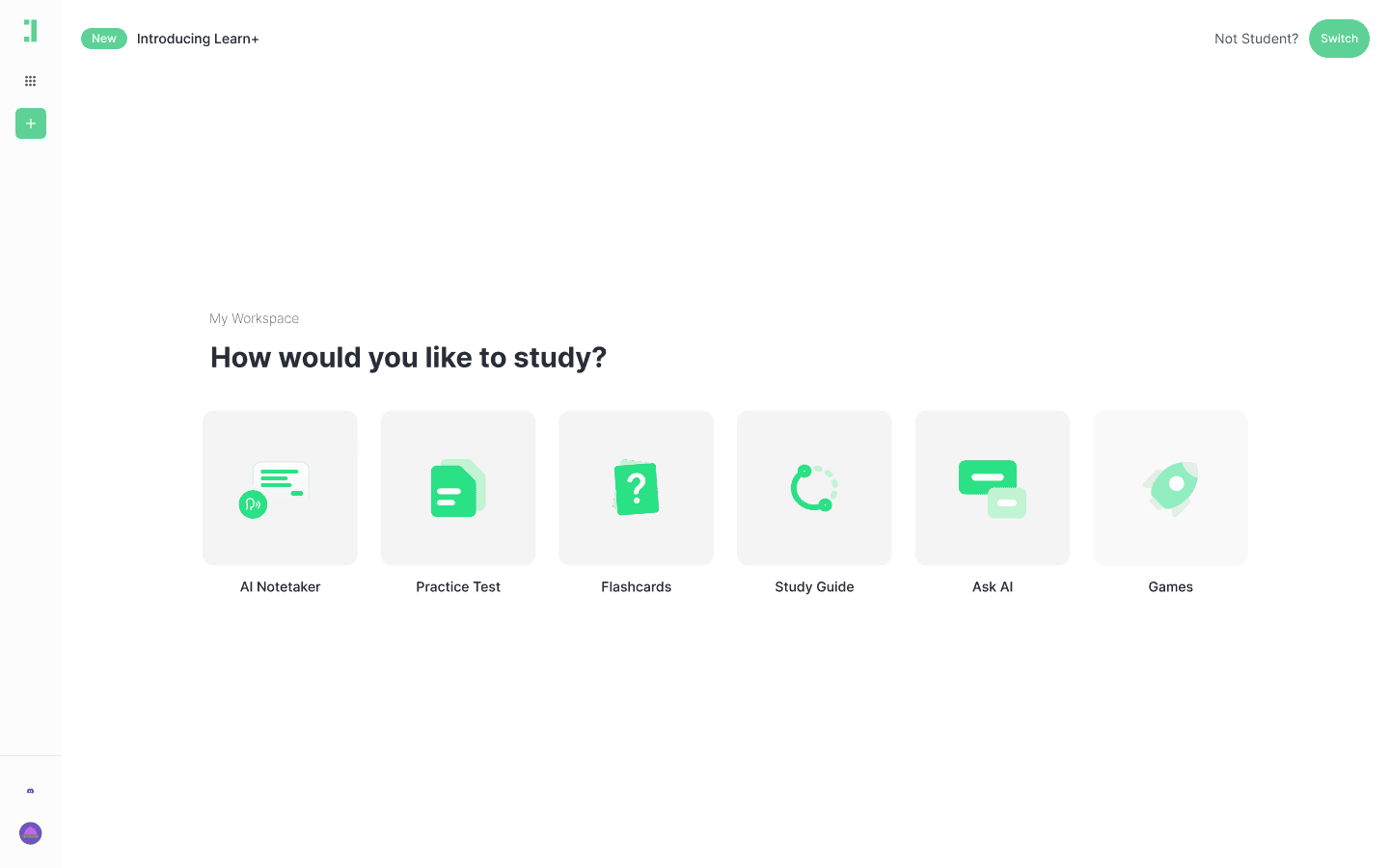
Generate Flashcards for Elasticity
Generate Elasticity flashcards in seconds. Turn notes into study tools. Try for free!
Generate Flashcards with AI Free
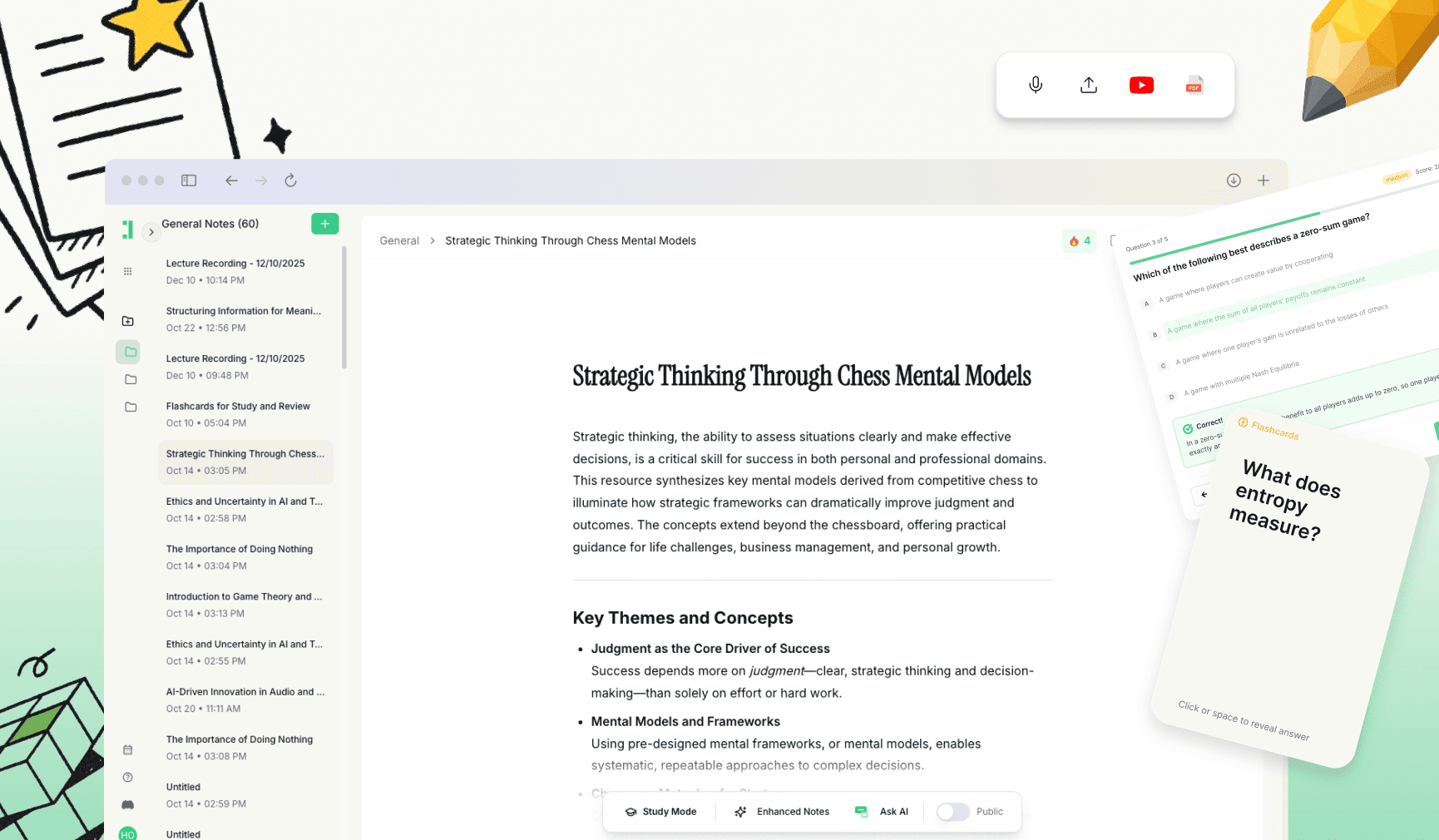
Generate Flashcards for Elasticity
Turn your notes, PDFs, slides, or economics lectures into Elasticity flashcards so you can review faster and remember more. Master complex formulas and market responsiveness without spending hours on manual data entry.
Generate Elasticity FlashcardsUpload notes / paste text
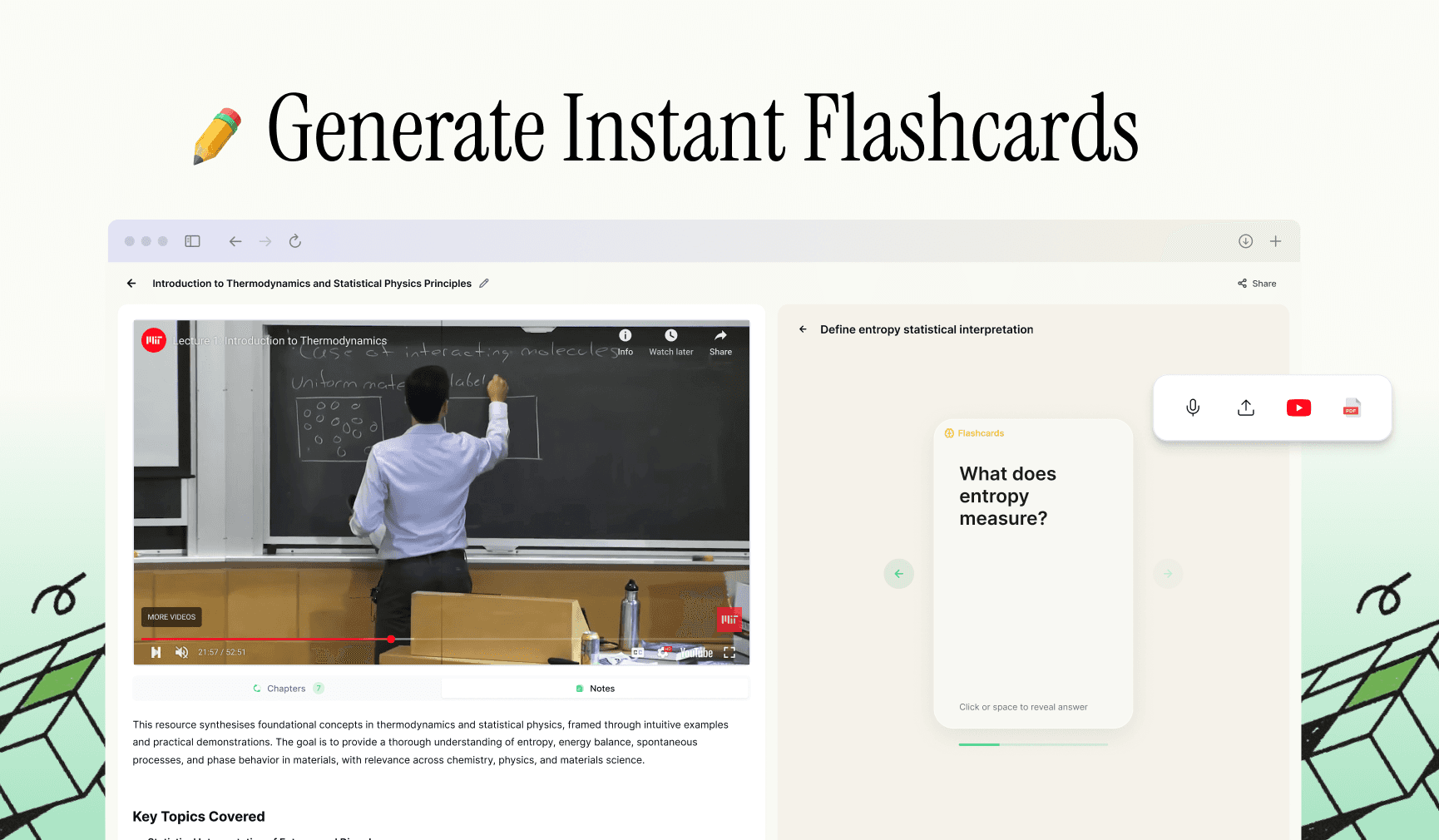
In Duetoday, the process is simple: upload your economics material, generate a comprehensive deck, review or edit your cards, and start studying with active recall immediately.
What are Elasticity flashcards?
Elasticity flashcards cover the fundamental economic concepts of how sensitive one variable is to changes in another. This includes price elasticity of demand (PED), price elasticity of supply (PES), cross-price elasticity, and income elasticity. They break down complex mathematical ratios into digestible questions.
The primary outcome of using these cards is moving beyond passive reading. Instead of just looking at graphs, you test yourself on shifts, coefficients, and determinants to build genuine recall. If you already have notes, Duetoday can generate a clean deck in minutes.
Why flashcards are one of the best ways to study Elasticity
Elasticity is a topic that requires both conceptual understanding and the ability to apply formulas quickly. Flashcards bridge the gap between knowing a definition and being able to calculate a coefficient under exam pressure. By using active recall and spaced repetition, you ensure that the difference between elastic and inelastic goods becomes second nature.
Remember key coefficient ranges (e.g., >1 vs <1) without cramming.
Separate similar concepts like Income Elasticity vs. Cross-Price Elasticity.
Learn the steps for the midpoint formula calculation.
Practice applying rules to real-world market scenarios.
What to include in your Elasticity flashcards
Effective Elasticity flashcards follow the "one idea per card" rule and are strictly question-based. This prevents you from simply recognizing information rather than retrieving it from memory. You should focus on a mix of theoretical definitions and practical application scenarios.
Definitions & key terms: "What does perfectly inelastic mean?" "Define the luxury good threshold."
Processes & steps: "What is the first step in the midpoint formula?"
Comparisons: "How does the availability of substitutes affect PED compared to PES?"
Application: "If price rises by 10% and quantity falls by 20%, what is the PED?"
Example prompts for your deck: "What is the formula for Cross-Price Elasticity?", "Identify the sign for complementary goods (+ or -)", "Name three determinants of supply elasticity", and "How does time period affect elasticity?"
How to study Elasticity with flashcards (a simple system)
To master economics, use a two-pass approach: first, build your deck from your textbook or lecture slides, then review in focused rounds. This prevents overwhelm and highlights exactly where your knowledge gaps are.
Review in short, 15-minute bursts. Economics is heavy on logic, so repeating the tough cards more frequently helps your brain wire those logical connections faster than one long study session.
Make a deck from your notes using Duetoday's AI generator.
Do one quick round to find weak spots in formula recall.
Review weak cards daily for three days.
Mix in graph-based scenarios to increase difficulty.
Do a final mixed review before your midterm or final.
Generate Elasticity flashcards automatically in Duetoday
Making cards manually for economics is slow, messy, and inconsistent—especially when dealing with subscripts and complicated formulas. It’s easy to get bogged down in the formatting rather than the learning.
Duetoday solves this by allowing you to upload your notes, PDFs, or lecture transcripts and instantly turning them into high-quality flashcards. You get a study-ready deck in seconds, allowing you to focus on the actual math and theory.
Upload or paste your Elasticity lecture material.
Click Generate Flashcards.
Review, edit, and start studying immediately.
Generate Elasticity Flashcards in Duetoday
Start with your notes and get a deck you can actually use today.
Common Elasticity flashcard mistakes (and how to fix them)
Most students make the mistake of creating cards that are too wordy. If a card contains a whole paragraph, you aren't testing recall, you are testing reading comprehension. Keep your cards focused and punchy.
Cards are too long: Split them so one card asks for the formula and another asks for the definition.
Only memorizing words: Ensure you include cards that ask "why" a good is elastic.
Confusing PED and PES: Use color coding or specific comparison cards.
No calculation practice: Add cards that require a mental math step for simple coefficients.
Ready to generate your Elasticity flashcards?
Stop rereading your textbook and start practicing active recall. Upload your notes, generate your deck, and master Elasticity with the power of AI-driven study tools.
Start Generating Flashcards
Works with notes, PDFs, slides, and transcripts.
FAQ
How many flashcards do I need for Elasticity? Usually, a comprehensive deck for this topic consists of 30 to 50 cards covering definitions, formulas, and determinants.
What’s the best format for Elasticity flashcards? Question and answer format is best. Use the front for the concept or formula name and the back for the explanation or calculation.
How often should I review Elasticity flashcards? Review them daily when first learning the concepts, then move to every 3-4 days once you can recall the formulas consistently.
Should I make cards from a textbook or slides? Both. Textbooks provide the deep theory, while slides often highlight the specific formulas your professor wants you to memorize.
How do I stop forgetting the formulas after a few days? Spaced repetition is the key. By reviewing the cards right before you are about to forget them, you strengthen the long-term memory bond.
What if my flashcards feel too easy? Add application cards. Instead of "What is PED?", ask "How would a tax affect a good with a PED of 0.2?"
Can I generate Elasticity flashcards from a PDF automatically? Yes, Duetoday allows you to upload any economics PDF and converts the text and tables into flashcards instantly.
Are digital flashcards better than paper for Elasticity? Digital is often better because AI can handle the formula formatting and the spaced repetition algorithm handles the scheduling for you.
How long does it take to make a full Elasticity deck? Manually it takes over an hour, but with Duetoday's AI, you can generate a full deck in under a minute.
Can Duetoday generate and organize my flashcards for me? Absolutely. It categorizes your notes into logical decks so you can study specific sub-topics like Income Elasticity separately.

Duetoday is an AI-powered learning OS that turns your study materials into personalised, bite-sized study guides, cheat sheets, and active learning flows.