Generate Flashcards for Ecology
Generate Ecology flashcards in seconds with AI. Learn faster today. Try for free!
Generate Flashcards with AI Free
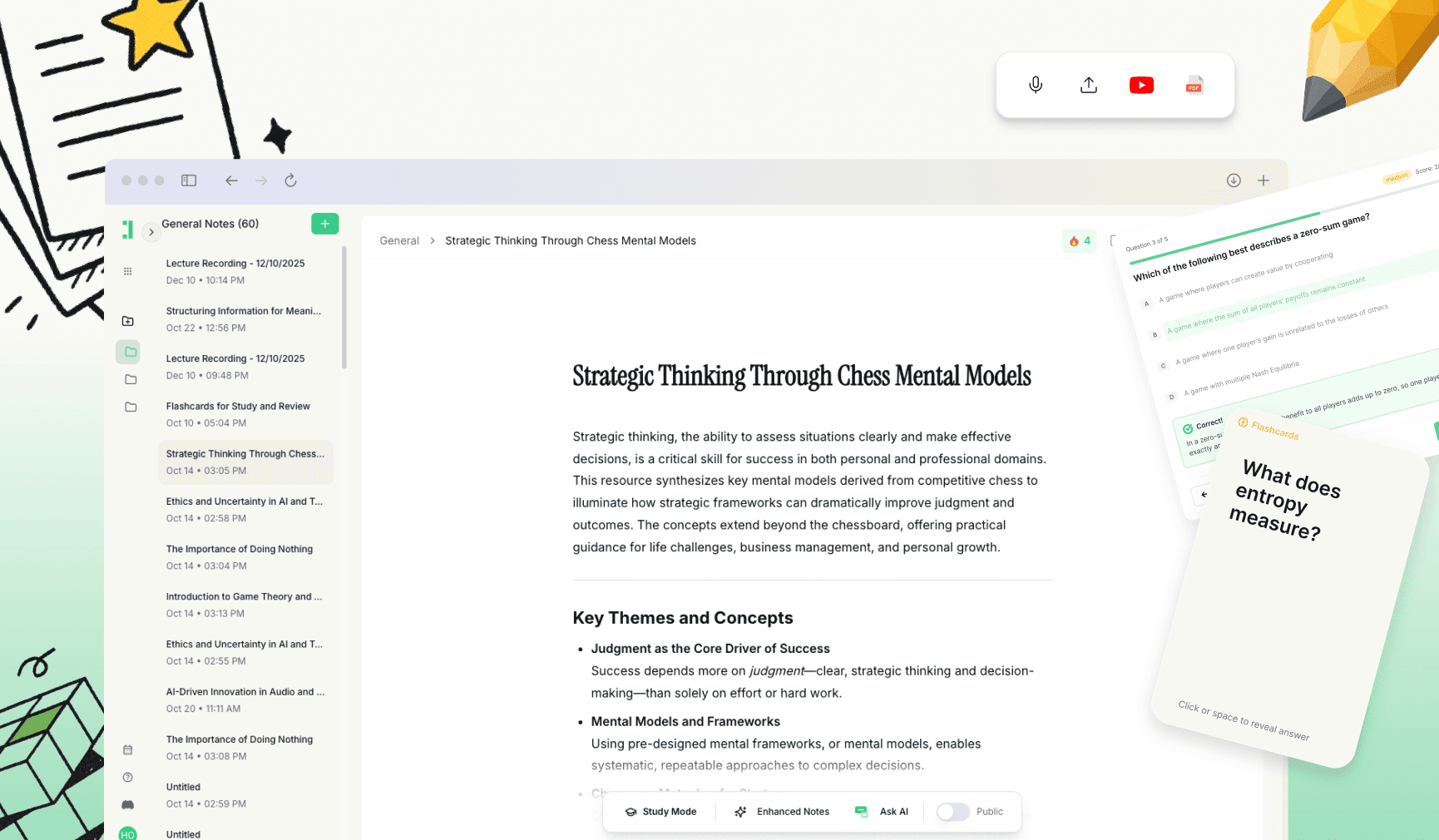
Generate Flashcards for Ecology
Turn your notes, PDFs, slides, or lectures into Ecology flashcards so you can review faster and remember more. Whether you are studying population dynamics or nutrient cycles, our AI helps you master complex environmental relationships in seconds.
Ready to master Ecology?
Generate Ecology FlashcardsUpload notes / paste text
In Duetoday, the process is simple: upload your materials, generate your deck, review or edit the content, and start studying with active recall. It takes the manual labor out of prep so you can focus on learning.
What are Ecology flashcards?
Ecology flashcards are study tools designed to cover the interactions between organisms and their environment. These cards typically focus on key terms like carrying capacity, niche, and trophic levels, as well as complex steps in biogeochemical cycles or the causes and effects of climate change.
The outcome is a shift from passive reading to active testing. Instead of just looking at a diagram of the nitrogen cycle, you test your ability to recall the specific bacteria involved, which builds much stronger neural pathways and long-term retention.
If you already have notes, Duetoday can generate a clean deck in minutes.
Why flashcards are one of the best ways to study Ecology
Ecology requires you to understand both specific definitions and broad, interconnected relationships. Flashcards allow you to isolate these variables and master the vocabulary required to explain scientific phenomena accurately.
By using active recall and spaced repetition, you ensure that you aren't just memorizing definitions for a day, but actually understanding how ecosystems function over time. This method prevents the "illusion of competence" where you think you know the material just because it looks familiar on the page.
Remember key terms like commensalism vs. mutualism without cramming.
Separate similar concepts such as primary vs. secondary succession.
Learn processes step-by-step like the stages of the phosphorus cycle.
Practice applying ecological rules and formulas like the Shannon Diversity Index.
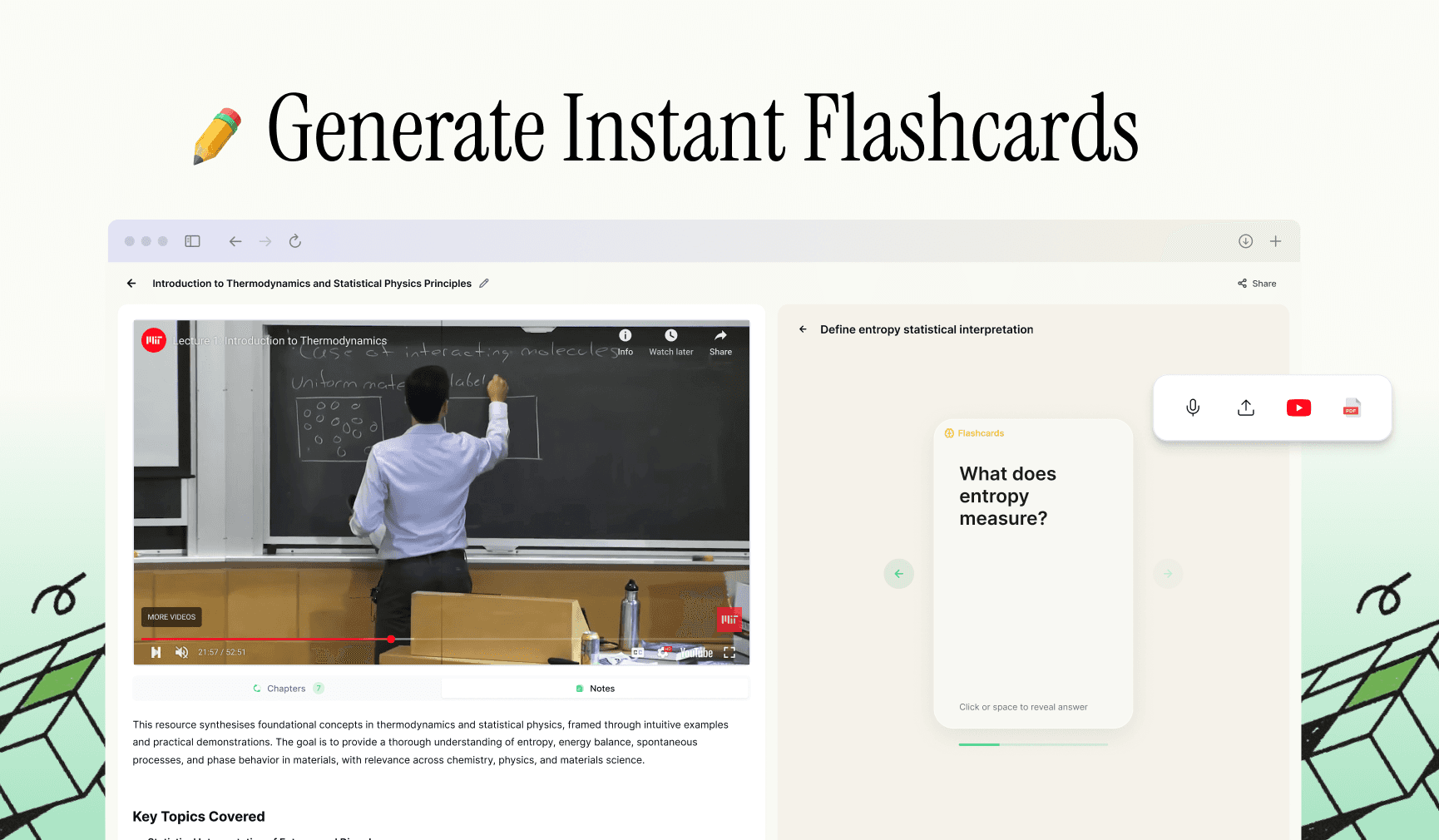
What to include in your Ecology flashcards
Good ecology flashcards follow the "atomic" rule: one idea per card. They should be question-based rather than just a word on the front and a definition on the back. This forces your brain to work harder to find the answer.
We recommend focusing on four main card types: Definitions for vocabulary, Processes for cycles, Comparisons for similar species interactions, and Application for environmental scenarios.
Definitions: "What is an abiotic factor?"
Processes: "What are the three stages of the water cycle?"
Comparisons: "How does a food web differ from a food chain?"
Application: "What happens to a population if the death rate exceeds the birth rate?"
Example prompts: "Define biomagnification," "Explain the 10% rule in energy pyramids," or "What is the role of decomposers in an ecosystem?"
How to study Ecology with flashcards (a simple system)
To master Ecology, use a two-pass approach. First, use Duetoday to build your deck from your syllabus or lecture slides, then move into focused review rounds. Don't try to master the whole deck at once; break it into sections like 'Biomes' or 'Population Ecology.'
Review in quick, high-intensity sessions. When you hit a card you don't know, don't sweat it—tag it for a more frequent review. The goal is to see the hardest concepts more often until they become second nature.
Make a deck from your ecology notes or textbooks.
Do one quick round to find weak spots in your knowledge.
Review weak cards daily for three to five days.
Mix in a few harder cards, like community ecology formulas, each session.
Do a final mixed review of all chapters before your exam.
Generate Ecology flashcards automatically in Duetoday
Making cards manually is slow, messy, and often leads to "leaky" study habits where you skip the hard stuff. Duetoday automates the tedious part so you can get straight to the active learning that actually improves your grades.
Simply upload your Ecology PDFs, slides, or even a recording of your lab lecture. Our AI identifies the most important concepts and formats them into high-quality cards instantly.
Upload or paste your Ecology material
Click Generate Flashcards
Review, edit, and start studying
Generate Ecology Flashcards in Duetoday
Start with your notes and get a deck you can actually use today.
Common Ecology flashcard mistakes (and how to fix them)
Most students make the mistake of creating "encyclopedia cards"—cards with way too much text. If a card takes more than 10 seconds to read, it's too long and you won't remember the details.
Cards are too long: Split complex cycles into one step per card.
Only memorizing words: Add "why" prompts to understand the logic behind ecological shifts.
Confusing similar concepts: Create specific cards to compare things like habitat vs. niche.
No review schedule: Use Duetoday's SRS to repeat weak cards more often.
No application: Include cards that ask you to predict what happens if a keystone species is removed.
Ready to generate your Ecology flashcards?
Stop rereading your textbook and start recalling the facts. Upload your notes, generate your deck, and master Ecology with active recall in half the time.
Start Generating Flashcards
Works with notes, PDFs, slides, and transcripts.
FAQ
How many flashcards do I need for Ecology?
For a standard introductory course, 150-200 cards usually cover the core concepts. However, it's better to have more short cards than fewer long ones.
What’s the best format for Ecology flashcards?
The Question-and-Answer format is best, especially for testing relationships between organisms and their environments.
How often should I review Ecology flashcards?
Weekly for general maintenance, but daily for the 3-5 days leading up to a midterm or final exam.
Should I make cards from a textbook or lecture notes?
Lecture notes are usually better because they highlight what your specific professor thinks is important for the exam.
How do I stop forgetting Ecology terms after a few days?
Use spaced repetition. By reviewing the cards right as you are about to forget them, you lock the information into long-term memory.
What if my flashcards feel too easy?
Delete the cards you've mastered and add new cards that focus on data interpretation or case studies.
Can I generate Ecology flashcards from a PDF?
Yes, Duetoday allows you to upload any Ecology PDF and converts the text into structured flashcards automatically.
Are digital flashcards better than paper?
Digital cards are often better for Ecology because you can easily include complex diagrams of cycles and search your deck instantly.
How long does it take to make a full Ecology deck?
With Duetoday's AI, you can generate a full deck in under 60 seconds. Doing it manually could take hours.
Can Duetoday organize my cards by topic?
Yes, you can categorize your cards into tags like 'Ecosystems,' 'Biomes,' and 'Global Change' for organized studying.

Duetoday is an AI-powered learning OS that turns your study materials into personalised, bite-sized study guides, cheat sheets, and active learning flows.