Generate Flashcards for Digestive System
Generate Digestive System flashcards from your notes in seconds. Try it for free today!
Generate Flashcards with AI Free
Generate Flashcards for Digestive System
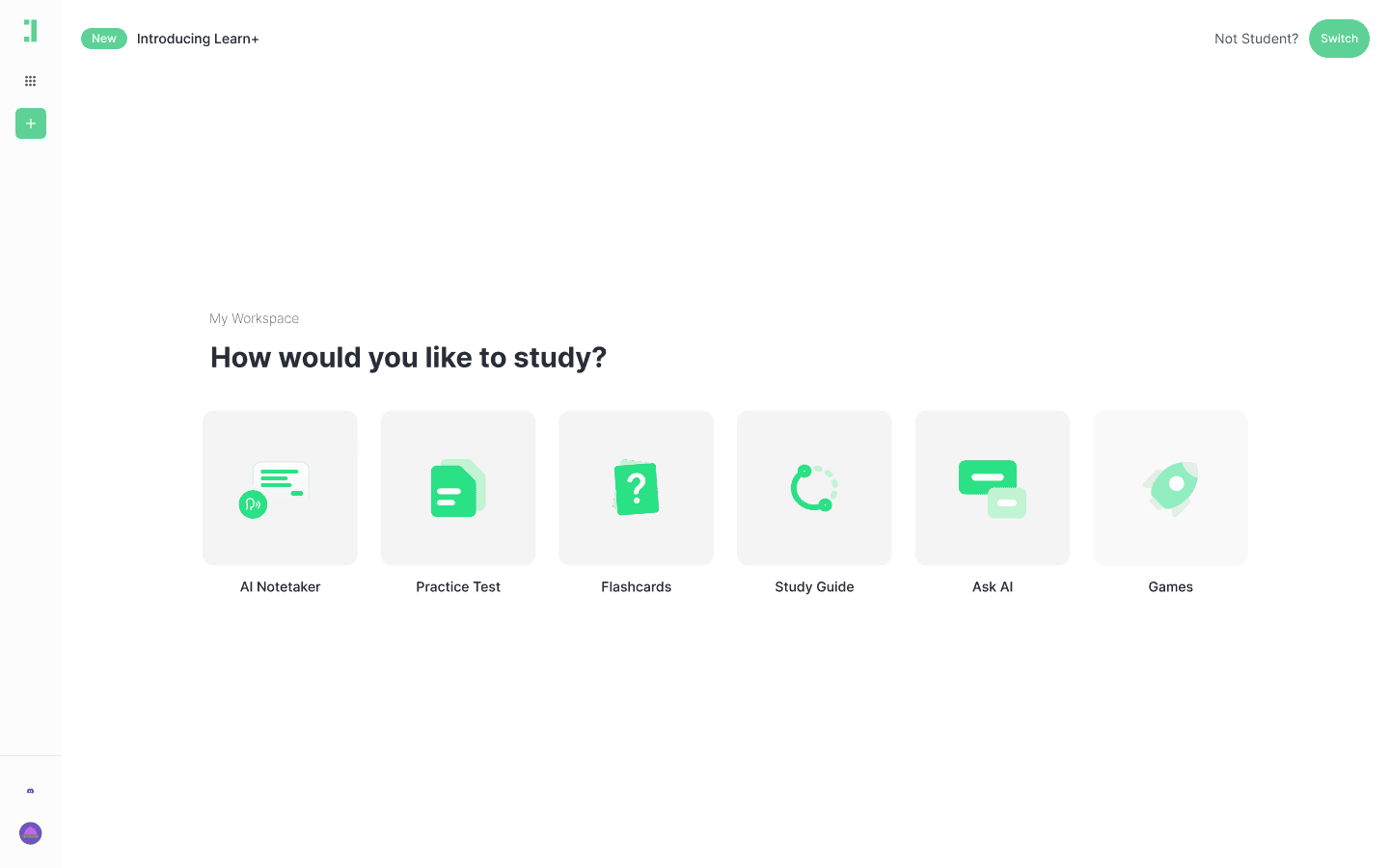
Turn your notes, PDFs, slides, or lectures into Digestive System flashcards so you can review faster and remember more. Whether you are studying the gastrointestinal tract, enzyme functions, or nutrient absorption, our AI helps you master complex biological processes in half the time.
Generate Digestive System FlashcardsUpload notes / paste text
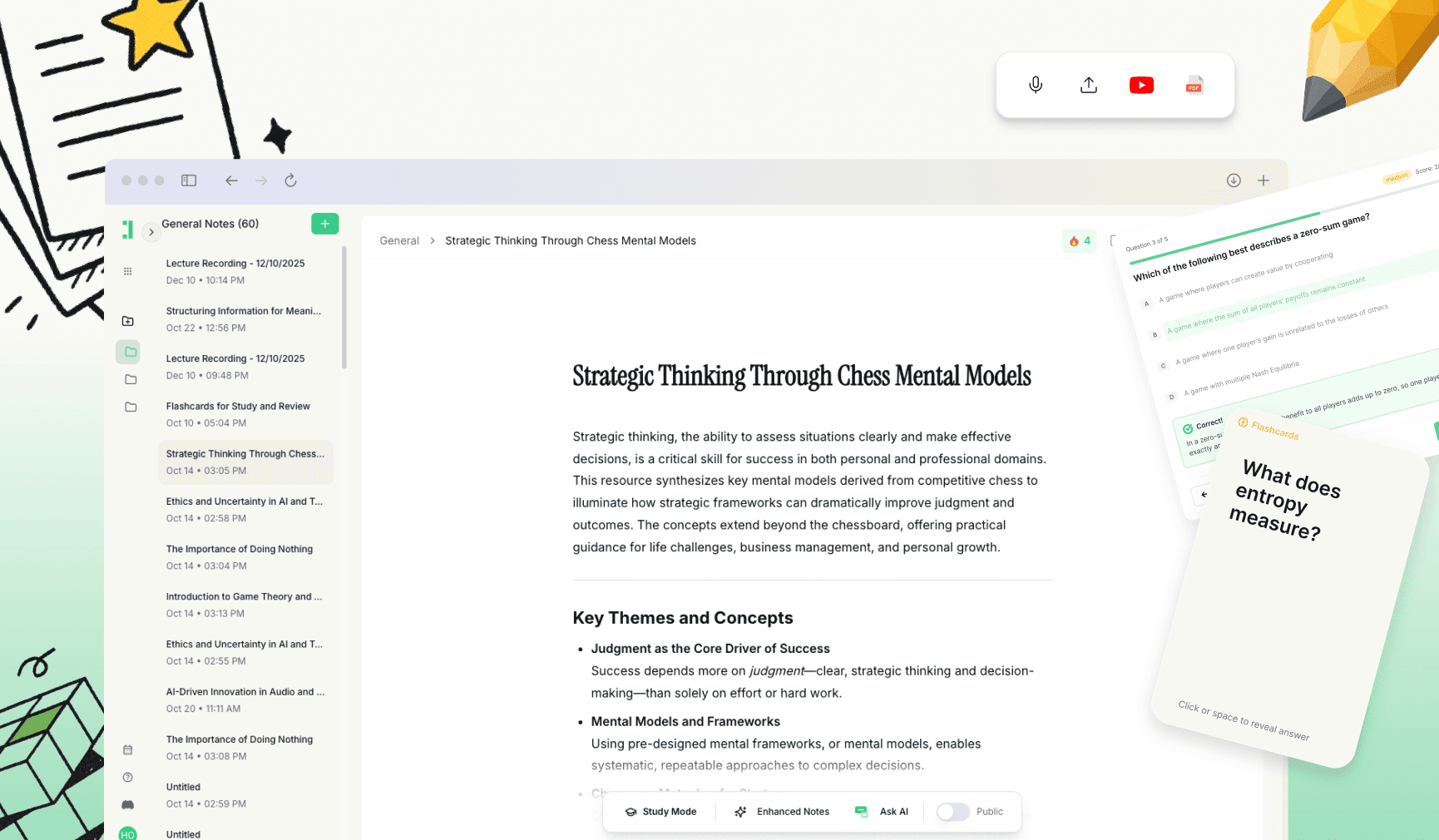
In Duetoday, the process is seamless: simply upload your biology materials, generate a comprehensive deck, review or edit the AI-suggested cards, and start your study session immediately.
What are Digestive System flashcards?
Digestive System flashcards are focused study tools that cover the anatomy and physiology of the human GI tract. They break down complex information such as organ functions (esophagus to colon), biochemical reactions (pepsin, lipase, amylase), and the four stages of food processing: ingestion, digestion, absorption, and elimination.
The primary outcome is active recall. Instead of passively rereading a textbook chapter on the small intestine, you test your brain to retrieve the specific functions of the villi and microvilli, which builds much stronger neural connections and long-term retention.
If you already have notes, Duetoday can generate a clean deck in minutes.
Why flashcards are one of the best ways to study Digestive System
The study of the Digestive System requires a mix of anatomical identification and understanding complex physiological sequences. Flashcards are ideal because they force you to isolate these variables, preventing the "illusion of competence" that comes from looking at a labeled diagram.
Remember key terms like peristalsis, chyme, and bolus without cramming.
Separate similar concepts, such as the roles of the liver vs. the gallbladder.
Learn processes step-by-step, like the hormonal control of digestion.
Practice applying rules, such as how pH levels change from the stomach to the duodenum.
What to include in your Digestive System flashcards
Effective flashcards follow the "atomic habit" of learning: one idea per card. By keeping questions specific, you ensure your brain actually learns the material rather than just recognizing the shape of a paragraph.
Definitions & key terms: "What is the function of the pyloric sphincter?"
Processes & steps: "What is the first step of carbohydrate digestion?"
Comparisons: "How is mechanical digestion different from chemical digestion?"
Application: "What happens to lipid digestion if bile production is inhibited?"
Example prompts: "Define Gastrin," "Where does protein digestion begin?", "List the three sections of the small intestine in order," and "Identify the role of the large intestine in water absorption."
How to study Digestive System with flashcards (a simple system)
Mastering anatomy and physiology works best with a "two-pass" approach. First, build your deck to organize the facts, then use spaced repetition to move those facts into your long-term memory.
Review in short, focused sessions. If you struggle with the enzymes of the pancreas, repeat those specific cards more frequently while skipping the organs you already know well, like the teeth or tongue.
Make a deck from your anatomy notes or lab slides.
Do one quick round to find weak spots (e.g., specific enzyme names).
Review weak cards daily for three to five days.
Mix in a few harder cards, like pathology or disease states, each session.
Do a final mixed review before your biology lab or exam.
Generate Digestive System flashcards automatically in Duetoday
Making cards manually is slow and often results in cards that are too wordy to be effective. You should spend your time studying the material, not formatting it.
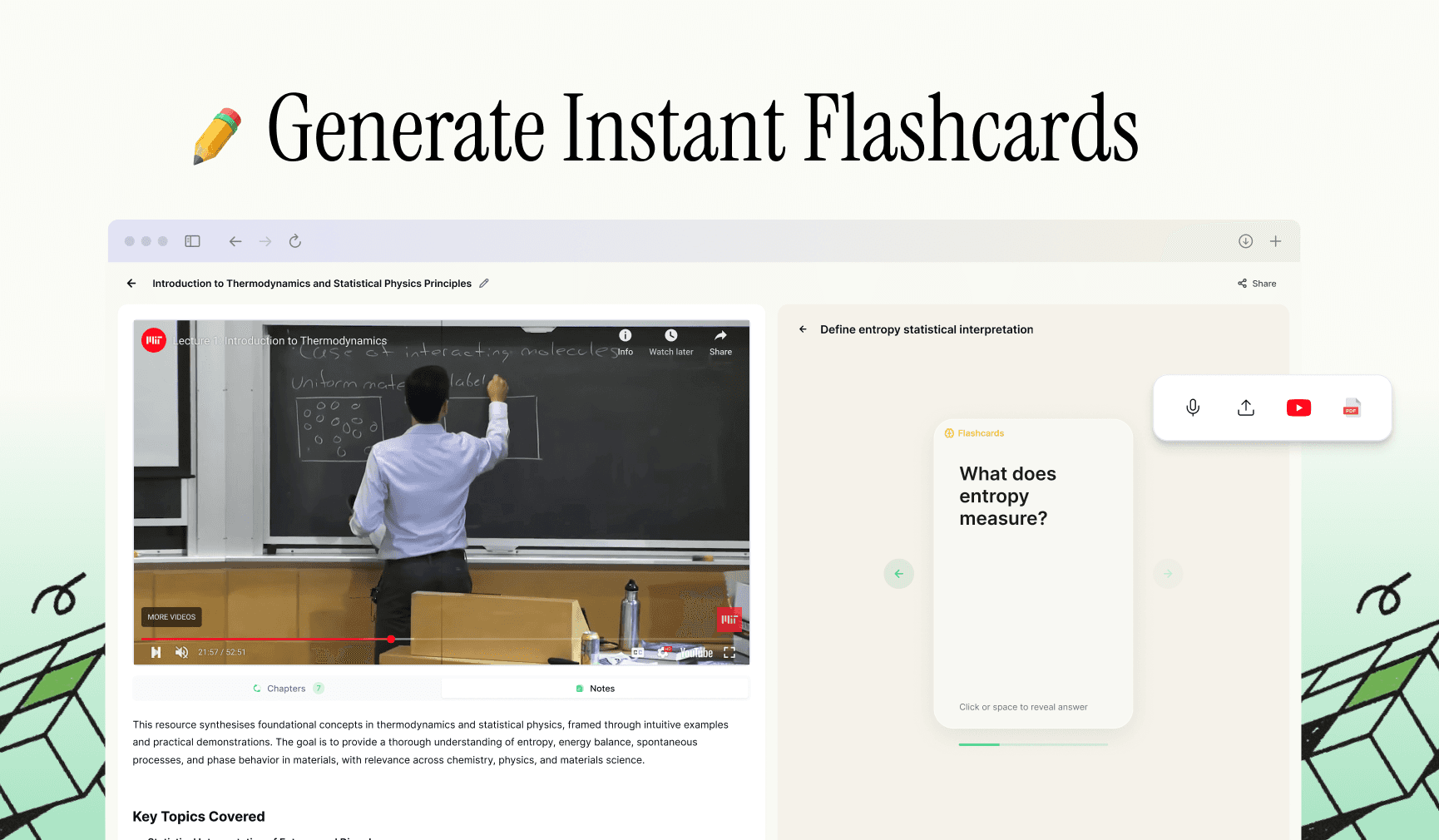
Duetoday transforms your study workflow: upload your PDF or lecture transcript, and our AI identifies the most important anatomical structures and physiological processes to create a high-quality deck instantly.
Upload or paste your Digestive System material
Click Generate Flashcards
Review, edit, and start studying
Generate Digestive System Flashcards in Duetoday
Start with your notes and get a deck you can actually use today.
Common Digestive System flashcard mistakes (and how to fix them)
Most students make cards that are essentially entire textbook paragraphs. These are hard to memorize and discourage frequent review.
Cards are too long: Instead of listing everything the liver does, create five separate cards for each function.
Only memorizing words: Add cards that ask "why" a certain enzyme is necessary for a specific nutrient.
Confusing similar concepts: Create a direct comparison card for 'Secretin' vs 'CCK'.
No review schedule: Don't just study the night before; use spaced repetition to keep the GI tract fresh in your mind.
Ready to generate your Digestive System flashcards?
Stop rereading and start recalling. Use Duetoday to turn your lecture notes into a powerful study tool in seconds.
Start Generating Flashcards
Works with notes, PDFs, slides, and transcripts.
FAQ
How many flashcards do I need for the Digestive System? For a standard anatomy course, 50-80 cards usually cover the major organs, enzymes, and hormones comprehensively.
What’s the best format for Digestive System flashcards? Question-and-answer format is best. Use the front for a specific process (e.g., 'Bile emulsification') and the back for a one-sentence explanation.
How often should I review Digestive System flashcards? High-intensity topics like physiology benefit from daily reviews for the first week, then transitioning to every 3 days as you gain mastery.
Should I make cards from a textbook or lecture notes? Use lecture notes for exam-specific content and textbooks for detailed anatomical diagrams and definitions.
How do I stop forgetting the enzymes after a few days? Group enzymes by the organ that produces them (e.g., 'Pancreatic Enzymes') and use spaced repetition to reinforce the harder names.
What if my flashcards feel too easy? Transition from "What is" questions to "What happens if" scenarios to test your deeper understanding of the system.
Can I generate Digestive System flashcards from a PDF automatically? Yes, Duetoday allows you to upload any biology PDF and converts the text into structured flashcards immediately.
Are digital flashcards better than paper for biology? Digital cards are superior for the Digestive System because you can easily tag cards by organ system and use AI to generate them from complex diagrams.
How long does it take to make a full Digestive System deck? Manually it could take hours, but with Duetoday’s AI, you can have a full deck ready in under 60 seconds.
Can Duetoday organize my flashcards by organ? Yes, you can generate specific sets for the upper GI tract, lower GI tract, and accessory organs to keep your study sessions organized.

Duetoday is an AI-powered learning OS that turns your study materials into personalised, bite-sized study guides, cheat sheets, and active learning flows.