Generate Flashcards for Data Structures
Make and generate Data Structures flashcards to master algorithms, Big O notation, and computer science concepts fast.
Generate Flashcards with AI Free
Generate Flashcards for Data Structures
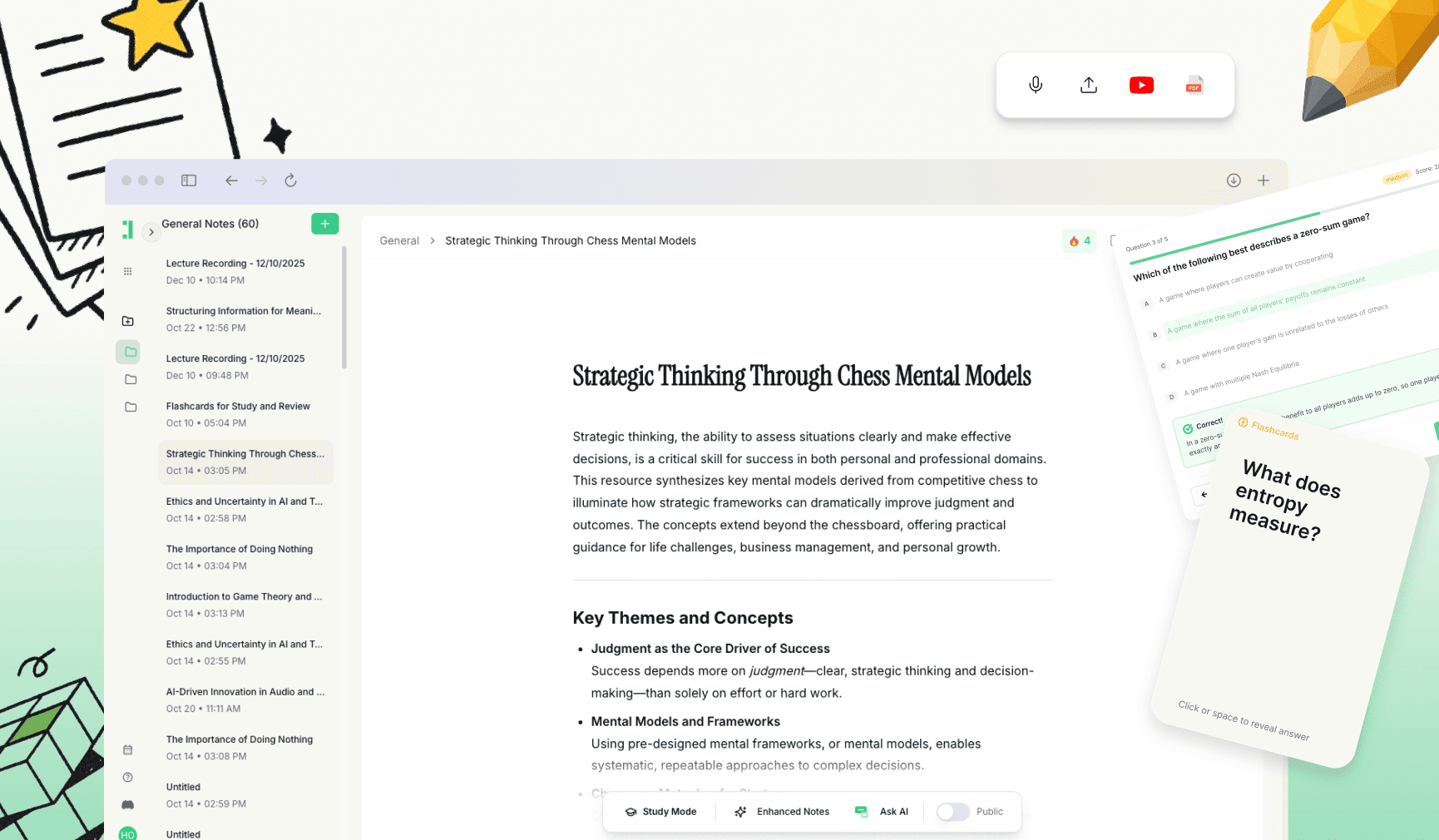
Turn your notes, PDFs, slides, or lectures into Data Structures flashcards so you can review faster and remember more. Master complex algorithms and storage methods without the manual effort of writing every card.
Generate Data Structures FlashcardsUpload notes / paste text
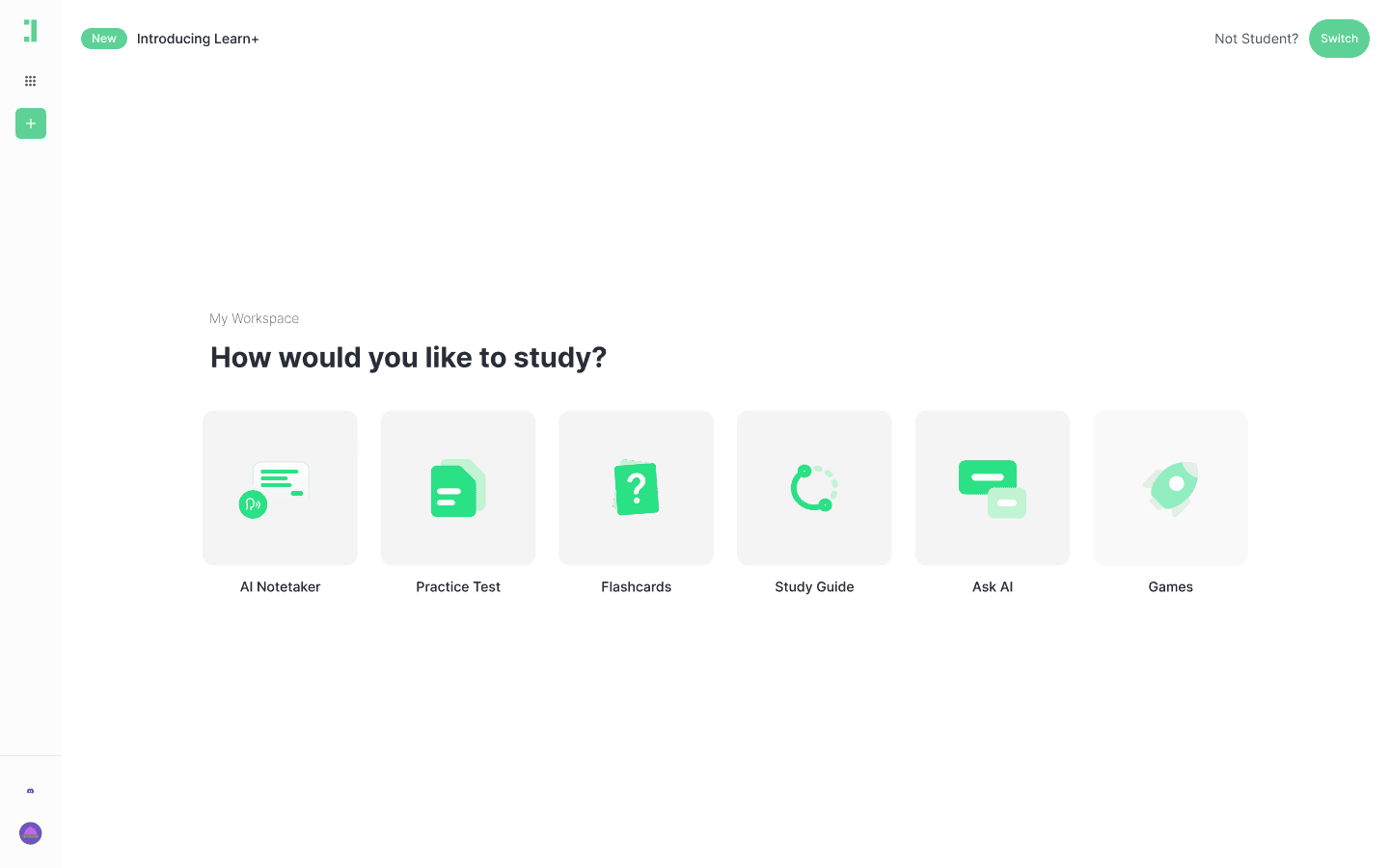
In Duetoday, the process is simple: upload your course material, our AI identifies key concepts, and generates a structured deck you can review, edit, and study immediately.
What are Data Structures flashcards?
Data Structures flashcards cover the fundamental ways we organize and store data in computer science. They focus on key terms, time complexities (Big O), implementation steps for structures like stacks and queues, and the pros and cons of different storage models.
The outcome is simple: instead of rereading dense textbooks, you test yourself on specific operations and build the rapid recall needed for coding interviews and exams. If you already have notes, Duetoday can generate a clean deck in minutes.
Why flashcards work for Data Structures
Mastering Data Structures requires moving beyond passive reading to active application. Flashcards are perfect for this subject because they isolate specific relationships—like the difference between a Hash Map and a Tree—and force you to recall the underlying logic.
By using active recall and spaced repetition, you ensure that Big O notations and pointer logic move from short-term memory into long-term mastery. No more mixing up your traversal methods.
Remember Big O complexities for every operation without cramming
Separate similar concepts (e.g., Singly vs. Doubly Linked Lists)
Learn algorithm steps step-by-step (Bubble Sort, Merge Sort, etc.)
Practice identifying the best structure for specific coding scenarios
What to include in your Data Structures flashcards
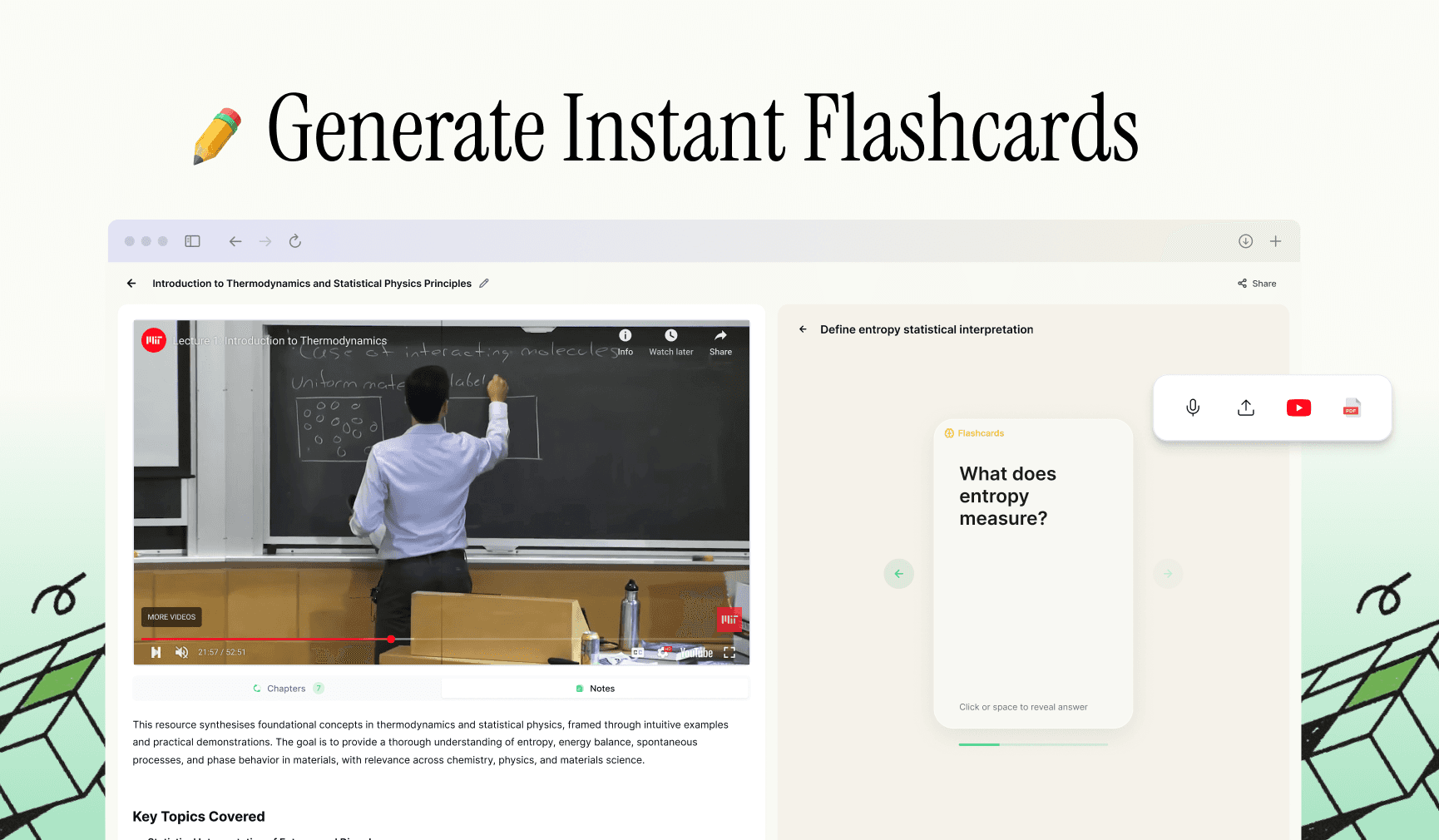
Good Data Structures flashcards follow the one idea per card rule. They should be question-based and focus on the mechanics of how data moves and is stored. We recommend using four main card types to cover the syllabus effectively.
Definitions & Key Terms: What is a balanced tree? Define a circular buffer.
Processes & Steps: What are the steps to delete a node in a Binary Search Tree?
Comparisons: How does an Array differ from a Linked List in terms of memory?
Application: Which structure is best for a Undo/Redo feature?
Use these example prompts for your deck: What is the worst-case time complexity of QuickSort?, Explain the FIFO principle in Queues, When would you use a Min-Heap?, or What is a collision in a Hash Table?
How to study Data Structures with flashcards
A simple system works best: start with a two-pass approach. First, generate your deck from your syllabus, then use your first round to identify which structures (like Graphs or Heaps) are giving you the most trouble.
Focus your energy on the weak spots. Review the high-complexity cards daily while keeping the easy ones—like basic Arrays—on a longer rotation. This ensures you aren't wasting time on what you already know.
Make a deck from your lecture slides or coding notes.
Do one quick round to find weak spots in logic or complexity.
Review weak cards daily for a few days until the logic clicks.
Mix in harder algorithm cards each session to build mental flexibility.
Do a final mixed review right before your technical interview or exam.
Generate Data Structures flashcards automatically in Duetoday
Making cards manually is slow, messy, and takes away from actual coding time. Duetoday automates the tedious part of studying so you can get straight to the practice.
Simply upload your PDFs, slides, or transcript, and watch as our AI creates a comprehensive deck. You can edit the cards to add your own code snippets or keep them concise for quick reviews. Start with your notes and get a deck you can actually use today.
Common Data Structures flashcard mistakes
Most students make cards that are essentially paragraphs. Avoid this by splitting long concepts into single, digestible ideas. Don't just memorize the name of an algorithm; include a card that asks why it's used in a specific context. Finally, don't ignore the worst-case scenarios; always include cards for edge cases and time complexities to ensure you are fully prepared for exam questions.
Ready to generate your Data Structures flashcards?
Stop rereading and start recalling. Upload your Data Structures material now to generate a custom deck that works for your specific course. Works with notes, PDFs, slides, and transcripts.
FAQ
How many flashcards do I need for Data Structures?
For a standard semester course, a deck of 100-150 cards usually covers the core structures, operations, and complexities thoroughly.
What’s the best format for Data Structures flashcards?
Use a question on the front and a clear, concise answer on the back—ideally including the Big O notation where applicable.
How often should I review Data Structures flashcards?
Daily review is best when first learning a concept; once you understand the logic, you can move to every 3-4 days to maintain memory.
Should I make cards from a textbook or my own code?
Both. Use textbooks for theoretical definitions and your own code or lecture notes for implementation details and specific logic.
How do I stop forgetting Big O notation?
Create specific Comparison cards that force you to list complexities for different structures side-by-side to highlight the differences.
Can I generate Data Structures flashcards from a PDF?
Yes, Duetoday is designed to parse PDFs and lecture slides to extract the most important technical terms and definitions automatically.
Are digital flashcards better than paper for computer science?
Digital cards are often better for CS because you can easily paste code snippets, diagrams, and update them as your understanding of the logic evolves.
How long does it take to make a full Data Structures deck?
With Duetoday, it takes seconds to generate a foundation deck from your notes, compared to hours of manual typing.
Can Duetoday organize my flashcards by topic?
Yes, you can generate separate decks for different modules like 'Sorting Algorithms', 'Tree Structures', or 'Graph Theory'.

Duetoday is an AI-powered learning OS that turns your study materials into personalised, bite-sized study guides, cheat sheets, and active learning flows.