
Generate Flashcards for Constitutional Law
Make Constitutional Law flashcards to study cases and doctrines. Generate high-quality study guides for law school.
Generate Flashcards with AI Free
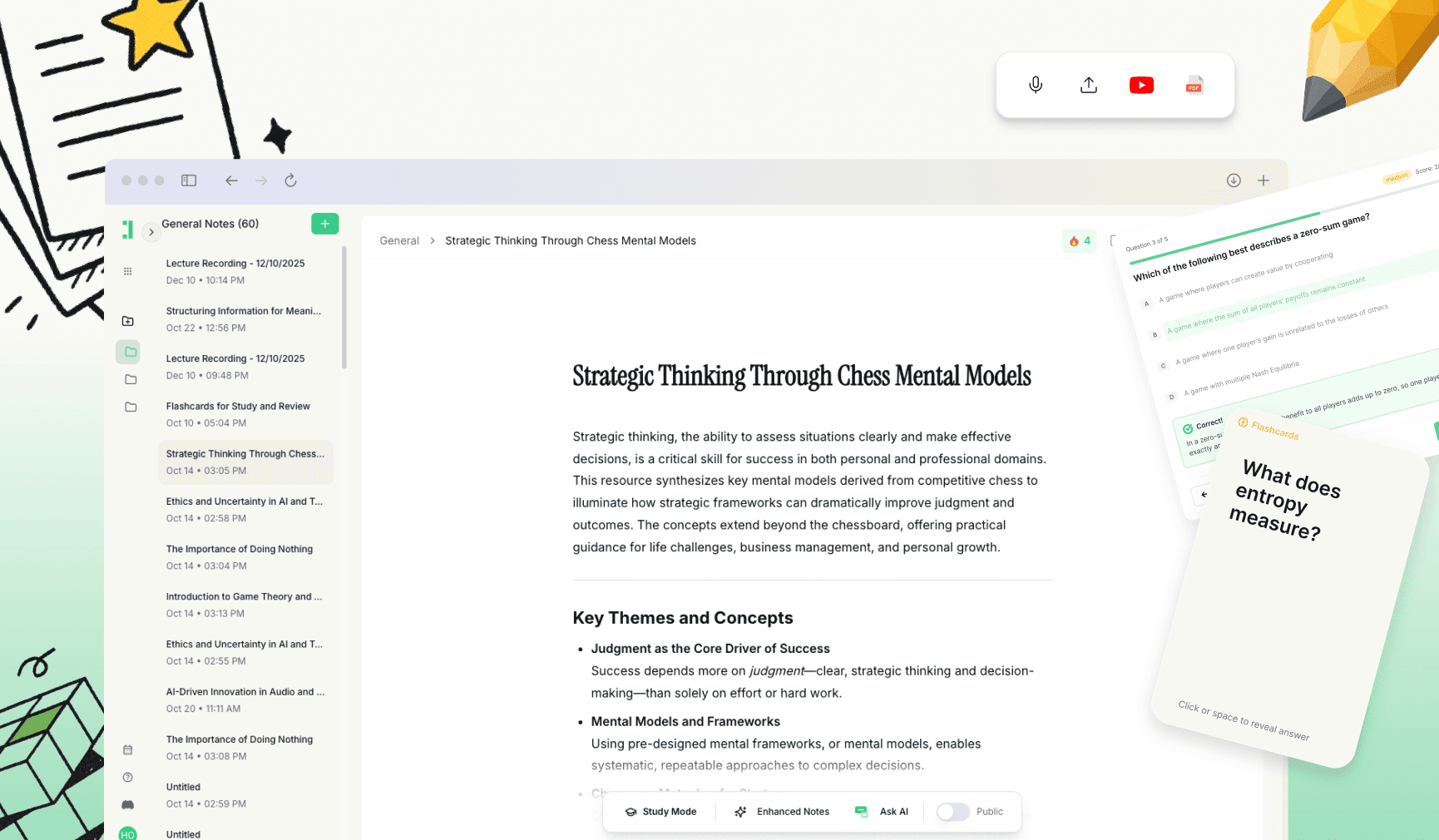
What are Constitutional Law flashcards?
Constitutional Law flashcards are targeted study tools designed to help you master the complex framework of the U.S. Constitution, including judicial review, federalism, separation of powers, and individual rights. These cards break down dense Supreme Court opinions and intricate legal doctrines into bite-sized questions and answers.
The outcome is simple: instead of passively rereading massive outlines or casebooks, you force your brain to retrieve specific holdings and tests. This builds the mental muscle memory required to issue-spot during a high-pressure exam.
If you already have case briefs or outlines, Duetoday can generate a clean deck in minutes.
Why flashcards are one of the best ways to study Constitutional Law
Constitutional Law requires a unique mix of memorizing specific case names and understanding broad, evolving legal principles. Flashcards bridge this gap by allowing you to drill the black letter law until it becomes second nature, leaving your mental energy free for complex legal analysis.
By using active recall and spaced repetition, you ensure that the nuances of different levels of scrutiny or the prongs of a specific legal test remain fresh in your mind long after you first read them.
Memorize the exact holdings of landmark SCOTUS cases.
Distinguish between similar concepts (e.g., Substantive vs. Procedural Due Process).
Learn multi-part legal tests step-by-step (e.g., the Lemon Test or Central Hudson Test).
Practice applying constitutional standards to hypothetical fact patterns quickly.
What to include in your Constitutional Law flashcards
Effective Con Law flashcards follow the one idea per card rule. Dense cards lead to fuzzy recognition rather than actual recall. Use question-based prompts to simulate the feeling of being cold-called or taking a multiple-choice exam.
We recommend organizing your cards into four core categories to ensure full coverage of the syllabus:
Definitions & Doctrines: Specific concepts like The Commerce Clause or Standing.
Case Briefs: The key holding and constitutional rule from specific SCOTUS decisions.
Standard of Review: When to apply Rational Basis, Intermediate, or Strict Scrutiny.
Application: Identifying which branch of government has the power in a specific scenario.
Example Prompts:
• What are the three requirements for Article III Standing?
• Define the 'Necessary and Proper' Clause.
• What was the holding in Wickard v. Filburn regarding the Commerce Clause?
• Under what circumstances does Strict Scrutiny apply in Equal Protection cases?
• What is the difference between facial and as-applied challenges?
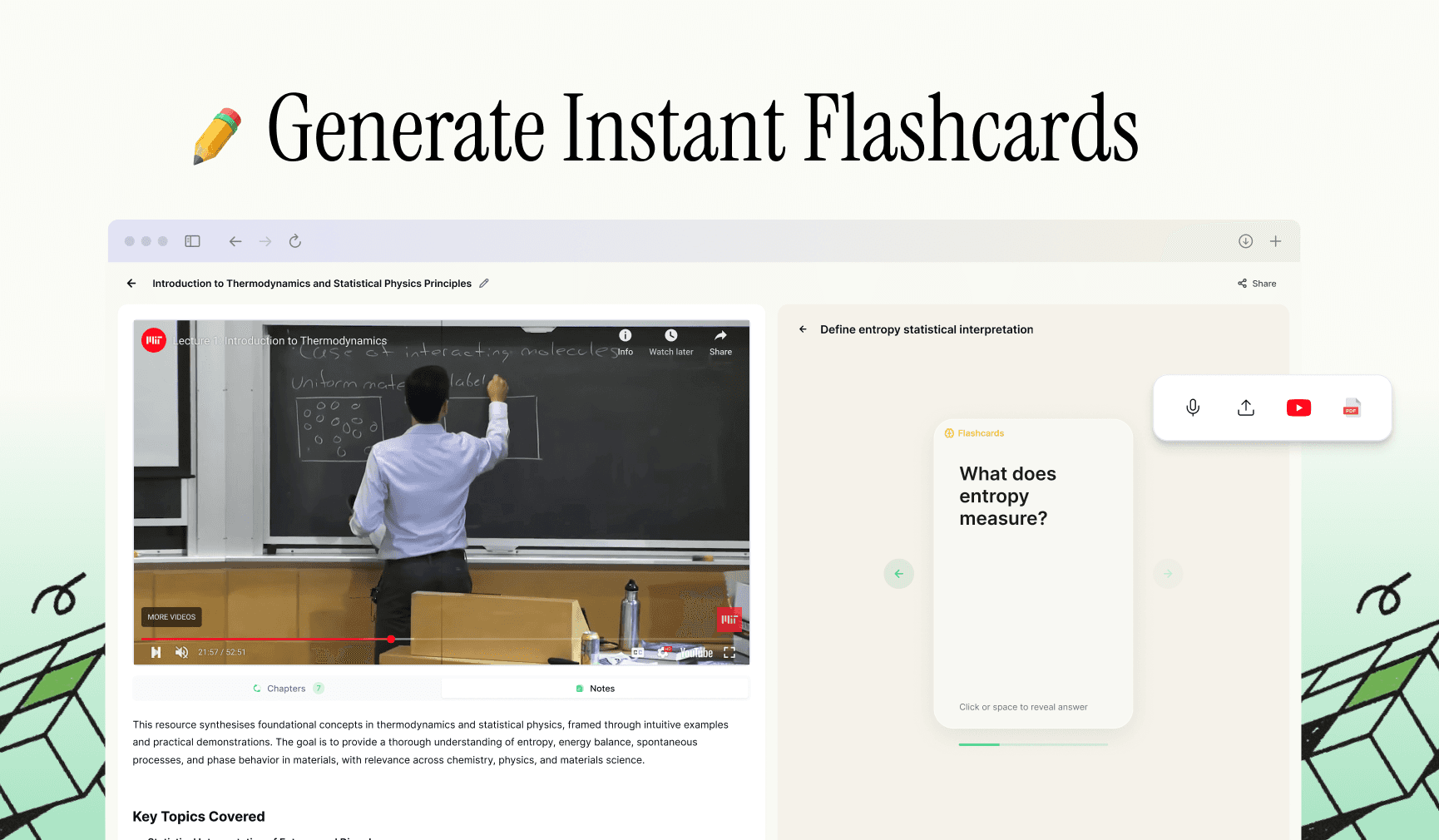
How to study Constitutional Law with flashcards
The most effective strategy is a two-pass approach. First, use your generated deck to identify which doctrines you actually know and which ones make you freeze. Then, focus your energy on the difficult concepts while keeping the easy ones in a light rotation.
Reviewing in short, frequent sessions—such as 15 minutes between classes—is far more effective for legal memory than a 5-hour marathon the night before the final.
Generate a deck from your class notes or casebook summaries.
Run a diagnostic round to flag weak spots like the Dormant Commerce Clause.
Review the hard cards daily until the rules feel intuitive.
Mix case names with theoretical questions to ensure a well-rounded understanding.
Perform a final comprehensive review before your exam or the Bar.
Generate Constitutional Law flashcards automatically in Duetoday
Making law cards manually is an administrative nightmare. Typing out case names, facts, and holdings by hand takes hours that should be spent actually studying. Duetoday eliminates this friction by doing the heavy lifting for you.
Simply upload your PDFs, lecture transcripts, or outlines, and our AI will extract the most critical legal rules and create a structured study deck in seconds.
Upload your Con Law syllabus, notes, or case briefs.
Click Generate Flashcards.
Review the cards, add your own notes, and start your session!
Generate Constitutional Law Flashcards in Duetoday
Start with your notes and get a deck you can actually use today.
Common Constitutional Law flashcard mistakes
Even the best students often make cards that are too long. If a card contains a full paragraph, you will likely memorize the shape of the text rather than the legal rule itself. Always break multi-part tests into individual cards for each prong.
Too much text: Don't put the entire case summary on one card; focus on the rule.
Ignoring the 'Why': Don't just memorize the holding; include a card for the Court's reasoning.
Mixing Scrutiny Levels: Clearly separate cards for Strict Scrutiny vs. Rational Basis.
Inconsistent Review: Checking cards once a week isn't enough for the volume of material in Con Law.
Ready to generate your Constitutional Law flashcards?
Stop rereading your 80-page outline. Upload your materials to Duetoday, generate your flashcards, and start mastering the Constitution with active recall right now.
Start Generating Flashcards
Works with notes, PDFs, slides, and legal transcripts.
FAQ
How many flashcards do I need for Constitutional Law?
A comprehensive deck usually ranges from 150 to 300 cards, covering major cases, constitutional amendments, and the various levels of judicial scrutiny.
What’s the best format for Constitutional Law flashcards?
Use a Question and Answer or Term and Definition format. For cases, use the name on the front and the holding/rule on the back.
How often should I review my law flashcards?
Daily review is best for long-term retention. Even 10-20 minutes a day can prevent the forgetting curve from wiping out your progress.
Should I make cards from my textbook or my professor's notes?
Prioritize your professor's notes, as they highlight the specific interpretations and cases that are most likely to appear on your final exam.
How do I stop forgetting the prongs of legal tests?
Break the test down. Create one card for the name of the test and separate cards for each individual prong or requirement.
Can I generate flashcards from a 50-page PDF?
Yes, Duetoday is designed to process long documents like casebooks or outlines and extract the most relevant legal points automatically.
Are digital flashcards better than paper cards for law school?
Digital cards are generally better because they allow for faster searching, easy editing, and built-in spaced repetition algorithms that paper cards lack.
How long does it take Duetoday to make a full deck?
Once you upload your material, it typically takes less than a minute to generate a full, organized deck of flashcards.
Can Duetoday organize my cards by topic?
Yes, you can organize your generated cards into specific decks like Equal Protection, First Amendment, or Federalism.

Duetoday is an AI-powered learning OS that turns your study materials into personalised, bite-sized study guides, cheat sheets, and active learning flows.