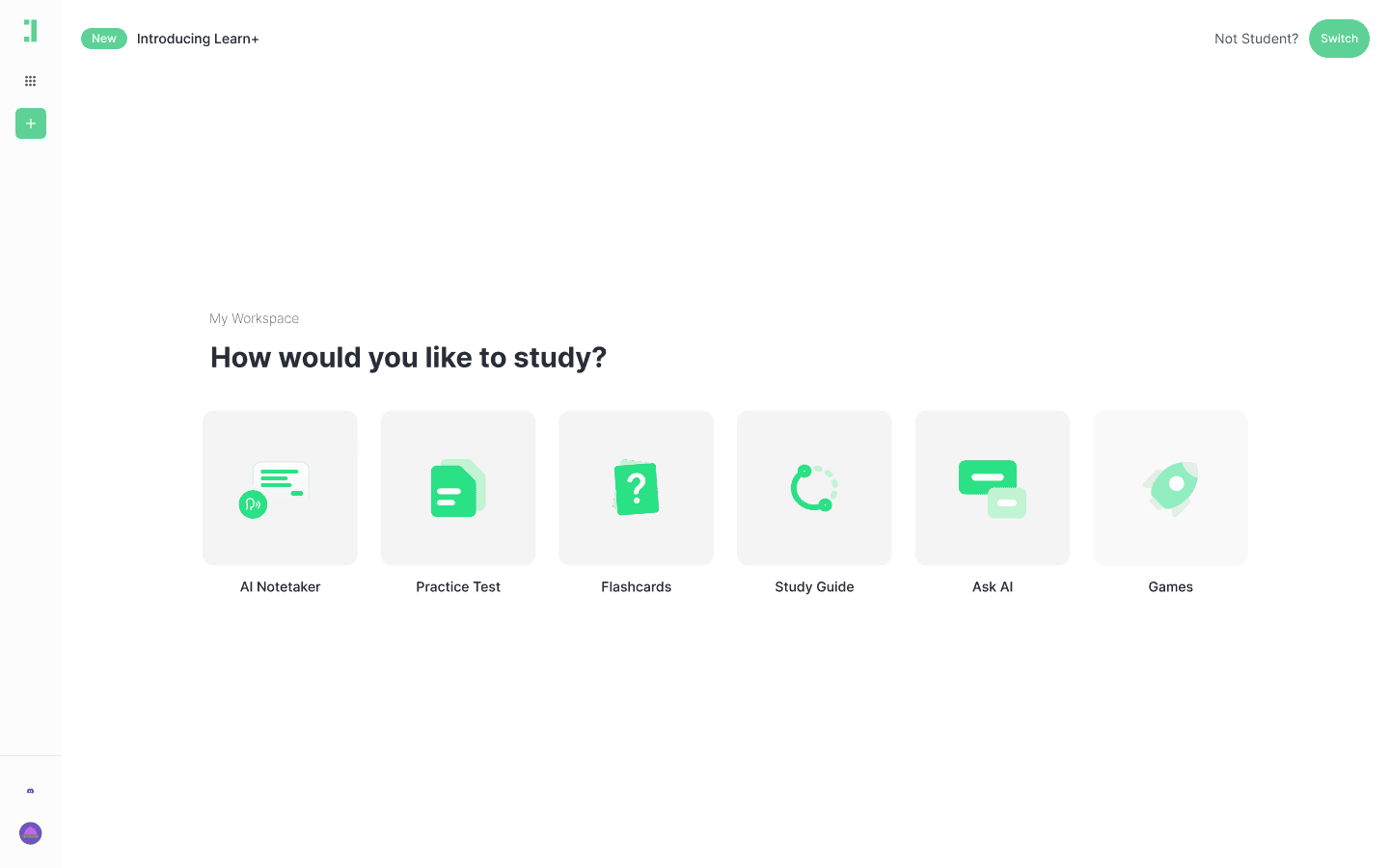
Generate Flashcards for Competitive Strategy
Turn business notes into Competitive Strategy flashcards. Try Duetoday for free now.
Generate Flashcards with AI Free
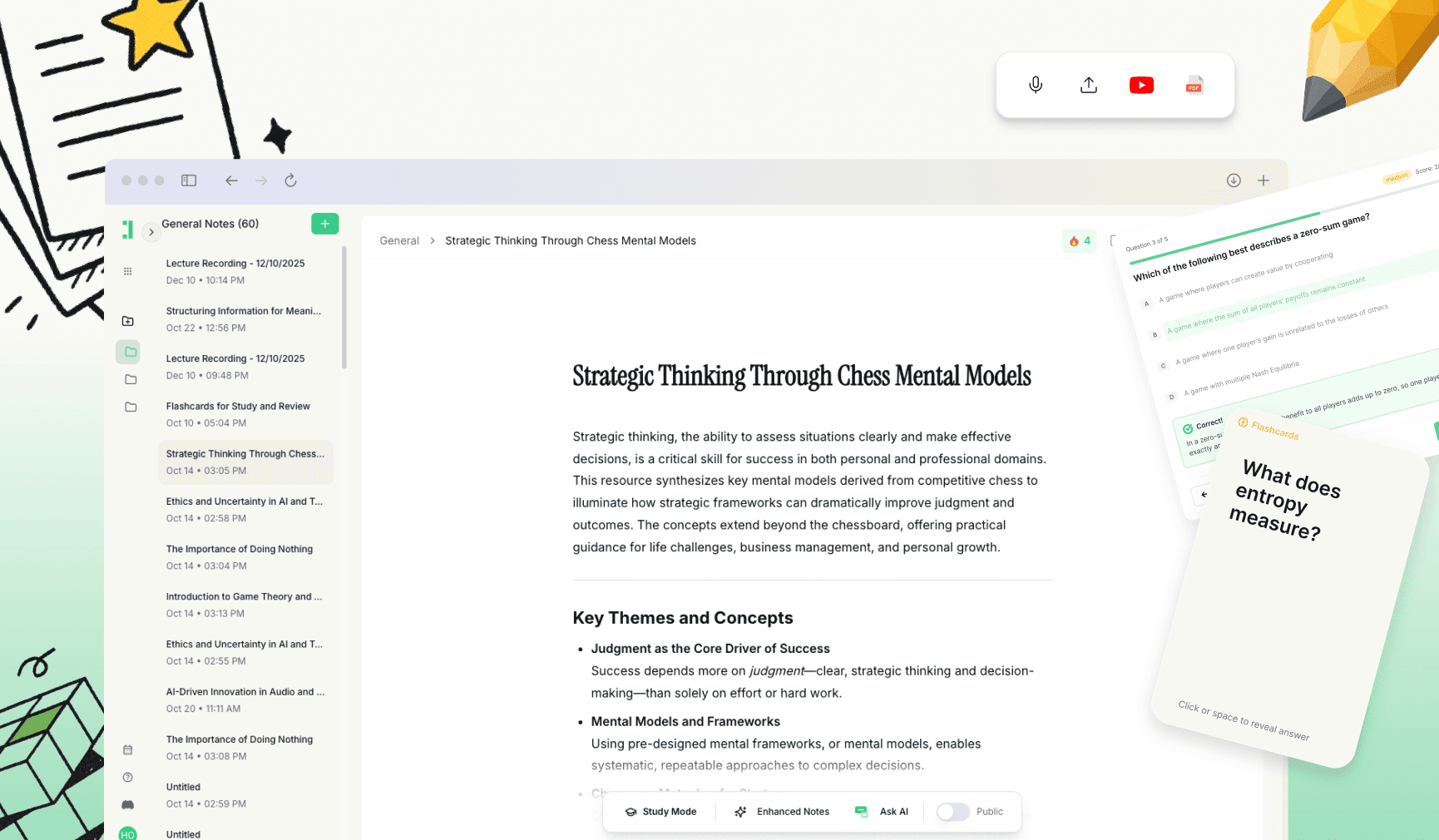
Generate Flashcards for Competitive Strategy
Turn your notes, PDFs, slides, or business case studies into Competitive Strategy flashcards so you can review faster and remember more. Whether you are studying for an MBA or a business management exam, mastering strategic frameworks requires moving beyond passive reading to active testing.
Generate Competitive Strategy Flashcards | Upload notes / paste text
In Duetoday, the process is seamless: simply upload your course materials, and our AI identifies core strategic concepts to generate a clean deck. From there, you can review, edit, and begin studying immediately to ensure you're ready for any exam or presentation.
What are Competitive Strategy flashcards?
Competitive Strategy flashcards cover the essential frameworks and theories used to analyze how firms gain and sustain a competitive advantage. This includes key terms like barriers to entry, core competencies, and the generic strategies of cost leadership and differentiation.
The outcome is better retention: instead of rereading dense chapters on game theory or industry structure, you test yourself quickly to build mental recall. If you already have notes, Duetoday can generate a targeted deck in minutes.
Why flashcards work for Competitive Strategy
Competitive Strategy requires more than just memorizing definitions; it requires understanding the relationships between market forces and firm behavior. Flashcards are ideal for this because they force you to link theory to application through active recall and spaced repetition.
Remember key frameworks like Porter’s Five Forces without cramming.
Separate similar concepts such as Blue Ocean vs. Red Ocean strategies.
Learn strategic processes step-by-step, such as SWOT or PESTEL analysis.
Practice applying strategic rules to various industry scenarios quickly.
What to include in your Competitive Strategy flashcards
Good strategy flashcards follow the “one idea per card” rule and are structured as questions. This prevents information overload and ensures you actually understand the underlying business logic.
Definitions & Key Terms: "What is a sustainable competitive advantage?"
Processes & Steps: "What are the steps in a Value Chain Analysis?"
Comparisons: "How does Cost Leadership differ from Differentiation?"
Application: "When would a firm use a Niche Strategy?"
Example prompts: "What constitutes a high supplier bargaining power?", "Define Vertical Integration.", "What are the four components of the VRIO framework?", "Explain the 'First Mover Advantage'."
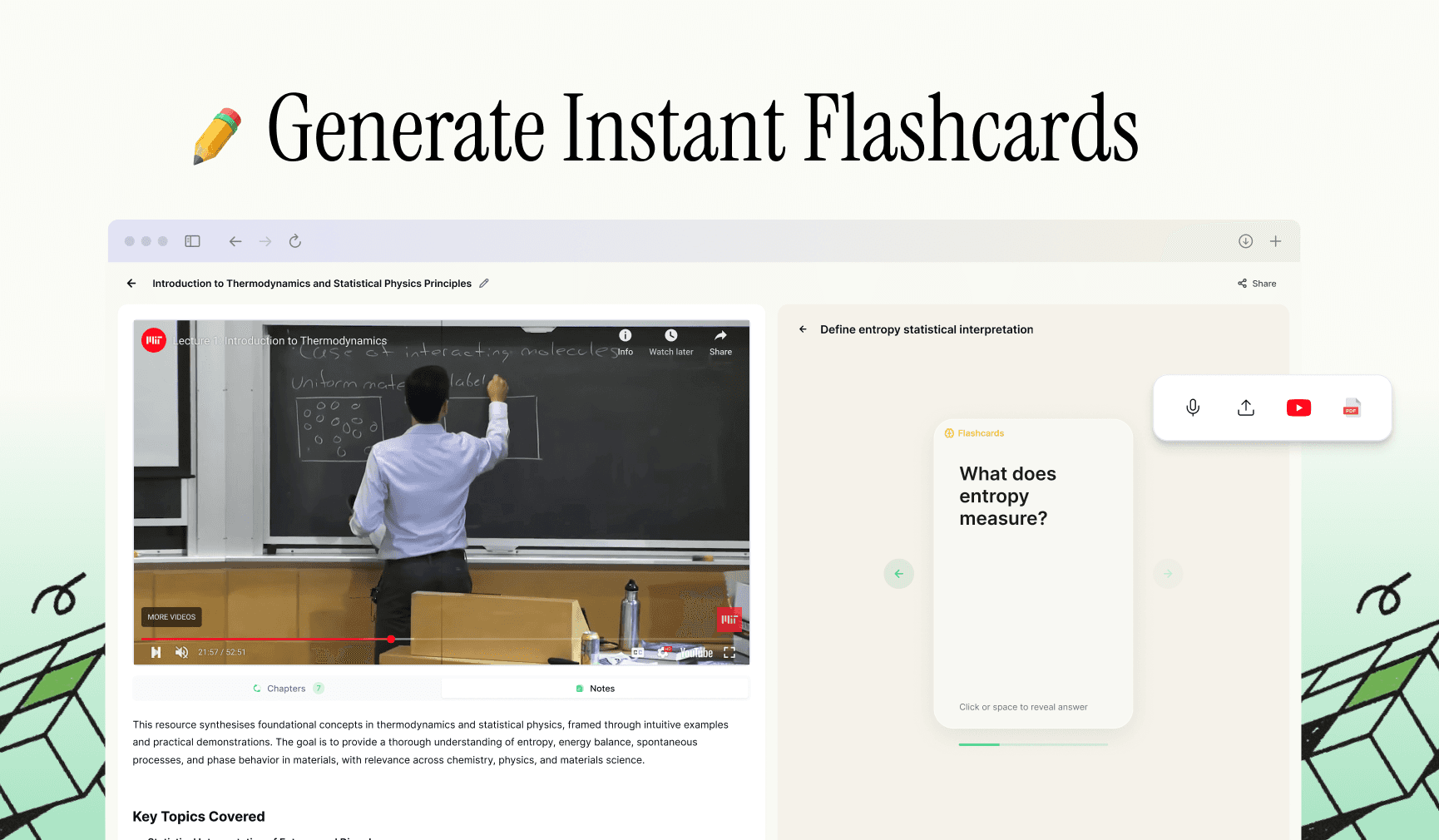
How to study Competitive Strategy with flashcards
Effective strategy study involves a "two-pass" approach. First, build your deck from your lectures or textbooks, then review in rounds to identify which frameworks you understand and which ones need more work.
Make a deck from your notes or generate it automatically from a case study.
Do one quick round to find weak spots in complex theories like Game Theory.
Review weak cards daily to cement the logic of strategic moves.
Mix in harder application cards to test your ability to diagnose industry problems.
Do a final mixed review before your midterm or final exam.
Generate Competitive Strategy flashcards automatically
Making cards manually is slow, messy, and often results in cards that are too wordy. Duetoday simplifies this by using AI to extract the most important strategic insights from your materials instantly.
Upload or paste your Competitive Strategy material (PDF, slides, or text).
Click Generate Flashcards.
Review, edit, and start studying with an AI tutor.
Generate Competitive Strategy Flashcards in Duetoday
Common Competitive Strategy flashcard mistakes
Many students make their cards too long, essentially copying entire paragraphs onto a card. This defeats the purpose of active recall. Focus on breaking down complex frameworks into smaller, digestible questions.
Cards are too long: Split VRIO into four separate cards.
Only memorizing words: Add "why" prompts to explain strategic logic.
Confusing similar models: Use comparison cards for PESTEL vs. Porter’s.
No review schedule: Ensure you repeat difficult case study facts more often.
Ready to generate your Competitive Strategy flashcards?
Don't waste hours writing out cards. Upload your notes, generate your deck, and start studying with active recall today. Duetoday works with business notes, PDFs, and slide decks to provide the ultimate study edge.
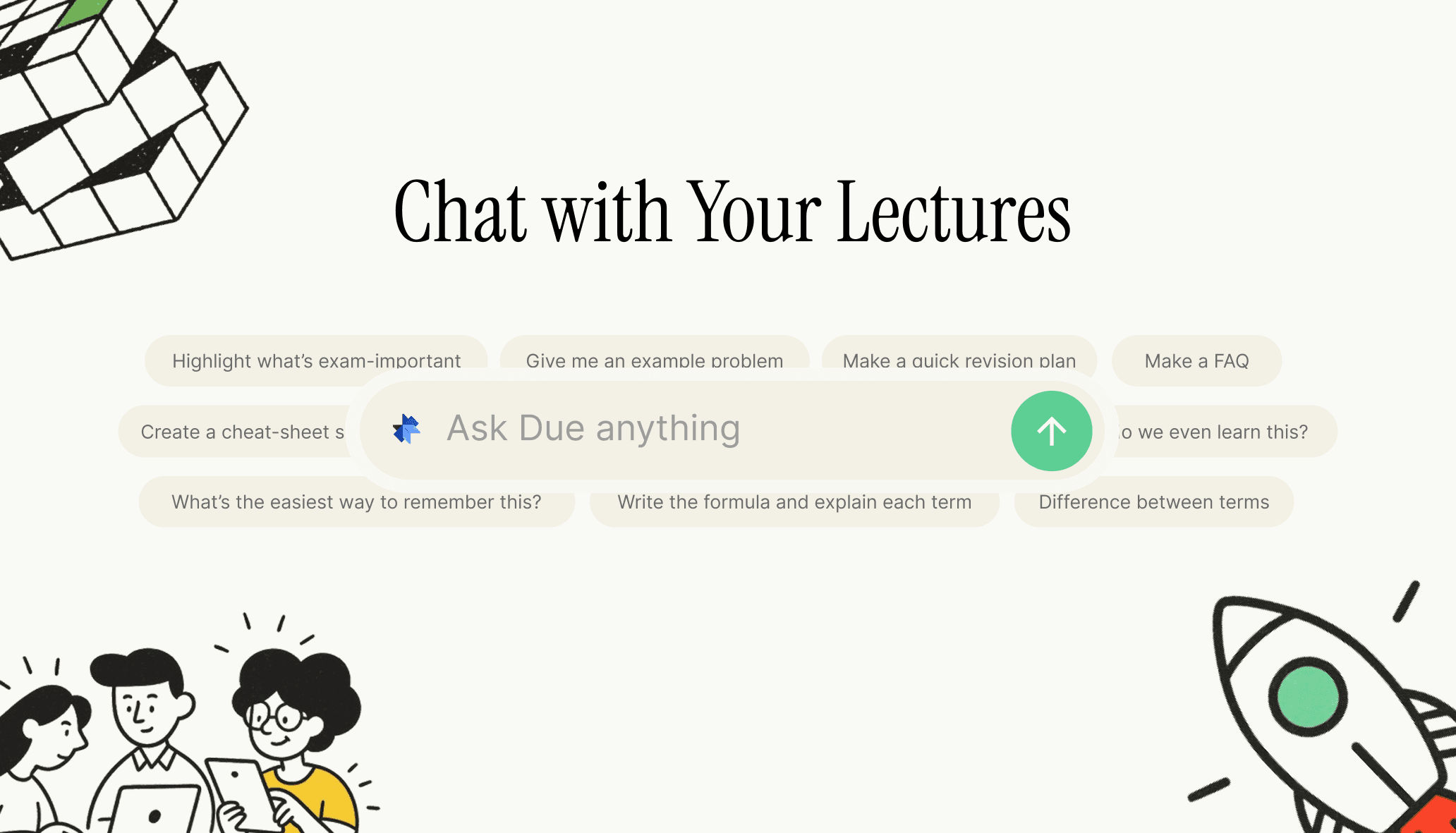
FAQ
How many flashcards do I need for Competitive Strategy? A typical semester-long course usually requires 150–300 cards to cover all frameworks and key case study facts.
What’s the best format for strategy flashcards? Question and answer format is best, specifically asking for the "impact" or "reasoning" behind a strategic move.
How often should I review? Review your most difficult frameworks once every 24 hours until they stick, then move to once every few days.
Should I make cards from a textbook or case studies? Both. Textbook cards help with theory, while case study cards help with the application of those theories.
How do I stop forgetting models after a week? Use a spaced repetition system like Duetoday that specifically resurfaces the cards you struggle with most.
What if my flashcards feel too easy? Try adding "scenario-based" questions, such as "If industry rivalry increases, what happens to profit margins?"
Can I generate flashcards from a PDF? Yes, Duetoday allows you to upload any business PDF and turn it into a study deck instantly.
Are digital flashcards better for business students? Yes, they allow for faster searching and the ability to study on-the-go between classes or meetings.
How long does it take to make a full deck? With Duetoday’s AI, a full deck from a chapter of notes takes less than 60 seconds.
Can Duetoday organize my cards by topic? Yes, you can categorize your decks by specific modules like 'Market Analysis' or 'Corporate Strategy'.

Duetoday is an AI-powered learning OS that turns your study materials into personalised, bite-sized study guides, cheat sheets, and active learning flows.