Generate Flashcards for Comparative Politics
Make flashcards for Comparative Politics instantly. Generate study guides and active recall cards for your politics assignments.
Generate Flashcards with AI Free
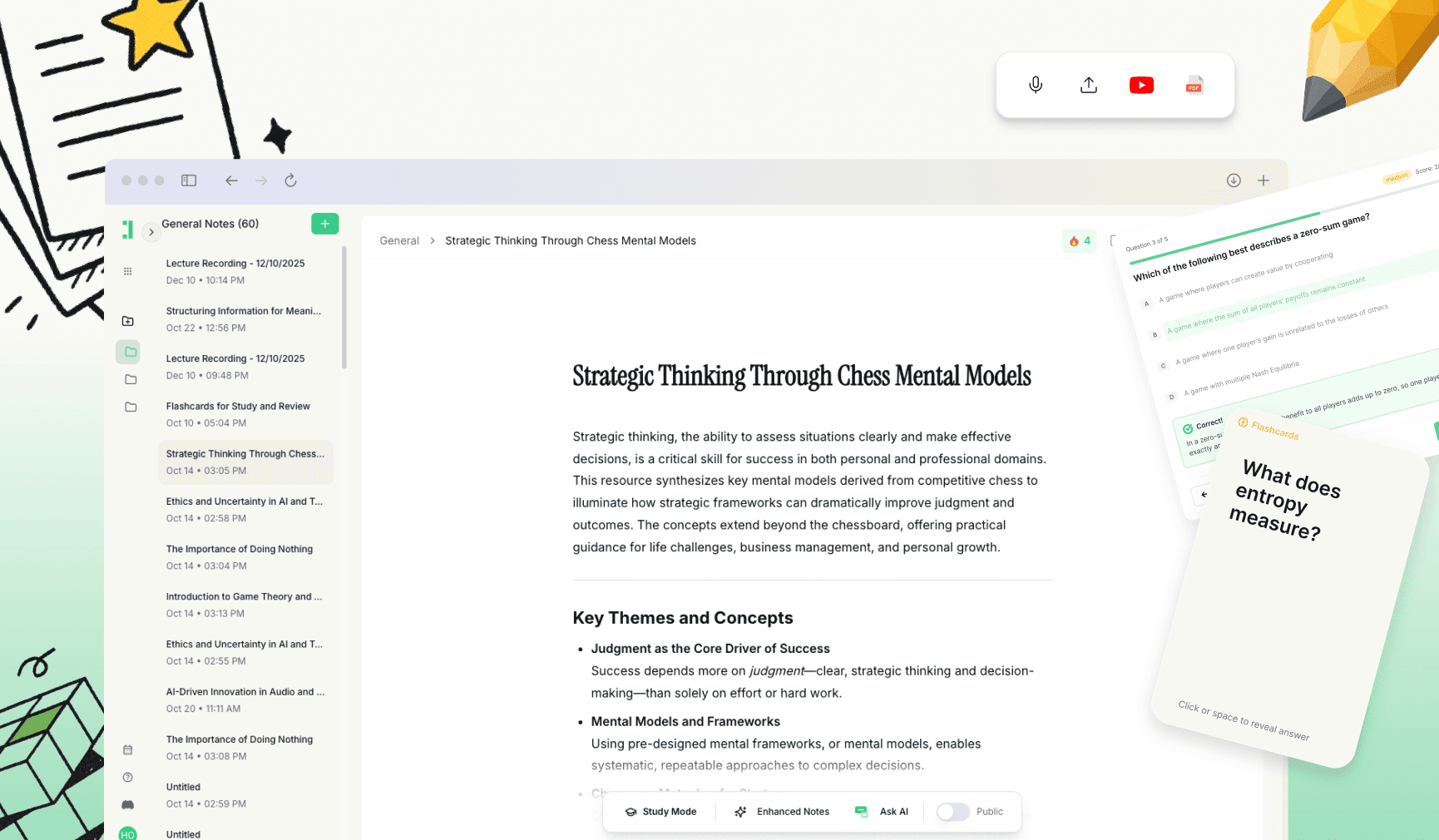
Maximize Your Comparative Politics Study Efficiency
Turn your notes, PDFs, slides, or lectures into Comparative Politics flashcards so you can review faster and remember more. Whether you are analyzing parliamentary systems, electoral laws, or democratization processes, moving from passive reading to active testing is the key to mastery.
Generate Comparative Politics Flashcards
Upload notes / paste text
In Duetoday, the process is simple: upload your syllabus or lecture transcripts, generate a comprehensive deck, review and edit for personal nuance, and start your study session. No more spending hours manually writing out cards.
What are Comparative Politics flashcards?
Comparative Politics flashcards cover the essential building blocks of political science including key terms, institutional frameworks, formulas for seat allocation, and cause/effect relationships in political development. They help you break down complex theories into bite-sized, digestible questions.
The outcome is simple: instead of rereading chapters on 'The State' or 'Political Economy' and hoping the info sticks, you test yourself quickly to build long-term recall. If you already have notes, Duetoday can generate a clean deck in minutes, allowing you to focus on the concepts that actually confuse you.
Why flashcards work for Comparative Politics
Comparative Politics requires a mix of detailed factual memory (dates, country cases) and conceptual understanding (regime types, institutional effects). Flashcards bridge this gap by forcing your brain to retrieve information rather than just recognizing it on a page.
Remember key terms like 'Clientelism' or 'Corporatism' without cramming.
Separate similar concepts (e.g., Presidential vs. Parliamentary systems).
Learn processes step-by-step such as the stages of democratic consolidation.
Practice applying theories to specific country case studies quickly.
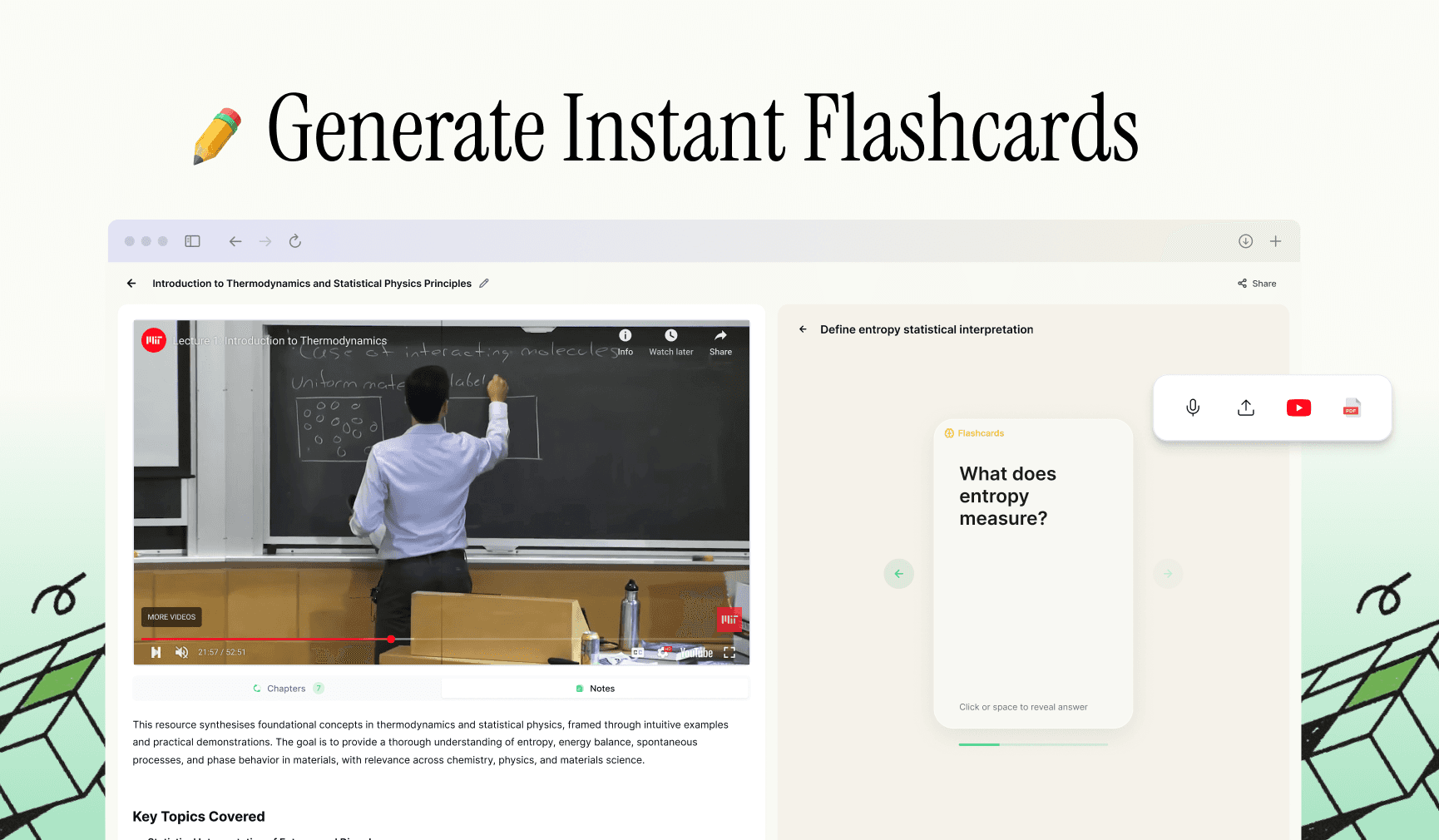
What to include in your Comparative Politics flashcards
Good flashcards follow the 'atomic' rule: one idea per card. This prevents you from accidentally skipping over parts of a complex answer. Your cards should be question-based and challenging.
Definitions & key terms: What is Duverger's Law? Define a Hybrid Regime.
Processes & steps: What are the steps in a double-ballot electoral system?
Comparisons: How is Federalism different from Unitary government?
Application: When would you use a Proportional Representation system?
Example prompts include: What is the main difference between a State and a Nation?, What are the three types of legitimacy according to Weber?, and Describe the 'Resource Curse' in a political context.
How to study Comparative Politics with flashcards
We recommend a 'two-pass' approach. First, generate your deck and do a quick run-through to identify which concepts feel like second nature and which feel like a foreign language. Repeat the tough cards daily, while spacing out the ones you already know.
Make a deck from your notes or generate it automatically.
Do one quick round to find weak spots.
Review weak cards every morning for a few days.
Mix in a few harder country-case cards each session.
Do a final mixed review before your midterm or final exam.
Generate Comparative Politics flashcards automatically
Making cards manually is slow and often feels like a chore that stops you from actually studying. Duetoday solves this by automating the heavy lifting. Simply upload your PDF readings or paste your lecture slides, and our AI builds a structured deck in seconds.
Upload or paste your Comparative Politics material.
Click Generate Flashcards.
Review, edit, and start studying immediately.
Common Comparative Politics flashcard mistakes
Many students create cards that are too wordy, essentially pasting whole paragraphs onto a virtual card. This leads to 'rote recognition' rather than mastery. Ensure you split long theories into separate cards and always include comparison questions to avoid confusing similar political systems.
Ready to generate your Comparative Politics flashcards?
Stop rereading and start recalling. Turn your notes into a powerful study tool today and walk into your next exam with confidence.
FAQ
How many flashcards do I need for Comparative Politics? It depends on the scope, but most students find that 50-100 cards per unit allow for adequate coverage of terms and case studies.
What’s the best format for Comparative Politics flashcards? Question and answer format works best, especially when focusing on 'Why' and 'How' rather than just 'What'.
How often should I review my cards? Daily review is best for new material, moving to every 3-4 days once you feel confident with the definitions.
Should I make cards from a textbook or slides? Use your lecture slides for the core 'testable' material and your textbook for deeper context on country cases.
How do I stop forgetting theories after a few days? Spaced repetition is the key. Ensure you revisit the cards periodically even after you think you've mastered them.
What if my flashcards feel too easy? Try adding 'Application' cards where you have to apply a theory to a new, hypothetical country scenario.
Can I generate flashcards from a PDF automatically? Yes, Duetoday is designed to extract key concepts from PDFs and turn them into flashcards instantly.
Are digital flashcards better than paper? Digital cards allow for better organization, easier editing, and the ability to study on the go via your phone.
How long does it take to make a full deck? With Duetoday, you can generate a full deck of 30-50 cards in less than a minute.
Can Duetoday organize my cards by topic? Yes, the AI can categorize and tag your flashcards based on the sub-topics in your uploaded material.

Duetoday is an AI-powered learning OS that turns your study materials into personalised, bite-sized study guides, cheat sheets, and active learning flows.