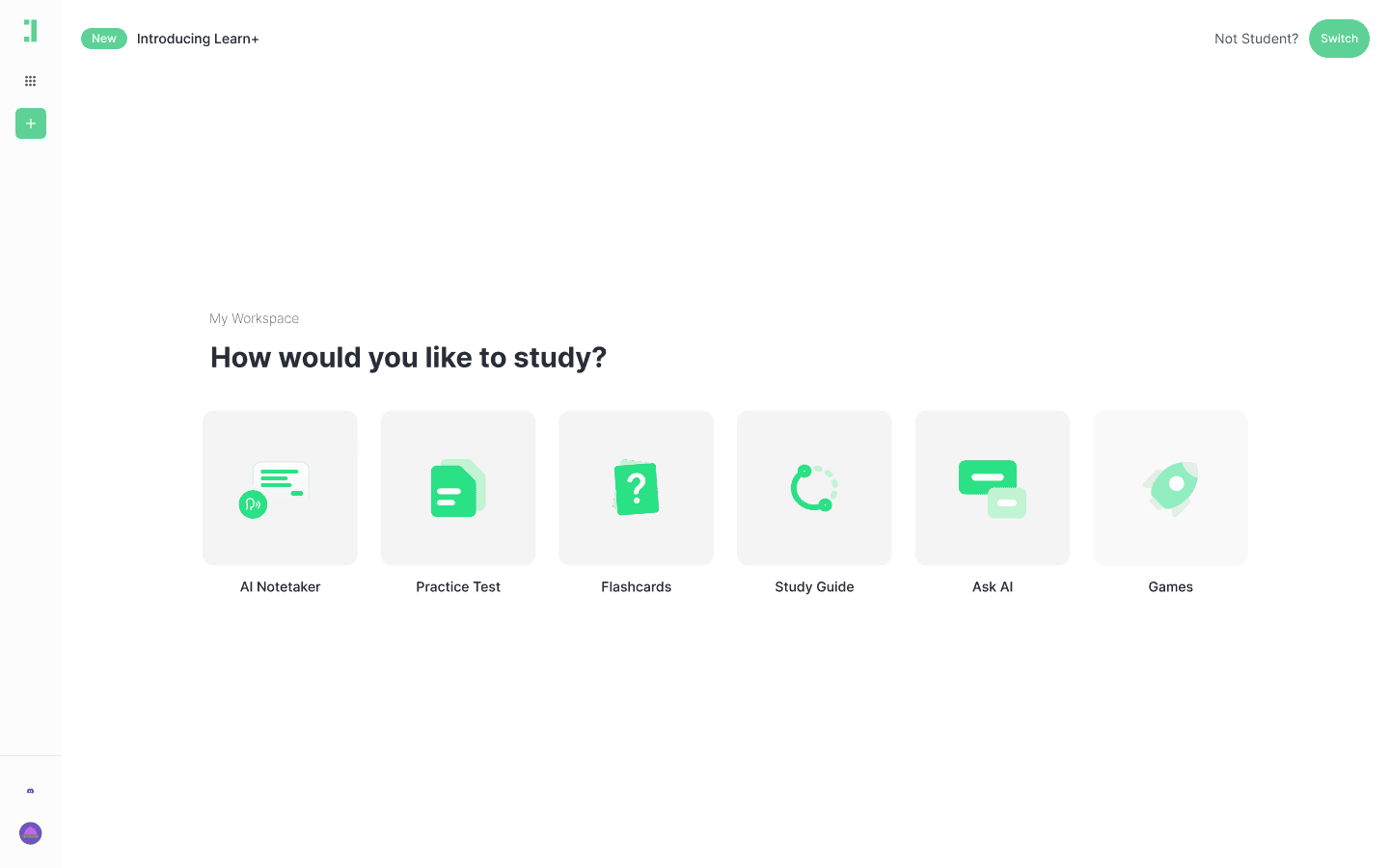
Generate Flashcards for Clinical Psychology
Make Clinical Psychology flashcards using AI. Generate study sets for DSM-5, theories, and diagnostic criteria from your notes.
Generate Flashcards with AI Free
What are Clinical Psychology flashcards?
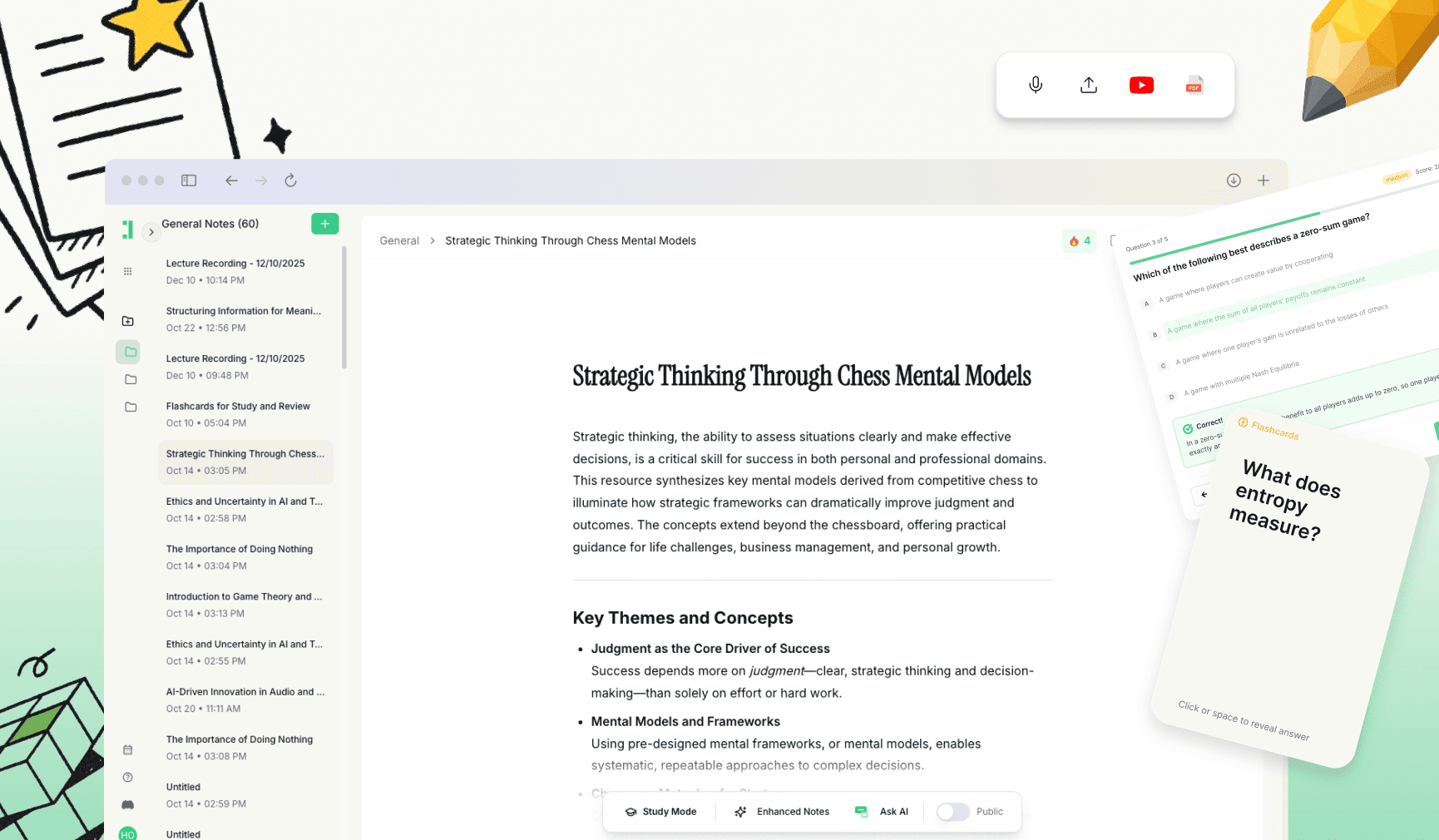
Clinical psychology flashcards are specialized study tools designed to help you master the complex landscape of mental health disorders, diagnostic criteria, and therapeutic interventions. They break down dense clinical information into manageable, bite-sized questions that test your knowledge of the DSM-5, psychopathology, and evidence-based treatments.
The primary outcome of using these flashcards is moving beyond passive reading of textbooks to active engagement with the material. Instead of just recognizing a disorder's name, you force your brain to recall specific symptoms, differential diagnoses, and ethical guidelines. If you already have lecture notes or case studies, Duetoday can generate a clean, professional deck in minutes.
Why flashcards are one of the best ways to study Clinical Psychology
Clinical psychology requires a high level of precise memory for diagnostic codes, developmental stages, and theoretical frameworks. Flashcards are uniquely suited for this because they rely on active recall—the process of retrieving information from your brain—which strengthens neural pathways much more effectively than highlighting a book.
By using spaced repetition, you ensure that you spend more time on difficult concepts like neurobiology or complex personality disorders and less time on the basics you already know. This systematic approach prevents the illusion of competence where you think you know the material just because it looks familiar.
Memorize DSM-5 diagnostic criteria without the last-minute cramming.
Separate similar concepts like Bipolar I vs. Bipolar II or different anxiety disorders.
Learn the stages of therapeutic models, such as CBT or Psychodynamic phases.
Practice applying ethical principles to hypothetical clinical scenarios.
What to include in your Clinical Psychology flashcards
Effective clinical psychology cards should follow the one idea per card rule. Avoid cluttering a single card with an entire disorder; instead, create specific questions that target different aspects of the condition to ensure deep understanding.
We recommend organizing your deck into four main categories to cover the breadth of the subject:
Definitions & Key Terms: Focus on terminology like anhedonia, comorbidity, or transference.
Processes & Steps: Break down the assessment process or the stages of a clinical interview.
Comparisons: Contrast symptoms between overlapping disorders to master differential diagnosis.
Application: Use short case snippets to practice identifying the correct intervention or diagnosis.
Example prompts: What is the minimum duration required for a Major Depressive Episode diagnosis? or Contrast the cognitive distortions in CBT vs. the core focus of Humanistic therapy.
How to study Clinical Psychology with flashcards (a simple system)
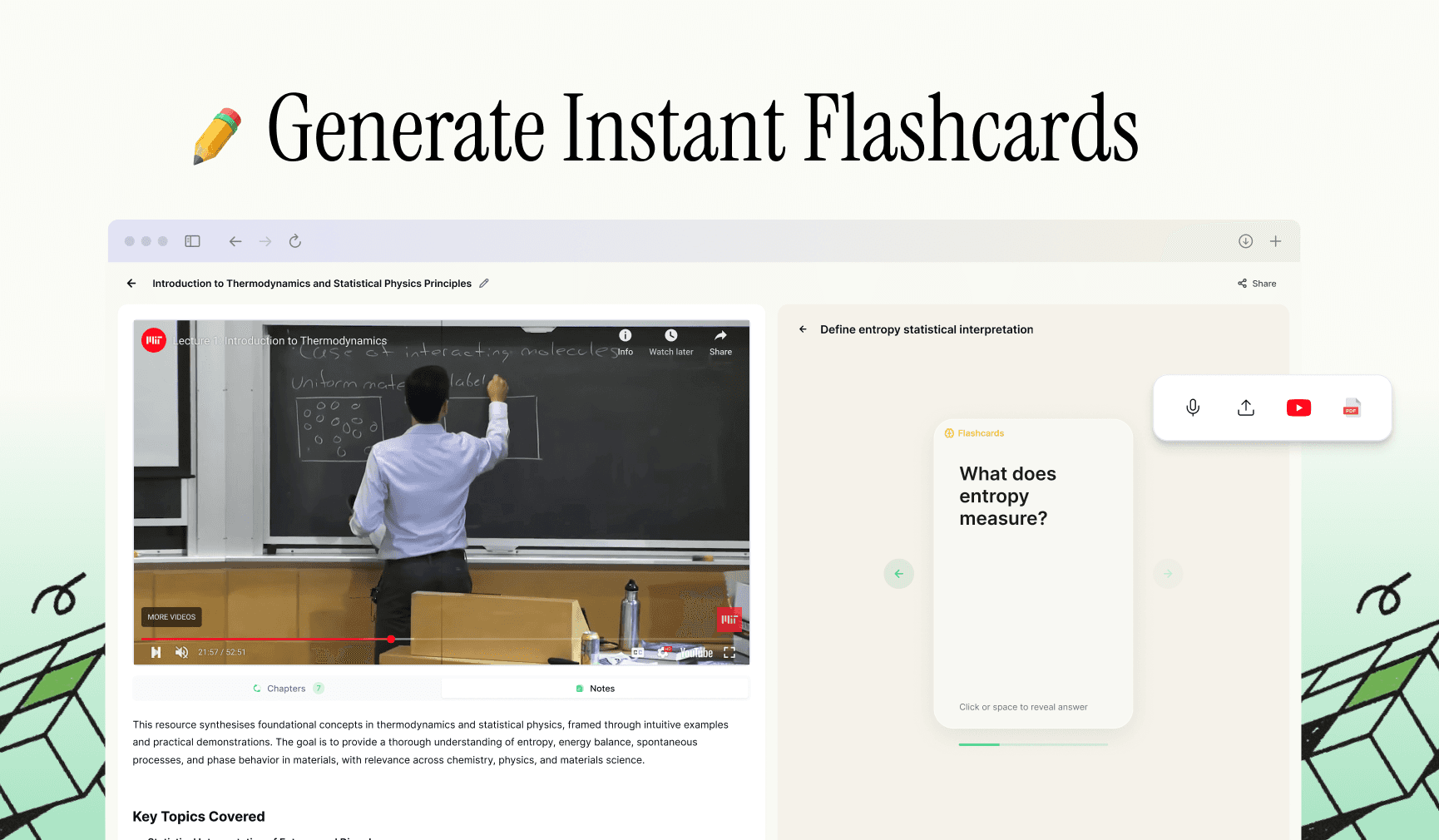
Mastering clinical psychology is about consistency. We recommend a two-pass approach: first, use your materials to build or generate a comprehensive deck, then move into focused review rounds. During your first pass, focus on understanding the logic behind the diagnosis rather than just rote memorization.
Review your cards in short, focused sessions of 15–20 minutes several times a day. This is far more effective for long-term retention than a single four-hour block. As you progress, mark the cards you struggle with for more frequent repetition.
Make a deck from your clinical notes, DSM-5 summaries, or research papers.
Do one quick round to identify which disorders or theories are your weak spots.
Review those difficult cards daily to move them into long-term memory.
Mix in shuffled cards from different chapters to simulate how disorders appear in real clinical settings.
Perform a final comprehensive review before your midterms or board exams.
Generate Clinical Psychology flashcards automatically in Duetoday
Manually writing out hundreds of cards for every mental disorder is incredibly time-consuming and often results in cards that are too wordy to be useful. Duetoday solves this by automating the creation process so you can start studying immediately.
Simply upload your lecture slides, textbook PDFs, or case study transcripts and our AI will extract the most critical information into structured flashcards.
Upload or paste your clinical psychology study material.
Click Generate Flashcards.
Review, edit for personal nuance, and start your active recall session.
Generate Clinical Psychology Flashcards in Duetoday. Start with your notes and get a deck you can actually use today.
Common Clinical Psychology flashcard mistakes (and how to fix them)
Avoid the trap of making cards that are essentially paragraphs. If a card is too long, you'll simply memorize the shape of the text instead of the actual concept.
Cards are too long: Split multi-symptom disorders into separate cards for each symptom cluster.
Only memorizing definitions: Add cards that ask Why a specific treatment is used for a specific disorder.
Ignoring ethics: Ensure you include cards on APA ethical guidelines and legal requirements.
No variety: Use a mix of term-definition, fill-in-the-blank, and scenario-based questions.
Ready to generate your Clinical Psychology flashcards?
Stop rereading pages of psychopathology notes. Upload your materials to Duetoday, generate a professional deck, and start mastering clinical psychology through active recall. It works with PDFs, lecture notes, slides, and even clinical transcripts.
Start Generating Flashcards
FAQ
How many flashcards do I need for Clinical Psychology?
A typical unit covering several disorders usually requires 50–100 cards. For a full semester or licensing exam, you may end up with 500+ cards categorized by disorder type.
What’s the best format for Clinical Psychology flashcards?
The best format is a clear question on the front (e.g., What are the 4 Ds of abnormality?) and a concise, bulleted answer on the back.
How often should I review my cards?
Review your full active deck daily leading up to an exam. Once you know a card well, space it out to every 3–5 days to keep the knowledge fresh without burning out.
Should I make cards from the DSM-5 or my notes?
Ideally, use both. Use the DSM-5 for technical accuracy on criteria and your lecture notes for the specific theories and case studies your professor emphasizes.
How do I stop forgetting disorders after a few days?
Use spaced repetition. Duetoday helps by allowing you to focus on the cards you get wrong, ensuring they appear more frequently until they stick.
Can I generate flashcards from my psychology PDF automatically?
Yes, Duetoday is designed to scan PDFs and identify key definitions, symptoms, and theories to create a study-ready deck in seconds.
Are digital flashcards better than paper for Clinical Psychology?
Digital cards are generally better because they allow for faster searching, easy editing, and the ability to carry hundreds of detailed case studies in your pocket.
How long does it take to make a full clinical deck?
Manually, it can take hours. With Duetoday, you can generate a comprehensive deck from an entire chapter in under a minute.
Can Duetoday organize my flashcards by disorder?
Yes, you can generate and tag decks specifically for categories like Mood Disorders, Personality Disorders, or Ethics to keep your study sessions organized.

Duetoday is an AI-powered learning OS that turns your study materials into personalised, bite-sized study guides, cheat sheets, and active learning flows.