Generate Flashcards for Classical Mechanics
Make Classical Mechanics flashcards for physics. Generate custom study decks from notes to master motion, forces, and energy.
Generate Flashcards with AI Free
Generate Flashcards for Classical Mechanics
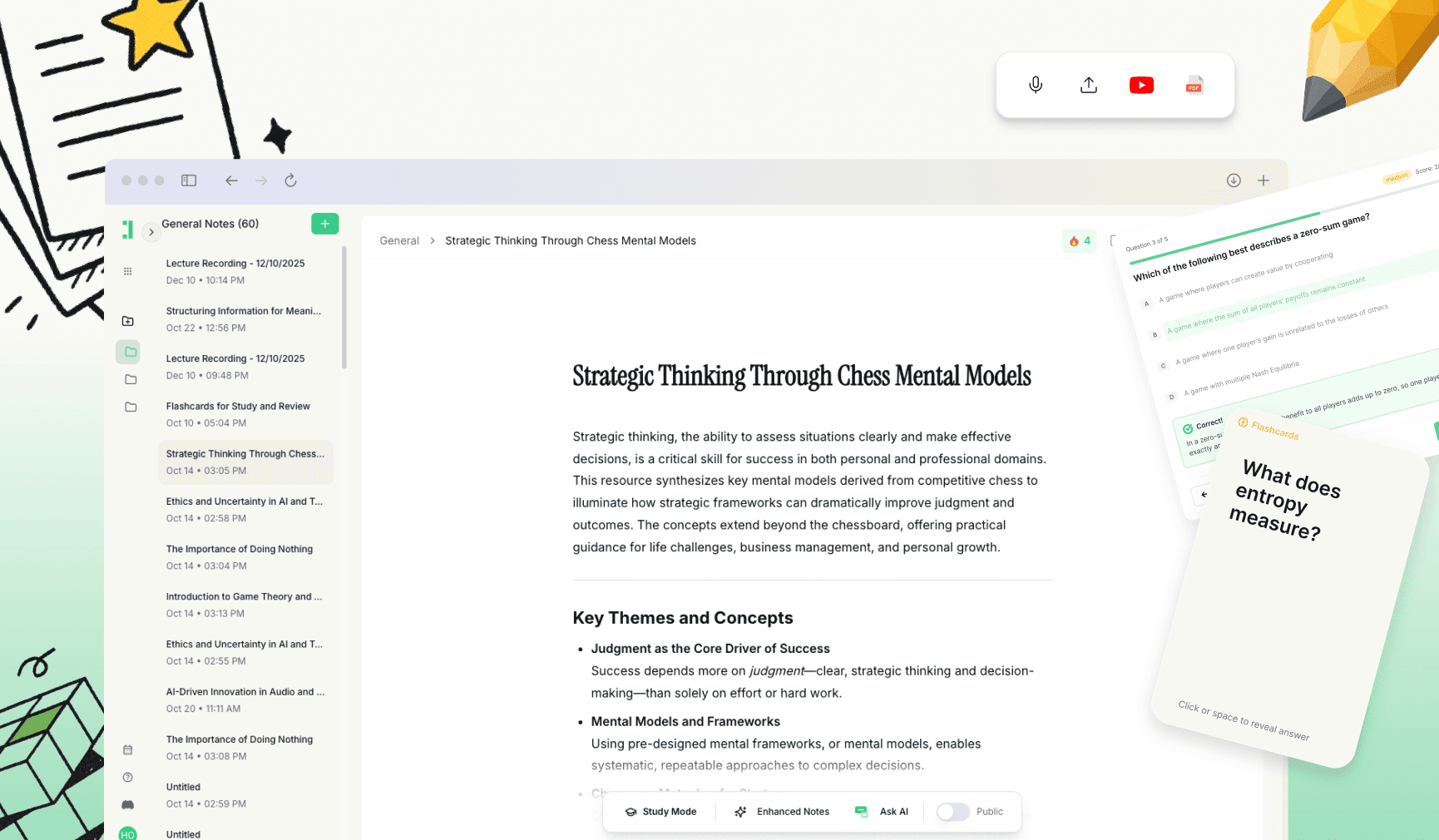
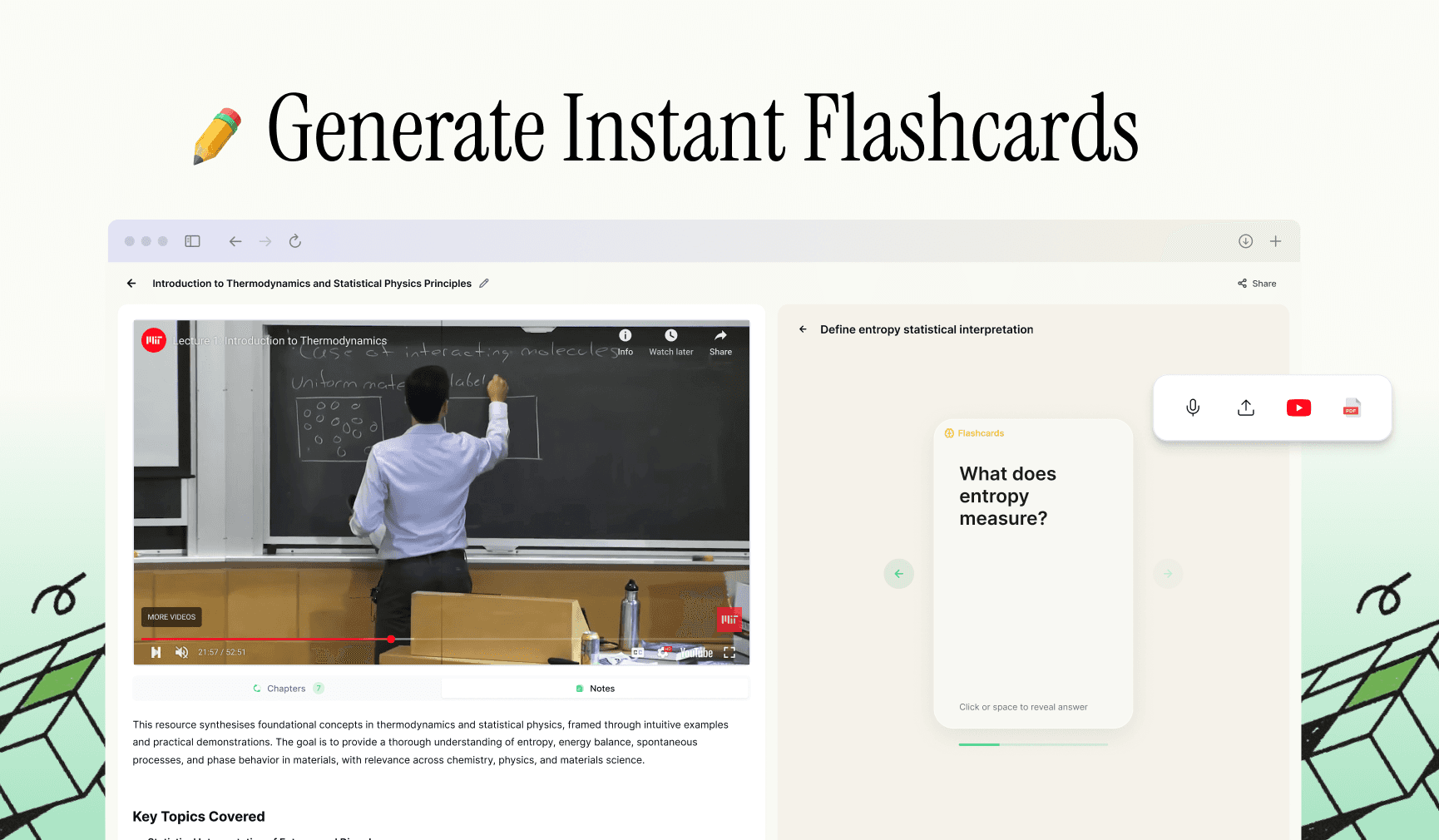
Turn your textbook notes, lecture slides, complex derivations, or physics PDFs into comprehensive Classical Mechanics flashcards so you can review faster and master the laws of motion. Duetoday simplifies physics revision by extracting key principles and transforming them into active recall tools.
Generate Classical Mechanics Flashcards
Upload Physics Notes
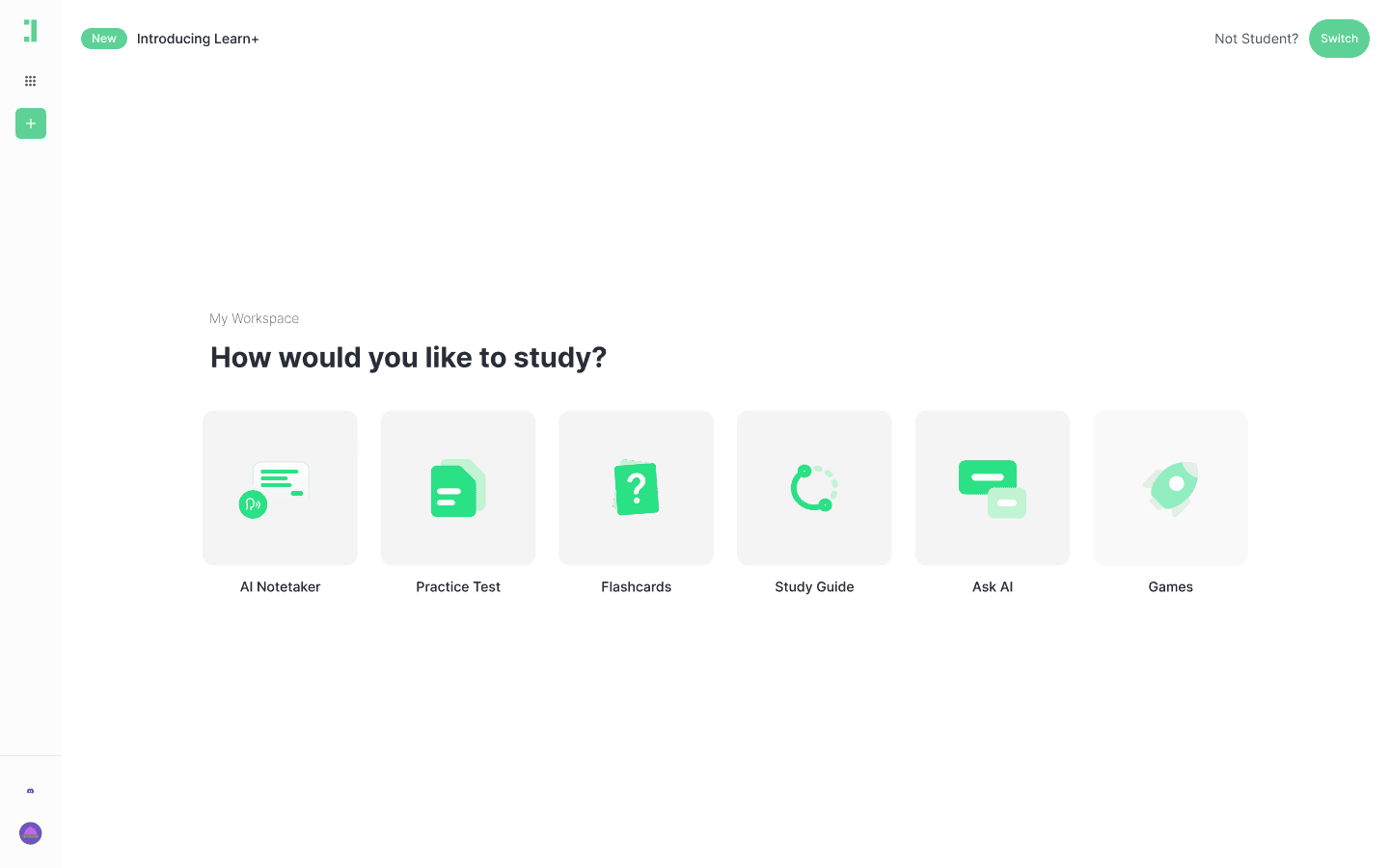
Using Duetoday is simple: upload your study material, let the AI generate a structured deck, review the cards for accuracy, and start your study session immediately.
What are Classical Mechanics flashcards?
Classical Mechanics flashcards focus on the physical laws governing the motion of bodies under the influence of a system of forces. They cover everything from basic Newtonian dynamics to advanced concepts like Hamiltonian mechanics, work-energy theorems, and rotational kinematics.
Instead of passively rereading dense physics textbooks, these flashcards force you to define variables, recall formulas, and explain physical phenomena from memory. This active engagement builds a much stronger mental model of how the universe works. If you already have notes, Duetoday can generate a clean deck in minutes.
Why flashcards work for Classical Mechanics
Classical Mechanics requires a mix of conceptual understanding and the ability to apply mathematical formulas to physical scenarios. Flashcards are ideal for this because they break down massive systems into solvable units of information.
By using active recall and spaced repetition, you ensure that fundamental constants and equations are instantly accessible in your mind during exams. This reduces the cognitive load required to solve complex problems because the 'basics' are already hardwired.
Memorize Newton’s Laws and Euler-Lagrange equations without cramming.
Separate similar concepts like elastic vs. inelastic collisions.
Learn multi-step processes for solving free-body diagrams.
Practice applying specific constraints to motion equations.
What to include in your Classical Mechanics flashcards
Effective physics flashcards follow the principle of 'one idea per card.' Don't try to fit an entire derivation on one side; instead, ask specific questions about steps or assumptions within that derivation.
Focus on four main card types: basic definitions, process-oriented steps, comparative analysis of forces, and shorthand application of formulas.
Definitions: "Define Torque in terms of angular momentum."
Processes: "What is the first step in setting up a Lagrangian?"
Comparisons: "How does a conservative force differ from a non-conservative force?"
Application: "What happens to the period of a pendulum if the length is quadrupled?"
How to study Classical Mechanics with flashcards
Physics is best learned through a 'two-pass' approach. First, generate your deck to identify the core facts, then use those facts to solve practice problems. The flashcards ensure you don't get stuck on the 'what' so you can focus on the 'how' of problem-solving.
Generate a deck from your lecture notes or textbook chapters.
Complete a quick pass to identify which formulas or definitions are fuzzy.
Review high-difficulty cards daily to lock in the math.
Shuffle your cards to avoid 'order memorization.'
Perform a mixed review combining mechanics with other physics topics before your exam.
Generate Classical Mechanics flashcards automatically
Manually writing out physics equations on 3x5 cards is time-consuming and prone to transcription errors. Duetoday uses AI to ensure your symbols and relationships remain accurate while saving you hours of prep work.
Simply upload your PDF, paste your notes, or provide a transcript of a physics lecture. Duetoday will instantly parse the material into a structured study deck ready for your next study session.
Common Classical Mechanics mistakes
Many students make their physics cards too wordy. If a card contains a whole paragraph, you aren't testing your memory; you're testing your reading speed. Keep cards punchy and focused on a single variable or concept. Another common mistake is ignoring the 'why'—make sure to include cards that ask for the physical intuition behind an equation, not just the symbols themselves.
Ready to generate your Classical Mechanics flashcards?
Stop rereading and start recalling. Turn your complex physics material into a streamlined study tool in seconds.
Start Generating Flashcards
FAQ
How many flashcards do I need for Classical Mechanics? It depends on the scope, but usually 50-100 cards per major unit (like Dynamics or Oscillations) is sufficient to cover definitions and core formulas.
What’s the best format for physics flashcards? Use the 'Question and Answer' format with a focus on 'What happens if...' scenarios to test your conceptual understanding.
How often should I review my mechanics cards? Daily review is best for new formulas, moving to every 3-4 days once you have the basic laws of motion memorized.
Should I make cards from a textbook or my own notes? Use both. Textbooks provide formal definitions, while your notes often contain the specific shortcuts your professor wants you to use.
How do I stop forgetting formulas after a few days? Use spaced repetition. Duetoday tracks your performance so you see the hardest formulas more frequently until they stick.
What if my flashcards feel too easy? If they are too easy, start adding 'Constraint' cards, such as asking how the motion changes under friction or air resistance.
Can I generate Classical Mechanics flashcards from a PDF? Yes, Duetoday is designed to read physics PDFs and extract key terminology and equations automatically.
Are digital flashcards better than paper for physics? Digital cards are often better for physics because you can easily include diagrams and search for specific equations instantly.
How long does it take to make a full deck? With Duetoday, you can generate a full deck from a chapter's worth of notes in less than a minute.
Can Duetoday organize my cards by topic? Yes, you can categorize your decks by sub-topics like Kinematics, Energy, or Statics for more targeted study sessions.

Duetoday is an AI-powered learning OS that turns your study materials into personalised, bite-sized study guides, cheat sheets, and active learning flows.