Generate Flashcards for Civil Procedure
Make Civil Procedure flashcards today. Learn how to generate study guides for law school subjects and master the FRCP.
Generate Flashcards with AI Free
Maximize Your Civil Procedure Study Efficiency
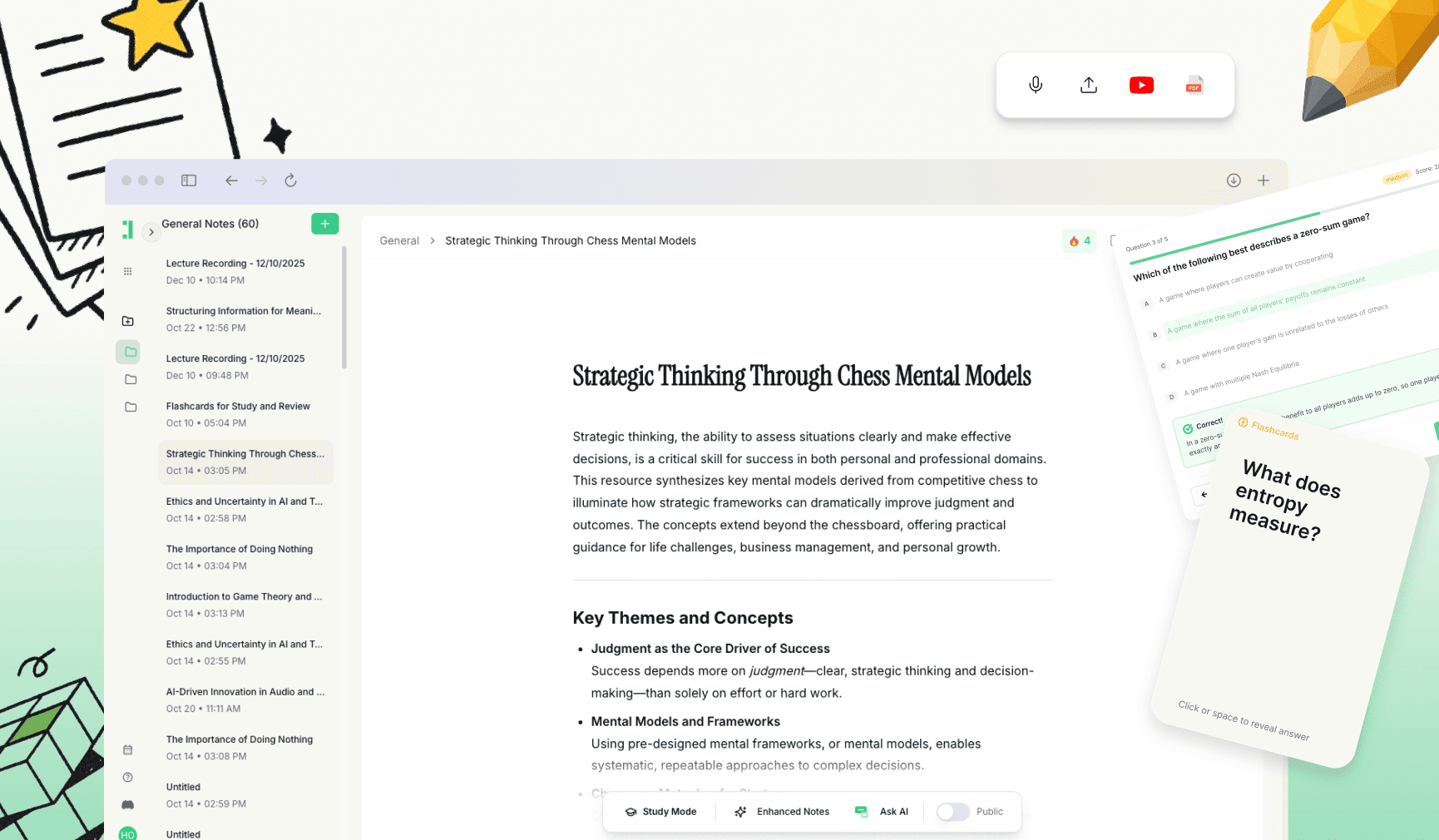
Turn your casebooks, FRCP rules, and lecture transcripts into Civil Procedure flashcards so you can review complex legal rules faster and ensure you never miss a deadline or a jurisdictional requirement. Civil Procedure is one of the most technical subjects in law school, and rote memorization is often the only way to master the precise timelines and rules required for success.
Generate Civil Procedure Flashcards
Upload your outlines or legal briefs and let Duetoday build your study deck in seconds.
When you use Duetoday, you simply upload your PDFs or paste your notes. Our AI identifies the key rules, statutes, and case holdings to generate a structured deck. You can then review, edit, and practice with active recall, moving from passive reading to active mastery.
What are Civil Procedure flashcards?
Civil Procedure flashcards cover the rules and standards that govern how a lawsuit is conducted in court. This includes everything from Subject Matter Jurisdiction and Personal Jurisdiction to Discovery, Summary Judgment, and Claim Preclusion. These cards help you break down the Federal Rules of Civil Procedure (FRCP) into digestible bites.
Instead of rereading a 50-page outline, flashcards force you to define specific rules and apply them to hypothetical scenarios. This process builds the mental muscle memory needed for the high-pressure environment of a law school final or the Bar Exam.
Why flashcards work for Civil Procedure
Civil Procedure is a logic-driven subject that relies heavily on sequences and specific conditions. Flashcards are perfectly suited for this because they allow you to isolate individual rules from the larger procedural framework. By using active recall and spaced repetition, you ensure that the details—like the difference between Rule 12(b)(6) and Rule 56—stay sharp in your mind.
Memorize filing deadlines without last-minute cramming.
Separate complex concepts like Erie Doctrine vs. Hanna.
Learn the multi-step tests for Personal Jurisdiction.
Practice applying the rules of Joinder and Class Actions.
What to include in your Civil Procedure flashcards
Effective legal flashcards follow the one idea per card rule. Don't try to put the entire 14th Amendment on one card. Instead, focus on specific questions that trigger a rule-based response. Your cards should be categorized by FRCP rules, constitutional requirements, and landmark case law.
Definitions & Rules: What is the 'nerve center' test for corporate citizenship?
Timelines: How many days does a defendant have to answer a complaint after service?
Comparisons: Distinguish between Specific Jurisdiction and General Jurisdiction.
Application: When is a motion for Judgment as a Matter of Law (JMOL) timely?
Example Prompts: Define the 'Minimum Contacts' test, What are the four requirements for Class Certification under Rule 23(a)?, and Explain the Difference between Res Judicata and Collateral Estoppel.
How to study Civil Procedure with flashcards
Start with a two-pass approach. In the first pass, generate a deck based on your class notes or a specific chapter of the FRCP. Do a quick round to identify which rules you know and which ones feel like a foreign language. In the second pass, focus heavily on the weak cards—usually the ones involving complex rules like Joinder or Supplemental Jurisdiction.
Generate your deck from notes or case briefs in Duetoday.
Identify weak spots (e.g., the Erie analysis).
Review difficult cards daily to move them into long-term memory.
Mix the deck to simulate the random nature of Bar Exam questions.
Generate Civil Procedure flashcards automatically in Duetoday
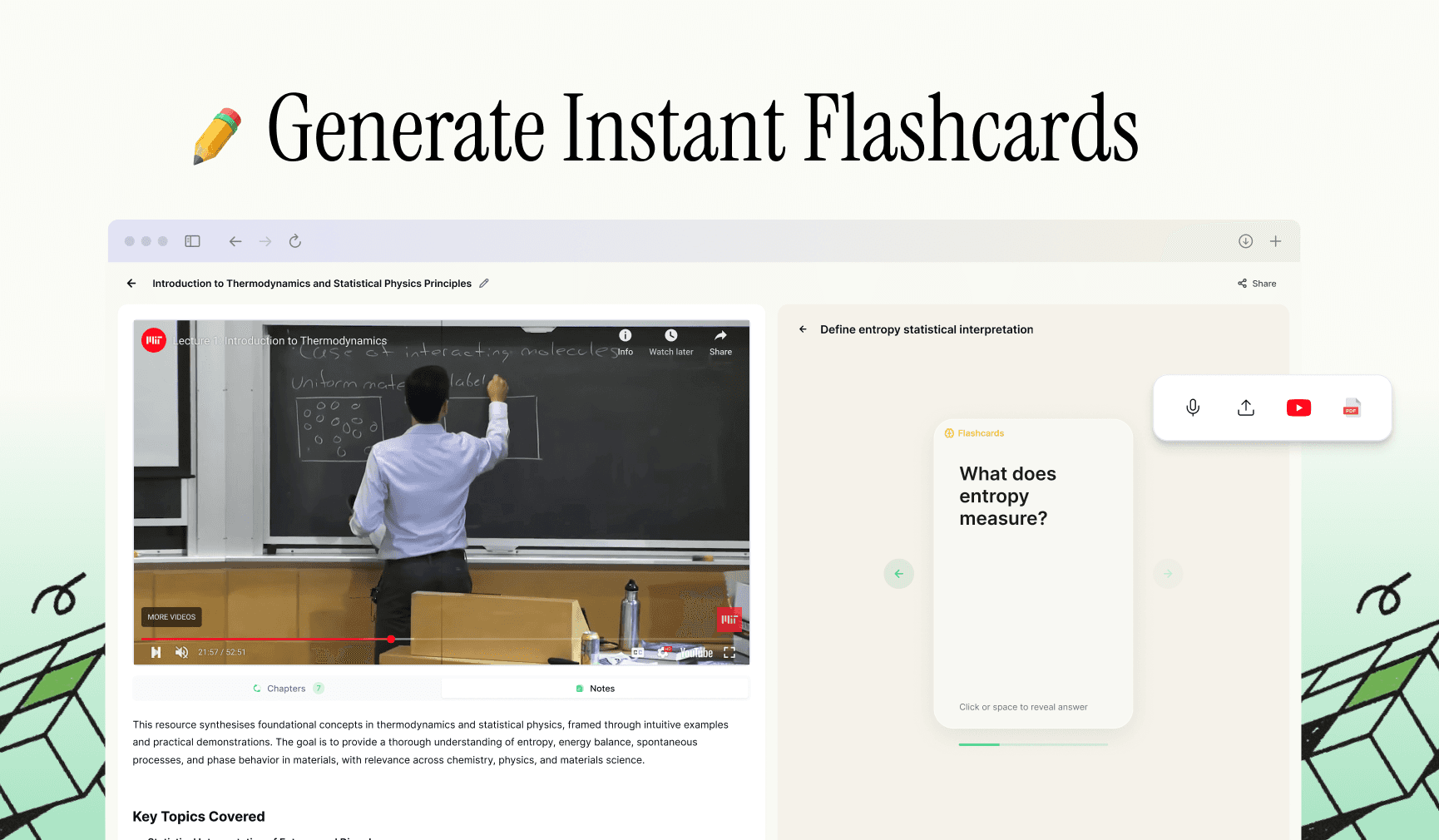
Making legal flashcards manually is incredibly skip-prone and time-consuming. You could spend hours typing out rules when you should be practicing them. Duetoday solves this by automating the creation process. Just upload your lecture notes or a PDF of the FRCP, and our AI does the heavy lifting.
Upload your Civil Procedure outlines or casebooks.
Click 'Generate Flashcards' to see the AI-curated results.
Edit for your specific professor's nuances and start studying immediately.
Common Civil Procedure flashcard mistakes
Many law students make cards that are too wordy. If a card has three paragraphs on it, you aren't using active recall; you're just reading. Another mistake is focusing only on the rule number (e.g., Rule 11) while forgetting the actual standard of conduct it requires. Finally, avoid studying cards in the same order every time, as your brain will start to memorize the sequence rather than the substance.
Ready to generate your Civil Procedure flashcards?
Stop drowning in outlines. Upload your Civil Procedure material to Duetoday, generate a professional deck in seconds, and start mastering the rules today.
FAQ
How many flashcards do I need for Civil Procedure?
A comprehensive deck usually consists of 150 to 300 cards covering the FRCP, Constitutional principles, and major cases.
What’s the best format for Civ Pro flashcards?
A 'Question and Answer' format is best. For example, 'Question: What is the standard for a Summary Judgment motion?' 'Answer: No genuine dispute as to any material fact and the movant is entitled to judgment as a matter of law.'
How often should I review my flashcards?
Review your 'weak' cards daily and your 'mastered' cards once a week to maintain retention via spaced repetition.
Should I make cards from a textbook or my notes?
Use your professor's lecture notes primarily, as they often emphasize specific interpretations of the rules that will appear on your final exam.
How do I stop forgetting the rules after a few days?
Consistent daily review sessions of 15-20 minutes are more effective than one five-hour cram session.
What if my flashcards feel too easy?
If they feel easy, start adding 'What If' scenarios to the cards to increase the difficulty and focus on rule application.
Can I generate flashcards from a PDF outline?
Yes, Duetoday can ingest PDF outlines and convert the bullet points into clear, concise flashcards automatically.
Are digital flashcards better than paper?
Digital cards are generally better for law students because they are searchable, easier to edit, and utilize AI for spaced repetition scheduling.
How long does it take to make a full deck?
Manually, it takes hours. With Duetoday’s AI, you can generate a full deck from your notes in less than a minute.
Can Duetoday organize my flashcards by topic?
Yes, Duetoday can categorize your cards into themes like Jurisdiction, Pleadings, and Discovery for targeted study sessions.

Duetoday is an AI-powered learning OS that turns your study materials into personalised, bite-sized study guides, cheat sheets, and active learning flows.