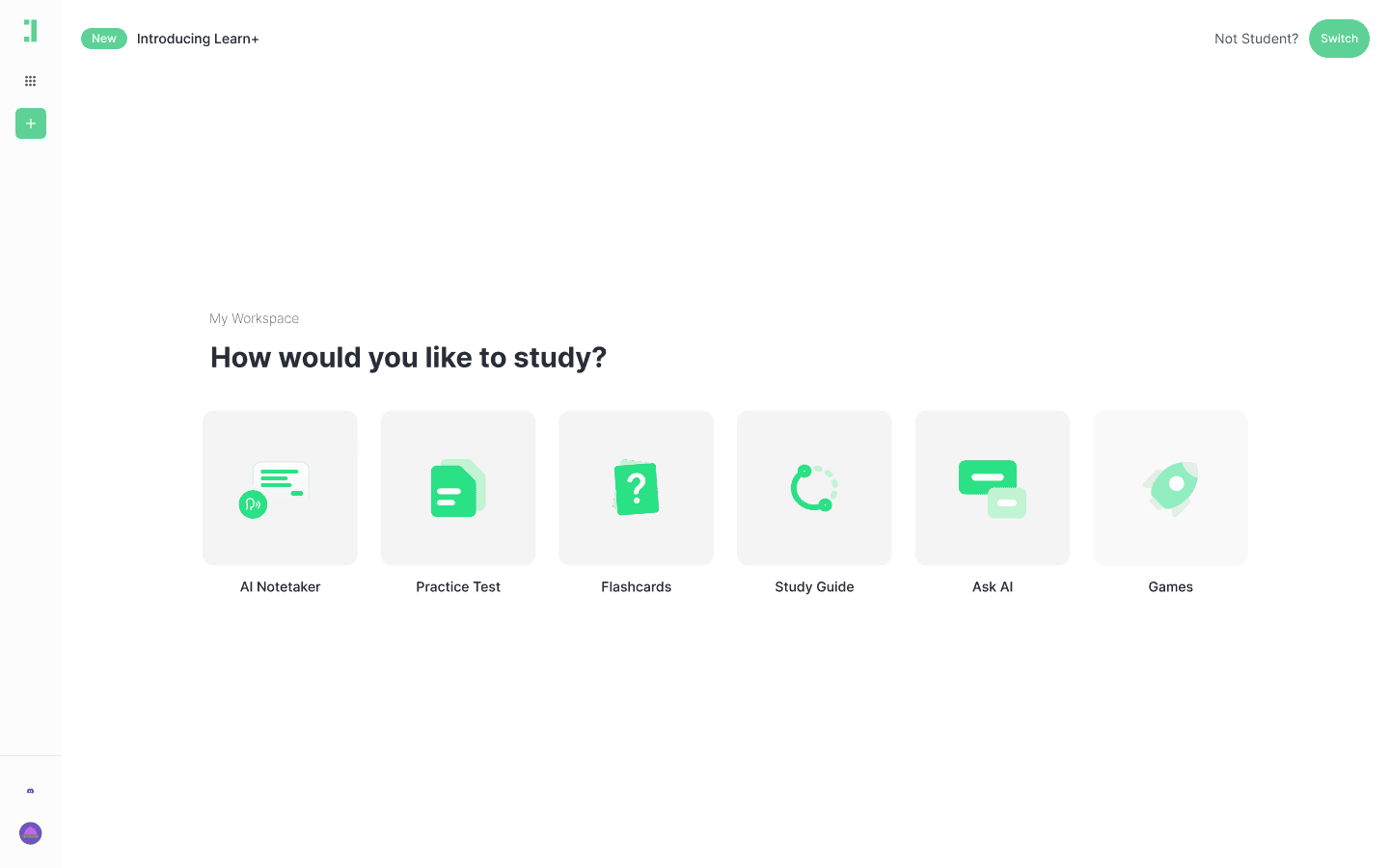
Generate Flashcards for Chromatography
Make chromatography flashcards to master HPLC and GC. Generate study guides from your chemistry notes and lab reports.
Generate Flashcards with AI Free
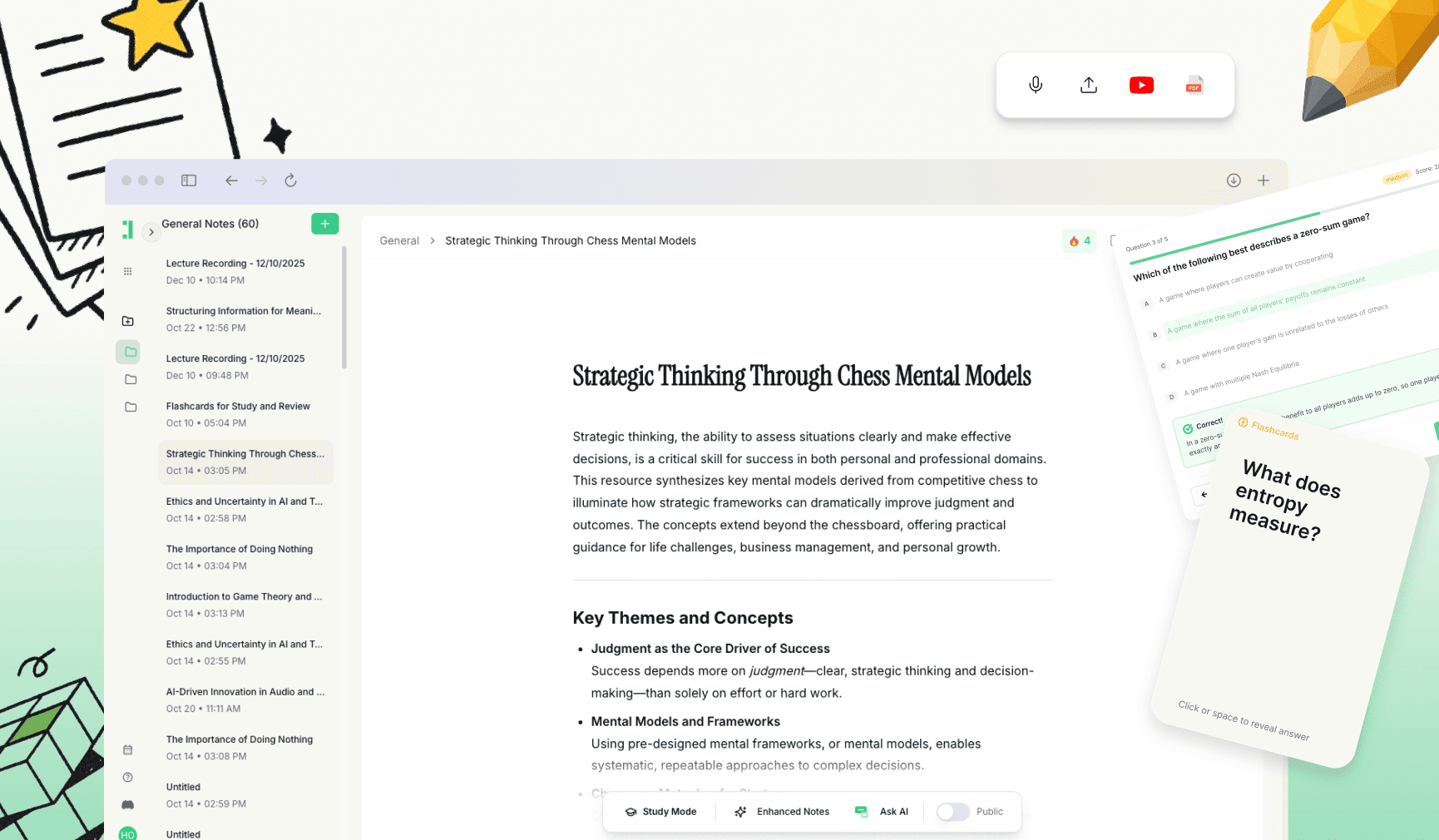
What are Chromatography flashcards?
Chromatography flashcards are targeted study tools designed to help you master the complex science of separating mixtures. These cards cover essential topics such as mobile and stationary phases, retention factors (Rf values), and specific techniques like High-Performance Liquid Chromatography (HPLC), Gas Chromatography (GC), and Thin-Layer Chromatography (TLC).
Instead of passively rereading dense textbooks or lab manuals, chromatography flashcards force you to engage in active recall. By testing your knowledge of polarities, equipment components, and chromatogram analysis, you build a stronger mental connection to the material and identify knowledge gaps faster. If you already have notes or lab slides, Duetoday can generate a clean deck of chromatography flashcards in minutes.
Why flashcards are one of the best ways to study Chromatography
Chromatography requires a mix of rote memorization for terminology and procedural understanding for laboratory applications. Flashcards bridge this gap by breaking down multifaceted processes into digestible nuggets of information. This method utilizes spaced repetition, ensuring you review difficult concepts—like the Van Deemter equation or detector types—more frequently until they are mastered.
Remember key terms like 'eluent' and 'analyte' without cramming.
Separate similar concepts such as Normal Phase vs. Reverse Phase chromatography.
Learn procedural steps for setting up columns or preparing samples.
Practice calculating Rf values and interpreting peak areas quickly.
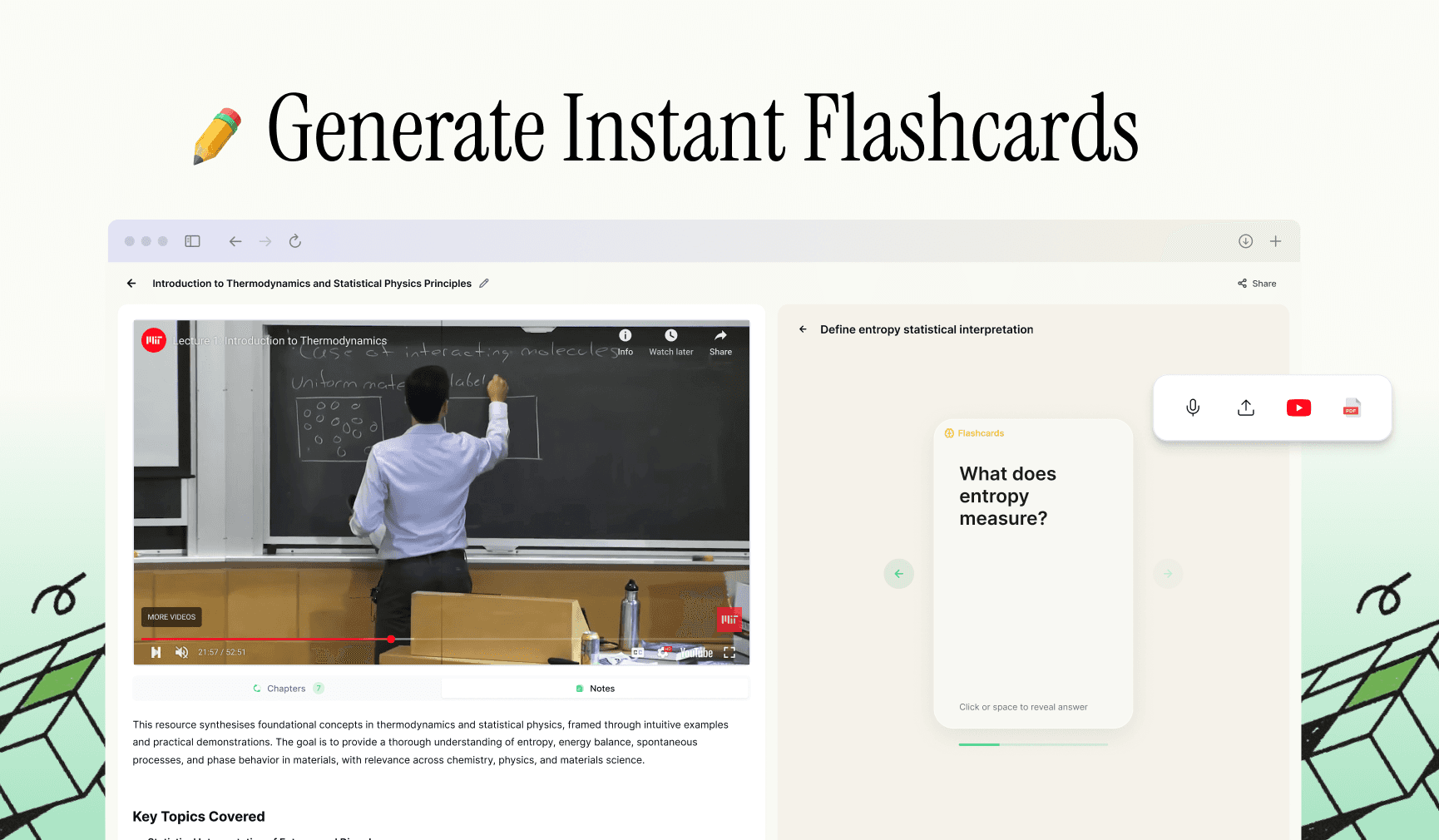
What to include in your Chromatography flashcards
Effective chromatography flashcards follow the 'one idea per card' rule. They should transform passive facts into active questions that challenge your understanding of chemical separation. Focus on four main categories: definitions, process mechanics, comparisons, and data application prompts.
Definitions & Key Terms: What is the stationary phase? Define the dead time (tM).
Processes & Steps: What is the first step in sample injection for GC? How does a gradient elution work?
Comparisons: How does HPLC differ from Gas Chromatography? Contrast adsorption vs. partition chromatography.
Application: If the solvent polarity increases in reverse-phase, what happens to retention time?
How to study Chromatography with flashcards
To master chromatography, use a two-pass approach. First, generate your deck from your syllabus or lab notes and do a quick run-through to identify which separation techniques confuse you most. Then, move into a targeted review phase where you focus heavily on those weak spots.
Make a deck from your notes or generate it automatically from your lab PDF.
Do one quick round to find weak spots (e.g., specific detectors or column types).
Review weak cards daily for a few days to build long-term memory.
Mix in harder application cards, like chromatogram interpretation, in every session.
Do a final mixed review of all techniques before your chemistry exam.
Generate Chromatography flashcards automatically in Duetoday
Let’s face it: manually writing out dozens of cards for every type of chromatography is slow and tedious. Duetoday eliminates the busywork by turning your PDFs, lecture slides, and organic chemistry transcripts into ready-to-use flashcards instantly.
Upload or paste your chromatography material.
Click 'Generate Flashcards'.
Review, edit, and start studying immediately.
Common Chromatography flashcard mistakes
Many students make the mistake of putting an entire textbook paragraph on one card. This makes the material impossible to memorize. Instead, keep cards punchy. Avoid just memorizing the names of detectors without understanding what they detect. Ensure you include cards that ask 'why' a certain change in the mobile phase affects the results, rather than just 'what' the mobile phase is.
Ready to generate your Chromatography flashcards?
Stop rereading your lab manual and start testing your knowledge. Upload your notes today and get a custom chromatography deck in seconds.
FAQ
How many flashcards do I need for Chromatography? Most students find that 40 to 60 cards are sufficient to cover the main types of chromatography, common detectors, and calculation formulas.
What’s the best format for Chromatography flashcards? A question-on-front, answer-on-back format works best, especially when including small diagrams of chromatograms for visual identification.
How often should I review Chromatography flashcards? Aim for 15-minute sessions daily leading up to an exam. Frequency is more important than duration when it comes to chemical formulas and processes.
Should I make cards from a textbook or lab notes? Lab notes are often better for practical application, while textbooks provide the theoretical 'why' behind the separation. Duetoday can combine both into one deck.
How do I stop forgetting retention factors after a few days? Spaced repetition is key. Use digital cards that show you the difficult Rf calculations more often than the easy definitions.
Can I generate Chromatography flashcards from a PDF? Yes, Duetoday is designed to scan PDFs and extract key concepts to create flashcards automatically.
Are digital flashcards better than paper for Chemistry? Digital cards allow for easier editing and the ability to include complex images of molecular structures and equipment setups that are hard to draw by hand.
How long does it take to make a full Chromatography deck? With Duetoday, it takes less than a minute. Manually, it could take 1-2 hours of writing and organizing.
Can Duetoday handle HPLC and GC specifics? Absolutely. It can distinguish between different chromatography types based on the specific material you upload.

Duetoday is an AI-powered learning OS that turns your study materials into personalised, bite-sized study guides, cheat sheets, and active learning flows.