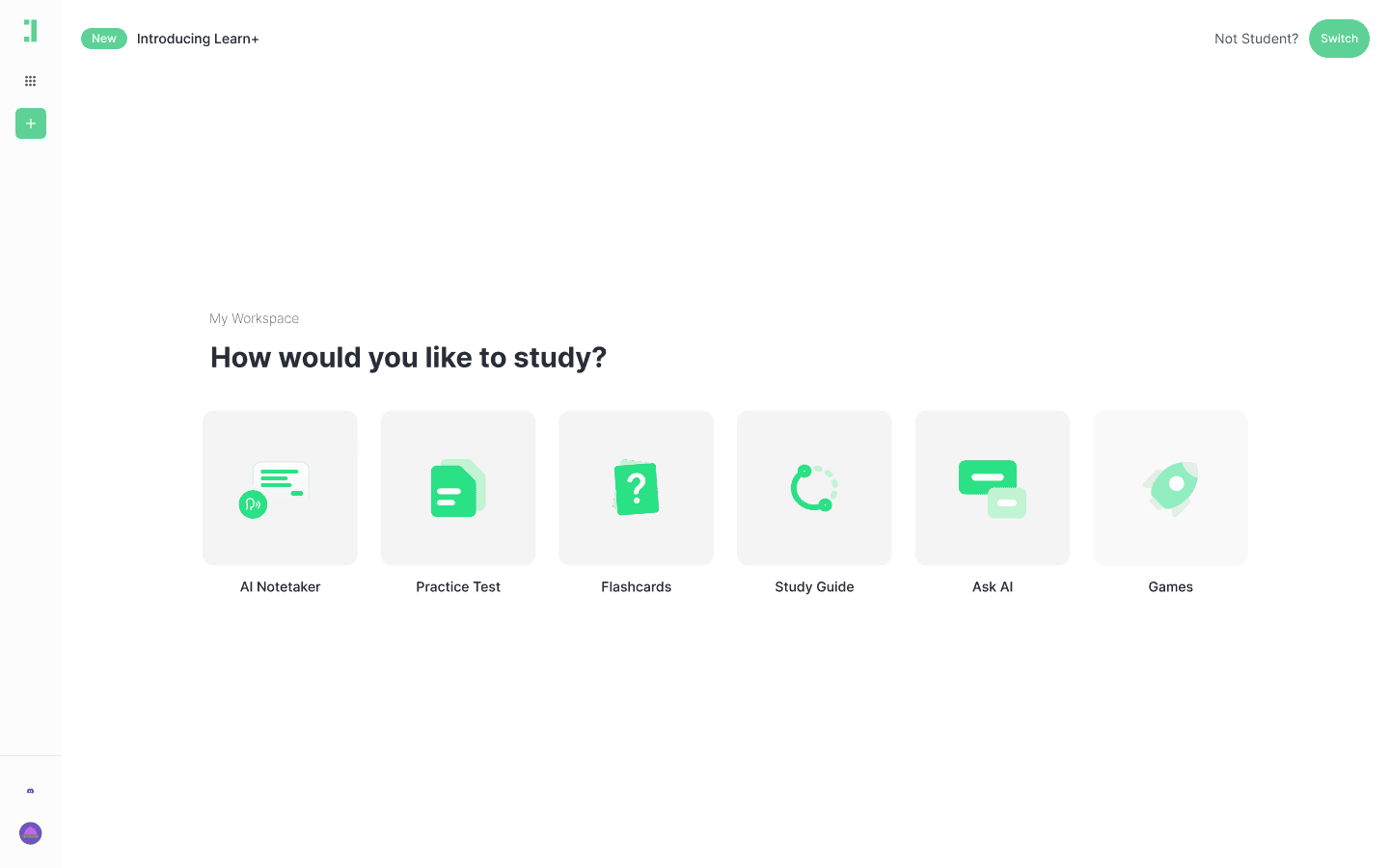
Generate Flashcards for Chemical Thermodynamics
Easily generate and make Chemical Thermodynamics flashcards for chemistry. This guide shows you how to use AI to turn notes into study materials.
Generate Flashcards with AI Free
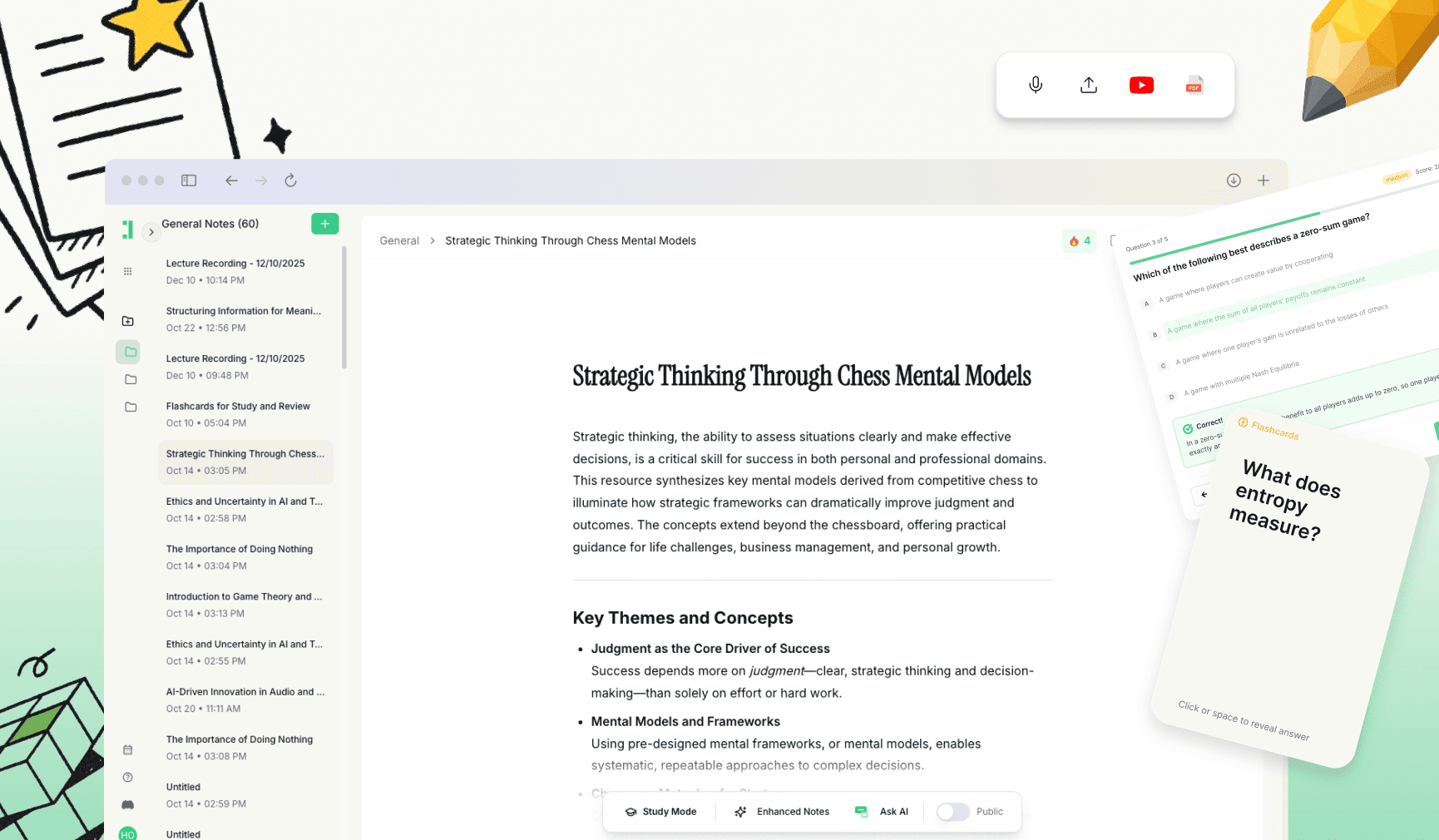
What are Chemical Thermodynamics flashcards?
Chemical Thermodynamics flashcards are focused study tools designed to help you master the laws of energy transfer, spontaneity, and equilibrium in chemical systems. These cards cover essential concepts such as the Three Laws of Thermodynamics, enthalpy (H), entropy (S), and Gibbs free energy (G). Unlike reading a textbook, these flashcards force you to define variables, recall specific formulas, and predict reaction behavior on the fly.
The goal of using these cards is to move beyond passive reading. Instead of just looking at the definition of an exothermic process, you test yourself to explain why the change in enthalpy is negative. If you already have lecture notes or textbook chapters, Duetoday can generate a clean, organized deck in minutes so you can spend your time studying rather than formatting cards.
Why flashcards work for Chemical Thermodynamics
Chemical Thermodynamics is a subject that relies heavily on understanding the relationships between different state functions and applying mathematical rules to physical systems. Flashcards are ideal because they facilitate active recall and spaced repetition, which are essential for memorizing constant values and sign conventions that often trip students up during exams.
Remember key terms without cramming: Master definitions like intensive vs. extensive properties quickly.
Separate similar concepts: Clearly distinguish between Delta G (spontaneity) and Delta H (heat flow).
Learn processes step-by-step: Practice the stages of a Carnot cycle or the steps of a Hess’s Law calculation.
Practice applying formulas: Quickly recall the Gibbs-Helmholtz equation or the Clausius-Clapeyron relation.
What to include in your Chemical Thermodynamics flashcards
Effective thermodynamics flashcards follow the one idea per card rule. They should bridge the gap between abstract theory and numerical application. Your deck should feature a mix of conceptual questions and rapid-fire formula checks to ensure a well-rounded understanding.
Definitions & key terms: What is the Second Law of Thermodynamics? or Define an isolated system.
Processes & steps: What happens to entropy when a gas expands isothermally?
Comparisons: How does a state function differ from a path function?
Application: If Delta G is negative, is the reaction spontaneous?
Example prompts include: Write the equation for Gibbs Free Energy, Explain the significance of the Third Law of Thermodynamics, or State the relationship between Keq and Delta G standard.
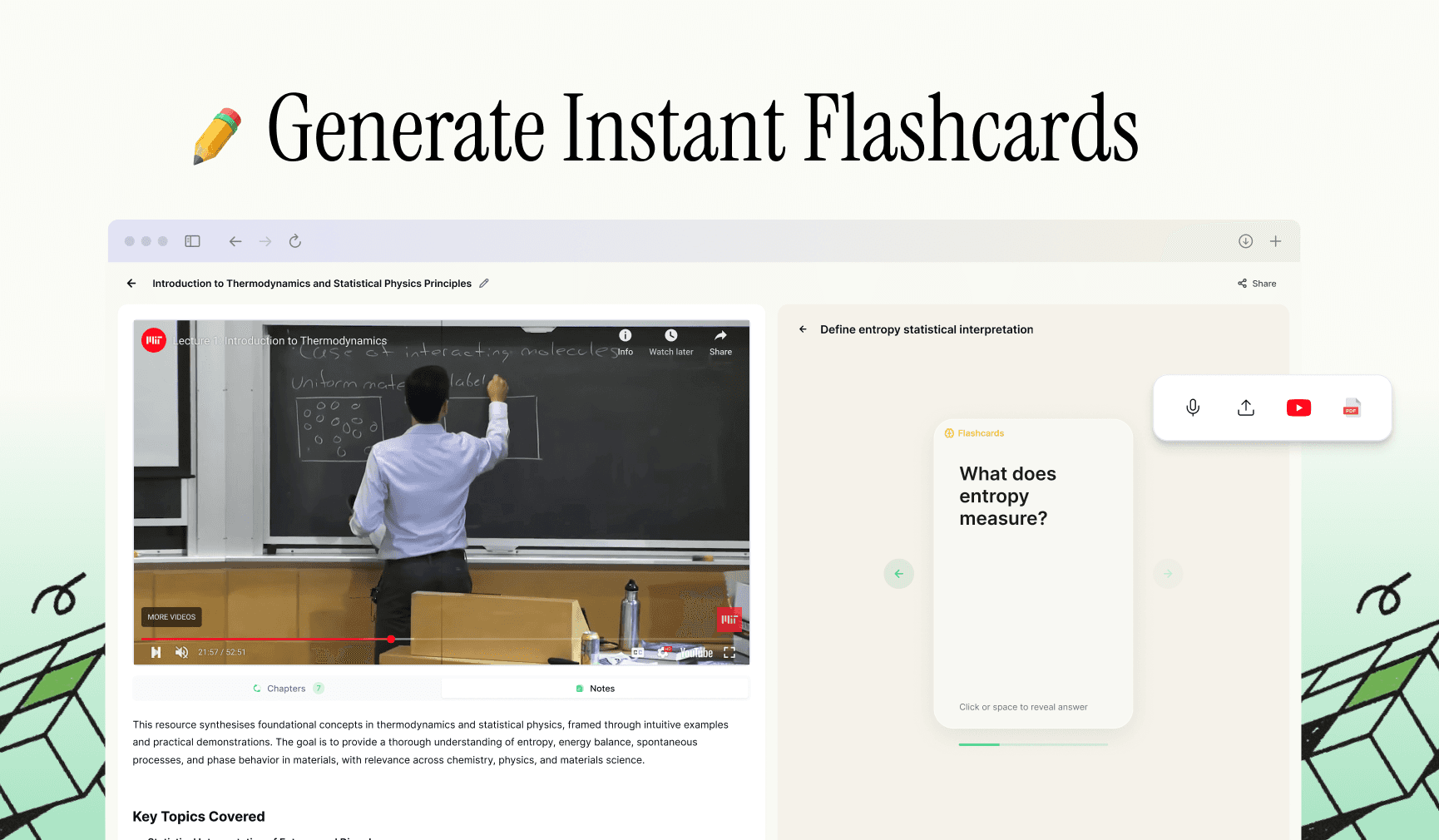
How to study Chemical Thermodynamics with flashcards
To master this subject, use a two-pass approach. First, build your deck using your notes or a generator, then filter your deck based on your confidence level. Start by reviewing the fundamental definitions of heat and work before moving into more complex topics like fugacity or chemical potential.
Make a deck from your notes (or generate it automatically from your PDF).
Do one quick round to find weak spots, particularly focusing on sign conventions (+/-).
Review weak cards daily for a few days until the formulas feel intuitive.
Mix in a few harder application cards, like predicting spontaneity at different temperatures.
Do a final mixed review of all chapters before your midterms or finals.
Generate Chemical Thermodynamics flashcards automatically
Making cards manually for chemistry can be incredibly slow, especially when you have to type out complex subscripts and Greek symbols. It often leads to messy notes that are hard to study from. Duetoday solves this by allowing you to upload your material and getting a structured deck instantly.
Upload or paste your Chemical Thermodynamics material (PDFs, slides, or notes).
Click Generate Flashcards.
Review, edit the formulas, and start studying immediately.
Generate Chemical Thermodynamics Flashcards in Duetoday
Start with your notes and get a deck you can actually use today. Stop rereading and start recalling.
Common Chemical Thermodynamics mistakes
Most students fail because they try to memorize the entire textbook on a single card. To succeed, avoid these common pitfalls:
Cards are too long: Don't put the entire derivation of an equation on one card; split it into steps.
Only memorizing words: Thermodynamics is about relationships; make sure to ask what happens if volume increases?
Confusing signs: Add specific cards for sign conventions of work (by the system vs. on the system).
No review schedule: Don't wait until the night before the exam; thermodynamics requires consistent logic practice.
FAQ
How many flashcards do I need for Chemical Thermodynamics? Generally, a solid deck for an introductory course consists of 50–100 cards covering laws, variables, and sign conventions.
What’s the best format for these flashcards? Question-and-answer format is best. Use the front for a prompt like 'Gibbs Free Energy Equation' and the back for the formula and variable definitions.
How often should I review them? Review your deck daily for 15 minutes. Spaced repetition is the only way to keep the different thermodynamic laws clear in your head.
Should I make cards from a textbook or lecture notes? Use lecture notes for the concepts your professor emphasizes, and use the textbook for more rigorous definitions and constant values.
How do I stop forgetting the formulas? Add cards that ask 'Why' a formula is used, not just 'What' it is. Understanding the logic prevents rote memorization failure.
What if my flashcards feel too easy? Increase the difficulty by adding scenario-based questions, such as 'Predict the sign of Delta S for the combustion of methane.'
Can I generate flashcards from a PDF automatically? Yes, Duetoday can scan your chemistry PDFs and extract the most important laws and formulas into flashcards instantly.
Are digital flashcards better than paper for chemistry? Digital is often better because you can easily include images of cycles (like the Phase Diagram) and use AI to regenerate cards as you learn more.
How long does it take to make a full deck? Manually it could take hours; with Duetoday, it takes less than a minute to generate a high-quality starting deck from your files.
Can Duetoday organize my flashcards by sub-topic? Yes, you can generate specific decks for Enthalpy, Entropy, or Equilibrium to keep your study sessions focused.

Duetoday is an AI-powered learning OS that turns your study materials into personalised, bite-sized study guides, cheat sheets, and active learning flows.