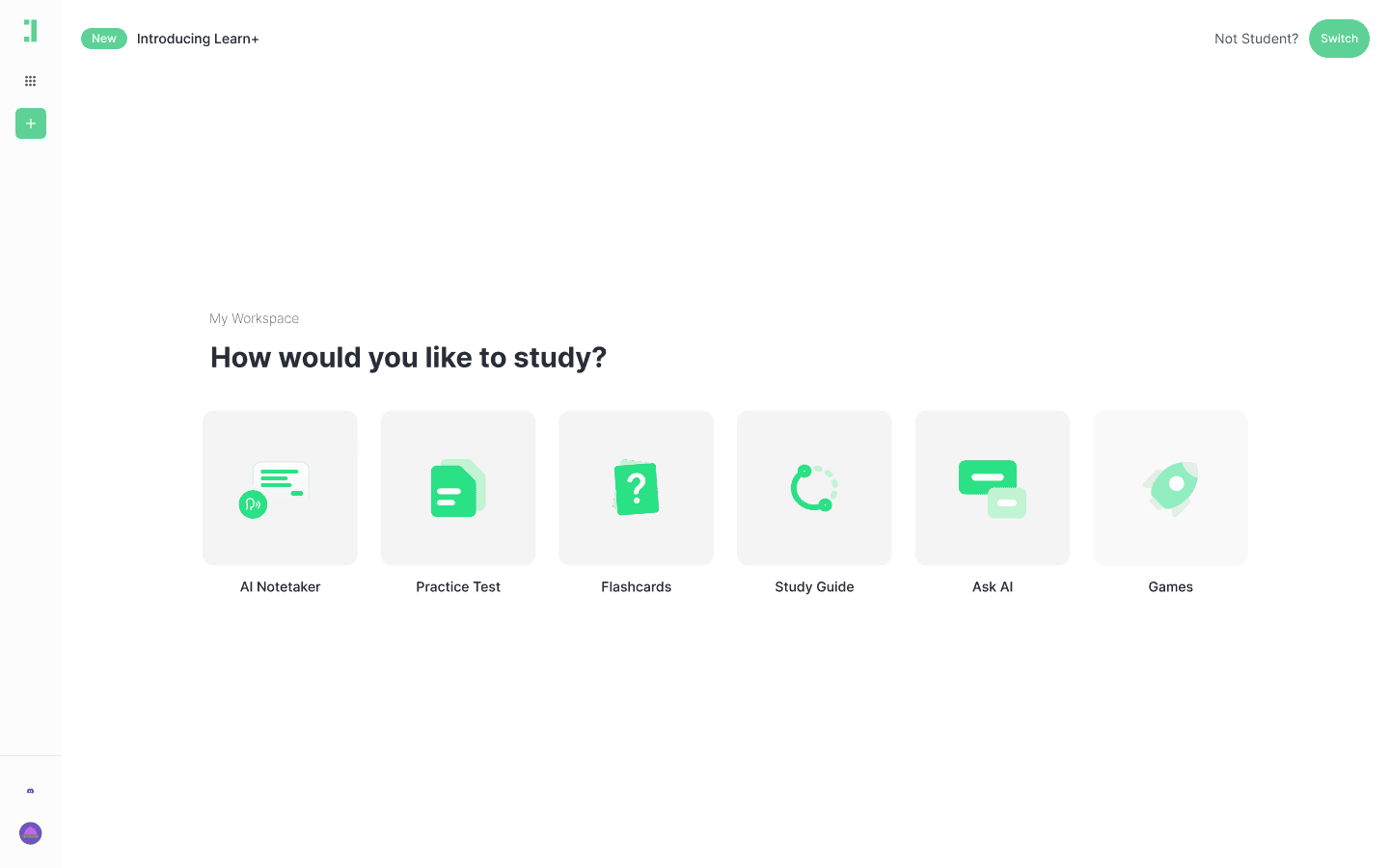
Generate Flashcards for Chemical Equilibrium
Turn notes into Chemical Equilibrium flashcards in seconds. Study faster with AI recall. Try it for free!
Generate Flashcards with AI Free
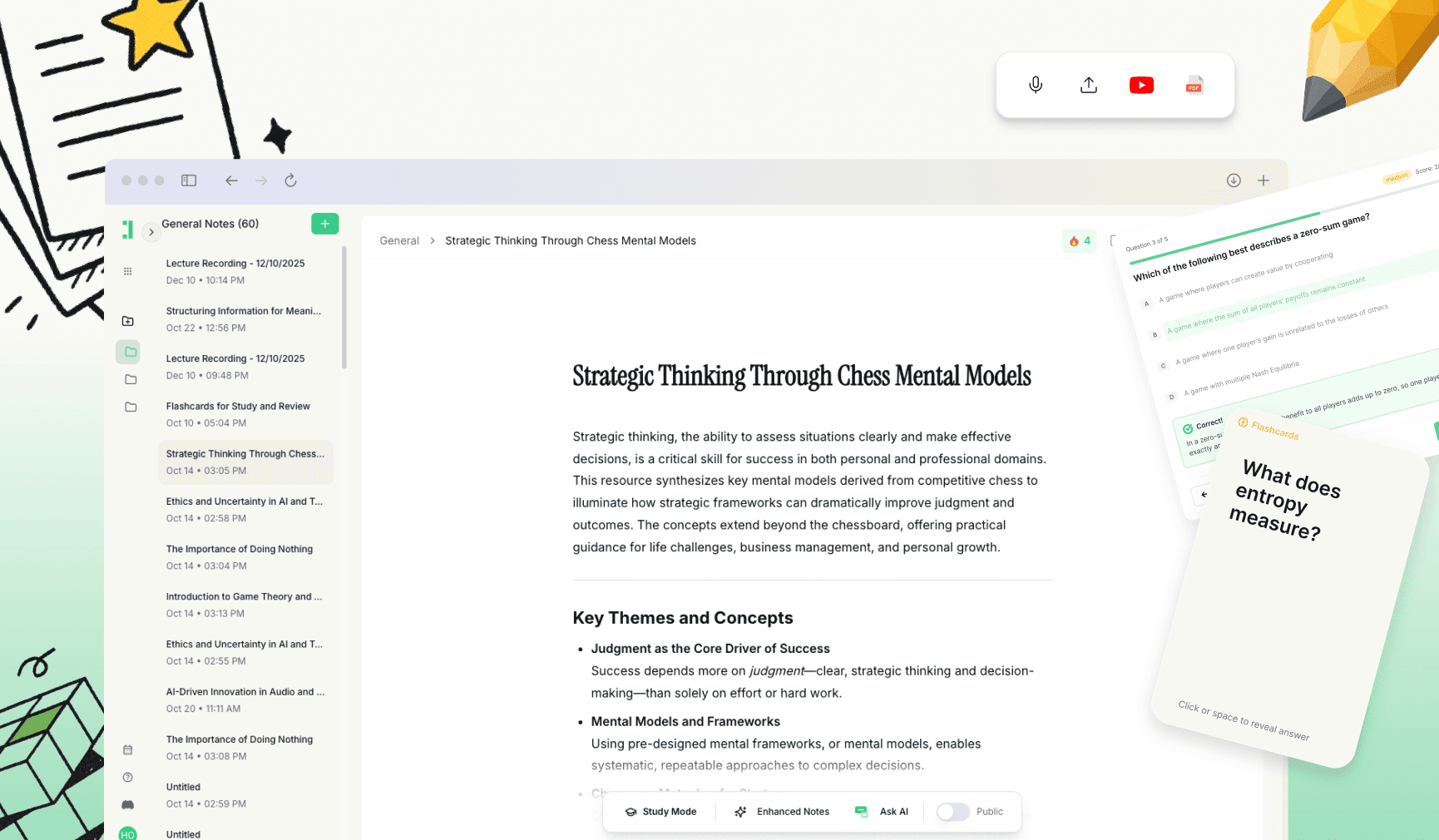
Generate Flashcards for Chemical Equilibrium
Turn your notes, PDFs, slides, or lectures into Chemical Equilibrium flashcards so you can review faster and remember more. Whether you are struggling with Kp vs Kc or mastering reaction quotients, AI-powered flashcards help you bridge the gap between reading and retaining.
Generate Chemical Equilibrium FlashcardsUpload notes / paste text
Upload your chemistry materials to Duetoday, and our AI will instantly extract key concepts, formulas, and shifts to create a custom study deck. You can then review, edit, and master your material through active recall.
What are Chemical Equilibrium flashcards?
Chemical Equilibrium flashcards are study tools designed to test your knowledge of reversible reactions, the law of mass action, and how systems respond to external stress. They cover everything from the fundamental definition of dynamic equilibrium to complex ICE table calculations and solubility products.
The outcome is simple: instead of passively rereading your textbook, you test yourself on specific triggers and constants. This builds the mental pathways needed to solve exam problems quickly under pressure. If you already have notes, Duetoday can generate a clean deck in minutes.
Why flashcards work for Chemical Equilibrium
Chemical Equilibrium is a topic built on relationships and shifts. You don't just need to memorize facts; you need to predict how a system will behave when conditions change. Flashcards force you to practice this prediction process through active recall and spaced repetition.
Remember Keq expressions without mixing up products and reactants
Separate similar concepts like Q (reaction quotient) vs K (equilibrium constant)
Learn the steps for solving ICE tables (Initial, Change, Equilibrium)
Practice applying Le Chatelier’s principle to temperature and pressure changes
Master the relationship between Gibbs Free Energy and equilibrium
What to include in your Chemical Equilibrium flashcards
Effective flashcards follow the "one idea per card" rule and are lead by questions. For chemistry, this means focusing on specific shifts, units, and mathematical definitions rather than cramming a whole chapter onto one card.
Definitions & key terms: "What is a dynamic equilibrium?" "Define the Law of Mass Action."
Processes & steps: "What is the first step in setting up an ICE table?"
Comparisons: "How does a homogeneous equilibrium differ from a heterogeneous one?"
Application: "If an exothermic reaction is heated, which way does the equilibrium shift?"
Try these example prompts in your deck: "Write the Kc expression for 2A + B ⇌ C," "What units are used for Kp?" or "Does a catalyst change the position of equilibrium?"
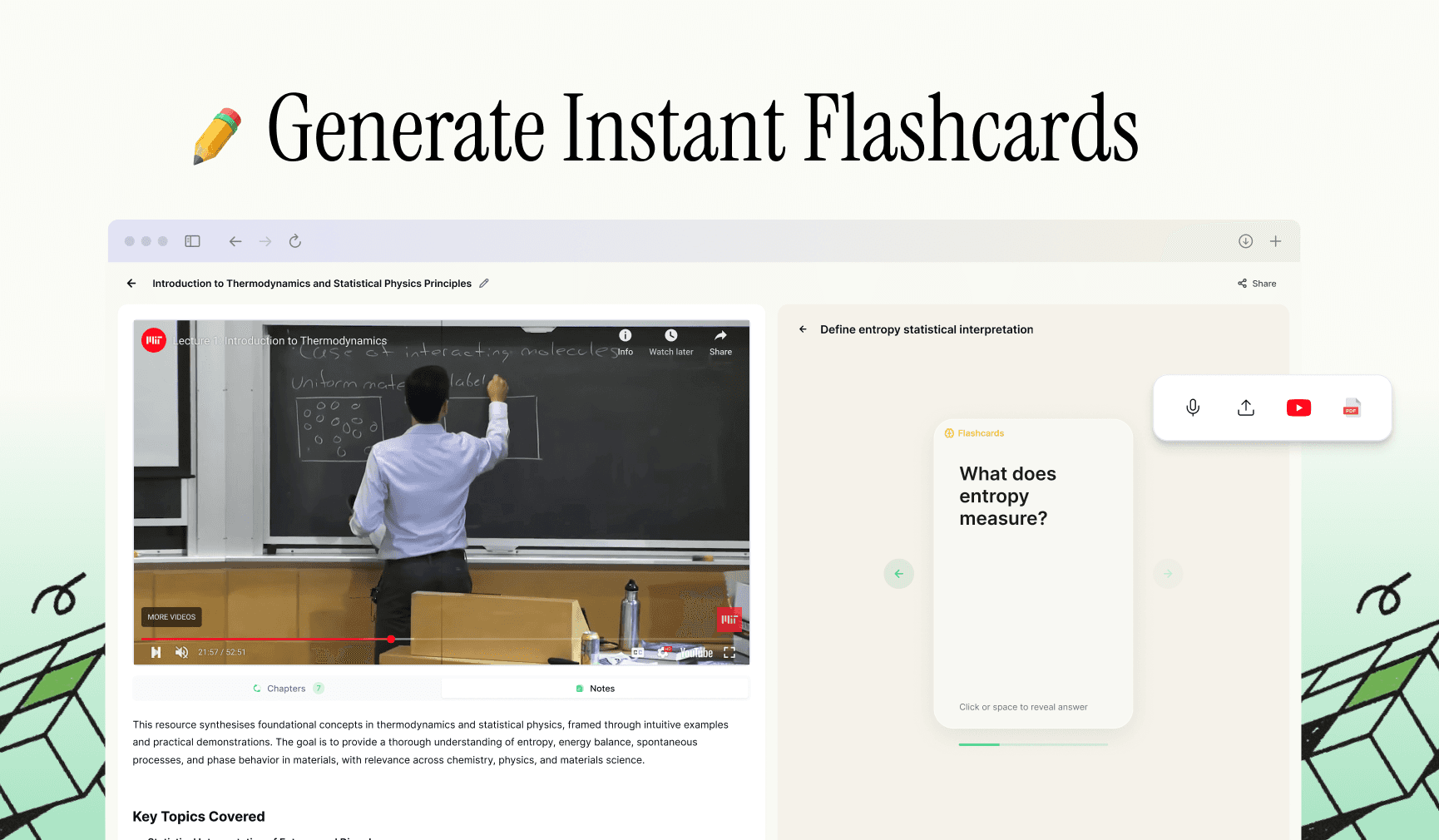
How to study Chemical Equilibrium with flashcards
We recommend a "two-pass" approach. First, generate your deck from your lecture slides or textbook chapters. Then, go through the deck once to identify which constants or shifts you find most confusing. These become your focus cards.
Review these tough cards daily. Chemical Equilibrium requires high conceptual clarity, so don't just memorize the answer—explain the "why" behind Le Chatelier's principle out loud before flipping the card. Finish with a mixed review that combines theory with quick mental math for K values.
Make a deck from your notes or generate it automatically.
Do one quick round to find weak spots like Kp/Kc conversions.
Review weak cards daily for at least three days.
Mix in harder application cards involving pressure and volume.
Do a final mixed review before your chemistry quiz or exam.
Generate Chemical Equilibrium flashcards automatically in Duetoday
Making chemistry cards manually is slow and messy, especially when dealing with superscripts, subscripts, and chemical equations. It’s easy to get bogged down in the formatting rather than the studying.
Duetoday solves this by allowing you to upload your chemistry PDF, notes, or lab manual to generate flashcards instantly. It handles the formatting and extracts the most testable material so you can start studying right away.
Upload your equilibrium notes or slides.
Click Generate Flashcards.
Review, edit, and start mastering the material.
Generate Chemical Equilibrium Flashcards in Duetoday
Start with your notes and get a deck you can actually use today. Stop rereading and start recalling.
Common Chemical Equilibrium flashcard mistakes
Many students make cards that are too long, trying to fit the entire Le Chatelier's table on one side. This leads to recognition rather than true recall. Break these down into individual stressors like pressure, temperature, and concentration.
Cards are too long: Split complex ICE problems into individual steps.
Ignoring states of matter: Ensure you have cards reminding you to exclude solids and liquids from K expressions.
No application: Don't just define K; create cards that ask what a large K value implies about product yield.
Forgetting the 'why': Always include a prompt asking why a temperature change is the only factor that changes the actual K value.
FAQ
How many flashcards do I need for Chemical Equilibrium? Most students find that 30 to 50 targeted cards cover the essentials, including definitions, Le Chatelier's rules, and K-value relationships.
What’s the best format for these flashcards? Question-and-answer format is best. Use the front for a specific stressor or equation and the back for the resulting shift or K expression.
How often should I review? Equilibrium is conceptual. Review your deck every other day leading up to an exam to ensure the logic of shifts stays fresh.
Should I make cards from a textbook or lecture notes? Use lecture notes for the specific types of problems your professor emphasizes, but use the textbook for precise definitions of constants.
How do I stop forgetting the shifts after a few days? Use spaced repetition. Duetoday’s system ensures you see the cards you struggle with more often than the ones you’ve mastered.
What if my flashcards feel too easy? Start adding "what if" scenarios, such as changing two variables at once (e.g., increasing pressure while decreasing temperature).
Can I generate flashcards from a chemistry PDF? Yes, Duetoday can scan your textbook chapters or lab PDFs to extract key equilibrium concepts automatically.
Are digital flashcards better than paper? Digital cards are superior for chemistry because they allow for easy editing of formulas and use algorithms to focus on your weakest areas.
How long does it take to make a deck? Manually, it can take hours. With Duetoday, you can generate a comprehensive equilibrium deck in under a minute.
Can Duetoday handle chemical equations? Yes, the AI is designed to recognize and format chemical symbols and equilibrium expressions accurately.

Duetoday is an AI-powered learning OS that turns your study materials into personalised, bite-sized study guides, cheat sheets, and active learning flows.