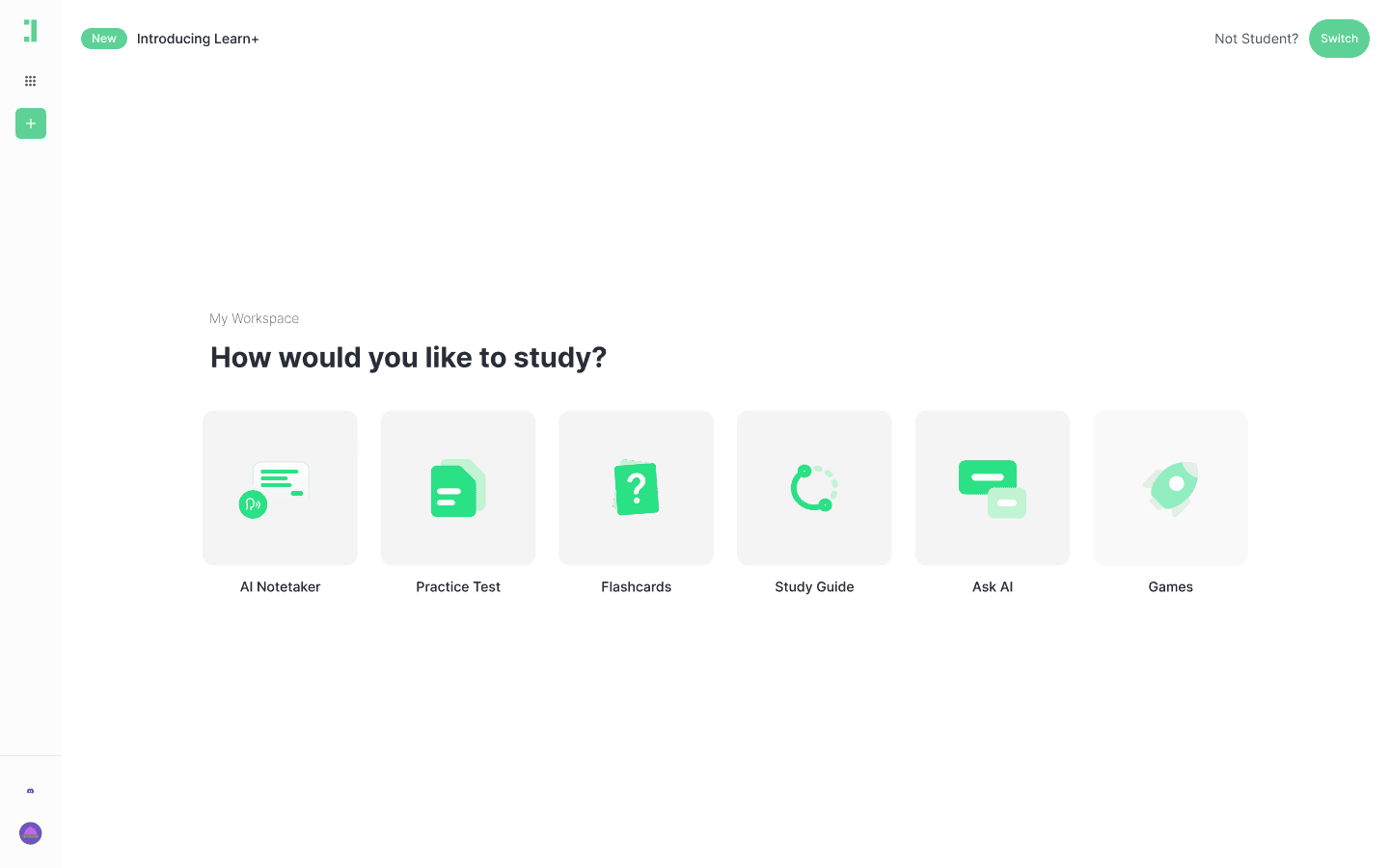
Generate Flashcards for Chemical Bonding
Generate Chemical Bonding flashcards in seconds. Use AI to turn notes into study decks. Try it for free!
Generate Flashcards with AI Free
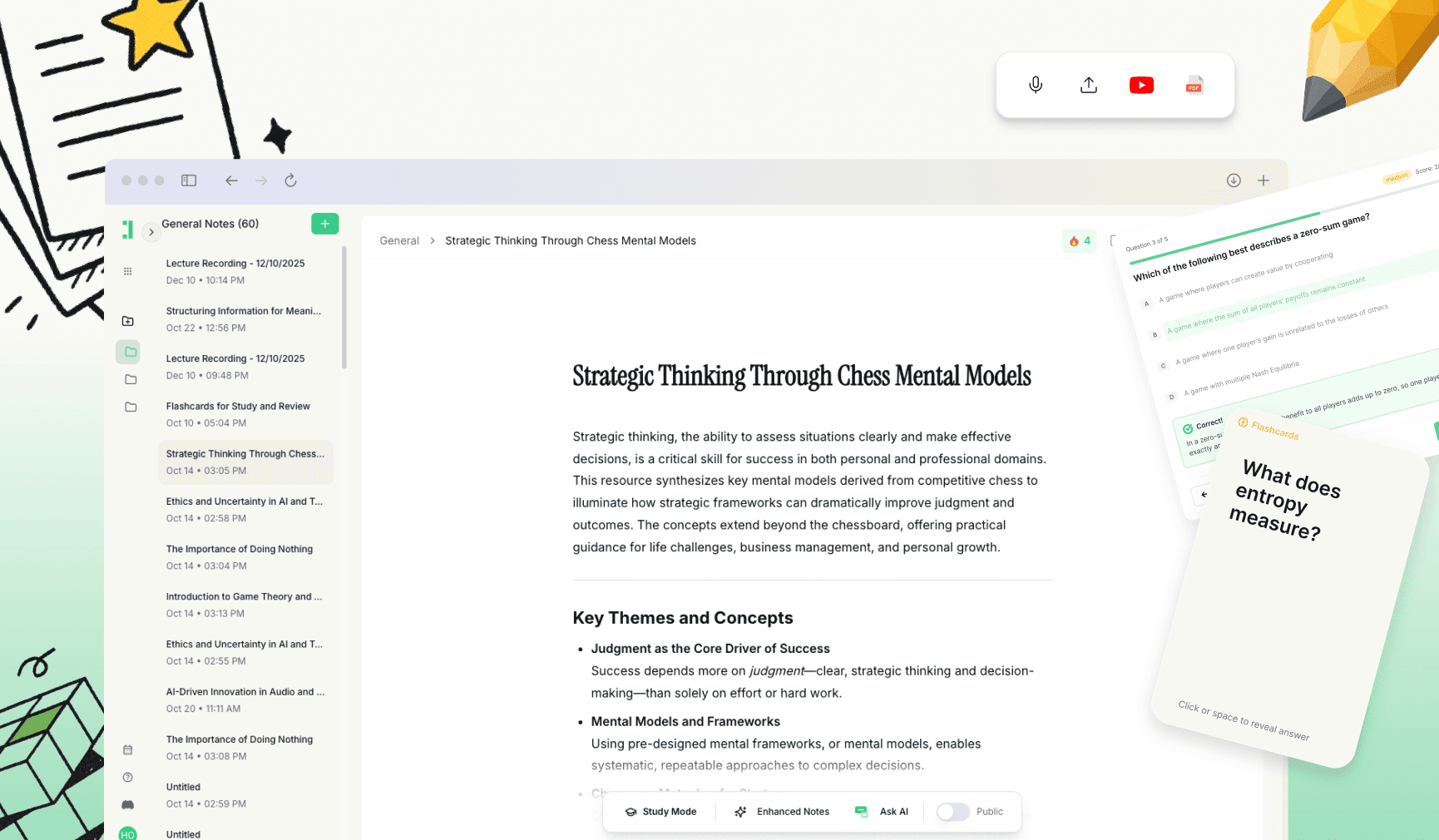
Generate Flashcards for Chemical Bonding
Turn your notes, PDFs, slides, or chemistry lectures into Chemical Bonding flashcards so you can review faster and remember more. Whether you are tackling electronegativity or molecular geometry, jumping straight into testing is better than rereading chapters.
Generate Chemical Bonding FlashcardsUpload notes / paste text
In Duetoday, the process is seamless: simply upload your chemistry materials, and our AI identifies key bonding concepts to generate a custom deck. Review your cards, edit them for clarity, and start studying immediately.
What are Chemical Bonding flashcards?
Chemical Bonding flashcards cover the fundamental forces that hold atoms together. They focus on identifying bond types (ionic, covalent, metallic), predicting molecular shapes via VSEPR theory, and understanding periodic trends like ionization energy and atomic radii.
Instead of passively looking at a periodic table, these flashcards force you to recall the specific rules that govern how atoms interact. This active recall builds the mental pathways needed to solve complex chemistry problems during exams.
If you already have notes, Duetoday can generate a clean deck in minutes.
Why flashcards are one of the best ways to study Chemical Bonding
Chemical Bonding requires a mix of memorizing specific definitions and applying logical rules. Flashcards bridge the gap between knowing a term and knowing how to use it in a Lewis structure or a bond energy calculation.
Using active recall and spaced repetition helps you move information from short-term memory to long-term mastery without the burnout of traditional cramming.
Remember key terms like 'lattice energy' or 'dipole moment' without struggle.
Separate similar concepts like polar vs. nonpolar covalent bonds.
Learn processes step-by-step, such as drawing Lewis dot structures.
Practice applying rules for octet exceptions quickly.
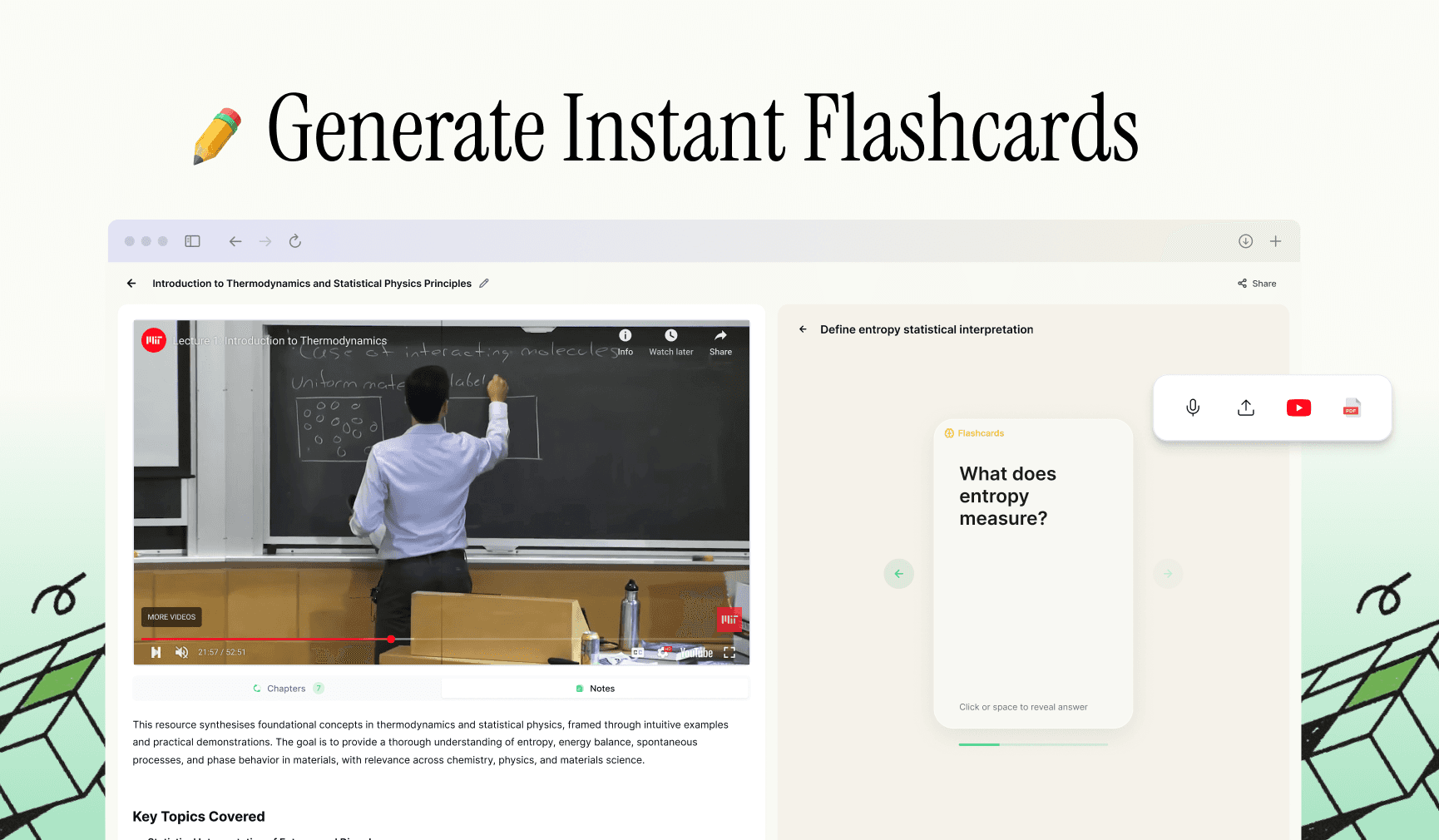
What to include in your Chemical Bonding flashcards
Effective chemistry flashcards follow the 'atomic' rule: one specific idea per card. Use a question-and-answer format to simulate the questions you will see on your midterms or finals.
Definitions & key terms: Focus on electronegativity, hybridization, and resonance.
Processes & steps: Breaking down how to calculate formal charge.
Comparisons: Contrasting Sigma vs. Pi bonds.
Application: Predicting the geometry of a specific molecule like CH4 or NH3.
Example prompts: 'What is the bond angle in a tetrahedral molecule?', 'Identify the main difference between an ionic and covalent bond.', 'How many valence electrons does Nitrogen have?'
How to study Chemical Bonding with flashcards
Start with a 'two-pass' approach. First, go through your entire deck to see which concepts (like VSEPR shapes) are sticking and which aren't. Then, focus your energy on the difficult cards.
Make a deck from your lecture slides or textbook chapters.
Complete one quick round to flag weak spots.
Review the 'hard' cards daily for three days.
Mix in easier cards to maintain your confidence.
Do a final mixed-topic review before your chemistry exam.
Generate Chemical Bonding flashcards automatically in Duetoday
Making chemistry flashcards manually is tedious—drawing shapes and writing out electronegativity values takes hours you don't have. Duetoday automates the busy work so you can focus on the actual learning.
Upload your PDF syllabus or lecture recordings.
Click Generate Flashcards.
Review, edit, and start your study session.
Generate Chemical Bonding Flashcards in Duetoday
Start with your notes and get a deck you can actually use today.
Common Chemical Bonding flashcard mistakes
Many students create cards that are too wordy. If a card contains a whole paragraph about intermolecular forces, you aren't testing recall; you're testing reading. Split those into smaller, punchier questions. Also, ensure you aren't just memorizing the words—add 'why' prompts to ensure you understand the underlying chemical logic.
Ready to generate your Chemical Bonding flashcards?
Stop rereading your textbook. Upload your notes to Duetoday, generate your flashcards instantly, and master Chemical Bonding today.
Start Generating Flashcards
FAQ
How many flashcards do I need for Chemical Bonding? Usually 40–60 cards are enough to cover the main types of bonds, Lewis structures, and molecular geometry for a standard unit.
What’s the best format for Chemical Bonding flashcards? Question-on-front, answer-on-back is best. Use the front to ask for a definition or a molecular shape and the back for the answer.
How often should I review my cards? Review daily for the first few days, then use spaced repetition to review every 3–4 days as the concepts stick.
Can I generate flashcards from a chemistry PDF? Yes, Duetoday is designed to parse complex PDFs and turn text into structured flashcards automatically.
Are digital flashcards better than paper for chemistry? Digital cards are often better because they allow you to easily edit Lewis diagrams and use AI to generate content faster.
How long does it take to make a deck? With Duetoday, it takes less than a minute once you upload your notes.

Duetoday is an AI-powered learning OS that turns your study materials into personalised, bite-sized study guides, cheat sheets, and active learning flows.