Generate Cellular Respiration Flashcards
Generate Cellular Respiration flashcards in seconds with AI. Try it free today!
Generate Flashcards with AI Free
Generate Flashcards for Cellular Respiration
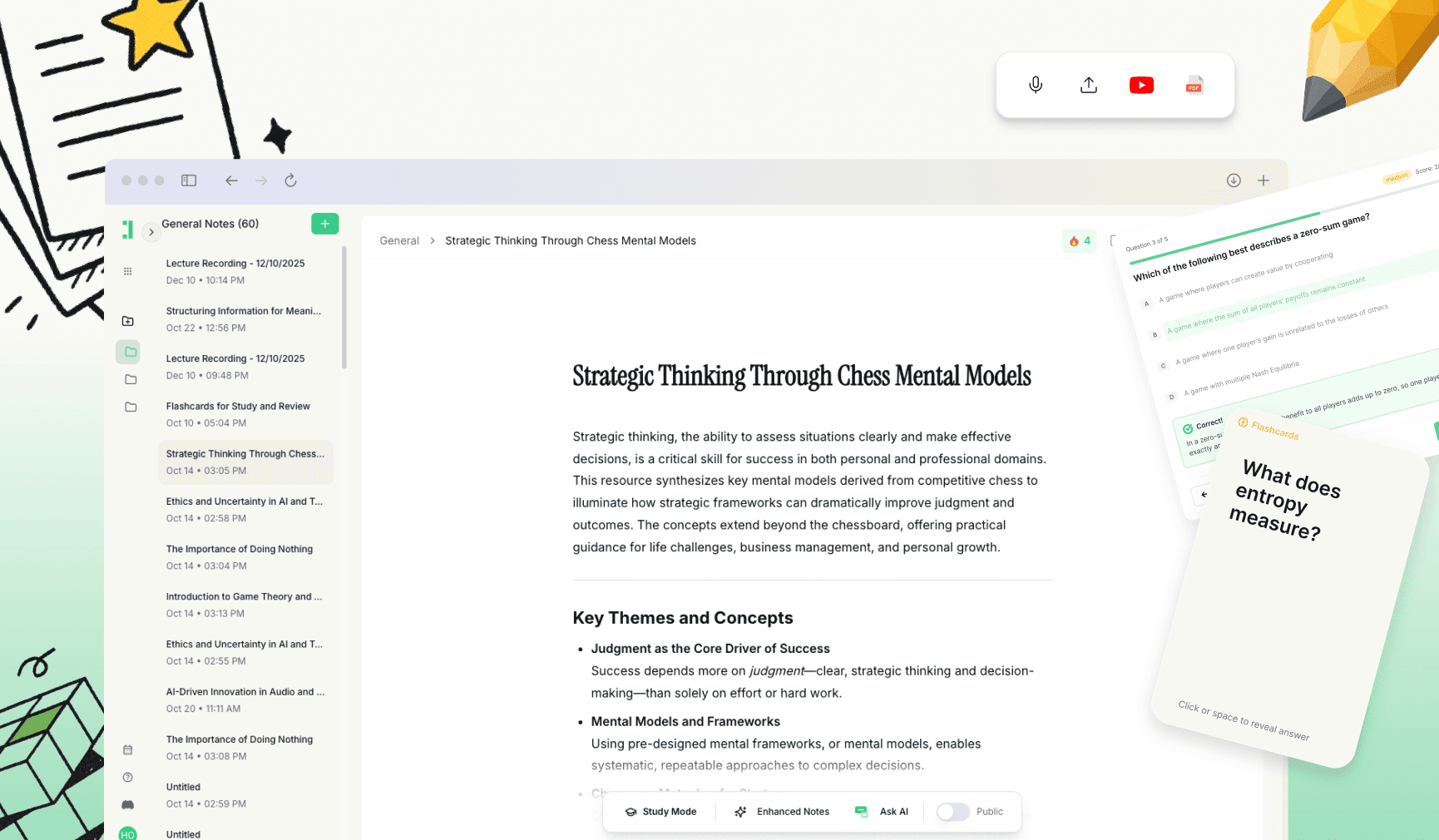
Turn your notes, PDFs, slides, or lectures into Cellular Respiration flashcards so you can review faster and remember more.
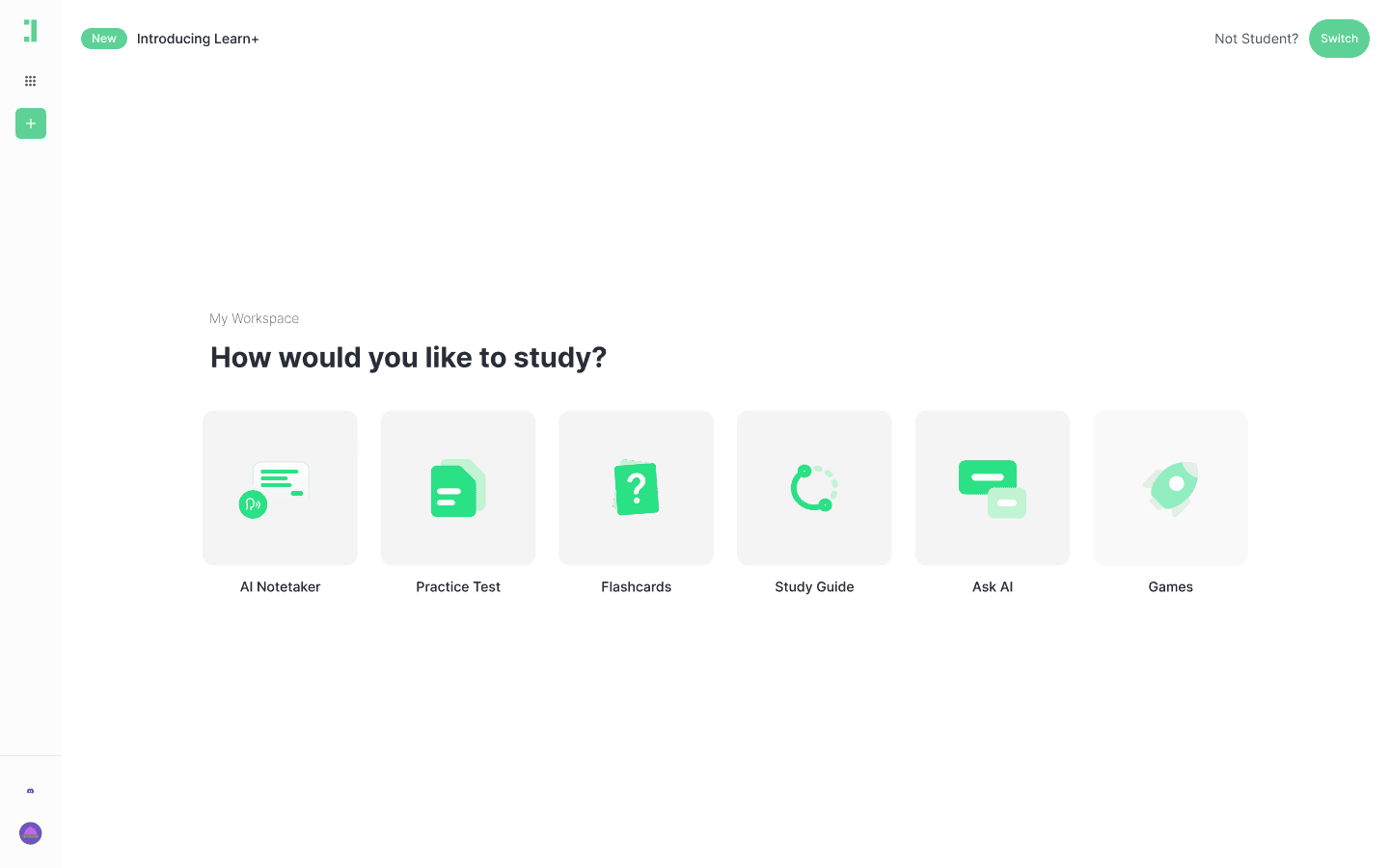
To study with Duetoday, simply upload your biology materials, click generate, and let the AI create a structured deck. You can then review, edit, and study your cards using active recall to ensure you're ready for your next exam.
What are Cellular Respiration flashcards?
Cellular Respiration flashcards cover the complex metabolic pathways that cells use to convert nutrients into ATP. These cards break down intricate processes like glycolysis, the citric acid cycle (Krebs cycle), and oxidative phosphorylation into bite-sized, testable questions.
Instead of rereading a textbook chapter for the fifth time, these flashcards force you to retrieve information from memory. This builds stronger neural connections for key terms like NAD+, FADH2, and ATP synthase, helping you distinguish between aerobic and anaerobic processes quickly.
Why flashcards are one of the best ways to study Cellular Respiration
Cellular Respiration requires a mix of rote memorization (enzymes and molecules) and high-level conceptual understanding (electron gradients and energy yields). Flashcards bridge this gap by using active recall and spaced repetition to move these complex cycles into your long-term memory.
Remember enzyme names and substrates without cramming
Separate similar concepts like phosphorylation vs. oxidation
Learn metabolic pathways step-by-step from glucose to CO2
Practice calculating net ATP yields for different stages
What to include in your Cellular Respiration flashcards
The most effective flashcards follow the "one idea per card" rule. Use question-based prompts rather than long descriptions to keep your review sessions fast and focused.
Definitions & key terms: Focus on molecules like Pyruvate, Acetyl-CoA, and Cytochromes.
Processes & steps: Ask what triggers the start of a specific cycle or what the final electron acceptor is.
Comparisons: Contrast the efficiency of aerobic respiration versus fermentation.
Application: Predict what happens if a specific enzyme is inhibited by a toxin.

How to study Cellular Respiration with flashcards
Start with a "two-pass" approach: first, generate your deck from your lecture notes or slides, then go through a rapid review round. Identify which parts of the electron transport chain or Krebs cycle are tripping you up and flag those specifically.
Keep your sessions short but frequent. Reviewing your weakest cards daily for ten minutes is significantly more effective than a three-hour marathon session the night before your biology midterm.
Generate Cellular Respiration flashcards automatically in Duetoday
Making cards manually is slow and often results in cards that are too wordy to be useful. Duetoday automates the tedious work so you can jump straight into the learning phase.
Upload your biology textbook PDF or lecture recording
Click Generate Flashcards to extract the metabolic cycles
Review, edit, and start studying with the AI tutor
Common Cellular Respiration flashcard mistakes
Many students make their cards too dense, essentially pasting whole paragraphs from their textbook. This makes it impossible to build quick recall. Keep cards simple: one question, one answer. Another mistake is ignoring the "why"—don't just memorize the name of an enzyme; make a card for its specific function in the pathway.
Ready to generate your Cellular Respiration flashcards?
Stop rereading and start recalling. Upload your notes to Duetoday and get a custom study deck in seconds.
FAQ
How many flashcards do I need for Cellular Respiration? Generally, a comprehensive deck for this topic ranges from 40 to 60 cards to cover all stages, enzymes, and energy yields.
What’s the best format for these cards? Use a question-and-answer format. For example, 'What is the net ATP gain of glycolysis?' rather than just 'Glycolysis energy.'
How often should I review? Review your deck daily until you hit a 90% mastery rate, then switch to every 3-4 days to maintain the memory.
Can I generate cards from my textbook PDF? Yes, Duetoday is designed to scan PDFs and extract the most important biological concepts automatically.
How do I stop forgetting the Krebs cycle? Use flashcards to break the cycle down into individual steps rather than trying to memorize the whole diagram at once.
Are digital flashcards better than paper? Yes, digital cards allow for spaced repetition algorithms that prioritize the cards you find difficult, saving you time.

Duetoday is an AI-powered learning OS that turns your study materials into personalised, bite-sized study guides, cheat sheets, and active learning flows.