Generate Flashcards for Cardiovascular System
Generate Cardiovascular System flashcards in seconds using AI. Try it for free today!
Generate Flashcards with AI Free
Generate Flashcards for Cardiovascular System
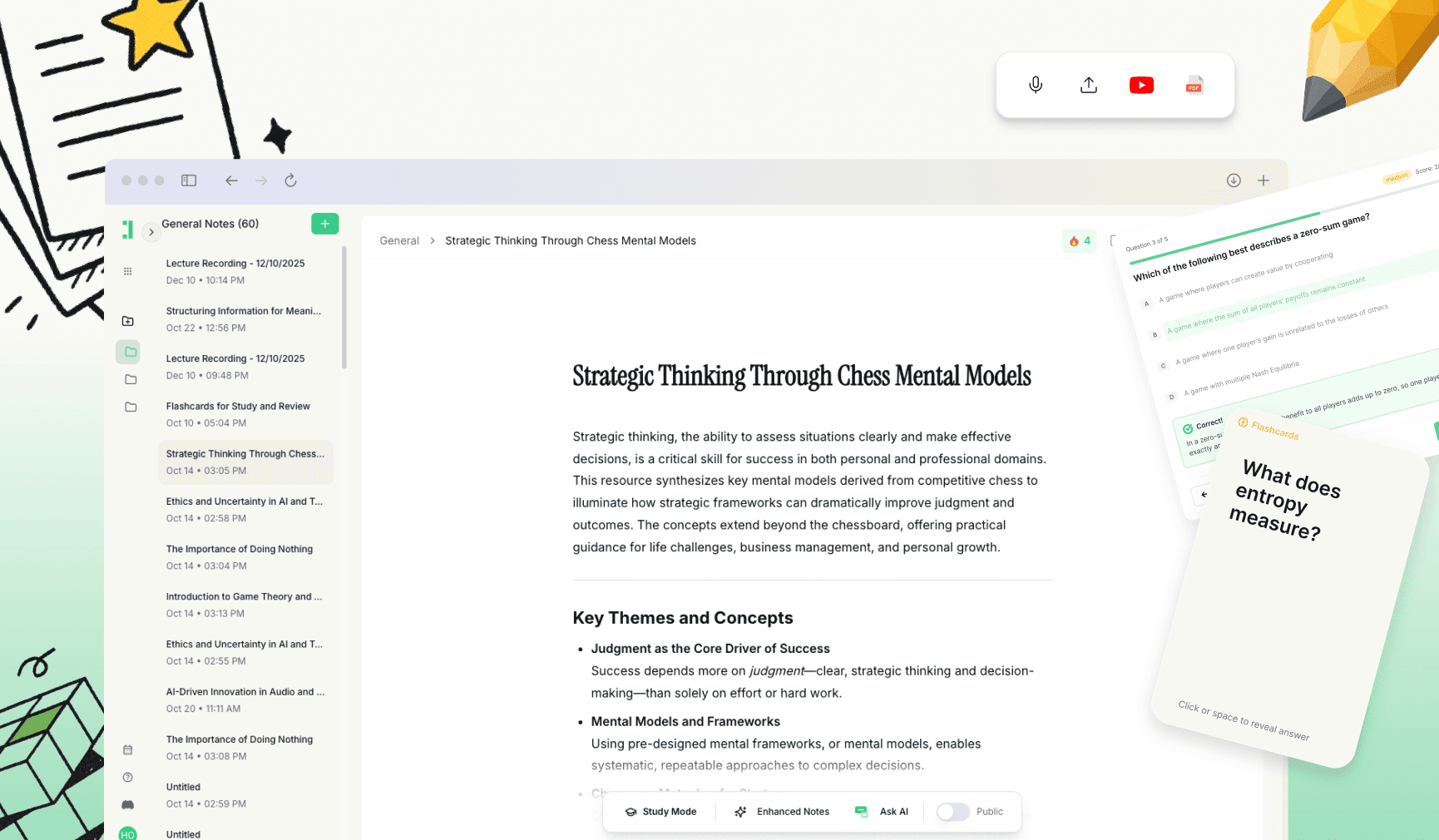
Turn your notes, PDFs, slides, or lectures into Cardiovascular System flashcards so you can review faster and remember more. Whether you are studying heart anatomy, hemodynamics, or pathology, manual card creation is a thing of the past.
Generate Cardiovascular System FlashcardsUpload notes / paste text
In Duetoday, the process is simple: upload your study material, click generate, review your new AI-powered deck, and start studying with active recall immediately.
What are Cardiovascular System flashcards?
Cardiovascular System flashcards cover the complex network of the heart, blood vessels, and blood. They break down dense clinical information into bite-sized questions about heart chambers, valve functions, electrical conduction pathways, and the systemic vs. pulmonary circuits.
Instead of passively rereading a textbook chapter on the cardiac cycle, these flashcards force you to retrieve information from memory. If you already have lecture notes, Duetoday can generate a clean, structured deck in minutes.
Why flashcards work for Cardiovascular System
The Cardiovascular System requires a mix of rote anatomical memorization and conceptual understanding of pressure gradients and flow. Flashcards are perfectly suited for this blend of knowledge.
Active recall and spaced repetition help move complex physiological processes from short-term memory to long-term mastery without the burnout of traditional cramming.
Remember heart anatomy and valve locations without mixing them up.
Separate similar concepts like preload vs. afterload.
Learn the cardiac conduction pathway step-by-step.
Practice applying hemodynamics formulas quickly.
What to include in your Cardiovascular System flashcards
Effective Cardiovascular flashcards follow the "one idea per card" rule. Use question-based prompts rather than long paragraphs to ensure your brain focuses on specific facts.
We recommend using four main card types: Definitions (key terms), Processes (the flow of blood), Comparisons (arteries vs. veins), and Application (EKG interpretation or clinical scenarios).
Definitions: "Define Stroke Volume." "What is the Myocardium?"
Processes: "Trace the path of blood through the heart starting at the Vena Cava."
Comparisons: "Identify three differences between Arteries and Veins."
Application: "What happens to heart rate if the Vagus nerve is stimulated?"
How to study Cardiovascular System with flashcards
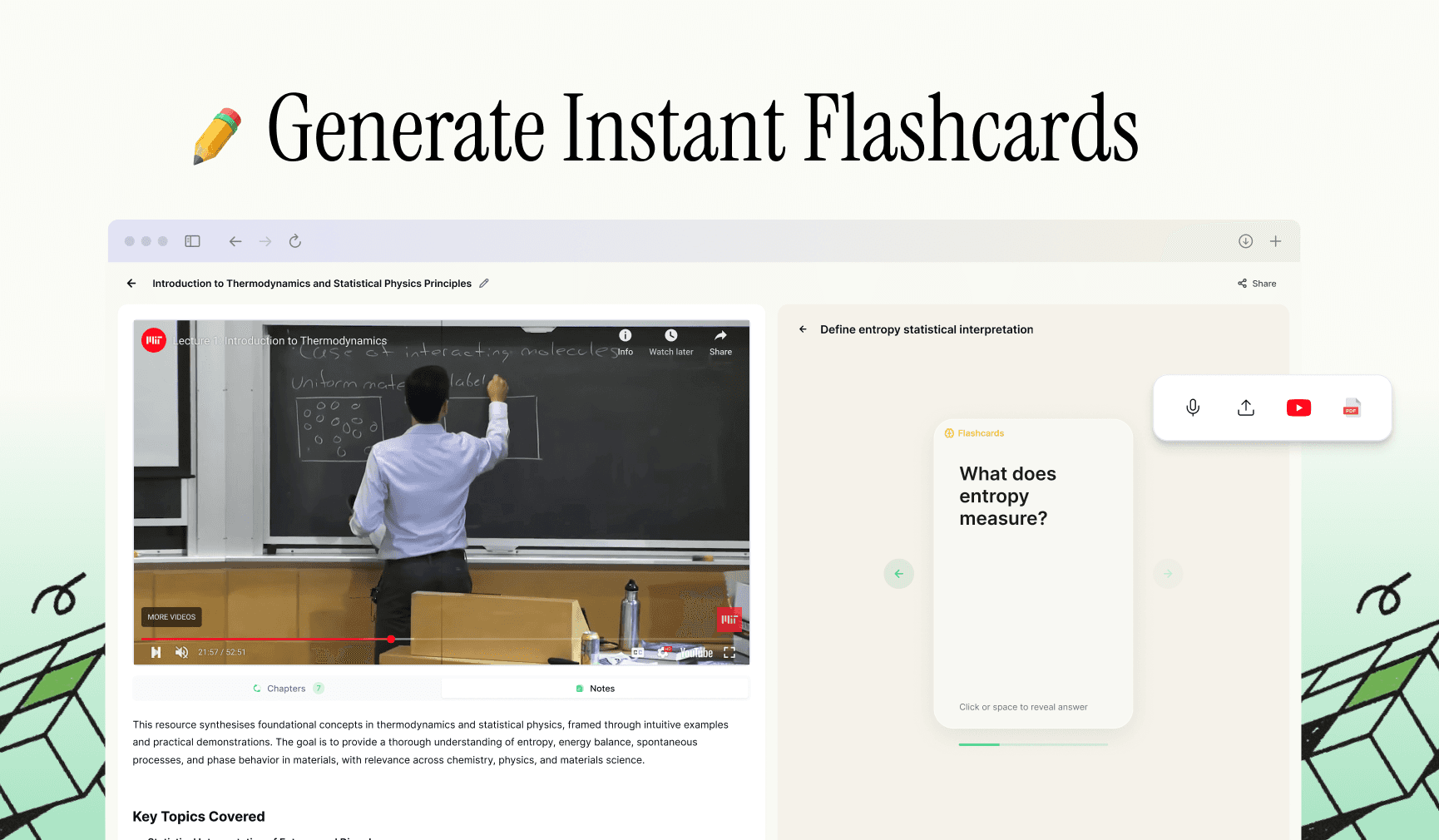
Use a "two-pass" approach. First, generate your deck and do a quick run-through to identify the concepts that confuse you most. Then, enter a focused study mode to master those specific topics.
Keep your sessions short but frequent. Reviewing 15 minutes a day is more effective for medical topics than a five-hour marathon session once a week.
Make a deck from your anatomy notes or clinical slides.
Do one quick round to find weak spots like EKG waveforms.
Review weak cards every morning for three days.
Mix in harder physiological concepts with easier anatomical ones.
Do a final mixed-topic review before your practical or exam.
Generate Cardiovascular System flashcards automatically in Duetoday
Making cards manually for every system in the body is slow and takes away from actual study time. Duetoday uses AI to scan your specific materials so your cards match exactly what your professor taught.
Simply upload your PDF, slide deck, or transcript, and Duetoday handles the formatting. You get a professional study deck ready for active recall in seconds.
Upload or paste your Cardiovascular System material.
Click Generate Flashcards.
Review, edit, and start studying.
Common Cardiovascular System flashcard mistakes
Avoid making cards that are too wordy; if a card feels like a paragraph, split it into three smaller cards. Don't just memorize the name of a structure—make sure you have a card explaining its function within the system.
Cards are too long: Split them into one specific anatomical feature per card.
Only memorizing words: Add "why" prompts to understand the pathology.
Confusing Systole and Diastole: Create direct comparison cards.
No review schedule: Ensure you repeat the "high-yield" cardiac cards more often.
Ready to generate your Cardiovascular System flashcards?
Stop rereading your textbook. Upload your notes, generate your deck, and start mastering the heart and vessels today with AI-powered active recall.
Start Generating Flashcards
Works with notes, PDFs, slides, and lecture transcripts.
FAQ
How many flashcards do I need for the Cardiovascular System? Usually 50 to 100 cards cover the basics of anatomy and physiology, though clinical students may need more for pathology.
What’s the best format for these flashcards? Question-and-answer format works best for anatomy, while "step-by-step" cards are better for blood flow pathways.
How often should I review? Daily for the first week, then every few days using spaced repetition to ensure the info stays fresh.
Should I make cards from a textbook or slides? Use your lecture slides first, as they contain the "high-yield" info your professor is likely to test.
How do I stop forgetting the cardiac cycle? Use flashcards that ask about specific phases (e.g., Isovolumetric contraction) rather than the whole cycle at once.
What if my flashcards feel too easy? Add "application" cards that ask you to predict what happens during certain diseases like heart failure.
Can I generate cards from a PDF? Yes, Duetoday can read your cardiovascular PDFs and extract the most important facts automatically.
Are digital flashcards better than paper? Yes, because digital tools like Duetoday use algorithms to show you the cards you're struggling with more often.
How long does it take to make a full deck? With Duetoday, it takes less than a minute to turn a 30-page PDF into a full deck.
Can Duetoday organize my cards? Bi-directionally! It organizes your cards by topic and links them back to your source notes.

Duetoday is an AI-powered learning OS that turns your study materials into personalised, bite-sized study guides, cheat sheets, and active learning flows.