Generate Flashcards for Business Analytics
Make Business Analytics flashcards to master data modeling and statistics. This guide shows how to generate study decks.
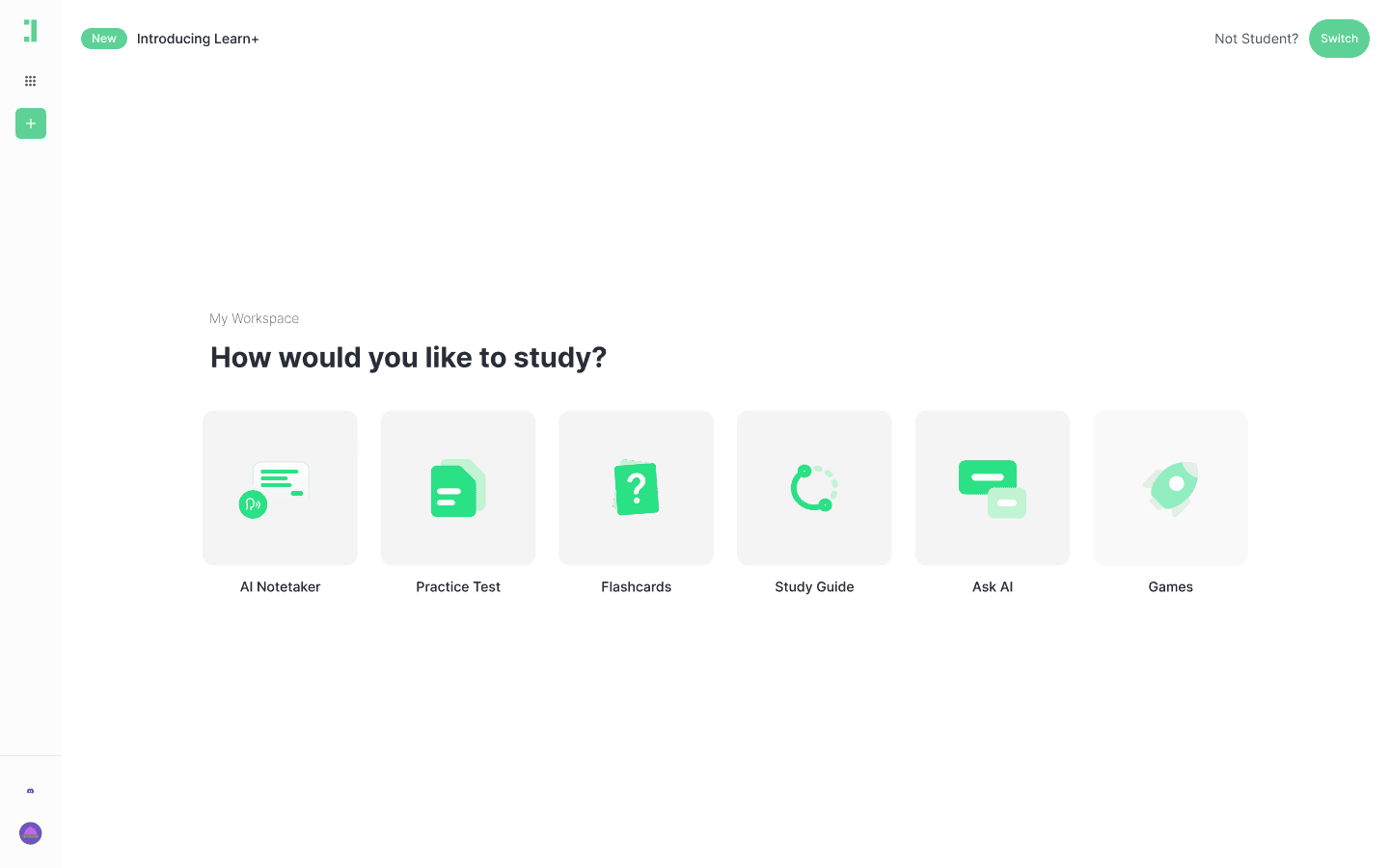
Generate Flashcards with AI Free
What are Business Analytics flashcards?
Business Analytics flashcards are concise study tools designed to help you master the intersection of data, statistics, and business strategy. They cover essential concepts like regression analysis, data visualization principles, database querying (SQL), and optimization models. Instead of wading through dense textbooks or complex datasets, these flashcards break down technical jargon into manageable questions and answers.
The primary outcome of using flashcards for Business Analytics is moving from passive recognition to active mastery. By testing yourself on specific metrics (KPIs), statistical tests, and software workflows, you build the mental muscle memory required for exams and real-world data interpretation. If you already have lecture notes or case studies, Duetoday can generate a clean deck in minutes.
Why flashcards are one of the best ways to study Business Analytics
Business Analytics requires you to remember both theoretical definitions and practical application steps. Flashcards excel here because they force you to recall the 'why' behind the data, rather than just rereading a slide. This method utilizes active recall and spaced repetition to ensure that complex formulas and logical sequences stick in your long-term memory.
Remember key terms: Quickly recall the difference between descriptive, predictive, and prescriptive analytics.
Separate similar concepts: Clearly distinguish between Type I and Type II errors or various sampling methods.
Learn processes step-by-step: Memorize the stages of the CRISP-DM framework or the steps of a hypothesis test.
Practice formula application: Master the logic behind variance, standard deviation, and correlation coefficients.
What to include in your Business Analytics flashcards
To be effective, your Business Analytics flashcards should follow the principle of 'one idea per card.' Focused questions prevent mental clutter and ensure you actually know the material. You should aim for a mix of conceptual, procedural, and comparative cards to cover the breadth of the subject.
Definitions & key terms: What is an outlier? Define P-value in the context of business significance.
Processes & steps: What are the five steps of the data cleaning process?
Comparisons: How does R-squared differ from Adjusted R-squared?
Application: When would you use a Logistic Regression instead of a Linear Regression?
Try using prompts like: What does a high silhouette score indicate in clustering?, Name three components of a time series, or What is the primary goal of A/B testing? These specific prompts bridge the gap between theory and practice.
How to study Business Analytics with flashcards (a simple system)
Don't try to memorize your entire Business Analytics deck in one sitting. Use a two-pass approach: first, build or generate your deck from your syllabus, then review it in focused rounds. This keeps the technical details from becoming overwhelming.
Reviewing effectively means focusing on your weak spots. If you struggle with SQL joins but know your summary statistics, the system should show you the join cards more frequently. Short, daily sessions are far more effective than an eight-hour marathon before a midterm.
Generate a deck from your spreadsheets, PDFs, or lecture slides.
Do one quick round to identify which formulas or concepts are tripping you up.
Review those 'weak' cards daily to build fluency.
Mix in 'harder' application cards (scenario-based) as you get more comfortable.
Perform a final mixed review of the entire deck before your exam or presentation.
Generate Business Analytics flashcards automatically in Duetoday
Manually writing out flashcards for Business Analytics is incredibly time-consuming, especially when you have to copy complex formulas or definitions from slides. It’s easy to get bogged down in the formatting rather than the learning.
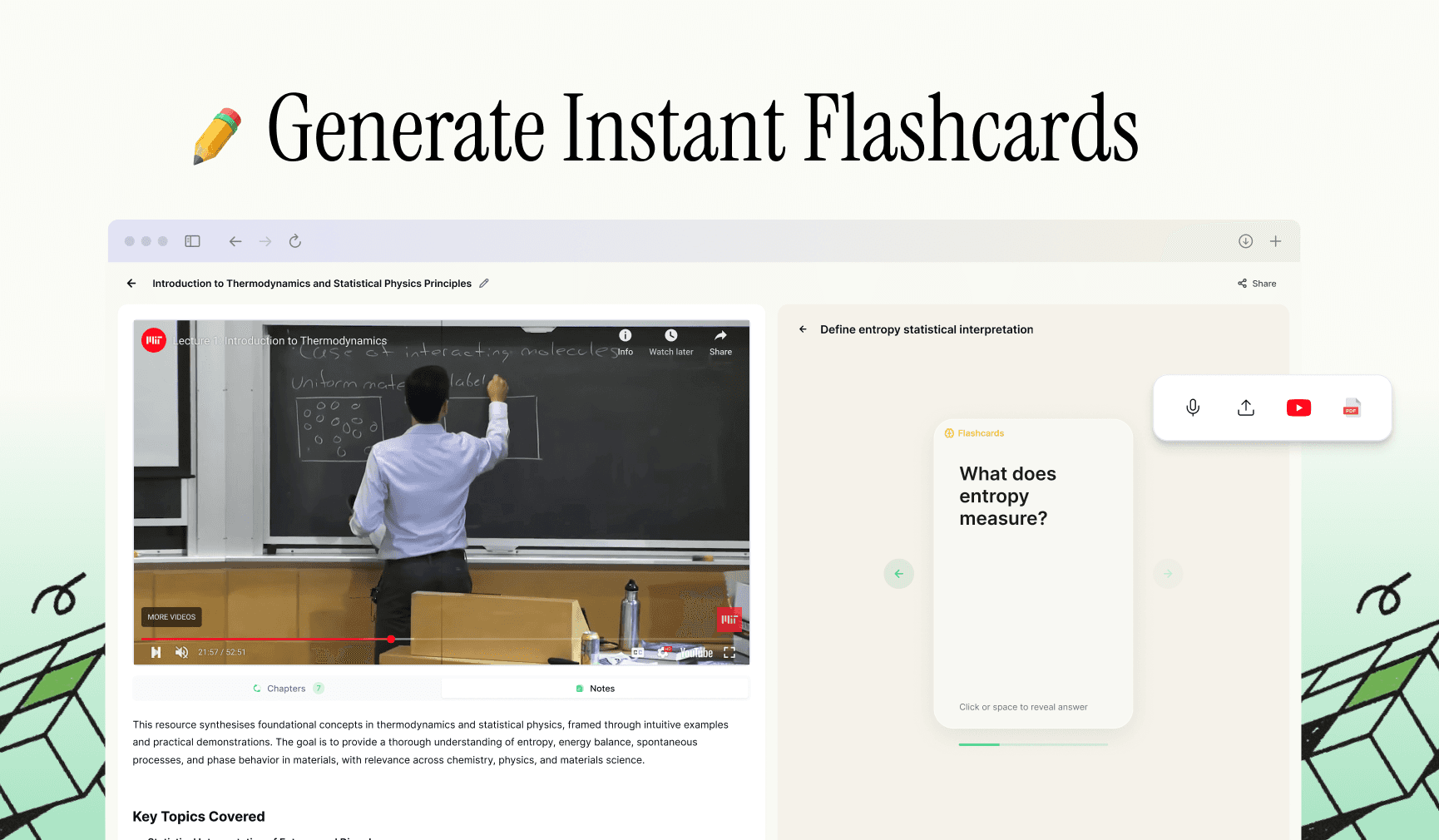
Duetoday solves this by automating the creation process. You can upload your data science notes, textbook PDFs, or lecture transcripts, and the AI will scan for key concepts and statistical methods to create a high-quality deck instantly. You spend less time making cards and more time mastering the data.
Upload or paste your Business Analytics material.
Click Generate Flashcards.
Review, edit for personal preference, and start studying.
Common Business Analytics flashcard mistakes (and how to fix them)
Many students create Business Analytics cards that are too wordy or focus only on rote memorization. This makes it hard to apply the knowledge during a real analysis. To avoid this, keep your cards lean and focused on logic.
Cards are too long: If a card contains a whole paragraph about regression, split it into three separate cards.
Only memorizing terms: Don't just learn the definition of overfitting; add a card asking how to prevent it.
Ignoring the 'Why': Ensure you have cards that explain why a specific metric is chosen over another.
No review schedule: Spaced repetition only works if you actually come back to the cards every few days.
Ready to generate your Business Analytics flashcards?
Stop rereading your slides and start testing your knowledge. Upload your Business Analytics notes to Duetoday right now and get a custom flashcard deck in seconds. It’s the fastest way to turn complex data concepts into long-term mastery.
FAQ
How many flashcards do I need for Business Analytics? It depends on the scope of your course, but a typical module (like Predictive Modeling) usually requires 50-80 cards to cover all terms, formulas, and use cases.
What’s the best format for Business Analytics flashcards? Question-and-answer format works best. For formulas, put the name of the formula on the front and the equation plus a brief explanation of the variables on the back.
How often should I review Business Analytics flashcards? Aim for 15-20 minutes every day. Consistency is better than intensity when trying to remember statistical rules and software commands.
Should I make cards from a textbook or lecture notes? Use both! Textbooks provide the formal definitions, while lecture notes often contain the specific applications or software steps your professor emphasizes.
How do I stop forgetting formulas after a few days? This is where Duetoday’s spaced repetition helps. By reviewing the cards at increasing intervals, you move the information from short-term to long-term memory.
What if my flashcards feel too easy? If you're getting every card right, it's time to add 'Application' cards. Instead of What is a P-value?, try What does a P-value of 0.03 mean for our null hypothesis?
Can I generate Business Analytics flashcards from a PDF automatically? Yes, Duetoday is designed to read your PDFs and transcripts to extract relevant terms and create flashcards for you instantly.
Are digital flashcards better than paper for Business Analytics? Digital cards are generally better because they allow you to easily include snippets of code (like SQL or Python) and use automated spaced repetition algorithms.
How long does it take to make a full Business Analytics deck? Manually, it can take hours. With Duetoday, it takes about 30 seconds once your material is uploaded.
Can Duetoday organize my flashcards by topic? Absolutely. You can generate separate decks for different sub-topics like 'Optimization,' 'Statistics,' or 'Visualization' to keep your studying organized.

Duetoday is an AI-powered learning OS that turns your study materials into personalised, bite-sized study guides, cheat sheets, and active learning flows.