Generate Flashcards for Budgeting
Turn budgeting notes into flashcards instantly with AI. Try out free to study faster!
Generate Flashcards with AI Free
Generate Flashcards for Budgeting
Turn your personal finance notes, PDFs, spreadsheets, or lecture slides into budgeting flashcards so you can review faster and master your money management skills. Stop rereading your notes and start testing your knowledge with AI-driven study tools.
Generate Budgeting FlashcardsUpload Notes / Paste Text
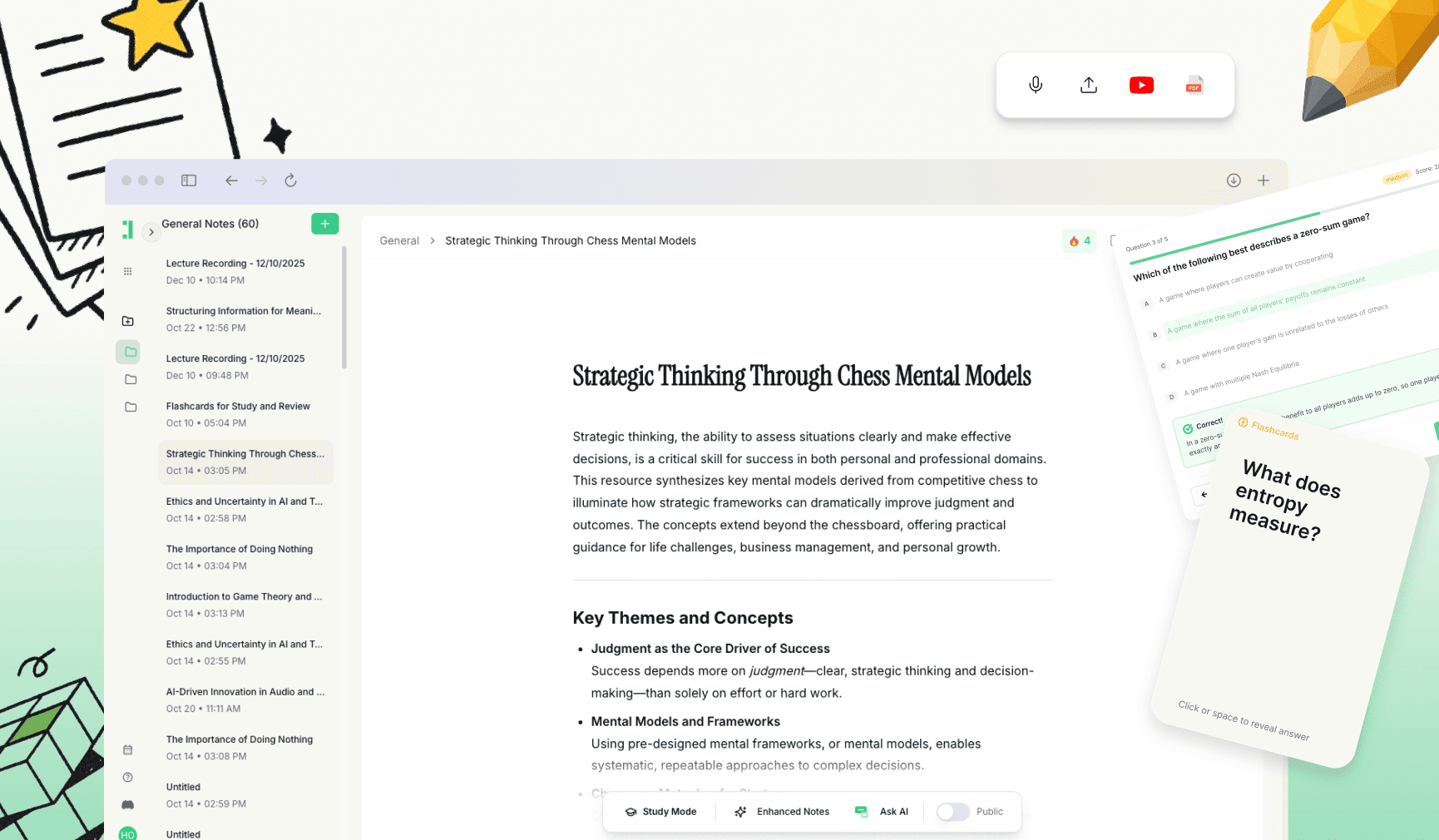
In Duetoday, the process is simple: upload your study material, click generate, review or edit your cards, and start your study session immediately.
What are budgeting flashcards?
Budgeting flashcards are study tools that cover essential financial concepts, including income types, expense tracking, savings strategies, and debt management formulas. They transform complex financial systems like the 50/30/20 rule or zero-based budgeting into digestible questions and answers.
The outcome is simple: instead of passively rereading a textbook, you test your brain's ability to retrieve financial definitions and rules, building long-term recall for exams or real-world application.
If you already have notes, Duetoday can generate a clean deck in minutes.
Why flashcards are one of the best ways to study budgeting
Budgeting requires a mix of memorizing terminology and understanding logical sequences. Flashcards are perfect because they force you to engage in active recall and spaced repetition—the two most effective ways to move information into your long-term memory.
Remember key financial terms like 'amortization' or 'net worth' without cramming.
Separate similar concepts, such as fixed vs. variable expenses.
Learn budgeting cycles and reconciliation pathways step-by-step.
Practice applying financial rules and percentage-based formulas quickly.
What to include in your budgeting flashcards
Effective budgeting flashcards focus on 'one idea per card' and are framed as questions. This prevents your brain from recognizing the text without actually knowing the answer.
Definitions & key terms: What is an emergency fund? Define discretionary spending.
Processes & steps: What is the first step in creating a zero-based budget?
Comparisons: How is a gross income different from net income?
Application: If your monthly income is $4,000, how much is allocated to needs under the 50/30/20 rule?
How to study budgeting with flashcards (a simple system)
Mastering budgeting is about consistency. We recommend a 'two-pass' approach: first, use AI to build your deck from your syllabus or notes, then review in focused rounds based on your level of comfort with the material.
Make a deck from your notes or generate it from finance content.
Do one quick round to find weak spots (e.g., tax-advantaged accounts).
Review weak cards daily for a few days until they become easy.
Mix in harder application scenarios each session.
Do a final mixed review before your finance certification or exam.
Generate budgeting flashcards automatically in Duetoday
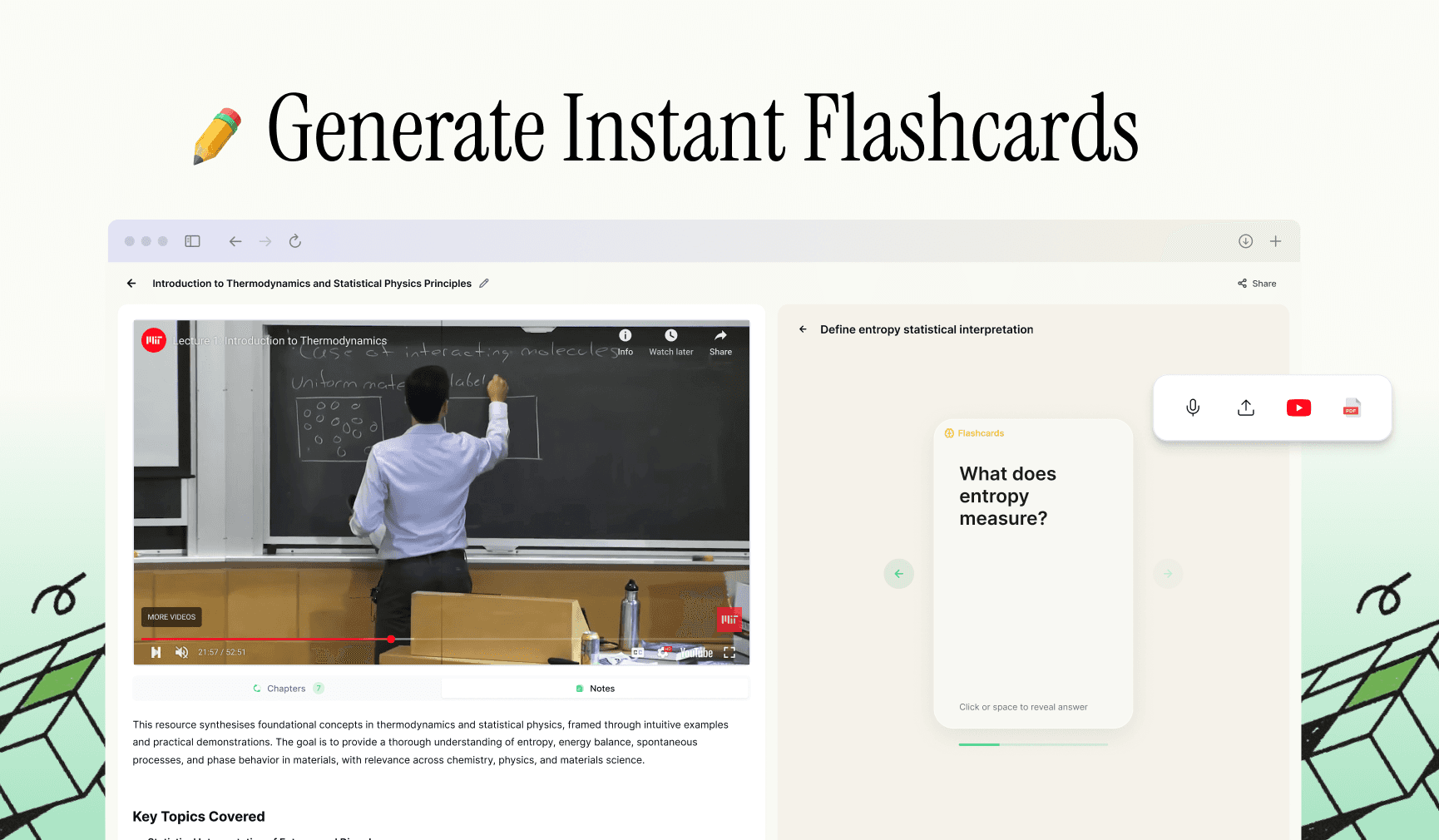
Making flashcards manually is slow, tedious, and often leads to overly wordy cards. Duetoday uses AI to scan your PDFs, slides, or transcripts and pull out the most important financial concepts for you.
Upload or paste your budgeting material.
Click 'Generate Flashcards'.
Review, edit, and start studying instantly.
Generate Budgeting Flashcards in Duetoday
Start with your notes and get a deck you can actually use today.
Common budgeting flashcard mistakes (and how to fix them)
Most students make cards that are too complex, which hinders the learning process. Keep your cards focused and actionable.
Cards are too long: Split complex definitions into two separate cards.
Only memorizing words: Add 'why' prompts to understand the purpose of a budget.
Confusing similar tax forms: Create comparison cards for 1040 vs. W-2.
No review schedule: Use Duetoday’s system to repeat difficult cards more often.
Ready to generate your budgeting flashcards?
Stop wasting hours on manual data entry. Upload your finance notes, generate your deck, and start mastering your budget with active recall today.
Start Generating Flashcards
Works with notes, PDFs, slides, and transcripts.
FAQ
How many flashcards do I need for budgeting?
For a standard personal finance course, 40-60 cards usually cover the core definitions, formulas, and budgeting methods. Quality matters more than quantity.
What’s the best format for budgeting flashcards?
Use a question-and-answer format. For example, 'Question: What is the 50/30/20 rule? Answer: 50% Needs, 30% Wants, 20% Savings.'
How often should I review budgeting flashcards?
Review daily for the first week, then use spaced repetition to review every 3-5 days once the concepts feel familiar.
Should I make cards from a textbook or lecture notes?
Both are useful, but lecture notes often highlight what your specific instructor finds most important for exams.
How do I stop forgetting financial terms after a few days?
Active recall is key. Instead of reading the answer, try to say it out loud before flipping the card.
What if my flashcards feel too easy?
This means you have mastered the definitions. It is time to add 'Application' cards where you have to solve a math-based budgeting problem.
Can I generate budgeting flashcards from a PDF?
Yes, Duetoday can read your PDF textbooks or slides and extract the key concepts into flashcards automatically.
Are digital flashcards better than paper for budgeting?
Digital cards are generally better because they allow for automated spaced repetition and are easier to organize than hundreds of physical cards.
How long does it take to make a full budgeting deck?
Manually, it can take hours. With Duetoday, you can generate a full deck from your notes in under sixty seconds.
Can Duetoday organize my flashcards for me?
Yes, Duetoday categorizes your cards and tracks your progress so you know exactly which budgeting topics need more work.

Duetoday is an AI-powered learning OS that turns your study materials into personalised, bite-sized study guides, cheat sheets, and active learning flows.