Generate Flashcards for Biostatistics
Make custom Biostatistics flashcards from your notes to master p-values and study designs with our AI generator.
Generate Flashcards with AI Free
What are Biostatistics flashcards?
Biostatistics flashcards are specialized study tools designed to help you master the application of statistical methods to biological and medical data. These cards cover essential concepts such as probability distributions, hypothesis testing, confidence intervals, and clinical trial design. Instead of passively reading through complex formulas, flashcards force you to engage with the material actively.
By using flashcards for biostatistics, you shift from recognition to recall. Whether you are memorizing the assumptions of a t-test or the definition of a type II error, testing yourself builds the cognitive pathways needed to solve problems quickly during exams. If you already have lecture notes or a textbook PDF, Duetoday can generate a clean deck in minutes, saving you hours of manual entry.
Why flashcards are one of the best ways to study Biostatistics
Biostatistics requires a unique mix of rote memorization and logical application. You need to remember specific definitions while also knowing which statistical test to apply to a given data set. Flashcards bridge this gap by breaking down high-level concepts into bite-sized, digestible pieces of information.
Using techniques like active recall and spaced repetition helps solidify your understanding of how variables interact. Instead of cramming formulas the night before a test, daily flashcard sessions ensure that the logic behind statistical inference stays fresh in your mind.
Remember critical formulas without constant rereading
Easily distinguish between similar concepts like Sensitivity vs. Specificity
Learn the step-by-step logic of hypothesis testing
Practice identifying study designs (cohort vs. case-control)
What to include in your Biostatistics flashcards
Effective biostatistics flashcards follow the one idea per card rule. Avoid cluttering a single card with an entire chapter’s worth of info; instead, focus on specific questions that trigger a clear answer. This keeps your study sessions fast and high-impact.
Definitions & key terms: What is a P-value? or Define Standard Error.
Processes & steps: What are the four steps of a Chi-square test?
Comparisons: How does Parametric data differ from Non-parametric data?
Application: Which test would you use for comparing the means of three groups?

How to study Biostatistics with flashcards
To master biostatistics, use a two-pass approach. First, generate your deck and do a quick run-through to identify which concepts feel like a black box. Second, focus your energy on those difficult cards while keeping the easy ones in a slower rotation. This ensures you spend time where it actually improves your grade.
Make a deck from your lecture slides or textbook chapters.
Complete one full round to flag cards that confuse you.
Review your weak cards daily to build confidence in formulas.
Mix in scenario-based cards to practice choosing the right statistical test.
Perform a final mixed review of all topics before your exam.
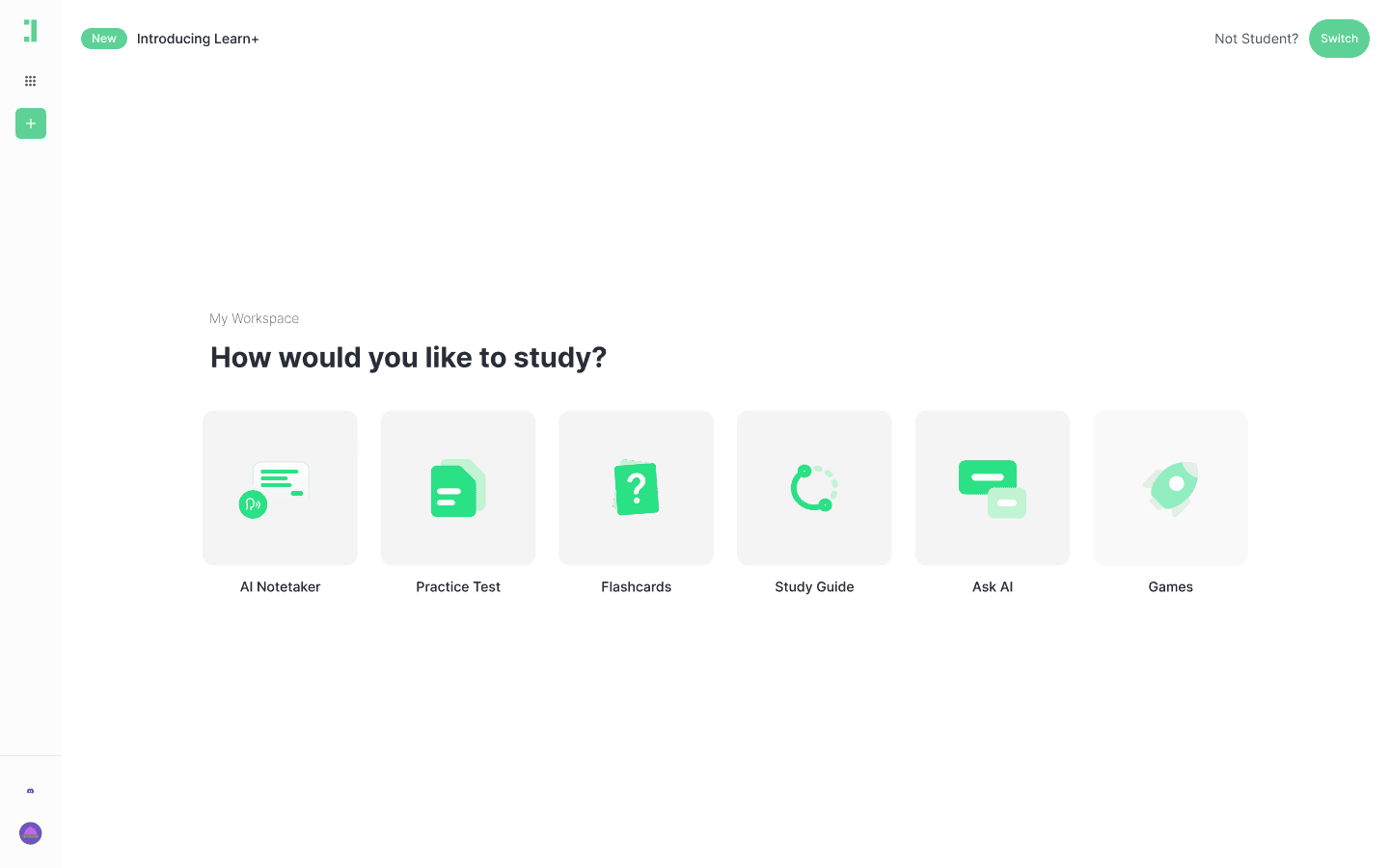
Generate Biostatistics flashcards automatically in Duetoday
Handwriting flashcards for biostatistics is a recipe for frustration. Drawing out distribution curves and writing out long-form equations by hand takes time you should be using to actually study. Duetoday simplifies this by using AI to extract the most important data from your materials instantly.
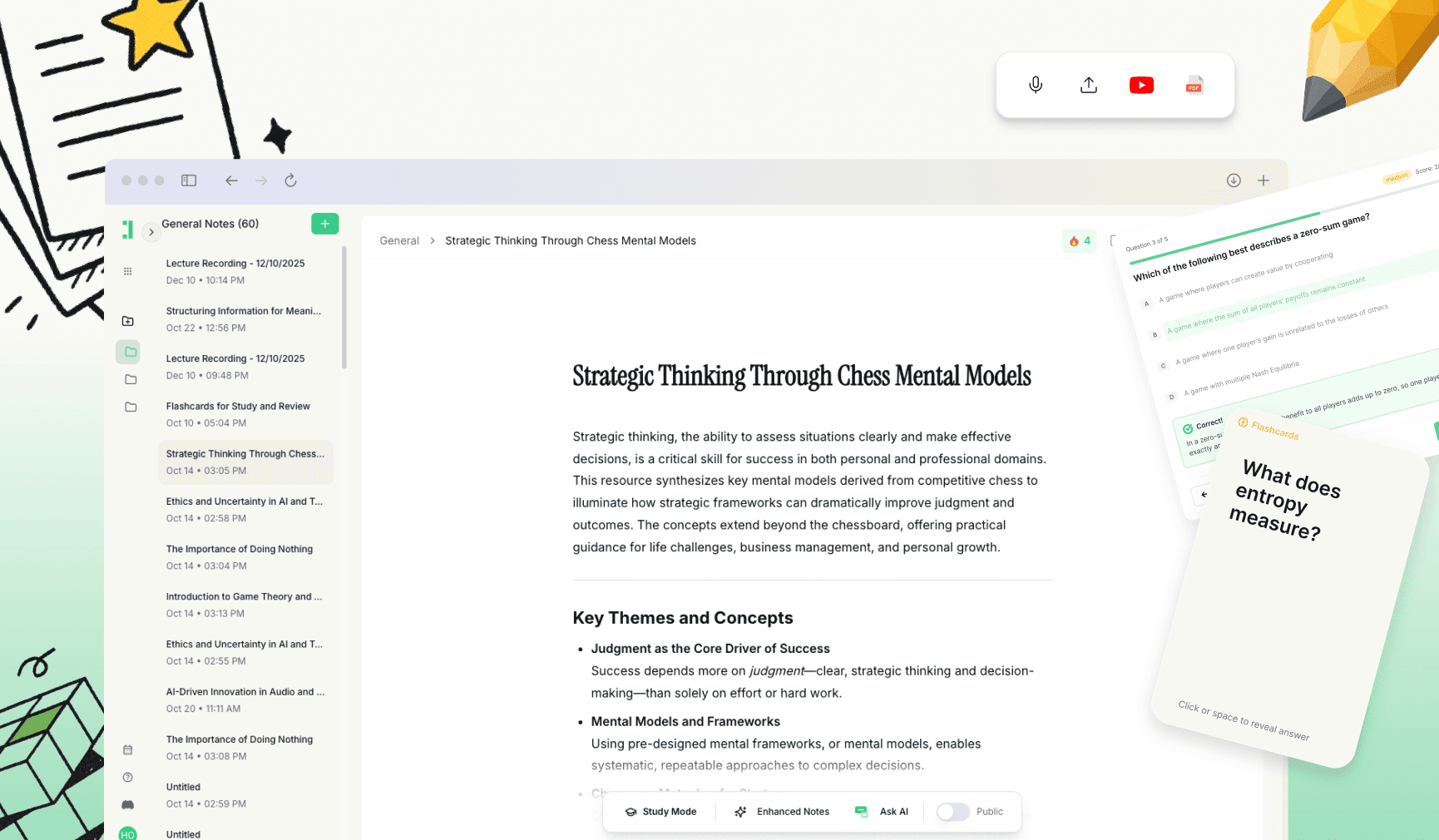
Simply upload your study guides, research papers, or transcripts, and let the AI handle the formatting. You get a professional study deck ready for mobile or desktop review in seconds.
Upload or paste your Biostatistics PowerPoints or notes
Click Generate Flashcards
Review, edit, and start mastering your data
Common Biostatistics flashcard mistakes
Many students make cards that are too wordy. If a card contains a whole paragraph, you aren't testing your memory—you're testing your reading speed. Keep your biostatistics cards focused on clear, singular answers to ensure you are actually learning the underlying math and logic.
Including too many variables on one card — split them up.
Only memorizing the formula name without the when to use it context.
Neglecting the interpretation of results (e.g., what a confidence interval actually means).
Forgetting to add cards for study design limitations and biases.
Ready to generate your Biostatistics flashcards?
Don't spend another hour copying definitions into a notebook. Upload your Biostatistics material today, generate a custom deck, and start using active recall to ace your next lab or exam. Duetoday makes it easy to turn complex data into simple, effective study sessions.
FAQ
How many flashcards do I need for Biostatistics?
A typical introductory course usually requires 150-200 cards to cover basic distributions, tests, and study designs. Advanced courses may require more for specific modeling techniques.
What’s the best format for Biostatistics flashcards?
The best format is a question-on-front, answer-on-back style. Use the front for a scenario or a term, and the back for the definition or the correct statistical test to apply.
Should I make cards from a textbook or my lecture notes?
Both are useful, but lecture notes usually highlight exactly what your professor thinks is important for the exam. Start with notes and use the textbook to fill in gaps for complex formulas.
Can I generate Biostatistics flashcards from a PDF automatically?
Yes, Duetoday allows you to upload any Biostatistics PDF and automatically converts the key concepts into study-ready flashcards in seconds.
How often should I review my Biostatistics cards?
Reviewing daily for 15-20 minutes is more effective than a 4-hour session once a week. Frequent exposure helps you internalize the logic of statistical inference.
What if my flashcards feel too easy?
If they feel easy, you likely have the definitions down. Try adding Application cards where you have to interpret a specific graph or a set of results instead of just defining a term.
Are digital flashcards better than paper for Biostatistics?
Digital cards are often better because they allow you to easily embed images of graphs and complex formulas, and they use algorithms to show you the hardest cards more often.
How long does it take to make a full Biostatistics deck?
Manually, it can take hours. With Duetoday, you can generate a comprehensive deck from your existing materials in less than a minute.

Duetoday is an AI-powered learning OS that turns your study materials into personalised, bite-sized study guides, cheat sheets, and active learning flows.