Generate Flashcards for Biochemistry I
Make Biochemistry I flashcards and generate study guides from your notes to master enzymes and metabolism.
Generate Flashcards with AI Free

Generate Flashcards for Biochemistry I
Turn your complex Biochemistry I notes, textbook chapters, or lecture slides into comprehensive flashcards so you can master metabolic pathways and molecular structures faster. Stop passive reading and start active testing.
Generate Biochemistry I Flashcards
Upload notes / paste text
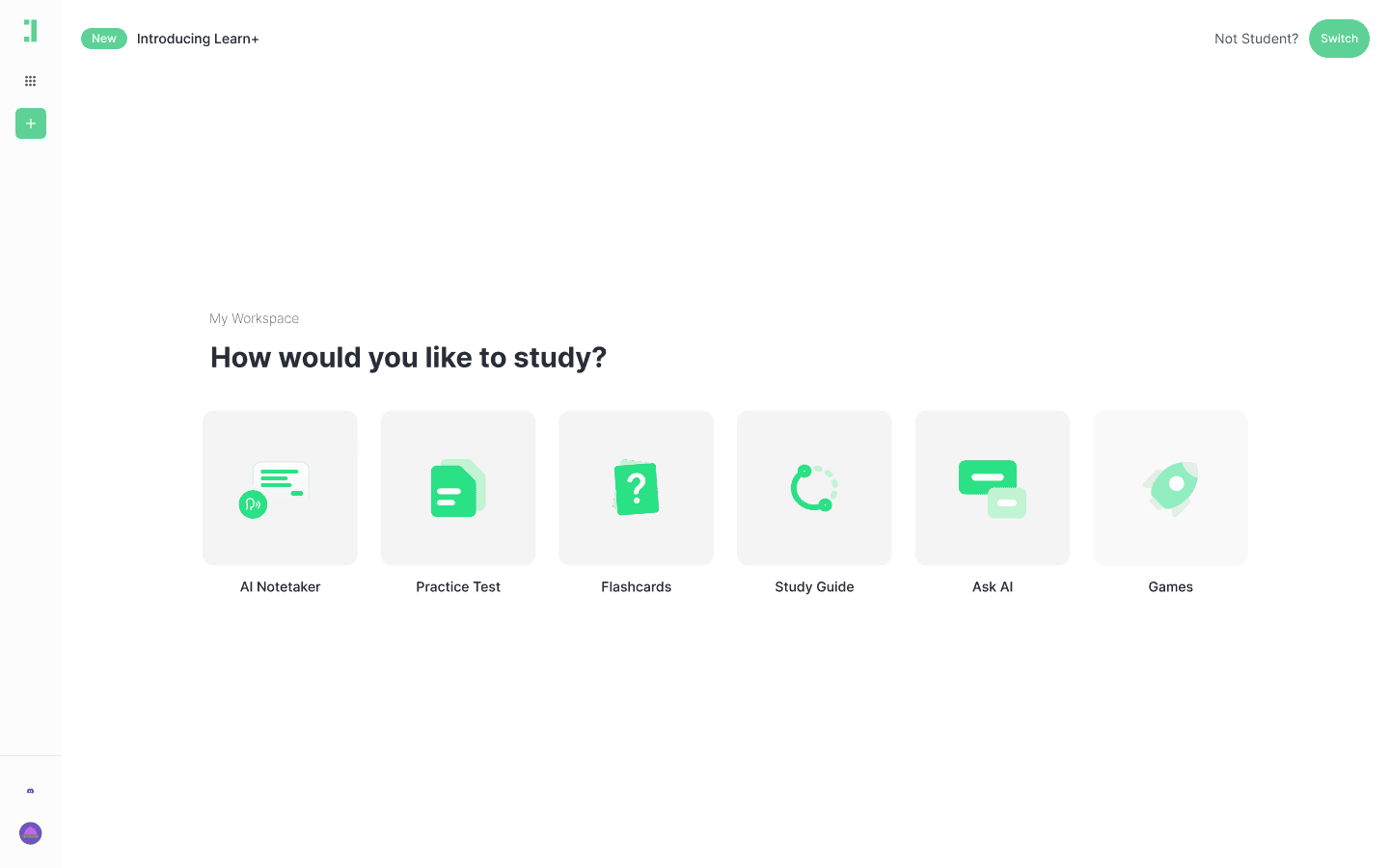
Using Duetoday is simple: upload your biochemical charts or lecture transcripts, and our AI generates a structured deck of flashcards. Review, edit, and sync them to your study schedule instantly.
What are Biochemistry I flashcards?
Biochemistry I flashcards are targeted study tools that break down the chemical processes of living organisms into bite-sized questions. They cover foundational topics like amino acid properties, enzyme kinetics (Michaelis-Menten), thermodynamics, and the primary metabolic cycles like Glycolysis and the TCA cycle.
Instead of staring at a 50-step metabolic map, these flashcards force you to recall specific enzymes, substrates, and regulatory steps, building the mental connections needed for high-level exams.
If you already have notes, Duetoday can generate a clean deck in minutes.
Why flashcards work for Biochemistry I
Biochemistry requires a blend of rote memorization (amino acid structures) and logical application (how pH affects enzyme activity). Flashcards bridge this gap by using active recall to strengthen neural pathways.
By utilizing spaced repetition, you ensure that high-yield topics like the Henderson-Hasselbalch equation or ATP synthase mechanisms are reviewed just as you are about to forget them.
Memorize all 20 amino acids and their R-group properties without cramming
Differentiate between similar pathways (e.g., Gluconeogenesis vs. Glycolysis)
Master enzyme inhibition types (Competitive, Non-competitive, Uncompetitive)
Learn complex cycles step-by-step through sequential recall

What to include in your Biochemistry I flashcards
Effective Biochemistry flashcards follow the principle of atomicity: one specific concept per card. This prevents the 'illusion of competence' where you think you know a long paragraph but actually only remember the first sentence.
Focus your cards on four primary categories: physical structures, mathematical formulas, pathway regulations, and functional relationships.
Definitions & Key Terms: What is a zwitterion? or Define the hydrophobic effect.
Processes & Steps: What is the rate-limiting enzyme of Glycolysis?
Comparisons: How does a competitive inhibitor affect Vmax vs. Km?
Application: In a low pH environment, what is the protonation state of Aspartate?
How to study Biochemistry I with flashcards
Don't try to learn the whole deck at once. Start with a 'two-pass' approach: build your deck from your latest lecture and do an initial sweep to identify which structures or cycles are confusing. Focus your energy on the difficult cards while letting the easier 'basics' slide to longer review intervals.
Generate a deck from your specific lecture notes or textbook chapters.
Perform a rapid first pass to flag high-difficulty pathway steps.
Review high-difficulty cards daily to move them into long-term memory.
Mix structural identification with functional questions to ensure deep understanding.
Generate Biochemistry I flashcards automatically in Duetoday
Manually drawing out every amino acid or typing every enzyme on a physical card is a massive time sink that could be spent actually studying. Duetoday automates the tedious part of the process.
Simply upload your PDF notes or lecture slides, and our AI identifies the most testable material to create a professional deck in seconds.
Upload your Biochemistry I syllabus and materials.
Click 'Generate Flashcards'.
Refine your deck and start your first active recall session.
Common Biochemistry I flashcard mistakes
Avoid putting an entire metabolic map on a single card; it's impossible to grade yourself fairly on 'The Citric Acid Cycle' as one prompt. Instead, break it into individual reactions. Also, ensure you aren't just memorizing names—include 'why' and 'how' questions to prepare for medical or graduate-level conceptual questions.
Ready to generate your Biochemistry I flashcards?
Stop rereading your textbook and start mastering the molecular world. Upload your notes now and get a custom study deck in seconds.
FAQ
How many flashcards do I need for Biochemistry I? Most students find that 300-500 high-quality cards cover the core semester-long foundational concepts effectively.
What's the best format for Biochemistry flashcards? A mix of visual image-occlusion (for structures) and Q&A (for enzyme kinetics and pathways) works best.
How often should I review my cards? Daily review is best for new pathways, while older concepts can move to every 3-5 days once they are mastered.
Should I make cards from the textbook or my slides? Use lecture slides for high-yield exam topics and the textbook for clarifying complex mechanisms like oxidative phosphorylation.
How do I stop forgetting the TCA cycle? Use cards that ask for the 'next step' and the 'required cofactor' for each specific reaction to build a sequential memory chain.
Can I generate flashcards from a PDF of my Biochemistry textbook? Yes, Duetoday can process large PDFs and extract the most relevant terms and concepts into cards.
Are digital flashcards better than paper for Biochemistry? Yes, digital cards allow for easier editing of complex structures and automated spaced repetition scheduling.
How long does it take to make a Biochemistry deck? With Duetoday, you can turn a hour-long lecture into a deck in less than 60 seconds.

Duetoday is an AI-powered learning OS that turns your study materials into personalised, bite-sized study guides, cheat sheets, and active learning flows.