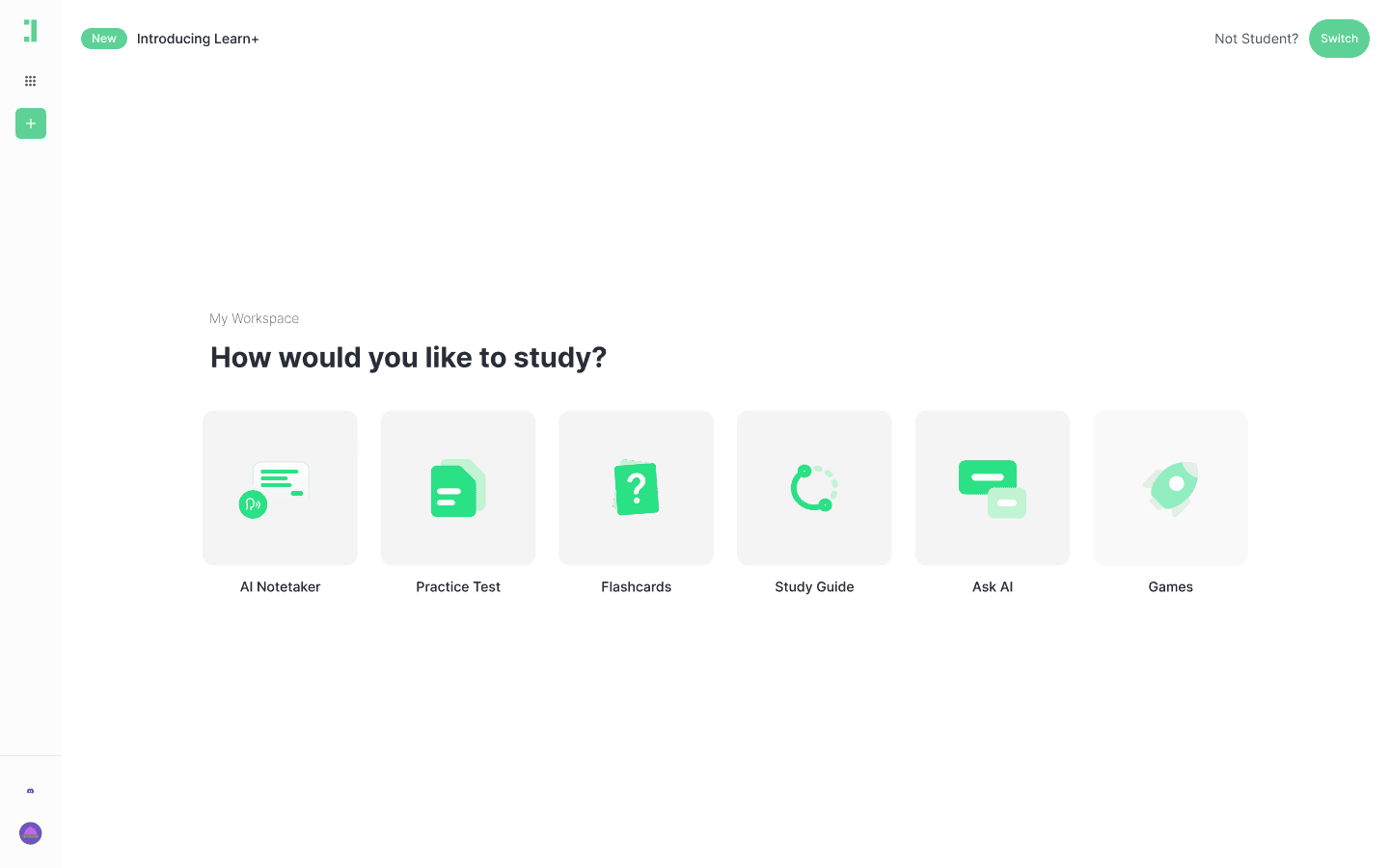
Generate Flashcards for Big Data Systems
Easily generate or make flashcards for Big Data Systems. This guide covers how to study Hadoop, Spark, and distributed systems.
Generate Flashcards with AI Free
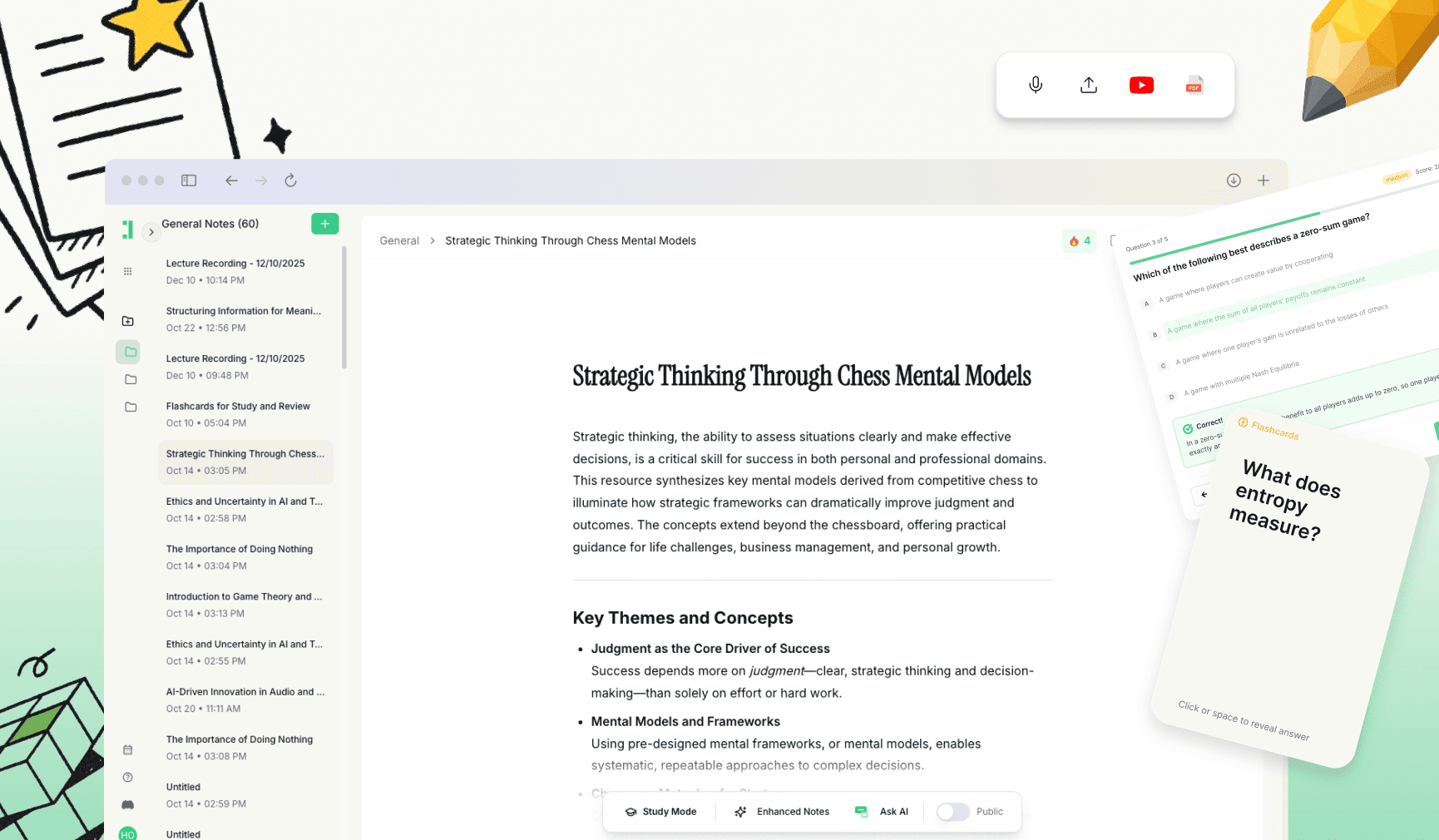
Generate Flashcards for Big Data Systems
Turn your notes, PDFs, slides, or lectures into Big Data Systems flashcards so you can review faster and remember more. Efficiently mastering complex architectures like Hadoop and Spark requires moving beyond passive reading to active testing.
Generate Big Data Systems FlashcardsUpload notes / paste text
In Duetoday, the process is simple: upload your course material, our AI extracts the core concepts, and you receive a structured deck ready for review or editing within minutes.
What are Big Data Systems flashcards?
Big Data Systems flashcards cover the infrastructure, frameworks, and methodologies used to process massive datasets. This includes distributed storage (HDFS), processing engines (MapReduce, Spark), NoSQL database modeling, and stream processing architectures.
Instead of rereading long chapters on CAP theorem or data partitioning, these flashcards test your ability to explain how these systems function and interact, building reliable long-term recall.
Why flashcards work for Big Data Systems
Big Data Systems require understanding complex relationships between distributed components. Flashcards are ideal for this because they force you to articulate technical mechanisms without looking at the answer.
Remember architectural components without cramming
Separate similar concepts (e.g., Batch vs Stream processing)
Learn data pipelines step-by-step (ingestion, storage, analysis)
Practice applying CAP theorem rules to system design
What to include in your Big Data Systems flashcards
Effective flashcards follow the one idea per card rule. For technical subjects, focus on the 'why' and 'how' behind various Big Data tools and strategies.
Definitions & key terms: What is Sharding? Define Idempotency in messaging queues.
Processes & steps: What are the stages of a MapReduce job?
Comparisons: How is HDFS different from a traditional RDBMS?
Application: When would you use HBase instead of Hive?
Example prompts: Explain the role of the NameNode in HDFS, What is the main advantage of Spark's RDDs over MapReduce?, and Describe the difference between horizontal and vertical scaling.
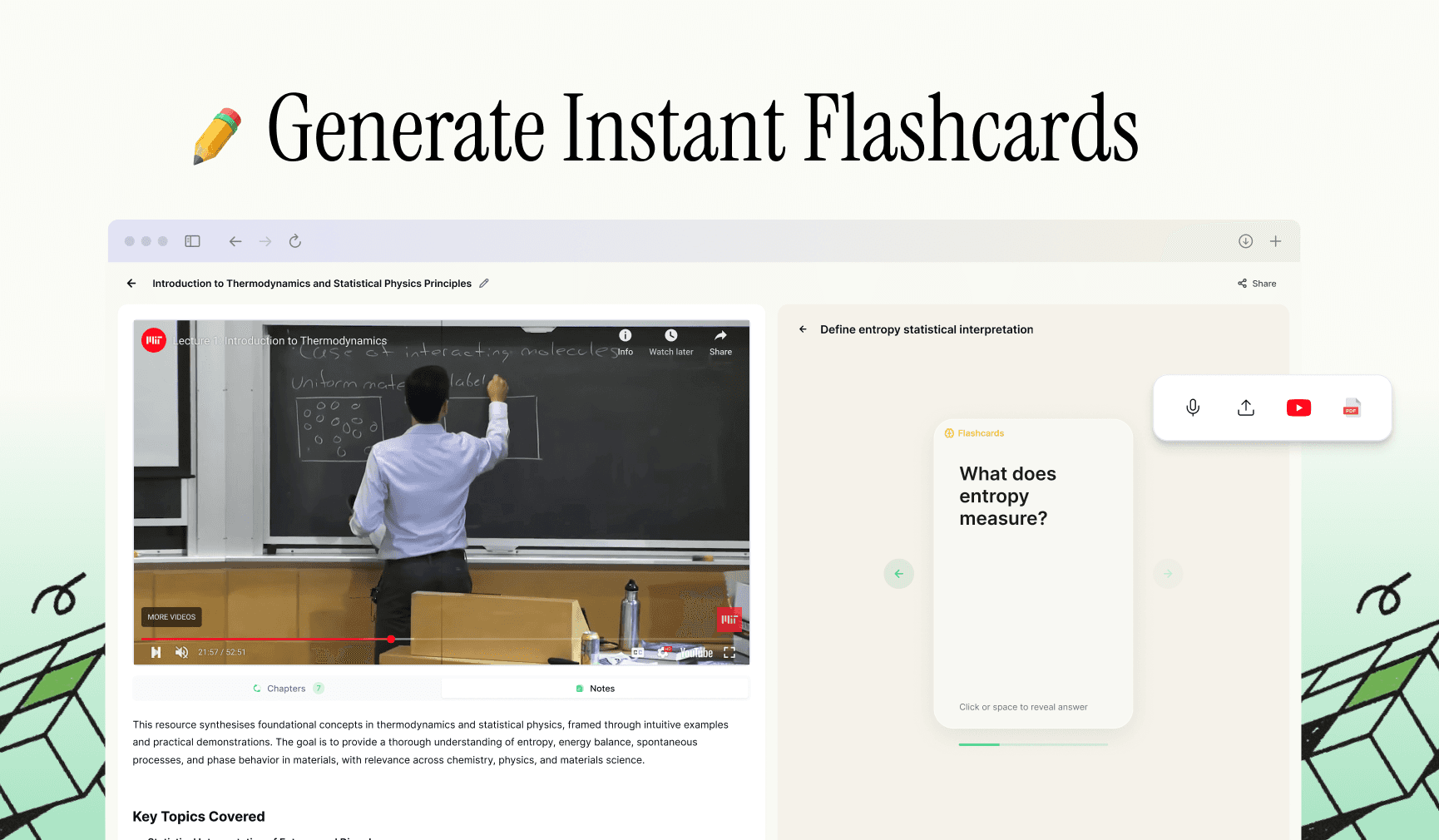
How to study Big Data Systems with flashcards
Success in Big Data often comes down to understanding system tradeoffs. Use a two-pass approach: first, build your core deck from your lecture slides, then refine it as you learn the nuances of different frameworks.
Make a deck from your notes or generate it from your textbook PDFs.
Do one quick round to identify which architectures (like Kafka or Cassandra) confuse you.
Review weak cards daily to cement distributed computing theories.
Mix in harder system design cards with basic definitions.
Perform a final review of the entire ecosystem before your exam.
Generate Big Data Systems flashcards automatically in Duetoday
Making technical flashcards manually is time-consuming and prone to over-complicating definitions. Duetoday streamlines this by focusing on high-signal content from your actual study materials.
Simply upload your PDFs or paste your lecture transcripts, and Duetoday generates a comprehensive deck instantly. You can then edit individual cards to add your own code snippets or diagrams before starting your study session.
Upload your Big Data PDFs or slides
Click Generate Flashcards
Review, edit, and start studying
Generate Big Data Systems Flashcards in Duetoday
Start with your notes and get a deck you can actually use today.
Common Big Data Systems flashcard mistakes
Many students make cards that are essentially paragraphs. For Big Data, focus on breaking down complex workflows into individual steps.
Cards are too wordy: Split a 5-step process into 5 separate cards.
Ignoring the 'Why': Don't just memorize tool names; ask why a specific tool is chosen for a specific load.
Mixing up SQL vs NoSQL: Use explicit comparison cards to highlight differences.
No review schedule: Big Data concepts are dense; repeat difficult cards every 24 hours.
Ready to generate your Big Data Systems flashcards?
Don't waste hours copying definitions. Upload your notes, generate your deck, and start mastering distributed systems with active recall today.
Start Generating Flashcards
Works with notes, PDFs, slides, and transcripts.
FAQ
How many flashcards do I need for Big Data Systems?
A typical semester-long course usually requires 150-250 cards to cover frameworks, storage, and processing logic.
What’s the best format for Big Data flashcards?
Q&A format is best. Ask specific questions about system trade-offs, like 'How does Spark achieve fault tolerance?'
How often should I review Big Data Systems flashcards?
Review new cards daily. Once you master a concept like HDFS replication, move it to a weekly review schedule.
Should I make cards from a textbook or slides?
Start with slides for core concepts and use textbooks to fill in the 'how-it-works' details for the cards.
How do I stop forgetting system architectures?
Use spaced repetition. Duetoday helps ensure you see the hardest cards more frequently until they stick.
What if my flashcards feel too easy?
Increase the difficulty by asking for comparisons or scenario-based answers rather than simple definitions.
Can I generate Big Data flashcards from a PDF automatically?
Yes, Duetoday is designed to parse complex technical PDFs and turn them into structured flashcards instantly.
Are digital flashcards better than paper for Big Data?
Yes, because you can easily include code snippets, diagrams, and benefit from automated spaced repetition algorithms.
How long does it take to make a full Big Data deck?
Manually, hours. With Duetoday’s AI generator, a full set of cards from a chapter takes less than a minute.
Can Duetoday organize my cards by framework?
Yes, you can generate separate decks for specific topics like Hadoop, NoSQL, or Stream Processing to keep your study sessions focused.

Duetoday is an AI-powered learning OS that turns your study materials into personalised, bite-sized study guides, cheat sheets, and active learning flows.