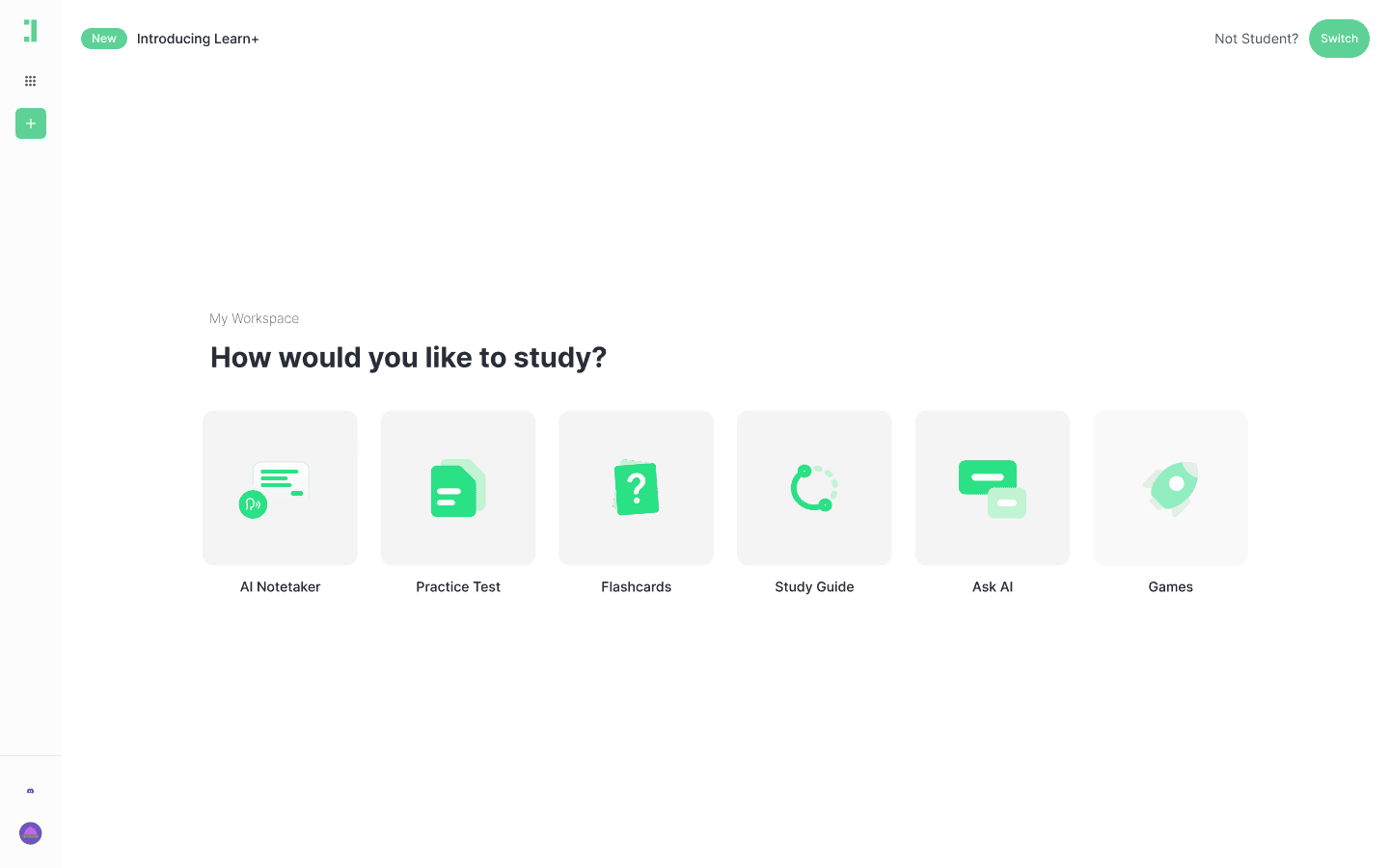
Generate Flashcards for Behavioral Neuroscience
Make Behavioral Neuroscience flashcards quickly using AI. Generate study decks for brain science and psychology students.
Generate Flashcards with AI Free
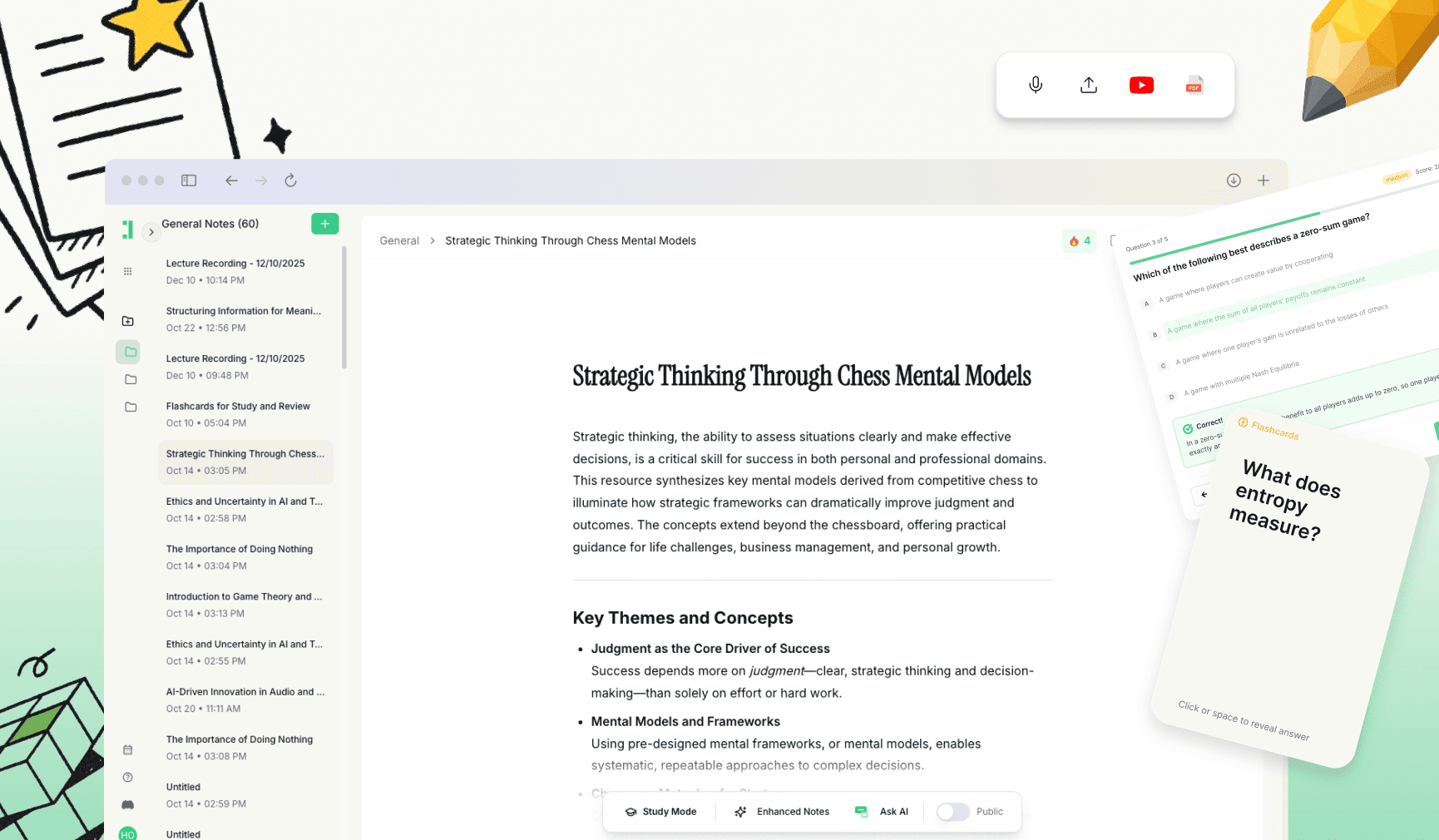
Generate Flashcards for Behavioral Neuroscience
Turn your notes, PDFs, slides, or lectures into Behavioral Neuroscience flashcards so you can review faster and remember more. Whether you are studying action potentials or the biological basis of emotion, Duetoday helps you transform complex material into study-ready decks.
Generate Behavioral Neuroscience FlashcardsUpload notes / paste text
In Duetoday, the process is simple: you upload your course materials, our AI generates precise flashcards, and you can immediately review or edit them to start your study session.
What are Behavioral Neuroscience flashcards?
Behavioral Neuroscience flashcards are targeted study tools that cover the intersection of biology and psychology. They break down dense topics like neuroanatomy, neurotransmitter functions, sensory systems, and the physiological underpinnings of behavior into bite-sized, testable units.
Instead of passively rereading a textbook on brain structures, these flashcards force you to actively retrieve information. If you already have notes, Duetoday can generate a clean deck in minutes, ensuring you spend time studying rather than formatting.
Why flashcards work for Behavioral Neuroscience
Behavioral Neuroscience requires a mix of rote memorization (brain regions) and understanding complex relationships (how a hormone affects a mood). Flashcards are the gold standard for this because they utilize active recall and spaced repetition.
Remember key terms like 'Long-Term Potentiation' without last-minute cramming
Separate similar concepts like the Sympathetic vs. Parasympathetic nervous systems
Learn neural pathways step-by-step from stimulus to response
Practice identifying the function of specific brain lobes and circuits
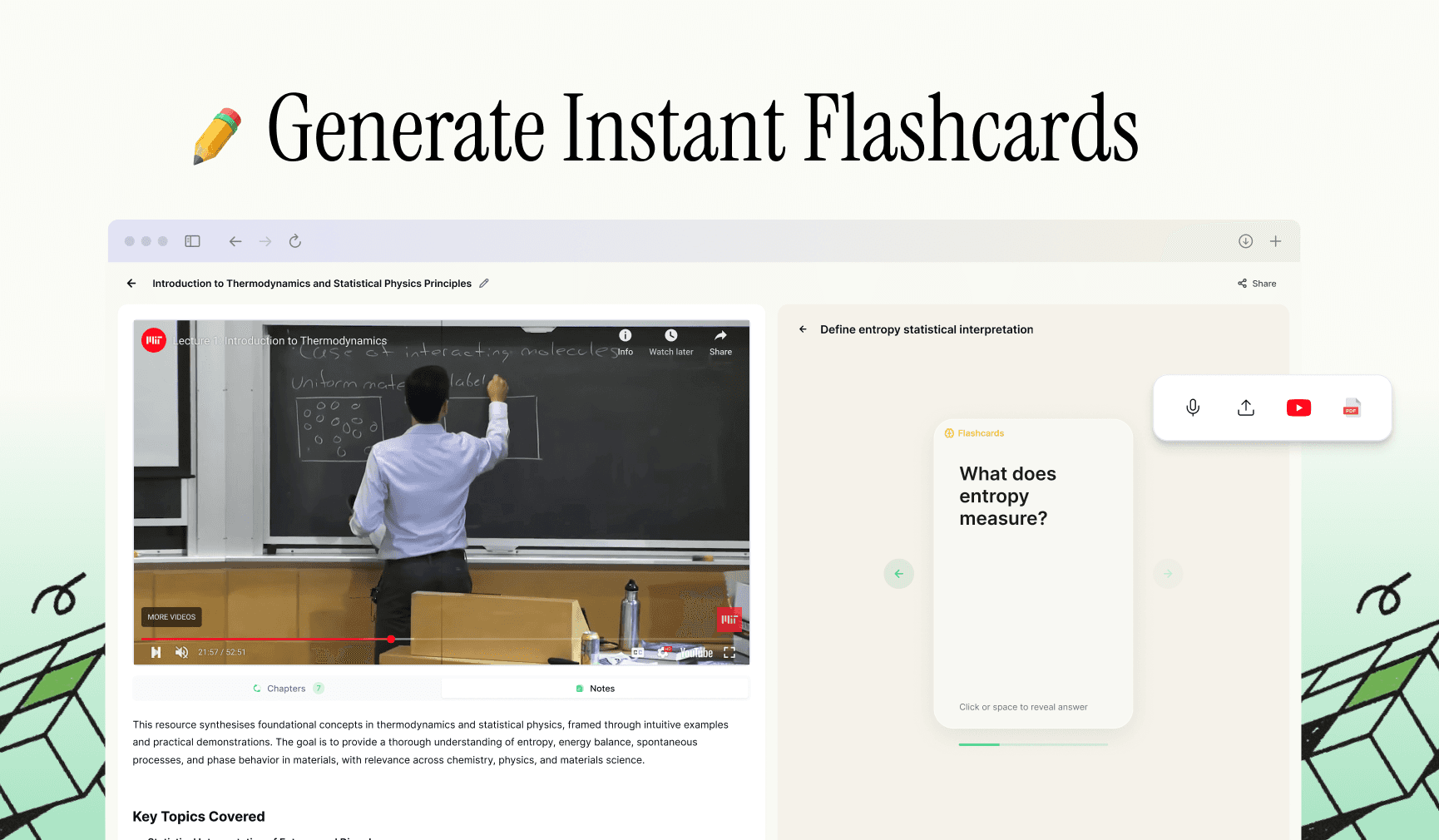
What to include in your Behavioral Neuroscience flashcards
Effective flashcards follow the 'atomic' rule: one specific idea per card. This prevents you from recognizing a whole page of text without actually knowing the individual facts. We recommend focusing on four specific card types.
Definitions & Key Terms: e.g., What is the function of the Myelin Sheath?
Processes & Steps: e.g., What triggers the release of neurotransmitters at the synapse?
Comparisons: e.g., How does Broca’s aphasia differ from Wernicke’s aphasia?
Application: e.g., Which brain region is most likely damaged if a patient loses fine motor coordination?
How to study Behavioral Neuroscience with flashcards
To master this subject, use a two-pass system. First, generate your deck from your lecture slides or textbook chapters. Then, go through the deck once to identify 'weak spots'—the concepts where you struggle to explain the 'why' behind the biology.
Make a deck from your notes or generate it automatically.
Do one quick round to find weak spots.
Review weak cards daily for a few days using spaced repetition.
Mix in harder application cards as you get more comfortable.
Perform a final mixed review before your midterm or final.
Generate Behavioral Neuroscience flashcards automatically in Duetoday
Making cards manually for a heavy science course is slow and mentally draining. Duetoday streamlines this by extracting the most important concepts directly from your source material. Simply upload your PDF or paste your notes, and our AI does the heavy lifting.
Upload your Behavioral Neuroscience material
Click Generate Flashcards
Review, edit, and start studying immediately
Common Behavioral Neuroscience flashcard mistakes
Avoid the 'wall of text' error where cards contain too much information. If a card explains the entire endocrine system, it's too long—split it into individual hormone functions. Additionally, don't just memorize definitions; ensure you have 'why' cards that explain the physiological purpose of a biological structure.
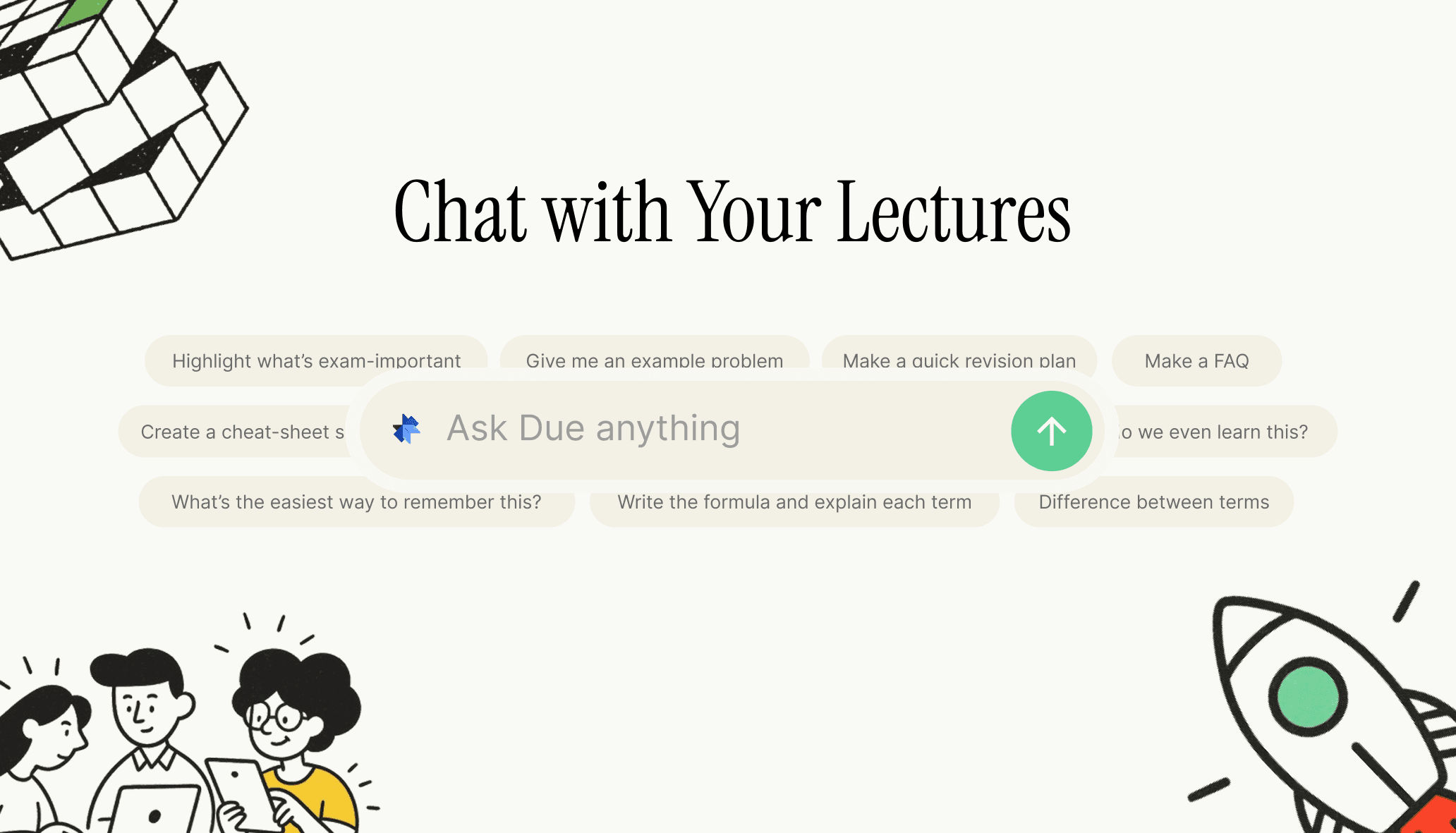
FAQ
How many flashcards do I need for Behavioral Neuroscience? It depends on the unit, but usually 50-100 cards per chapter is common to cover anatomy and physiological processes thoroughly.
What’s the best format for these flashcards? Question-and-answer format is best for active recall. Use 'cloze deletion' for learning specific brain structures or chemical formulas.
How often should I review? Ideally, every day for 15-20 minutes. Frequency is more important than duration when it comes to neurobiology.
Should I make cards from textbooks or slides? Use lecture slides first as they represent what your professor values, then supplement with textbook details for complex pathways.
How do I stop forgetting brain regions? Use 'Application' cards. Instead of just naming a region, ask what happens if that region is inhibited or stimulated.
What if my flashcards feel too easy? This is a sign to move from 'what' questions to 'how' and 'why' questions to deepen your understanding.
Can I generate flashcards from a PDF? Yes, Duetoday is designed to ingest PDFs and extract core concepts into flashcards automatically.
Are digital flashcards better than paper? Yes, because digital tools like Duetoday use algorithms to show you the cards you struggle with more frequently.
How long does it take to make a full deck? With Duetoday, it takes seconds to generate a draft from your notes, compared to hours of manual writing.
Can Duetoday organize my cards by topic? Yes, you can generate and organize your decks by specific chapters like 'Neurotransmitters' or 'Cognitive Disorders'.

Duetoday is an AI-powered learning OS that turns your study materials into personalised, bite-sized study guides, cheat sheets, and active learning flows.