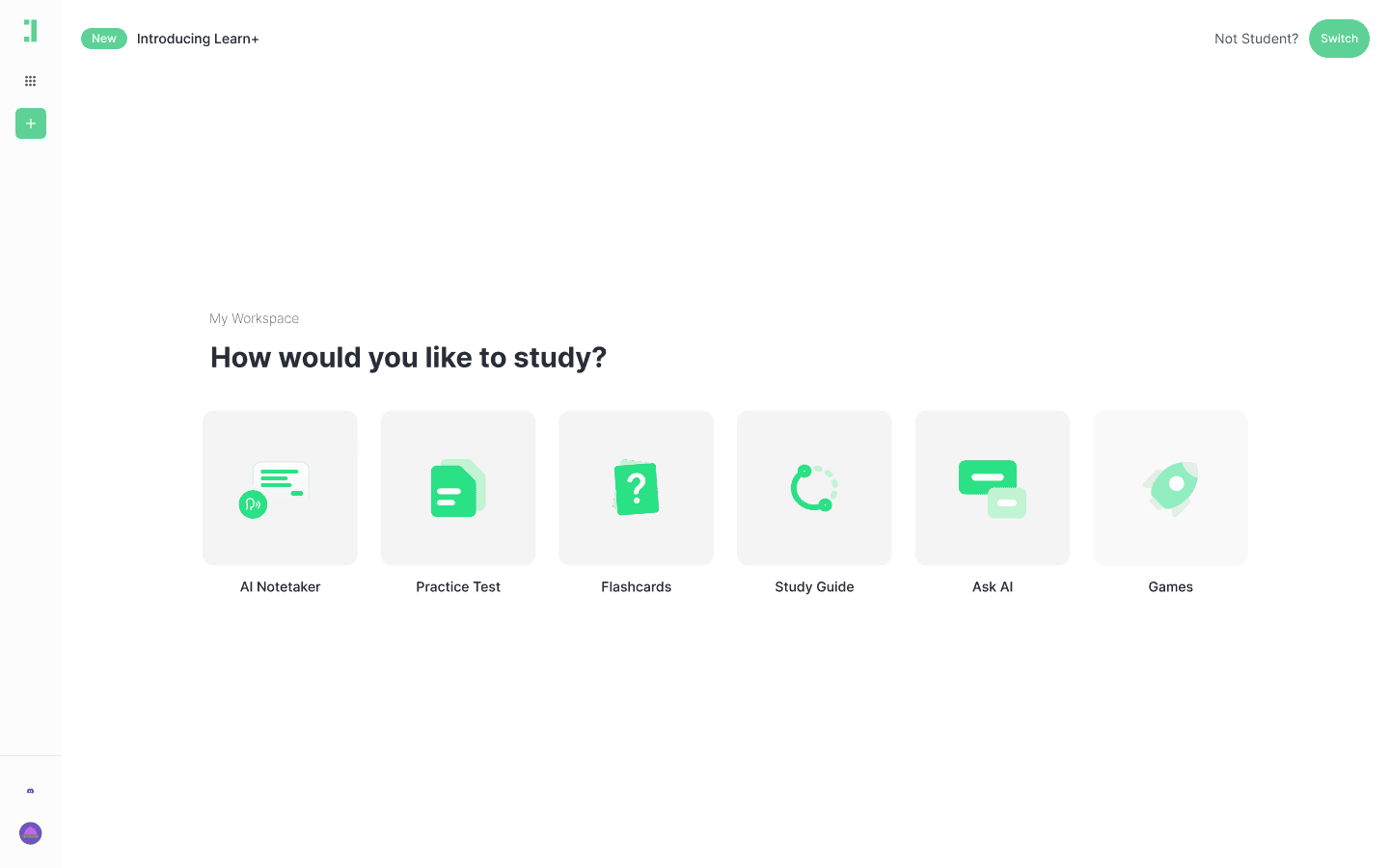
Generate Flashcards for Behavioral Economics
Learn how to make or generate Behavioral Economics flashcards to master cognitive biases and economic psychology.
Generate Flashcards with AI Free
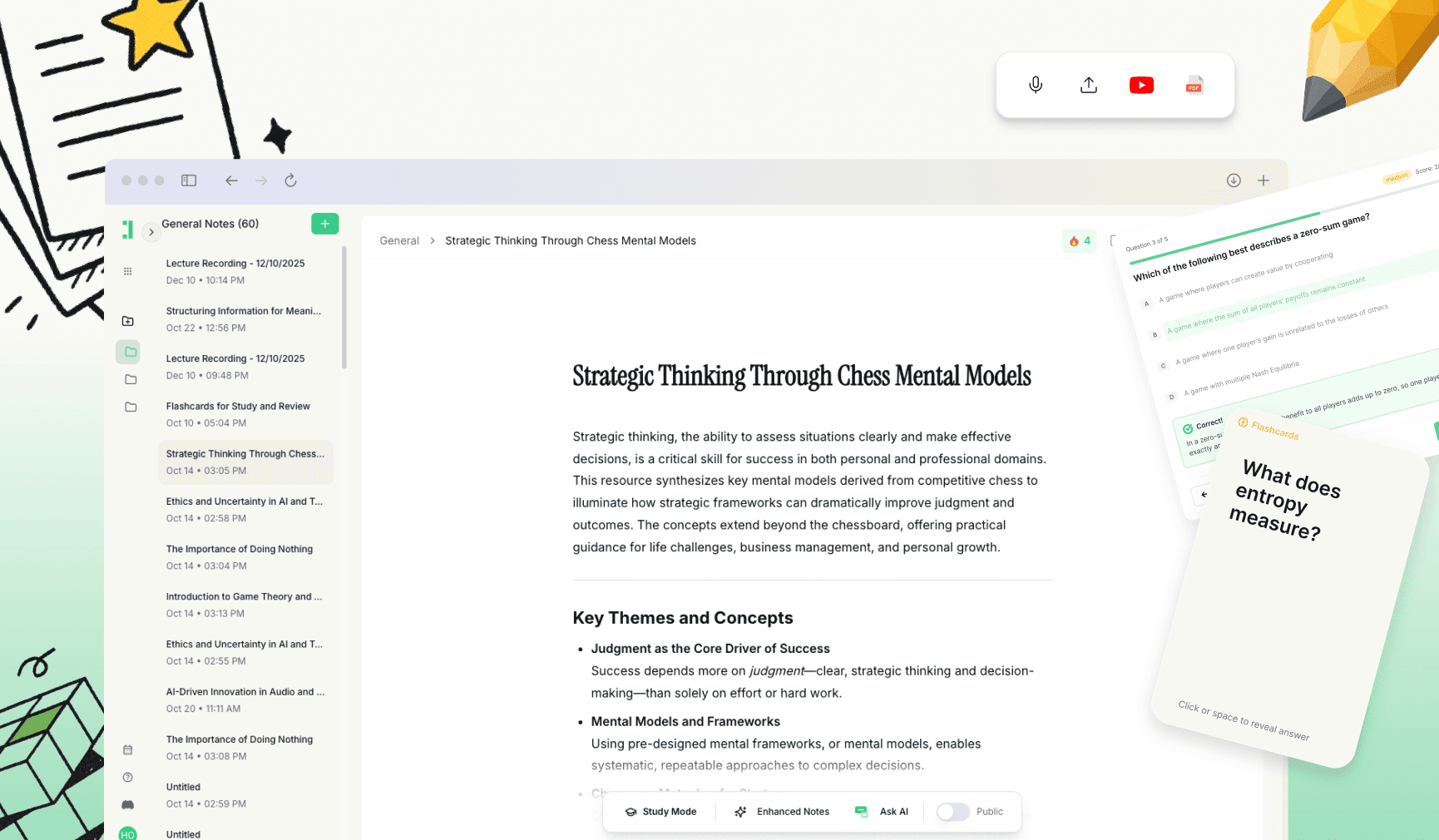
What are Behavioral Economics flashcards?
Behavioral Economics flashcards are specialized study tools designed to help you master the intersection of psychology and economics. They cover essential concepts like cognitive biases, heuristics, prospect theory, and nudging. Instead of just reading about how humans make irrational decisions, these flashcards force you to define and apply these theories actively.
By using flashcards, you shift from passive reading to active retrieval. The outcome is a deeper understanding of why individuals deviate from traditional economic models, allowing you to recognize patterns and recall key experiments instantly. Better yet, Duetoday can generate a clean, organized deck from your lecture notes in minutes.
Why flashcards are one of the best ways to study Behavioral Economics
Behavioral Economics requires you to memorize specific terminology and understand complex relationships between human behavior and market outcomes. Flashcards are perfect for this because they leverage active recall and spaced repetition—the two most effective ways to move information into your long-term memory.
Internalize complex biases (e.g., Sunk Cost Fallacy vs. Loss Aversion)
Memorize key researchers and their landmark experiments
Learn the specific conditions under which certain heuristics occur
Practice applying theoretical 'nudges' to real-world scenarios
What to include in your Behavioral Economics flashcards
To make your Behavioral Economics study sessions effective, your cards should be concise and focused on a single concept. Avoid cluttering a card with too much text; instead, focus on the 'why' and 'how' behind human irrationality.
Definitions: What is the Availability Heuristic?
Processes: Describe the two systems of thinking in Dual Process Theory.
Comparisons: How does Prospect Theory differ from Expected Utility Theory?
Application: Give an example of a 'nudge' in a cafeteria setting.
Try using prompts like: 'Which bias explains why we value items more once we own them?' or 'Define Choice Architecture.' These direct questions build the neural pathways needed for exam day.
How to study Behavioral Economics with flashcards
Mastering this subject requires a systematic approach. Start by creating a comprehensive deck from your course materials. Once your deck is ready, go through it in rounds. In the first pass, identify the concepts that trip you up—perhaps the nuance between different types of framing effects.
Focus your energy on those difficult cards. Review them daily until the concepts click, then gradually re-integrate the easier cards to ensure you don't forget the basics. This 'two-pass' system ensures you are always challenging your brain where it needs it most.
Generate Behavioral Economics flashcards automatically in Duetoday
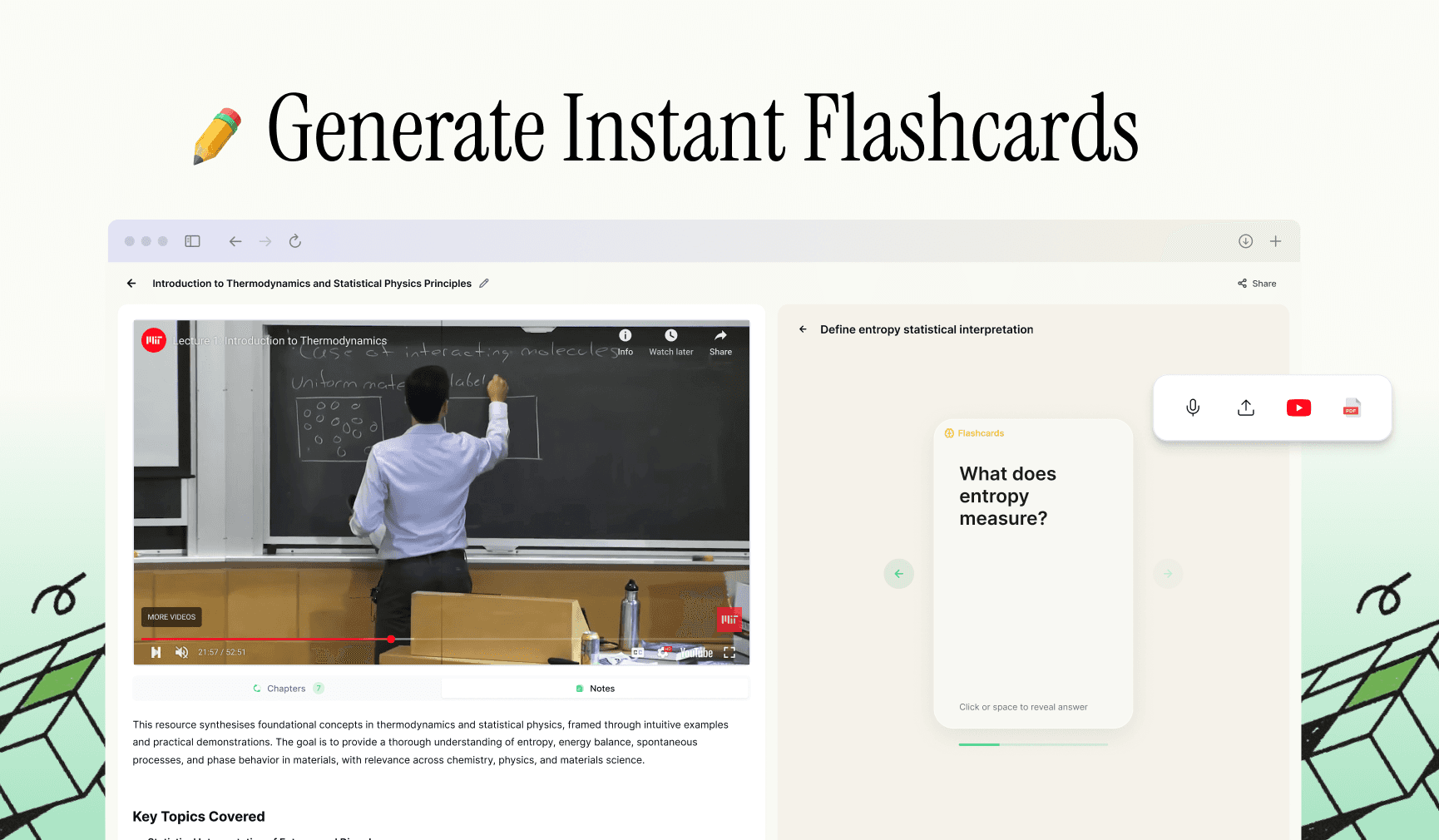
Manually writing out cards for every heuristic and bias is time-consuming and often leads to messy, disorganized notes. Duetoday eliminates the grunt work by transforming your PDFs, slides, and transcripts into professional-grade flashcards instantly.
Upload your Behavioral Economics syllabus or lecture notes.
Click 'Generate Flashcards' to see AI-powered study sets.
Edit your cards for personal context and start your study session.
Generate Behavioral Economics Flashcards in Duetoday. Stop rereading your textbook and start testing your knowledge today.
Common Behavioral Economics flashcard mistakes
Many students fail to get the most out of their cards because of a few simple errors. The most common mistake is making cards too wordy. If a card contains a whole paragraph, you're reading, not recalling. Split complex theories into multiple smaller cards. Additionally, don't just memorize the name of a bias; ensure you include a card that asks for a real-world example to prove you actually understand the underlying logic.
FAQ
How many flashcards do I need for Behavioral Economics?
For a standard introductory course, aim for 100-150 cards. This allows you to cover all major biases, the core principles of Prospect Theory, and key experimental findings without being overwhelmed.
What is the best format for these flashcards?
The 'Question/Answer' format is best. Put the name of a concept on the front and a concise definition plus one example on the back to ensure you understand application as well as theory.
How often should I review my deck?
Review new or difficult cards every day. Once you feel confident, use a spaced repetition schedule, reviewing the deck every 3 to 7 days leading up to your exam.
Should I make cards from my textbook or lectures?
Both are valuable, but lecture notes often highlight which specific Behavioral Economics theories your professor deems most important for the exam.
How do I stop forgetting the difference between similar biases?
Create 'Comparison' cards. For example, have a card that specifically asks: 'What is the main difference between Anchoring and Priming?'
What if my flashcards feel too easy?
Make them harder by asking for 'Application' instead of 'Definition.' Instead of 'What is Loss Aversion?', use 'How does Loss Aversion explain why investors hold onto losing stocks?'
Can I generate cards from a PDF transcript?
Yes, Duetoday is designed to scan PDF transcripts and lecture slides to extract key terms and definitions automatically.
Are digital flashcards better than paper for this subject?
Digital cards are generally better because they allow for easier organization of the dozens of biases you need to learn and utilize built-in spaced repetition algorithms.
How long does it take to make a full deck?
Manually, it could take hours. Using Duetoday's AI generation, you can have a full deck ready in under 60 seconds.
Can Duetoday organize my cards by topic?
Yes, Duetoday categorizes your generated cards so you can study specific modules like 'Game Theory' or 'Heuristics' separately.

Duetoday is an AI-powered learning OS that turns your study materials into personalised, bite-sized study guides, cheat sheets, and active learning flows.