Generate Flashcards for Banking and Financial Institutions
Make Banking and Financial Institutions flashcards to master finance regulations and subject terminology with this guide.
Generate Flashcards with AI Free
What are Banking and Financial Institutions flashcards?
Banking and Financial Institutions flashcards are specialized study tools designed to help you master the complex structure of the global financial system. These cards cover essential topics such as commercial banking operations, central bank policies, investment banking, credit unions, and the regulatory frameworks like Basel III or the Dodd-Frank Act.
The outcome is simple: instead of passively rereading dense textbooks on monetary policy or liquidity ratios, you test yourself with targeted questions. This builds active recall, ensuring you can explain the difference between a retail bank and a shadow bank under pressure. If you already have lecture notes or industry PDFs, Duetoday can generate a clean deck in minutes.
Why flashcards are one of the best ways to study Banking and Financial Institutions
Studying finance requires memorizing both rigid legal definitions and dynamic operational processes. Flashcards are ideal for this subject because they force you to connect financial terms with their real-world applications without the clutter of a 500-page manual.
By using active recall and spaced repetition, you move information from short-term memory into long-term mastery, which is critical for passing licensing exams or university finals. Use them to:
Remember complex regulatory terms without late-night cramming.
Separate similar concepts like 'liquidity' vs. 'solvency'.
Learn banking processes step-by-step, from loan syndication to clearing cycles.
Practice applying financial formulas and capital adequacy rules quickly.
What to include in your Banking and Financial Institutions flashcards
Effective banking flashcards should follow the 'one idea per card' rule. They should be question-based rather than just a list of facts, forcing your brain to work for the answer. We recommend focusing on four main categories: Definitions, Institutional Roles, Regulatory Standards, and Operational Sequences.
Definitions & Key Terms: What is fractional reserve banking? or Define Net Interest Margin (NIM).
Processes & Steps: What are the four stages of the credit approval process?
Comparisons: How does a credit union differ from a commercial bank?
Application: What happens to the money supply if the Central Bank raises the reserve requirement?
Example Prompts for your deck:
Define the role of the Federal Deposit Insurance Corporation (FDIC).
What is the main objective of the Basel III Accords?
Explain the difference between Tier 1 and Tier 2 capital.
Identify three functions of a Central Bank.
What are the characteristics of a Money Market Account?
How does the 'Lender of Last Resort' function work?
How to study Banking and Financial Institutions with flashcards
To master banking concepts, use a 'two-pass' system. In the first pass, go through your entire deck to identify which financial instruments or regulations you struggle with. In the second pass, focus exclusively on those difficult cards.
Keep your review sessions short but frequent. Reviewing for 15 minutes a day during your commute is more effective than a five-hour session on Sunday night. As you get closer to your exam, mix your banking deck with related subjects like Macroeconomics to see how these institutions interact with the broader economy.
Make a deck from your notes (or generate it automatically from your syllabus).
Do one quick round to find weak spots in regulation or formula memory.
Review weak cards daily for at least three days.
Mix in harder institutional case studies each session.
Do a final mixed review before your midterm or professional certification.
Generate Banking and Financial Institutions flashcards automatically in Duetoday
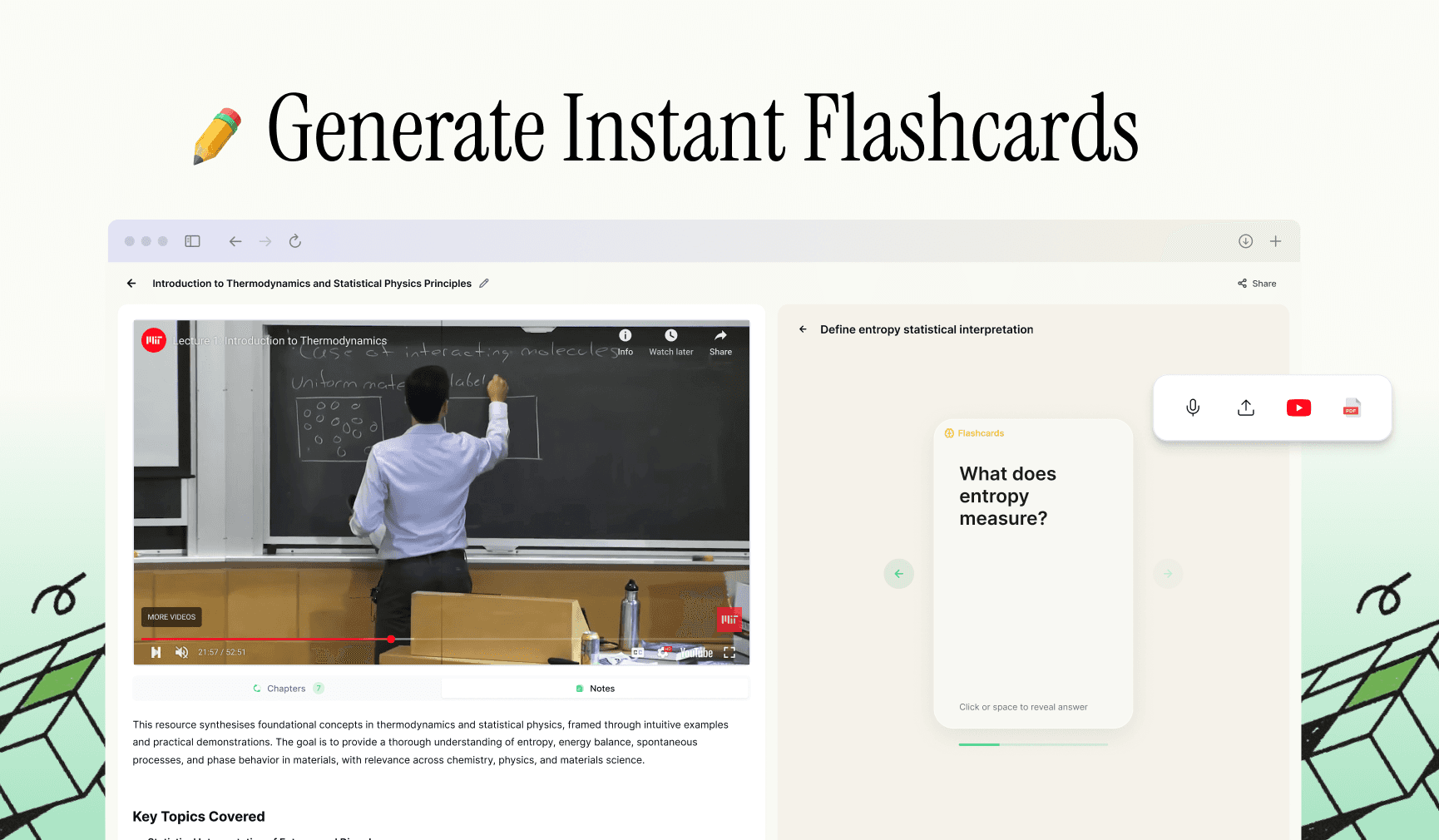
Manually writing out flashcards for a finance degree or CFA exam is incredibly slow and often results in messy, inconsistent notes. Duetoday eliminates this friction by instantly converting your professional documents into high-quality study materials.
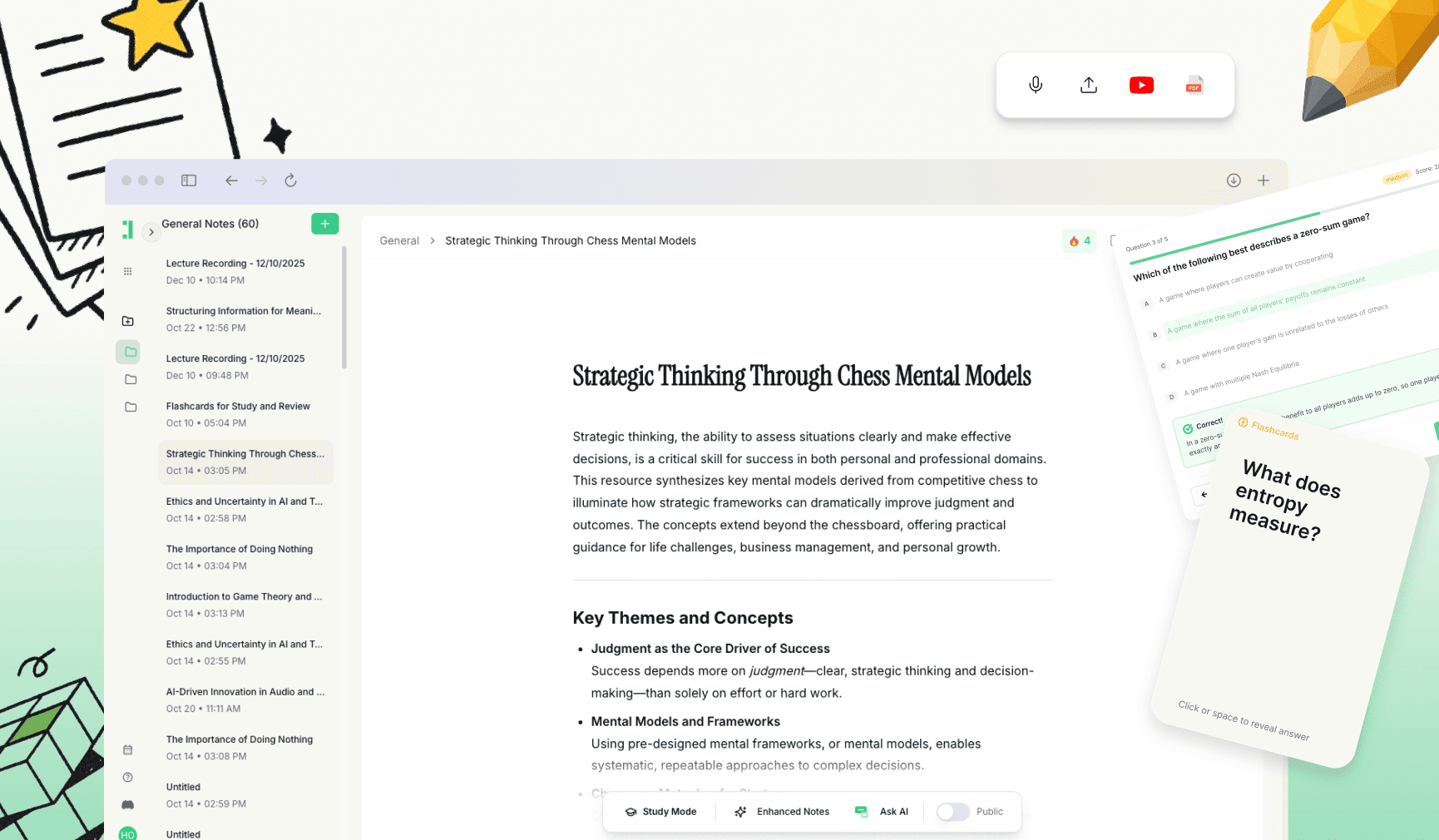
Simply upload your lecture slides, PDF textbooks, or research papers, and our AI will extract the most important banking concepts for you. It ensures every card is clear, concise, and ready for active recall study.
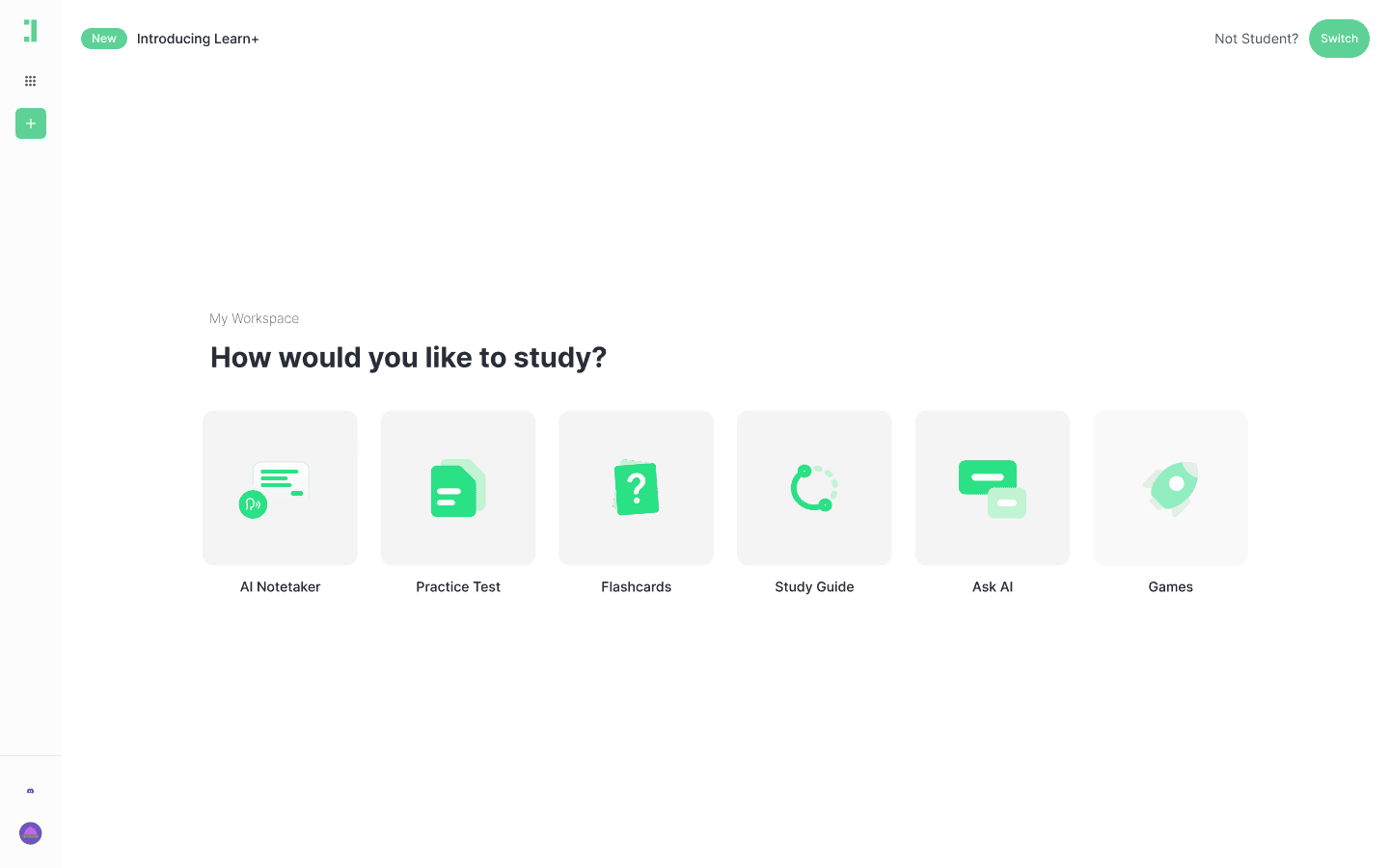
Upload or paste your Banking & Finance material.
Click 'Generate Flashcards'.
Review, edit, and start studying immediately.
Common Banking and Financial Institutions flashcard mistakes
Many students make their cards too wordy, trying to fit an entire sub-chapter onto one card. This leads to recognition (thinking you know it) rather than recall (actually knowing it). Keep your prompts sharp.
Cards are too long: If a card takes 30 seconds to read, split it into three separate cards.
Only memorizing words: Don't just learn the definition of 'Inflation'; add cards asking how it affects commercial interest rates.
Ignoring acronyms: In finance, acronyms like LIBOR, CDO, and KYC are everywhere. Dedicate specific cards to them.
No review schedule: Professional finance exams are marathons; you must repeat weak cards regularly to retain them.
Ready to generate your Banking and Financial Institutions flashcards?
Stop rereading and start recalling. Upload your notes, generate your deck, and master the world of banking today.
Works with notes, PDFs, slides, and transcripts.
FAQ
How many flashcards do I need for Banking and Financial Institutions?
Typically, a comprehensive course deck ranges from 80 to 150 cards, depending on the depth of regulatory detail required.
What’s the best format for banking flashcards?
The 'Question and Answer' format is best. For example: 'Question: What is the primary goal of the Basel Accords? Answer: To ensure financial institutions maintain enough capital to absorb losses.'
How often should I review my finance flashcards?
Ideally, daily for new cards and every 3-4 days for cards you have already mastered, using a spaced repetition approach.
Should I make cards from a textbook or my lecture notes?
Both are valuable, but lecture notes often highlight what the professor considers most important for exams, while textbooks provide the technical definitions.
How do I stop forgetting complex financial regulations?
Break regulations down into smaller parts. Create one card for the 'Goal' of the regulation, one for the 'Requirements', and another for the 'Penalties'.
What if my flashcards feel too easy or too hard?
If they are too easy, combine concepts or add application scenarios. If they are too hard, break the information down into more granular, single-concept cards.
Can I generate banking flashcards from a PDF automatically?
Yes, Duetoday can scan your banking PDFs and automatically identify key terms and concepts to create a structured deck.
Are digital flashcards better than paper for finance?
Digital cards are generally superior because they allow for easier organization of hundreds of terms and enable automatic spaced repetition scheduling.
How long does it take to make a full banking deck?
Manually, it can take hours. With Duetoday, you can generate a full deck from your uploaded materials in under a minute.
Can Duetoday handle financial formulas?
Yes, Duetoday can extract and format formulas for capital ratios, interest calculations, and more directly from your notes.

Duetoday is an AI-powered learning OS that turns your study materials into personalised, bite-sized study guides, cheat sheets, and active learning flows.