Generate Flashcards for Bacteriology
Easily generate or make Bacteriology flashcards for your microbiology course. Turn notes into study guides for bacterial classification.
Generate Flashcards with AI Free

What are Bacteriology flashcards?
Bacteriology flashcards are specialized study tools designed to help you master the vast world of microorganisms. These cards typically cover bacterial morphology, Gram-staining characteristics, metabolic pathways, virulence factors, and antibiotic resistance mechanisms. Instead of passively reading a textbook, these cards force you to recall specific details about pathogens like Staphylococcus aureus or Escherichia coli on demand.
The outcome is simple: instead of rereading complex chapters, you test yourself quickly to build long-term retention. If you already have lecture notes or lab manuals, Duetoday can generate a clean deck of Bacteriology flashcards in minutes, allowing you to focus on learning rather than formatting.
Why flashcards are one of the best ways to study Bacteriology
Bacteriology requires a mix of rote memorization (names and classifications) and conceptual understanding (pathogenesis and host-pathogen interactions). Flashcards utilize active recall and spaced repetition to bridge the gap between identifying a bacterium under a microscope and understanding the disease it causes.
Remember complex genus and species names without cramming
Separate similar organisms (e.g., Streptococcus vs. Staphylococcus)
Learn biochemical cycles and metabolic pathways step-by-step
Practice identifying Gram-positive vs. Gram-negative characteristics instantly
Master antibiotic mechanisms and their specific bacterial targets
What to include in your Bacteriology flashcards
Effective Bacteriology flashcards follow the atomic rule: one specific fact per card. Mixing too much information on one card leads to recognition over recall, where you think you know the material because it looks familiar, but you can't actually reproduce it during an exam.
We recommend focusing on four main card categories:
Morphology & Typing: Is Neisseria Gram-positive or Gram-negative?
Virulence Factors: What toxin is produced by Clostridium tetani?
Clinical Presentation: Which bacterium is the primary cause of Lyme disease?
Diagnostics: What is the gold standard test for identifying Mycobacterium tuberculosis?
Example prompts for your deck: Define the function of a bacterial capsule, List the four phases of bacterial growth, How does a bacteriostatic drug differ from a bactericidal one? and Which bacteria lack a cell wall?

How to study Bacteriology with flashcards (a simple system)
Bacteriology is dense, so a two-pass approach works best. Start by creating your deck from your syllabus or lab notes, then move into intensive review cycles. In the first pass, focus on basic identification; in the second, move into clinical applications and treatment protocols.
Make a deck from your notes (or generate it automatically with Duetoday).
Do one quick round to identify which bacteria you consistently confuse.
Review those weak cards daily for three days to lock in the differences.
Mix in shuffled cards from different bacterial families to prevent predictable patterns.
Do a final mixed review of both Gram-positive and Gram-negative organisms before your practical.
Generate Bacteriology flashcards automatically in Duetoday
Making cards manually for hundreds of bacteria is slow, messy, and often leads to inconsistent study habits. You spend more time typing than you do actually learning the material.
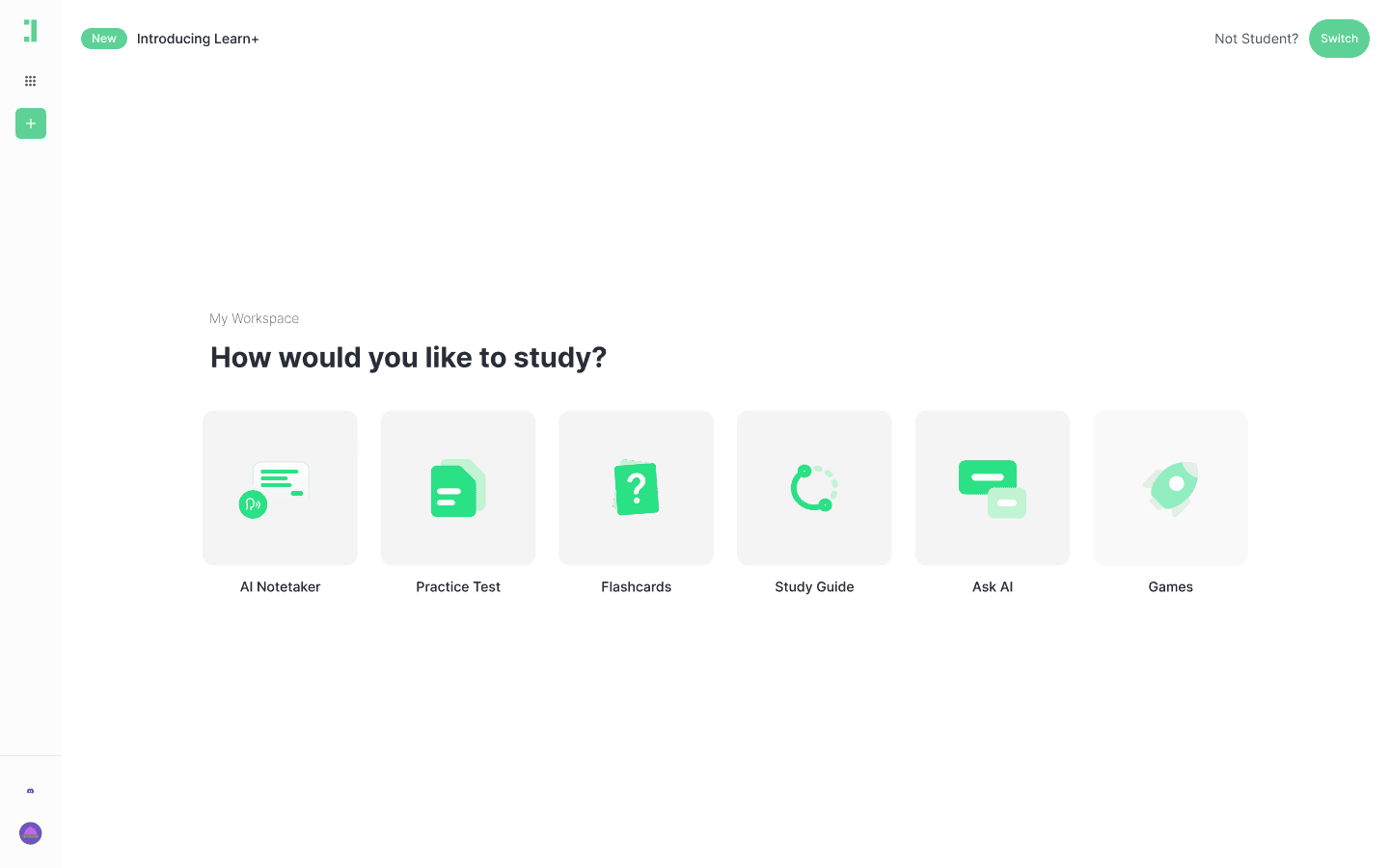
Duetoday solves this by allowing you to upload your microbiology PDFs, lab slides, or lecture transcripts and instantly turning them into high-quality flashcards. You can then edit them for specific lab focus areas and start studying immediately.
Upload or paste your Bacteriology textbook chapters or notes
Click Generate Flashcards
Review, edit, and start studying with our AI-powered interface
Generate Bacteriology Flashcards in Duetoday
Start with your notes and get a deck you can actually use today.
Common Bacteriology flashcard mistakes (and how to fix them)
Most students make their cards too wordy, which defeats the purpose of quick-fire testing. Here is how to avoid common pitfalls:
Cards are too long: Split a bacterium’s profile into several cards (Structure, Disease, Treatment).
Only memorizing names: Ensure you include why and how cards regarding bacterial mechanisms.
Ignoring the Gram-stain: Always include the staining characteristic, as it dictates treatment.
No review schedule: Use spaced repetition to ensure you don't forget the first week's bacteria by week ten.
Ready to generate your Bacteriology flashcards?
Don't waste hours copying definitions from a textbook. Upload your Bacteriology material, generate a professional deck, and spend your time mastering the science instead. Works with notes, PDFs, slides, and lab transcripts.
Start Generating Flashcards

FAQ
How many flashcards do I need for Bacteriology?
A standard introductory course usually requires 200–400 cards to cover all major bacterial families, structures, and clinical manifestations.
What’s the best format for Bacteriology flashcards?
The Question and Answer format is best for identifying bacteria, while Image Occlusion is excellent for identifying parts of a cell or agar plate results.
How often should I review Bacteriology flashcards?
Review new bacteria daily for the first three days, then move them to a 3-day or 7-day interval once you can recall them without hesitation.
Should I make cards from a textbook or lab notes?
Both are vital. Textbooks provide the theory and pathogenesis, while lab notes provide the diagnostic features you'll need for practical exams.
How do I stop forgetting bacteria names after a few days?
Use mnemonic devices on the back of your flashcards and use spaced repetition software like Duetoday to ensure you see them at optimal intervals.
What if my flashcards feel too easy?
If cards feel too easy, start adding Scenario cards. Instead of What is Staph? use A patient presents with a skin abscess... what is the likely agent?
Can I generate Bacteriology flashcards from a PDF automatically?
Yes, Duetoday is designed to ingest your lecture PDFs and extract the most important bacterial facts into a structured flashcard deck instantly.
Are digital flashcards better than paper for Bacteriology?
Digital cards are generally better because they allow for faster searching, the inclusion of high-res microscopic images, and automated spaced repetition scheduling.
How long does it take to make a full Bacteriology deck?
Manually, it can take 5–10 hours. With Duetoday's AI generation, you can have a comprehensive deck ready in under 60 seconds.
Can Duetoday organize my flashcards by bacterial family?
Yes, you can tag and categorize your generated cards to group them by families like Enterobacteriaceae or Firmicutes for focused study.

Duetoday is an AI-powered learning OS that turns your study materials into personalised, bite-sized study guides, cheat sheets, and active learning flows.