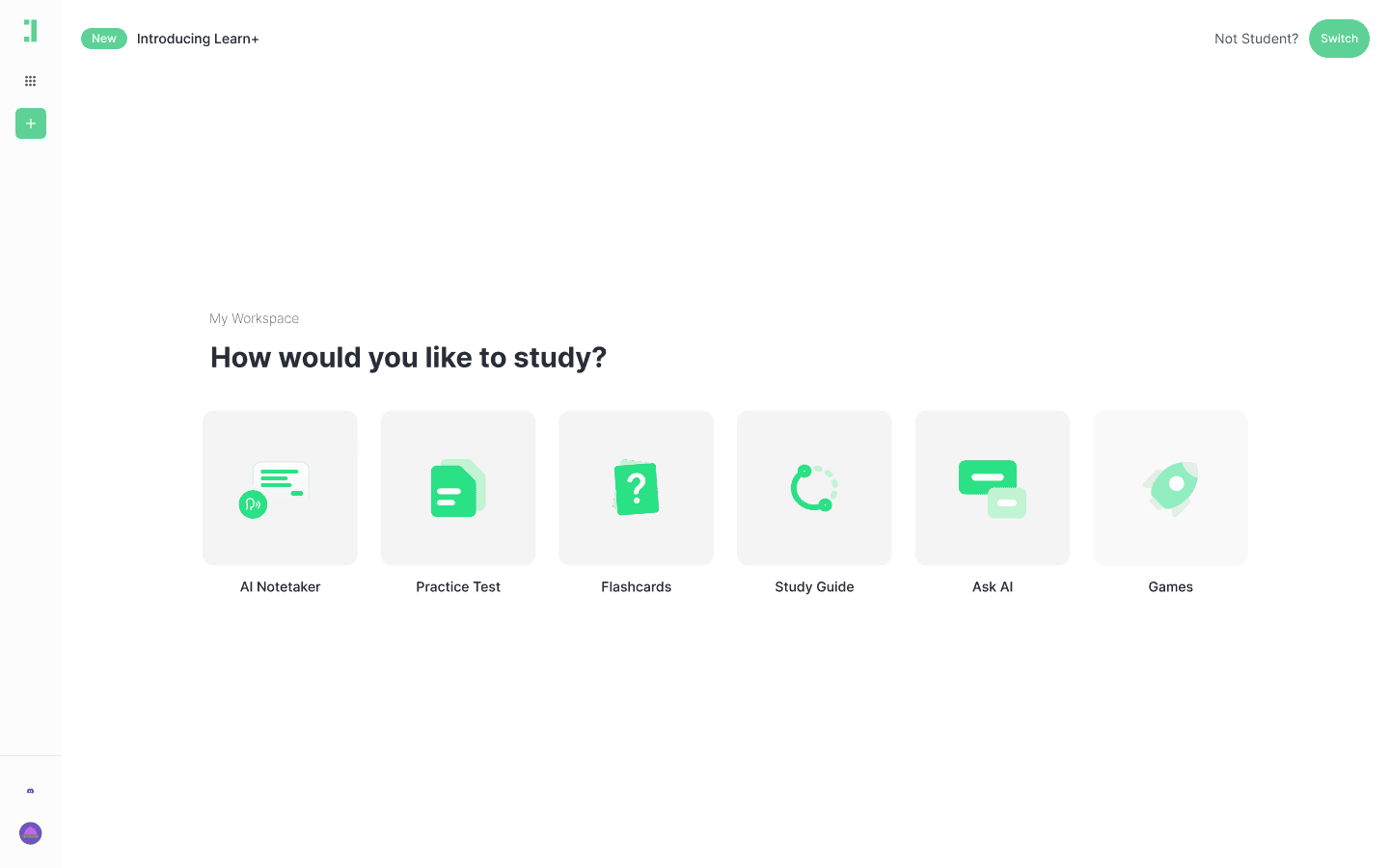
Generate Flashcards for Atomic Structure
Generate Atomic Structure flashcards in seconds with AI. Try out free to master chemistry fast!
Generate Flashcards with AI Free
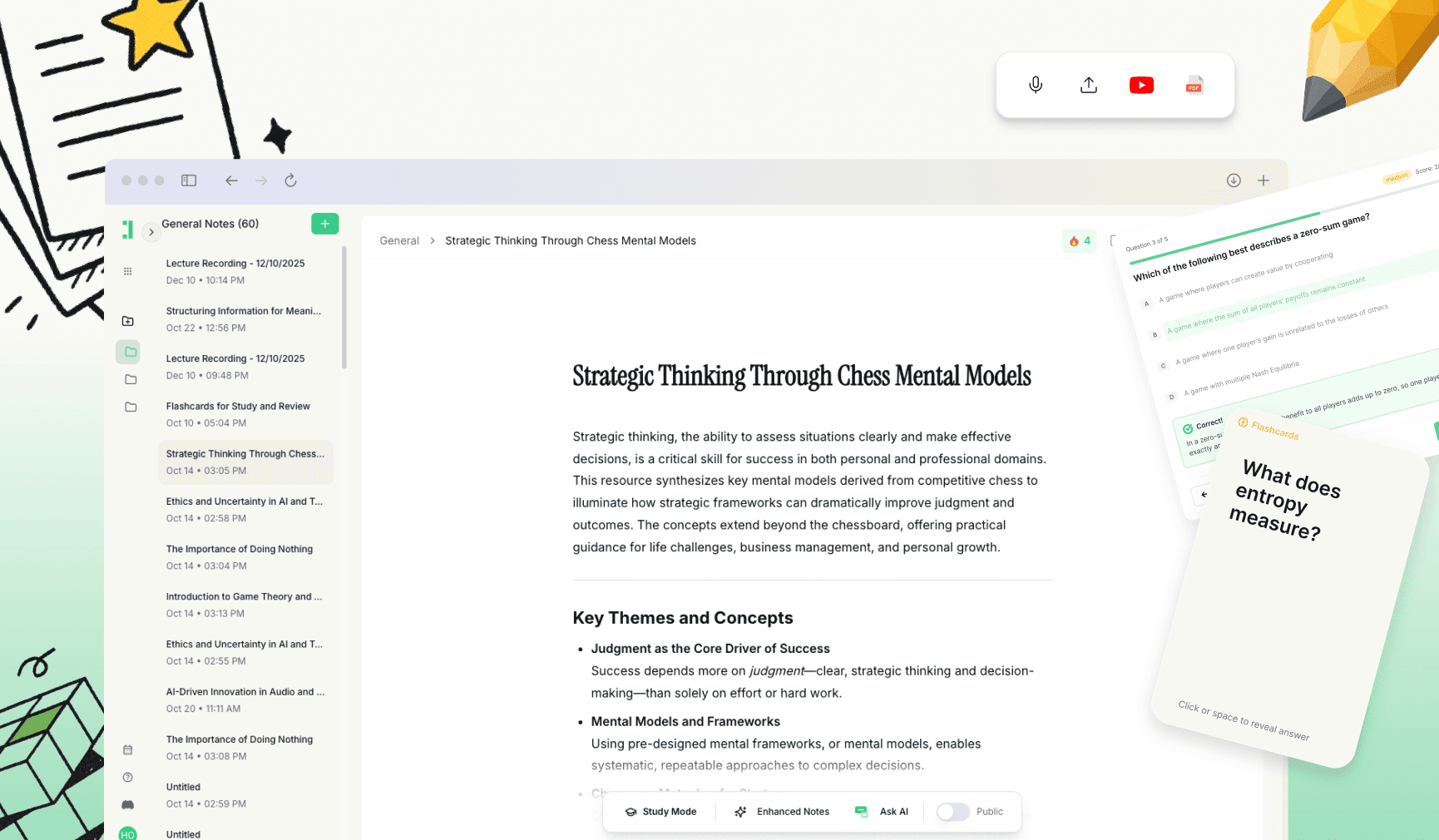
Generate Flashcards for Atomic Structure
Turn your notes, PDFs, slides, or chemistry lectures into Atomic Structure flashcards so you can review faster and remember more. Mastering the building blocks of matter shouldn't require hours of manual data entry.
Generate Atomic Structure Flashcards
Upload notes / paste text
In Duetoday, the process is simple: upload your chemistry materials, and our AI instantly generates a comprehensive deck. You can then review, edit, and start your study session immediately to lock in key concepts.
What are Atomic Structure flashcards?
Atomic Structure flashcards cover the fundamental properties of atoms, including subatomic particles (protons, neutrons, and electrons), atomic numbers, mass numbers, and isotopes. They also dive into more complex topics like Bohr’s model, quantum numbers, and electron configurations.
Instead of passively rereading your textbook, these flashcards force you to test your knowledge of how atoms are organized and how they interact. If you already have notes, Duetoday can generate a clean deck in minutes so you can focus on the science, not the formatting.
Why flashcards work for Atomic Structure
Atomic Structure requires a mix of rote memorization and conceptual application. You need to memorize the periodic table's basics while understanding the relationships between energy levels and electron shells. Flashcards use active recall and spaced repetition to ensure these facts stick in your long-term memory.
Remember key terms like 'valency' and 'isotope' without cramming.
Separate similar concepts, such as the difference between mass number and atomic mass.
Learn the sequence of electron filling (Aufbau principle) step-by-step.
Practice applying rules like Hund's Rule or the Pauli Exclusion Principle quickly.
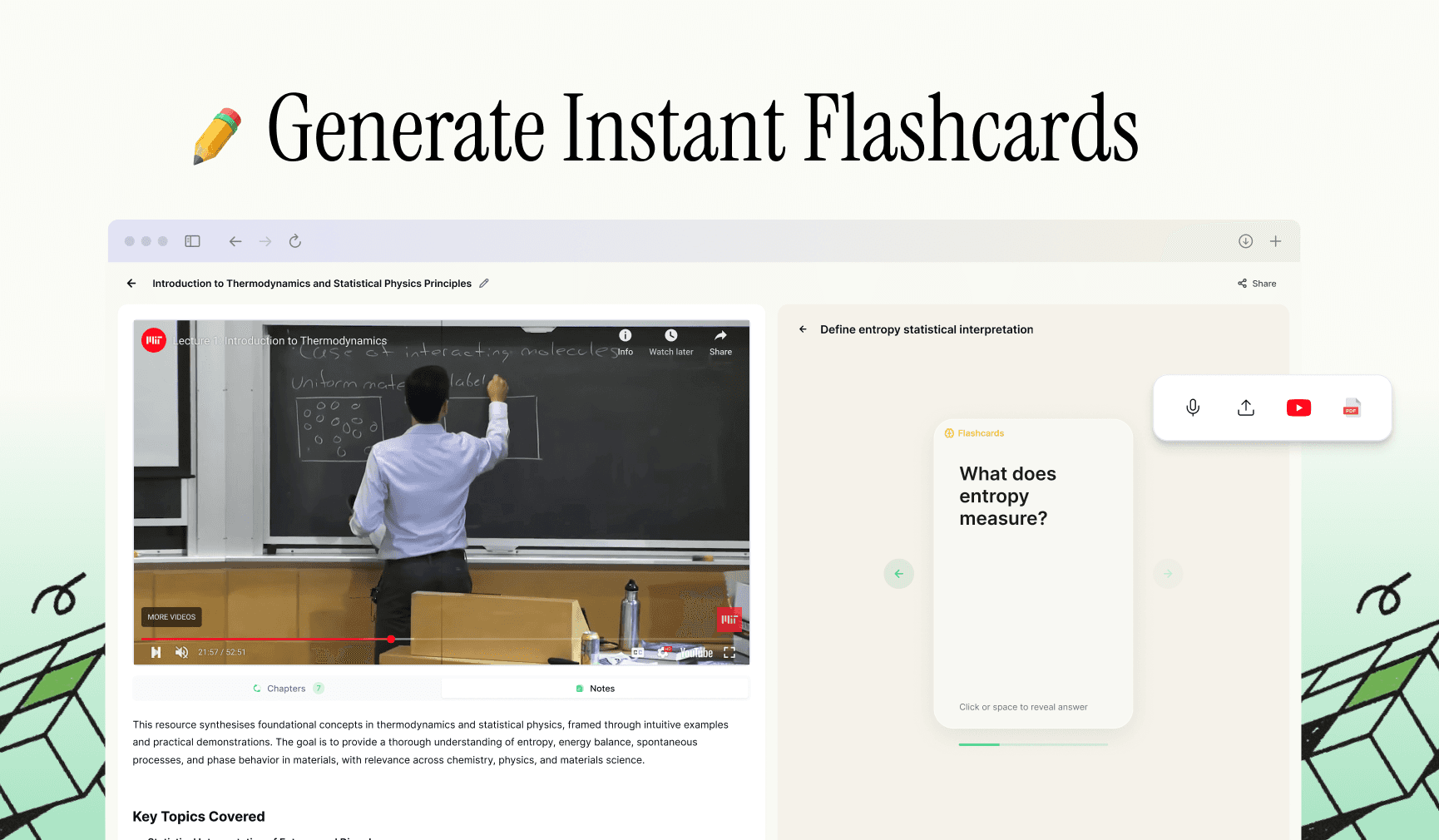
What to include in your Atomic Structure flashcards
Effective flashcards follow the "one idea per card" rule. Use question-based prompts to trigger your brain's retrieval process. We recommend focusing on four primary categories: definitions, processes, comparisons, and application of rules.
Definitions: "What is an isotope?" or "Define a cation."
Processes: "What happens to an atom's charge when it loses an electron?"
Comparisons: "How does the Bohr model differ from the Quantum Mechanical model?"
Application: "What is the electron configuration of Carbon?"
Example prompts include: "How many neutrons are in Carbon-14?", "State the charge of a nucleus," and "What defines the identity of an element?"
How to study Atomic Structure with flashcards
Use a two-pass approach. First, generate your deck and do a quick run-through to identify which concepts (like orbital shapes) are tripping you up. Then, enter a focused review phase where you repeat the difficult cards more frequently.
Make a deck from your chemistry notes or PDF textbook chapters.
Complete one quick round to find weak spots in your understanding.
Review weak cards daily to leverage spaced repetition.
Mix in a few harder calculation cards (like calculating average atomic mass) each session.
Do a final mixed review before your chemistry quiz or exam.
Generate Atomic Structure flashcards automatically in Duetoday
Making chemistry cards manually is slow and often results in cards that are too wordy. Duetoday solves this by transforming your complex diagrams and text into bite-sized, study-ready flashcards instantly.
Upload your Atomic Structure PDF or paste your lecture transcript.
Click Generate Flashcards.
Review, edit, and start studying immediately with our AI tutor.
Generate Atomic Structure Flashcards in Duetoday
Start with your notes and get a deck you can actually use today.
Common Atomic Structure flashcard mistakes
Many students make cards that are essentially paragraphs. This makes it impossible to test specific knowledge. Avoid these common pitfalls:
Cards are too long: Split complex electron configurations into smaller orbital segments.
Only memorizing names: Add "explain why" prompts for periodic trends.
Confusing Ions vs Isotopes: Create direct comparison cards for these terms.
Neglecting math: Ensure you include cards for mass calculations, not just definitions.
Ready to generate your Atomic Structure flashcards?
Stop rereading your chemistry textbook and start recalling the facts that matter. Upload your notes, generate your deck, and master the atom today.
Start Generating Flashcards
Works with notes, PDFs, slides, and transcripts.
FAQ
How many flashcards do I need for Atomic Structure? Usually, a deck of 40-60 cards covers everything from subatomic particles to electron configurations for a standard intro course.
What’s the best format for Atomic Structure flashcards? A question-and-answer format is best. For example: 'Question: What particle determines the element's identity? Answer: The Proton.'
How often should I review Atomic Structure flashcards? Review daily for the first three days, then transition to every other day until you can answer every card without hesitation.
Should I make cards from a textbook or slides? Use both. Textbooks provide the definitions, while lecture slides often highlight the specific models your instructor wants you to know.
How do I stop forgetting the quantum numbers? Use cards that link the name of the quantum number to its physical meaning (e.g., 'Principal' = 'Size/Energy').
What if my flashcards feel too easy? If they are too easy, combine concepts. Instead of 'What is a proton?', ask 'How does the number of protons affect the atomic number and charge?'
Can I generate Atomic Structure flashcards from a PDF? Yes, Duetoday specializes in reading chemistry PDFs and extracting key scientific concepts into flashcards.
Are digital flashcards better than paper? Yes, because digital cards use AI-driven spaced repetition algorithms that paper cards can't mimic.
How long does it take to make a full deck? Manually, it takes hours. With Duetoday, it takes less than 60 seconds.
Can Duetoday organize my cards by topic? Yes, you can categorize your cards into sub-topics like 'Subatomic Particles' and 'Electron Configuration' for better focus.

Duetoday is an AI-powered learning OS that turns your study materials into personalised, bite-sized study guides, cheat sheets, and active learning flows.