Generate Flashcards for Art History
Make and generate Art History flashcards to master artists, movements, and visual analysis with our AI-powered study guide.
Generate Flashcards with AI Free
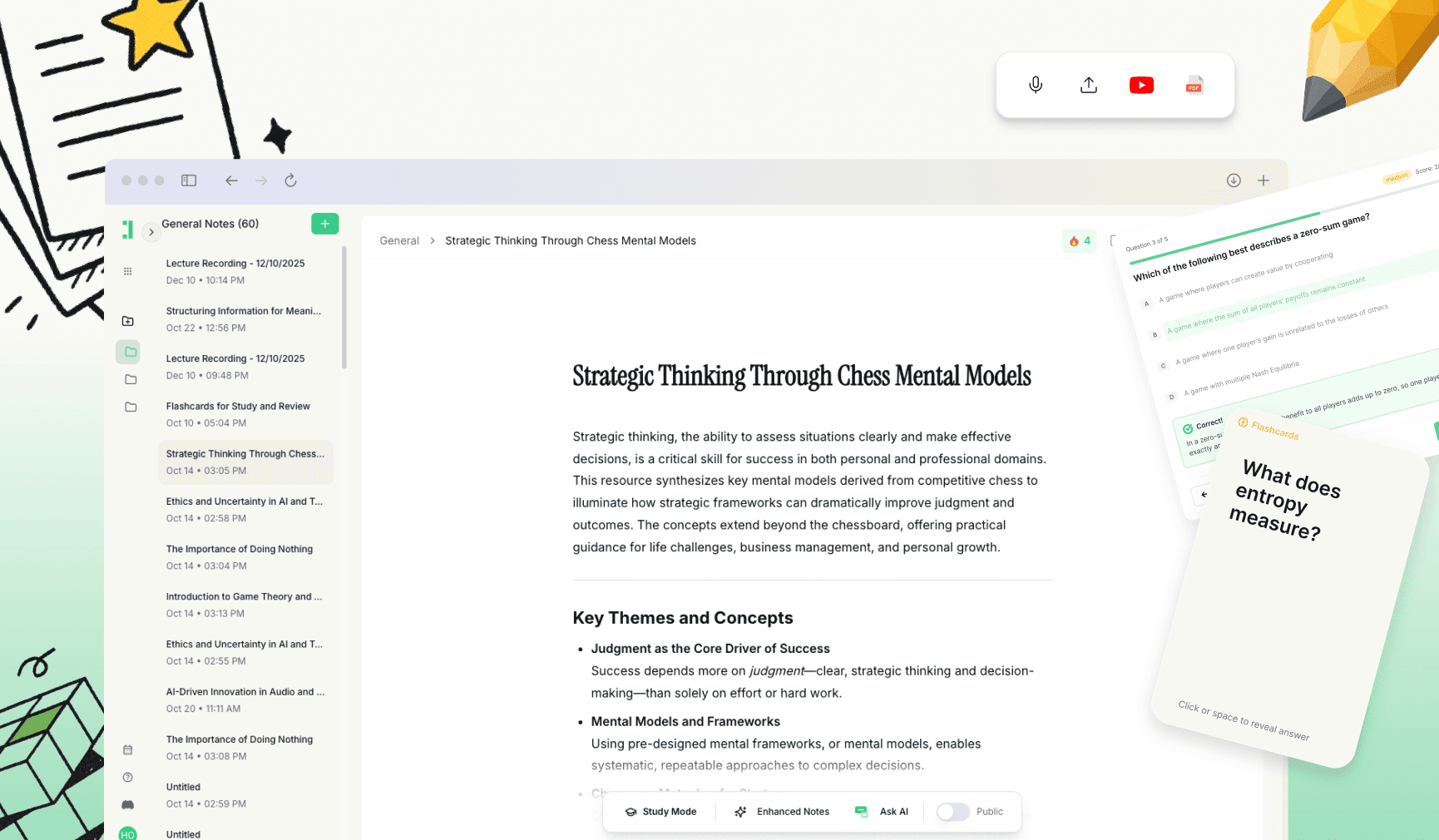
What are Art History flashcards?
Art History flashcards are specialized study tools designed to help you bridge the gap between visual recognition and historical context. They cover essential elements such as artist biographies, stylistic characteristics of specific periods, formal analysis of techniques, and the socio-political influences behind famous works. Instead of passively looking at images in a textbook, these flashcards force you to recall specific details about a piece's provenance, medium, and deeper meaning.
The primary outcome of using these cards is mastery over visual identification and critical analysis. By testing yourself on the names of movements, dates of creation, and key terminology (like chiaroscuro or iconography), you build a mental library that allows you to analyze any artwork with confidence. If you already have lecture notes or a syllabus, Duetoday can generate a clean, organized deck in minutes.
Why flashcards are one of the best ways to study Art History
Art history requires a unique blend of visual memory and fact-based recall. Flashcards are highly effective because they isolate specific artworks and force you to identify their significance without the surrounding context of a textbook layout. This mirrors the format of many art history exams where you are presented with a slide and asked to identify and analyze it on the spot.
Using active recall and spaced repetition helps you move beyond short-term memorization. Instead of cramming hundreds of paintings the night before a test, you focus on the pieces you find most difficult to identify, ensuring you can distinguish between similar styles like Baroque and Rococo or Impressionism and Post-Impressionism.
Identify key masterpieces and their creators instantly
Differentiate between similar artistic periods and movements
Memorize technical vocabulary and formal analysis terms
Recall the historical significance and patronage of specific works
What to include in your Art History flashcards
Effective art history cards should be concise and visual-centric. The goal is to avoid wall of text cards that simply list every fact about the Renaissance; instead, break information down into bite-sized queries that focus on one specific attribute per card. This makes the review process faster and ensures you aren't guessing based on luck.
We recommend organizing your deck into four distinct categories to cover all bases of the discipline:
Visual Identification: Title of work, artist, date, and medium.
Formal Analysis: Questions about composition, color palette, and light usage.
Contextual History: The why behind the art—patronage, religion, or politics.
Movement Characteristics: Defining traits of an era (e.g., What defines Gothic architecture?).
Example prompts: Who painted the Garden of Earthly Delights?, Define the term sfumato., What was the primary goal of the Bauhaus school?, Identify three characteristics of Egyptian funerary art.
How to study Art History with flashcards (a simple system)
Start with a two-pass approach. In your first pass, go through your entire deck to see which images you recognize instantly and which ones leave you blank. This initial sort allows you to focus your energy where it matters most—the works and periods that are currently tricky for you.
For your second pass, engage in high-frequency reviews of your weak cards. Spend 15 minutes a day looking at these specific works. As you get closer to your exam, mix your specialized decks (e.g., Ancient Greece) with broader decks (e.g., Modernism) to ensure you can pivot between different centuries and styles without losing your train of thought.
Generate your deck from your syllabus, slides, or museum notes.
Perform a rapid identification round to flag difficult images.
Review the tough cards daily to build visual recognition.
Practice writing out one formal analysis point for each card you see.
Conduct a final randomized review of all periods before your exam.
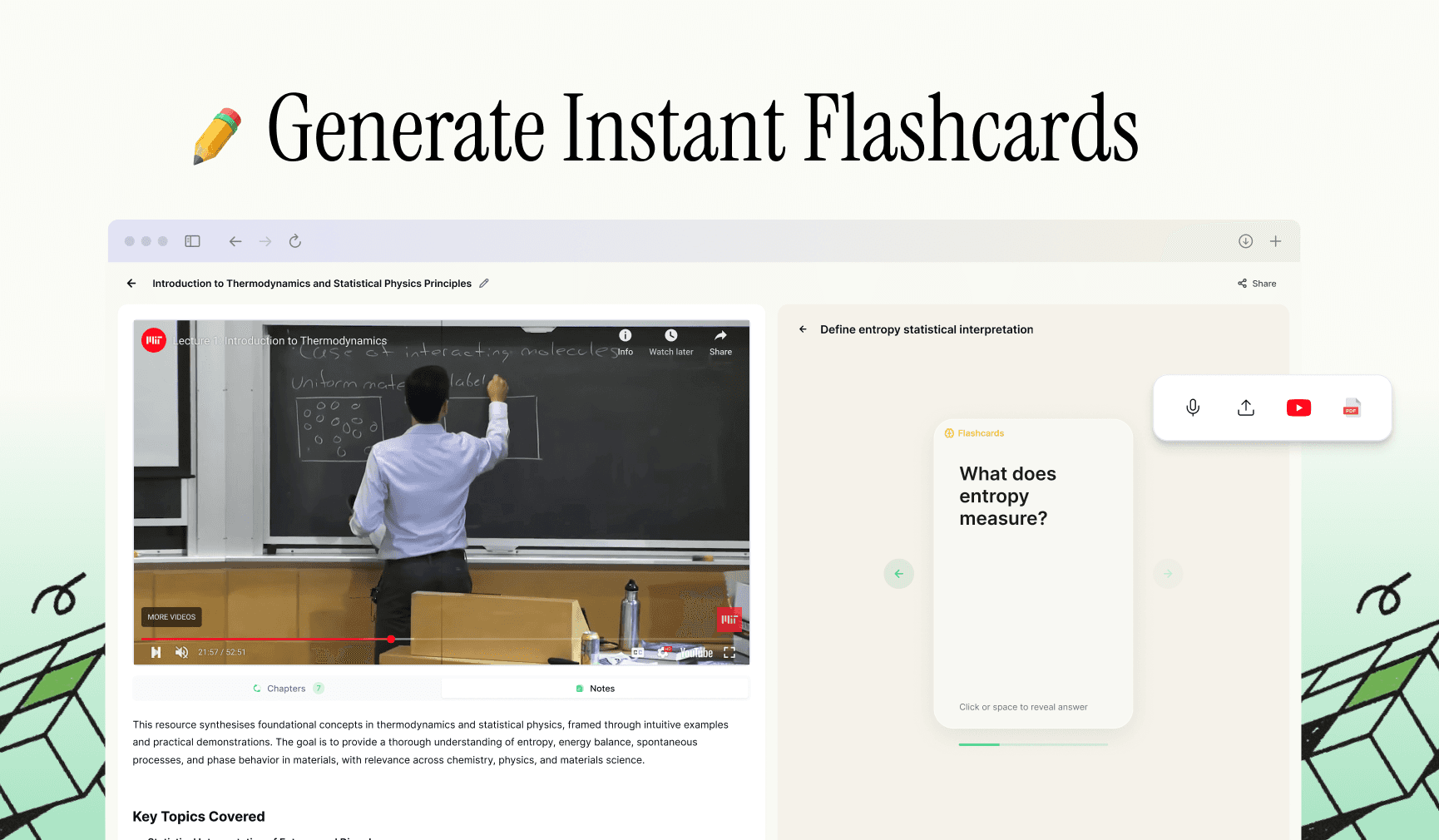
Generate Art History flashcards automatically in Duetoday
Making flashcards manually is incredibly time-consuming, especially when you have to crop images and type out long lists of dates and names. Duetoday eliminates this friction by instantly converting your study materials into structured decks. Whether you have a PDF of a textbook chapter or a PowerPoint from a lecture, our AI extracts the key artworks and concepts for you.
Upload your Art History PDFs, slides, or lecture transcripts.
Click Generate Flashcards.
Review your new deck and start studying immediately.
Common Art History flashcard mistakes
The most common mistake is putting too much information on a single card. If a card lists the artist, date, location, medium, and 5 paragraphs of analysis, your brain will only remember the first line. Another pitfall is only memorizing the Big Four (Artist, Title, Date, Medium) while ignoring the historical context, which is often worth more points on an essay exam.
Overcrowding cards with too much text
Neglecting to include the medium/materials used
Ignoring the social or political why of the work
Not reviewing similar-looking movements back-to-back for comparison
Ready to generate your Art History flashcards?
Stop rereading your textbook and start mastering visual analysis. Upload your notes to Duetoday and get a custom deck of Art History flashcards in seconds.
FAQ
How many flashcards do I need for Art History? It depends on the scope of your course, but generally, 30-50 cards per major era or chapter is common to cover key works and terminology.
What’s the best format for Art History flashcards? A visual-first format is best. Use the image on the front and the name, date, and 2-3 key analysis points on the back.
How often should I review Art History flashcards? Daily for 10-15 minutes is better than a 3-hour session once a week. Spaced repetition relies on frequent, thin slices of study.
Should I make cards from a textbook or my lecture notes? Use lecture notes first, as these reflect what your professor deems important, then supplement with textbook details for deeper analysis.
How do I stop forgetting dates? Group works by century or movement rather than exact years if your professor allows, or use anchor dates for major events (like the French Revolution).
What if my cards feel too easy? Start adding comparison cards. Instead of identifying one work, try to explain how it influenced a later work or artist.
Can I generate Art History flashcards from a PDF? Yes, Duetoday can read your chapter PDFs or lecture slides and extract the most important artworks and definitions into cards.
Are digital flashcards better than paper for Art History? Digital is often better for Art History because you can easily include high-resolution color images of the artworks without printing costs.
How long does it take to make a full Art History deck? Manually it can take hours; with Duetoday, you can generate a comprehensive deck from your notes in under a minute.
Can Duetoday organize my flashcards by movement? Yes, you can upload material by movement (e.g., Renaissance, Pop Art) and Duetoday will create organized decks for each.

Duetoday is an AI-powered learning OS that turns your study materials into personalised, bite-sized study guides, cheat sheets, and active learning flows.