Generate Flashcards for Aromatic Compounds
Master Organic Chemistry. Turn your notes into flashcards for Aromatic Compounds. Try it for free!
Generate Flashcards with AI Free
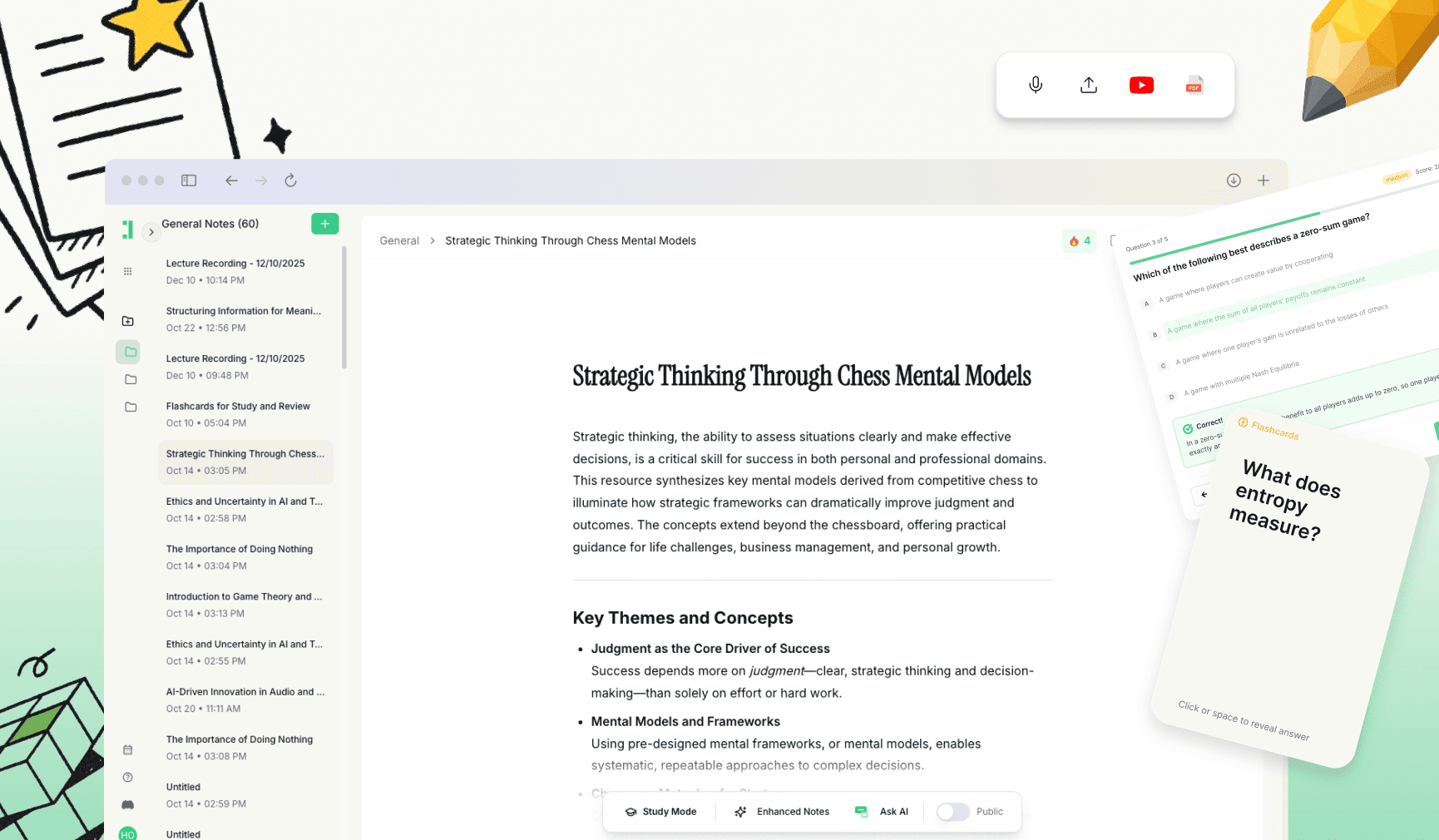
What are Aromatic Compounds flashcards?
Aromatic Compounds flashcards are targeted study tools designed to help you master the complex structure and reactivity of benzene and its derivatives. These cards cover essential organic chemistry concepts like Huckel’s Rule (4n+2), resonance stability, nomenclature, and specific naming conventions for ortho, meta, and para positions.
Instead of passively rereading your chemistry textbook, these flashcards force you to engage in active recall. By testing your ability to predict reaction products or identify aromaticity on the spot, you build the neural pathways needed to excel in organic chemistry exams. If you already have lecture notes or lab manuals, Duetoday can generate a clean deck in minutes.
Why flashcards are one of the best ways to study Aromatic Compounds
Aromaticity requires a mix of rote memorization for naming rules and deep conceptual understanding for reaction mechanisms. Flashcards bridge this gap by breaking down overwhelming structures into bite-sized, digestible pieces of information.
Using active recall and spaced repetition helps you move beyond temporary memorization into long-term mastery. This is especially important for chemistry, where earlier concepts like hybridization and pi-bonding are foundational to later topics like synthesis.
Memorize functional groups and substituents without midnight cramming.
Easily distinguish between Aromatic, Antiaromatic, and Nonaromatic compounds.
Learn multi-step synthesis pathways one reagent at a time.
Practice identifying activating vs. deactivating groups instantly.
What to include in your Aromatic Compounds flashcards
Effective chemistry flashcards follow the "atomicity" principle: one specific concept per card. This prevents your brain from getting overwhelmed and ensures you truly know the material rather than just recognizing the general shape of a page.
Definitions & Key Terms: "What is Huckel's Rule?" "Define resonance energy in benzene."
Processes & Steps: "What is the first step in Electrophilic Aromatic Substitution (EAS)?"
Comparisons: "How does toluene differ from phenol in terms of reactivity?"
Application: "Predict the major product for the nitration of nitrobenzene."
Example prompts: "Draw the sigma complex for benzene bromination," "List the three criteria for aromaticity," and "Which position does a hydroxyl group direct to?"
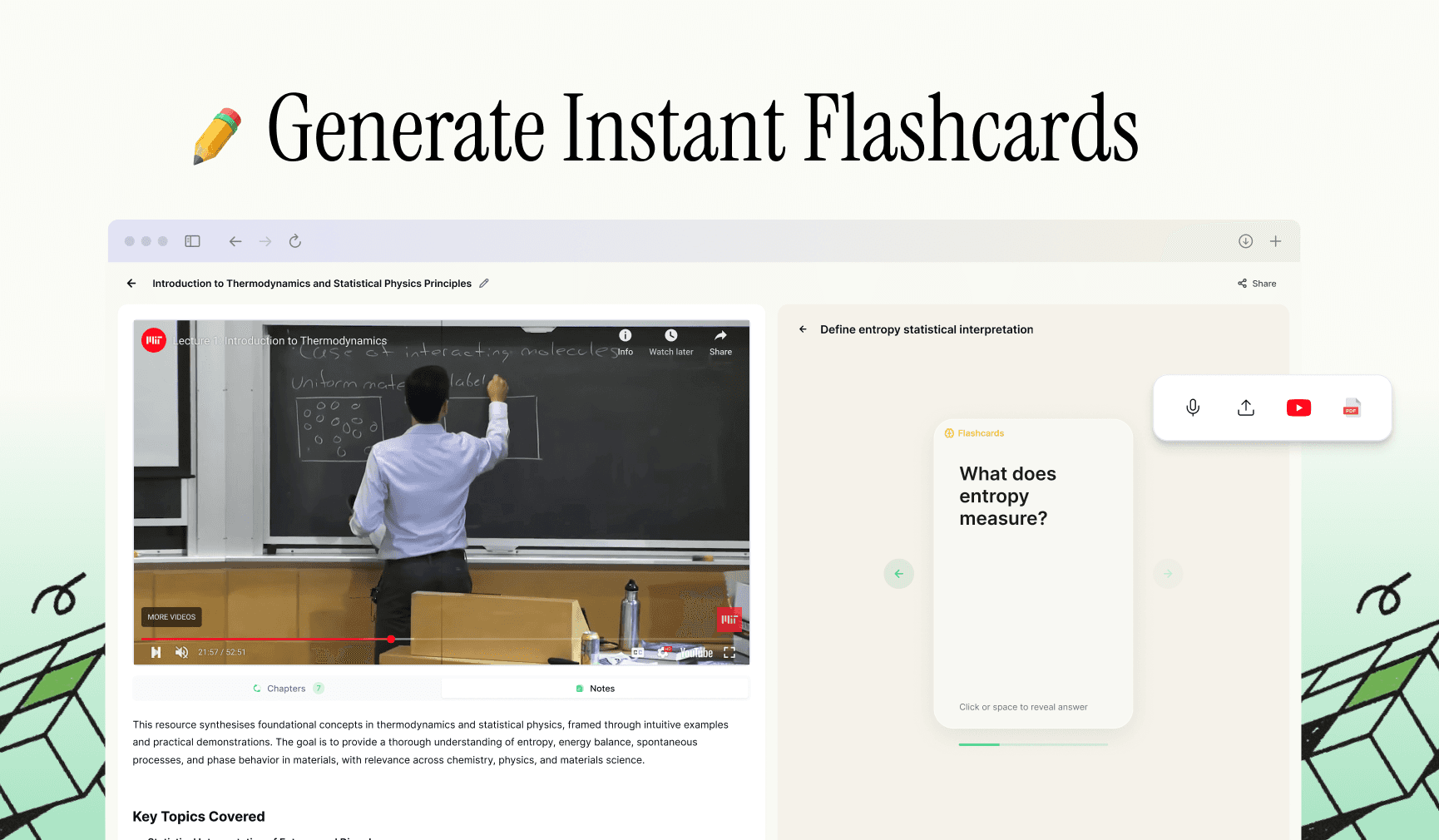
How to study Aromatic Compounds with flashcards
To master organic chemistry, use a "two-pass" workflow. Start by generating your deck from your notes or slides, then move into focused review cycles that prioritize the hardest mechanisms.
Generate a deck from your organic chemistry notes or PDF textbooks in Duetoday.
Complete a rapid first pass to identify which directing groups or reactions confuse you.
Review high-difficulty cards daily to leverage spaced repetition.
Mix these cards with other reaction mechanisms to simulate exam conditions.
Perform a final review of "named reactions" (like Friedel-Crafts) before your test.
Generate Aromatic Compounds flashcards automatically in Duetoday
Drawing structures and writing out mechanisms by hand is slow and often leads to messy notes that are hard to study from later. Duetoday eliminates the manual labor of card creation.
Simply upload your chemistry PDFs, lecture slides, or even photos of your handwritten notes. Our AI analyzes the chemical structures and text to create a comprehensive study deck instantly. You can then edit the cards, add your own notes, and start studying with our built-in active recall system.
Upload your Aromaticity lecture slides.
Click "Generate Flashcards."
Review, edit, and master your deck.
Generate Aromatic Compounds Flashcards in Duetoday
Common Aromatic Compounds flashcard mistakes
Many students fail to make their cards specific enough. Avoid putting a whole reaction mechanism on one card; instead, break it down into the formation of the electrophile, the attack of the benzene ring, and the loss of the proton.
Cards are too complex: Split a synthesis sequence into individual steps.
Ignoring regiochemistry: Always include "ortho/meta/para" prompts for substituted rings.
Passive reading: Ensure your cards ask a question rather than just showing a diagram.
Skipping conditions: Don't just learn the product; include the specific catalysts (e.g., FeBr3).
Ready to generate your Aromatic Compounds flashcards?
Stop rereading your chapters and start testing your knowledge. Upload your notes to Duetoday to generate a professional deck of Aromatic Compounds flashcards in seconds. This is the fastest way to turn complex chemistry into manageable study sessions.
Start Generating Flashcards
FAQ
How many flashcards do I need for Aromatic Compounds? Typically, 40-60 cards cover the basics of nomenclature, aromaticity rules, and the primary EAS reactions.
What’s the best format for these flashcards? Question-on-front, answer-on-back with clear structural diagrams is most effective for chemistry.
How often should I review them? Daily review is best during the first week, then every 3-4 days as you approach your exam date.
Should I make cards from my textbook or slides? Use both. Slides often contain what the professor emphasizes, while textbooks provide the necessary mechanical detail.
How do I stop forgetting reaction reagents? Use flashcards that specifically ask "Which reagent is needed for this transformation?" alongside product prediction cards.
What if my flashcards feel too easy? Combine cards to form multi-step synthesis challenges or increase the complexity of the starting material.
Can I generate flashcards from a chemistry PDF? Yes, Duetoday can read chemistry textbooks and notes to extract key formulas and reactions automatically.
Are digital flashcards better than paper? Yes, because they allow for easier organization of complex diagrams and use algorithms to repeat difficult cards automatically.

Duetoday is an AI-powered learning OS that turns your study materials into personalised, bite-sized study guides, cheat sheets, and active learning flows.